鲍默《东方教会:亚述基督教图史》第九章:蒙古时期(中英文对照版)
阿甲按:本连载以克里斯托夫·鲍默(Christoph Baumer)2016年英文新版为底本,采用人工智能辅助中译,以中英文对照形式供研读参考。译文及原文提取仍有待校订,人名、地名、专业术语和个别断句未必准确,欢迎读者与专家指正。
本章导读
本章考察蒙古帝国兴起后东方教会的机遇与危机,叙述蒙古统治者、基督徒群体及东西方使节之间的往来,并追踪这一时期教会版图的变化与衰退。
凡例
- 翻译自:Christoph Baumer, The Church of the East: An Illustrated History of Assyrian Christianity, new edition, translated by Miranda G. Henry (London and New York: I.B.Tauris, 2016),第九章,原书第 195–234 页。
- 本连载保留英文原文、图版与原书页码,采用双语对照形式,便于参阅和引用。原作页码与 PDF 文件的物理页序不同,本文标示原书页码。
- 中文初稿由 DeepSeek 辅助生成,部分缺译和遗漏段落使用 GPT-6-luna 补译;本次整理不等同于完成学术校订。原文中的个别断句、图注拼接和脚注提取仍需对照原书核查。
- 人名、地名、书名与叙利亚语专业术语的译法仅供参考,相关条目可参阅《高尔吉亚叙利亚遗产百科辞典》。
- 引用建议:克里斯托夫·鲍默,《东方教会:亚述基督教图史》第九章“蒙古时期”,袁永甲整理(人工智能辅助中译,待校订),教父原文中译计划,2026年10月12日,本文网址,并注明原书页码及访问日期。
第九章:蒙古时期
The Period of the Mongols IX
蒙古时期 IX
Shamanism and religious syncretism among the
萨满教与宗教融合在……之中
Turko-Mongolian peoples bless mare’s milk with the cross on the altar and all present to drink from it. In this way the Church of the East demonstrated its flexibility in questions of liturgy and its acceptance of inculturation.3 The prince who served as priest was later one of the models for the mythic figure of Prester John.
突厥-蒙古诸民族在祭坛上用十字架祝福马奶,并让所有在场者从中饮用。东方教会 (Ch. of E.) 以此表明其在礼仪问题上的灵活性,以及对本土化的接纳。3 那位兼任司铎的王子后来成为神话人物祭司王约翰 (Prester John) 的原型之一。
The Church of the East came into contact with the Turkic and Mongol peoples quite early.1 First towards the end of the fifth or in the sixth century with the White Huns, then less than a century later with some Western Turks; further conversions of Turkic tribes followed in 644 and in the early 780s”, whereupon a small minority of the Uigurs adopted East Syrian Christianity. In 1007 East Syrian missionaries made a real breakthrough with the conversion of the khan of the Keraits and his people. According to the historians Mari ibn Suleiman and Bar Hebraeus, the ruler of the Turks respectively of the Kerait,2 whose homeland stretched from modern central Mongolia to the south into the Gobi Desert, lost his way while hunting in a snowstorm and wandered about in confusion. Then St Sargis appeared to him in a vision and promised to save him, if he would have himself baptized. The rescued khan consulted Nestorian merchants, who were staying in his camp, about this and asked the metropolitan of Merv, Odisho, for baptism. Odisho sent a priest and a deacon, who promptly baptized the khan and 200,000 Turks or Kerait, adapted the fasting regulations to Mongol customs, and allowed the khan to
东方教会 (Ch. of E.) 很早就与突厥和蒙古诸民族有了接触。1 首先是在五世纪末或六世纪与白匈奴 (White Huns),然后不到一个世纪后与一些西突厥 (Western Turks);随后在644年和780年代初期又有突厥部落的进一步皈依,于是回鹘人 (Uigurs) 中的一小部分人接受了东叙利亚基督教 (East Syrian Christianity)。1007年,东叙利亚传教士随着克烈部 (Keraits) 的汗 (khan) 及其民众皈依而取得了真正的突破。据历史学家马利·伊本·苏莱曼 (Mari ibn Suleiman) 和巴尔·赫卜拉乌斯 (Bar Hebraeus) 记载,突厥人、也就是克烈部2的统治者,其故土从今蒙古中部向南延伸至戈壁沙漠,在一次暴风雪中狩猎时迷了路,困惑地四处游荡。随后,圣萨尔吉斯 (St Sargis) 在异象中向他显现,许诺若他受洗,便救他。获救的汗就此事咨询了留驻其营地的聂斯托利派 (Nestorian) 商人,并向梅尔万 (Merv) 的都主教奥狄绍 (Odisho) 请求受洗。奥狄绍 (Odisho) 派了一位司铎和一位执事,他们随即为汗以及20万突厥人或克烈人施洗,将斋戒规定调整以适应蒙古习俗,并允许汗……
At that time the Turko-Mongolian peoples worshipped the sky or the god of the sky, called Tengri (for which reason their religion is also called Tengrism) as well as numerous natural phenomena such as mountains and the points of the compass. The shaman – called qam among the Turkic peoples – served as mediator between human beings and the spirits, the personifications of natural phenomena. Although Tengrism also included ideas about the afterlife in the world to come, to which the shamans would lead the soul, the actions of the shamans concentrated on influencing good and evil spirits in coping with everyday life.4 Thus shamanistic Tengrism did not necessarily consider as rivals other religions that were strongly oriented towards the world to come, as long as they avoided absolute religious claims. Religious tolerance was expressly declared in the 1206 law codex of Genghis Khan: ‘All religions shall be respected; none shall be preferred to the others.’5 In the same spirit the Great Khan Möngke (ruled 1251–1259) expressed his view to the Franciscan William of Rubruk (c.1215–1295) on the eve of Pentecost Sunday in
当时,突厥-蒙古诸民族崇拜天空或天空之神,称为腾格里 (Tengri)(因此其宗教也被称为腾格里信仰 (Tengrism)),并崇拜诸如山脉和罗盘方位等众多自然现象。萨满——在突厥诸民族中称为喀姆 (qam)——充当人与神灵之间的中介,这些神灵是自然现象的人格化。尽管腾格里信仰也包含关于来世——即萨满将引导灵魂前往的世界——的观念,但萨满的行为主要集中于影响善恶神灵,以应对日常生活。4 因此,萨满教的腾格里信仰并不必然将那些强烈面向来世的其他宗教视为竞争对手,只要这些宗教避免提出绝对的宗教主张。成吉思汗 (Genghis Khan) 1206年法典中明确宣告了宗教宽容:“一切宗教皆应受到尊重;不得使任何一种宗教凌驾于其他宗教之上。”5 本着同样的精神,大汗蒙哥 (Möngke)(在位1251—1259年)在五旬节主日 (Pentecost Sunday) 前夕,向方济各会士 (Franciscan) 鲁布鲁克的威廉 (William of Rubruk)(约1215—1295年)表达了他的看法,于
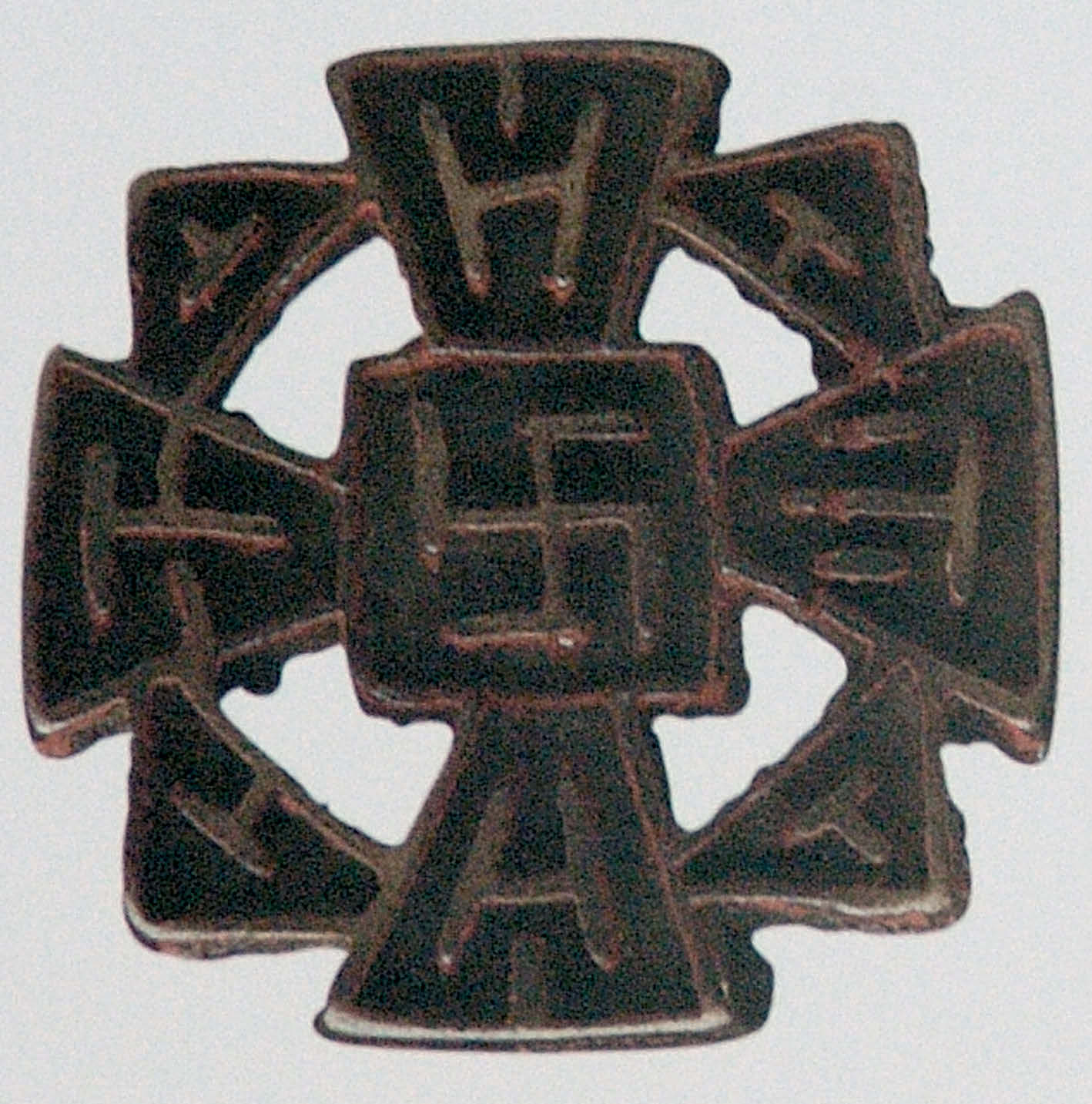
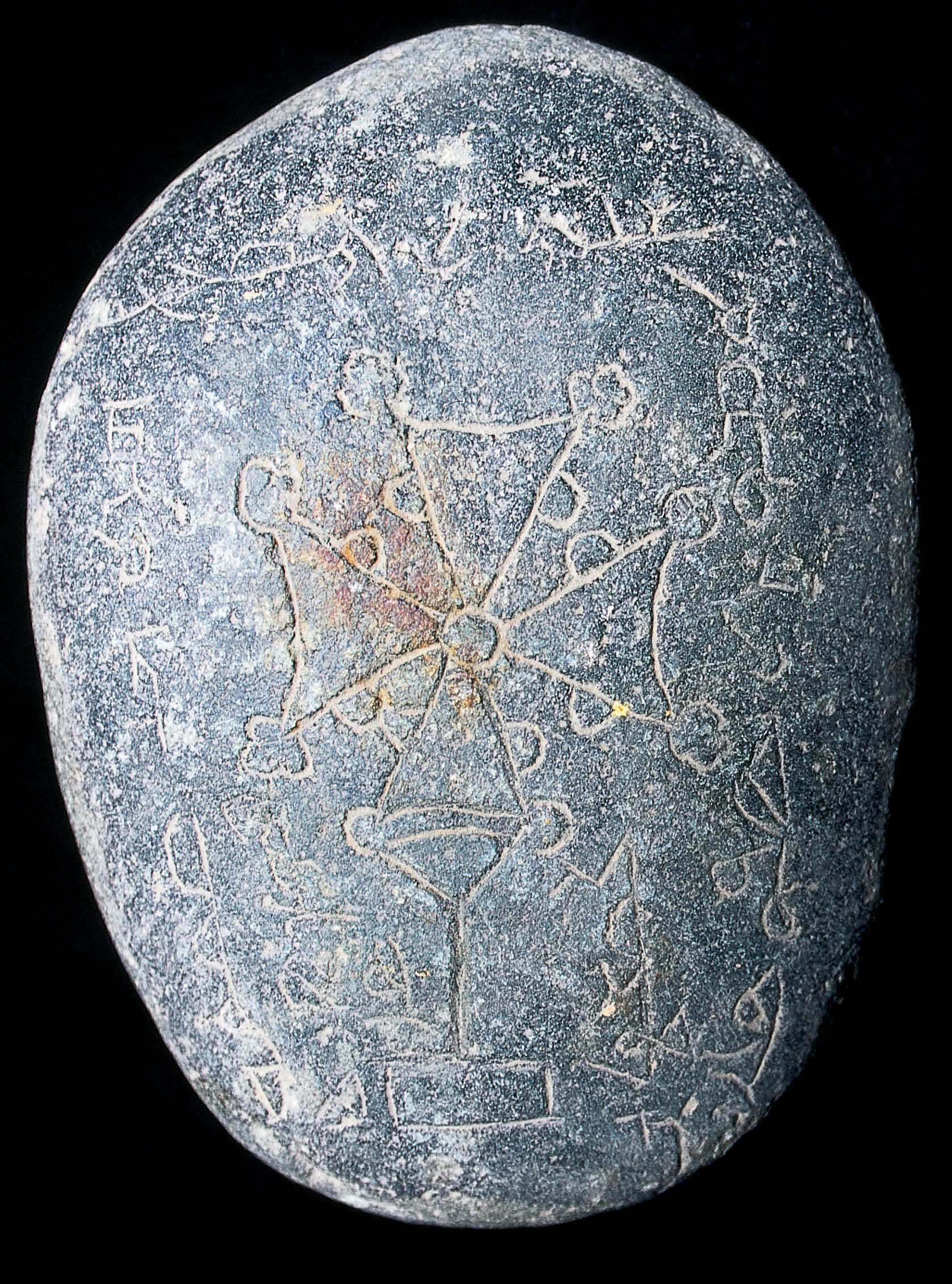
A copper amulet, measuring 5x5 cm, from the Ordos, Inner Mongolia. The amulet is typical of the religious syncretism of the thirteenth/ fourteenth centuries, as it combines symbols from two religions: the Christian cross and the Buddhist swastika. However, since many of these so-called Ordos-crosses were bought in the antique market, they lack stratigraphic context and their provenance remains doubtful. Furthermore, similar looking copper seals have appeared in the art dealers’ market which allegedly stem from Afghanistan and are tentatively attributed to the Bactriana-Margiana Archaeological Complax dating 2300/200-1500 BCE. 53a
一件铜护身符,尺寸为5×5厘米,出自内蒙古 (Inner Mongolia) 鄂尔多斯 (Ordos)。该护身符是十三/十四世纪宗教融合的典型代表,因为它结合了两种宗教的符号:基督教十字架和佛教卍字符。然而,由于许多这类所谓的鄂尔多斯十字架 (Ordos-crosses) 购自古董市场,它们缺乏地层背景,其来源仍然存疑。此外,外观相似的铜印已出现在艺术品经销商市场上,据称来自阿富汗 (Afghanistan),并被暂时归入巴克特里亚-马尔吉阿纳考古综合体 (Bactriana-Margiana Archaeological Complax),年代为公元前2300/200—1500年 (2300/200-1500 BCE)。53a
1254: ‘We Mongols believe that there is only one God [the sky god Tengri], in whom we live and die, and to him we direct our whole hearts. But, as God gave the hand several fingers, so he gave human beings several ways to achieve blessed- ness.’6 Möngke’s call for tolerance was also based on the fact that the claim to absoluteness is alien to a folk religion tied to a certain people, while it is the basis for universal religions.
1254年:“我们蒙古人相信只有一位神 [天空之神腾格里 (Tengri)],我们在他之中生活、死亡,并全心全意归向他。但是,正如神给了手几根手指,他也给了人类几种获得福乐的方式。”6 蒙哥 (Möngke) 对宽容的呼吁也基于这一事实:绝对性诉求对于与某一特定民族相联系的民间宗教来说是陌生的,而它却是普世宗教的基础。
But the religious tolerance of Mongol Tengrism ended where the claim to absolutness of mono- theistic religions led to the disparagement of other religions. First, before the start of a great religious disputation, which took place in 1254 in his presence among shamanists, Buddhists, Muslims, Nestorians and Rubruk, Great Khan Möngke had the following rule proclaimed: ‘He [Möngke] orders that, under pain of death, no one shall dare to use quarrelsome or injurious words against the other party.’7 Second, the tolerant spirit of shamanism rejected the accusations that its belief in the spirits was a reprehensible superstition. Thus, in the long term Buddhism, whose popular form showed aspects of polytheism and which had no problem adopting foreign deities into its pantheon, stood closer to the nomadic Mongols than did monotheistic faiths such as Christianity and Islam with their claims to absolutness. On the other hand, over time many of the settled Turkic peoples bowed to the absolute claims of the teachings of Mohammed, which also spread with the help of the sword, and were Islamicized. The lack today of Christian architectural evidence within the geographical area of the Turko-Mongol peoples is explained by the fact that the nomads had mobile tent churches, while the churches of the settled Christians were destroyed by the subsequent Muslim rulers. customs. The ancient Mongol belief in the omnipotent sky god Tengri paved the way for the monotheistic idea of belief in the one God. On the other hand, Christian symbols mutated into protective amulets that were also worn by non-Christians. The best-known examples are the more than 1000 so-called Ordos-crosses that were found in the region of the Öngüt Mongols in the Chinese provinces of Ningxia and Inner Mongolia. About two-thirds of these small metal amulets are really cruciform, but the others are either decorated with other symbols such as swastikas or represent geometric patterns and birds.8
蒙古腾格里(Tengri)信仰的宗教宽容,一旦一神教宣称自身绝对真理并贬低其他宗教,便会止步。首先,1254年,一场在蒙哥大汗(Möngke)面前举行的大型宗教辩论即将开始,参与者有萨满教徒、佛教徒、穆斯林、聂斯托利派信徒和鲁布鲁克(Rubruk);蒙哥下令宣告:“他[蒙哥]命令任何人都不得以死亡为代价,胆敢对另一方说争吵或伤害性的话。”7 其次,萨满教宽容的精神拒绝接受一种指控:相信灵体是应受谴责的迷信。因此,从长远看,佛教的通俗形态带有多神教色彩,也不排斥把外来神祇纳入其神祇体系;它比基督教和伊斯兰教这类主张绝对真理的一神教更接近游牧蒙古人。另一方面,随着时间推移,许多定居的突厥民族屈从于穆罕默德教义的绝对要求;该教义也借助武力传播,于是他们被伊斯兰化。如今,在突厥—蒙古民族的地理区域内缺少基督教建筑遗存,这可以解释为:游牧民族使用可移动的帐篷教堂,而定居基督徒的教堂则被后来的穆斯林统治者摧毁。风俗。古蒙古人相信全能的天神腾格里(Tengri),这为一神论的独一上帝观念铺平了道路。另一方面,基督教象征物也演变成护身符,非基督徒同样佩戴。最著名的例子是所谓鄂尔多斯十字架,发现于中国宁夏和内蒙古两省的汪古蒙古人地区,数量超过1,000件。这些小型金属护身符中约2/3确实呈十字形,其余则饰有卍字符等其他符号,或呈几何图案及鸟形。8
In the case of Christian-Mongolian syncretism, the question arose of how many liturgical compromises could be granted without betraying or at least seriously diluting the essence of the Christian spirit. While belief in the efficacy of amulets was relatively harmless and widespread even within Christian praxis, the matter of lavish burial rituals was more contentious. The 676 synod of Patriarch Giwargis I (in office 661–680) had already condemned the addition of heathen burial rituals to Christian funerals. ‘Christian dead shall be buried in the Christian
就基督教-蒙古混合主义而言,问题随之出现:可以在不背叛、或至少不严重削弱基督教精神本质的情况下,允许多少礼仪上的妥协。尽管对护身符功效的信仰相对无害,甚至在基督教实践中也广泛存在,但奢华的丧葬仪式问题则更具争议。宗主教吉瓦尔吉斯一世 (Giwargis I,在任 661–680 年) 的 676 年主教会议已经谴责了在基督教葬礼中增添异教丧葬仪式的做法。“基督徒亡者应安葬在基督徒的……”
Because of the tolerance of the Turko- Mongolian peoples and the flexibility of the Nestorian missionaries, these peoples could accept Christianity without abandoning their
由于突厥-蒙古诸民族 (Turko-Mongolian peoples) 的宽容以及聂斯托利派传教士 (Nestorian missionaries) 的灵活变通,这些民族能够接受基督教而不放弃他们的
bishop only once every few years or once a decade, it is not surprising that some Turko- Mongol Christians were more closely oriented to their old customs, and Christian doctrine was reduced to a vague concept of the afterlife. not the heathen manner. For it is a heathen custom to shroud the dead in choice, luxurious garments.’9 Nonetheless, Rubruk observed among the Mongols burials that could no longer be reconciled with Christianity. ‘In the case of one who had recently died, I saw that they had hung around the grave, between tall poles, 16 horsehides, four towards each direction of the compass. They also provided mare’s milk to drink and meat to eat, and they declared that he had been baptized.’10 Although the Church of the East used natives to fulfil the functions only of priests and deacons, and bishops came from Mesopotamia or Iran and were correspondingly educated, the enormous distances hindered the maintenance of orthodox rituals. Since individual nomadic tribes were visited by their
主教仅每隔几年或每十年才来一次,因此一些突厥-蒙古基督徒更倾向于他们旧有的习俗,基督教教义被简化为一种模糊的来世概念,这并不令人惊讶。而非异教方式。因为用精美、奢华的衣物裹尸是异教习俗。’9 尽管如此,鲁布鲁克 (Rubruk) 在蒙古人中间观察到一些已无法与基督教相调和的葬礼。‘对于一位刚去世的人,我看到他们在坟墓周围、在高杆之间悬挂了16张马皮,每个罗盘方向各四张。他们还提供马奶供饮用,提供肉供食用,并宣称他已受洗。’10 尽管东方教会 (Ch. of E.) 仅让当地人担任司铎和执事,而主教则来自美索不达米亚 (Mesopotamia) 或伊朗 (Iran),并相应地受过教育,但巨大的距离阻碍了正统仪式的维持。由于各个游牧部落只能由其
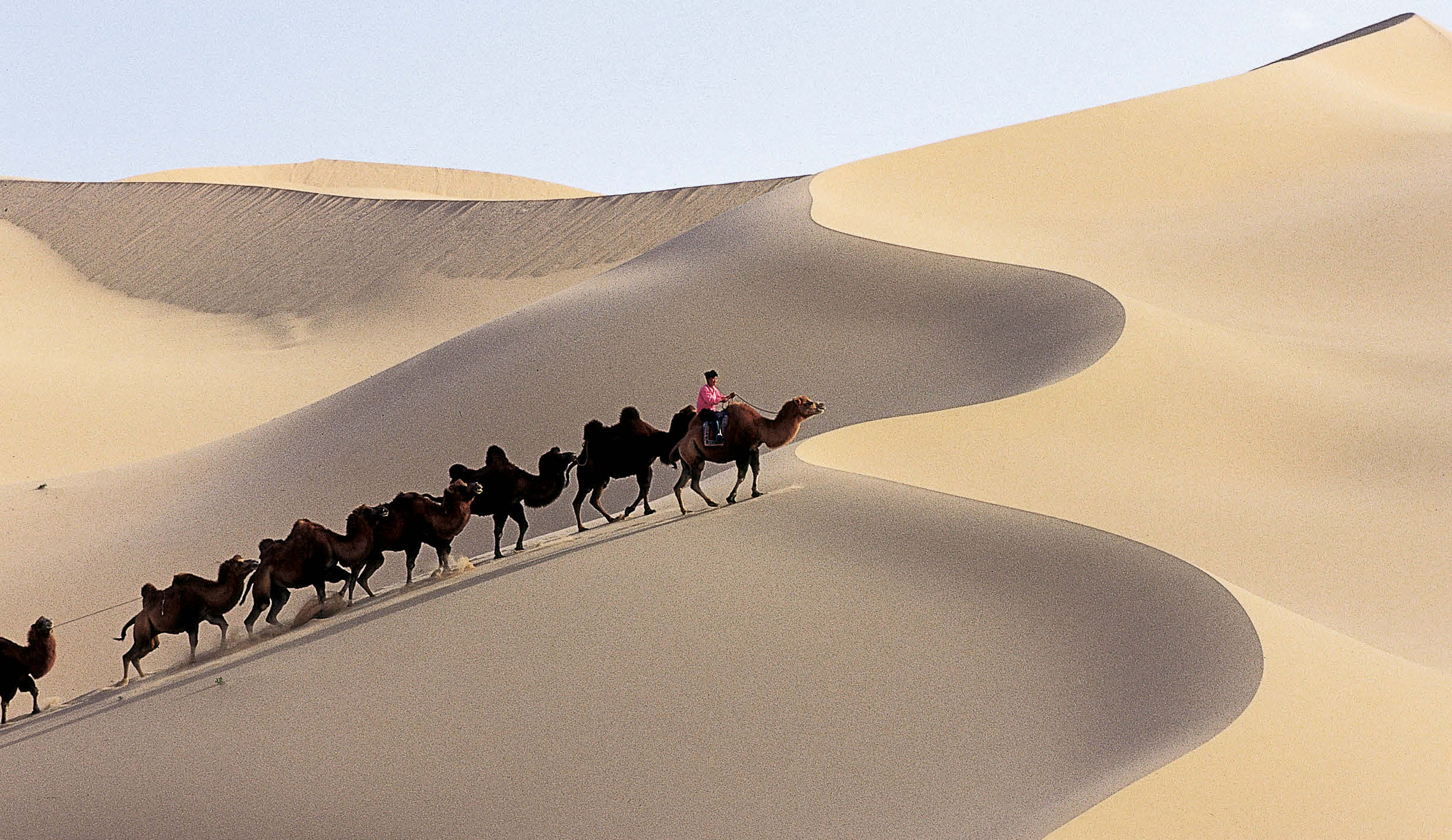
Camel caravan in the desert of Khongorin Els, southern Gobi, Mongolia. This desert formed the southern border of the Kerait, the majority of whom were Nestorian.
骆驼商队行进在蒙古戈壁南部洪戈林埃尔斯 (Khongorin Els) 的沙漠中。这片沙漠构成了克烈 (Kerait) 的南部边界,克烈人大多信奉聂斯托利派 (Nestorian)。
Nestorian Turkic
聂斯托利派突厥语 (Nestorian Turkic)
and Mongol peoples
以及蒙古诸民族
The Kerait
克烈部 (Kerait)
The Kerait, who, according to Bar Hebraeus converted around 1007, and became under the leadership of Toghril Khan (r. with interruptions 1165/71–1203) in the late twelfth century the most powerful Mongol people, remained Nestorians,
克烈部 (Kerait) 根据巴尔·希伯来 (Bar Hebraeus) 的说法,约于1007年皈依,并在脱斡邻勒汗 (Toghril Khan)(在位 (r.),有间断,1165/71–1203年)的领导下,于12世纪后期成为最强大的蒙古部族,他们仍信奉聂斯托利派 (Nestorians),
at least among the nobility. A few rulers, who called themselves Gur Khan, ‘Universal Khan’, adopted Christian names. Thus Toghril’s grandfather was called Marghuz – that is, Mark. At that time Marghuz fought the Tatar people and the northern Chinese empire of the Jin (1115–1234), a people of Manchurian ancestry, for rule over eastern Mongolia. Marghuz fell into the hands of the Tatars, who handed him over to the emperor of the Jin. The emperor mocked the Christian king in an especially cruel fashion, having him nailed with long nails to a wooden donkey – a contemptuous allusion to Palm Sunday.11 Marghuz’s grandson Toghril later avenged his ancestor when, together with his protégé and ally Genghis Khan (whose father Jesügei had also been poisoned by the Tatars in 1176) he destroyed the Tatars in three battles between 1196 and 1202. The nobles were massacred and the common people sold into slavery.12 Khan Marghuz’s son, Toghril’s father, also bore a Christian name, Cyriacus († c. 1165/71), Qurjaquz in Mongolian.13 When Qurjaquz died, Toghril rebelled against his uncle, murdered all his brothers and, thanks to his blood brotherhood with Jesügei, Genghis Khan’s father, established himself as ruler of the Kerait. of his tribe. Thanks to Toghril’s military aid, Temüjin prevailed, after which, in 1185 or 1189, a few Mongol tribes declared him khan.15 When the Naiman people, who were also Nestorian and who lived to the west of the Kerait, drove out Toghril Khan, Genghis Khan showed his gratitude. He conquered the Naiman and in 1196 helped Toghril to regain the throne. Now Toghril Khan was again the most powerful Mongol prince and could hope, with Genghis Khan’s support, to become the acknowledged ruler of all the Mongol peoples. Thus developed the vision of unifying the Turko-Mongol peoples, of whom at least seven were more or less Nestorian, into a Nestorian empire under the leadership of a Christian ruler.16 Since some 30 to 40 per cent of the Turko-Mongols living between Lake Balchasch in eastern Kazakhstan and Manchuria were Nestorian, this idea was entirely conceivable.
至少在贵族阶层中如此。一些自称“古儿汗”(Gur Khan,意为“普世之汗”)的统治者采用了基督教名字。例如,脱斡邻(Toghril)的祖父名叫马尔古兹(Marghuz),也就是马可(Mark)。当时,马尔古兹为争夺东蒙古的统治权,与鞑靼人(Tatars)以及中国北方的金朝(Jin,1115—1234年)交战;金朝人具有满洲(Manchuria)血统。马尔古兹落入鞑靼人(Tatars)手中,鞑靼人又把他交给金朝皇帝。皇帝以极其残酷的方式嘲弄这位基督教国王:用长钉把他钉在木驴上,以此恶意影射棕枝主日(Palm Sunday)。11 马尔古兹之孙脱斡邻后来为祖父报仇;他与自己的保护人兼盟友成吉思汗(Genghis Khan)一同,在1196年至1202年间的3场战役中击败鞑靼人。成吉思汗之父也曾于1176年被鞑靼人毒死。贵族遭到屠杀,平民则被卖为奴隶。12 马尔古兹之子、脱斡邻之父也有一个基督教名字:居里亚库斯(Cyriacus;约1165/71年卒),蒙古语称忽儿札忽思(Qurjaquz)。13 忽儿札忽思去世后,脱斡邻反叛其叔父,杀死所有兄弟,并凭借与成吉思汗之父也速该(Jesügei)的安答(结拜兄弟)关系,确立了自己作为克烈部(Kerait)统治者的地位。其部族的统治者。由于脱斡邻的军事援助,铁木真(Temüjin)得以获胜;此后,1185年或1189年,几个蒙古部落拥立他为汗。15 当时,居住在克烈部以西、同样信奉聂斯托利派的乃蛮人(Naiman)驱逐了脱斡邻汗,成吉思汗便以征服乃蛮(Naiman)来报答他。他于1196年帮助脱斡邻复位。此时,脱斡邻汗再次成为最强大的蒙古王公,并有望在成吉思汗支持下成为所有蒙古人的公认统治者。由此形成了一个设想:将突厥—蒙古诸部统一起来——其中至少有7个部族或多或少信奉聂斯托利派——建立一个由基督教统治者领导的聂斯托利派帝国。16 鉴于生活在哈萨克斯坦(Kazakhstan)东部巴尔喀什湖(Lake Balchasch)至满洲(Manchuria)之间的突厥—蒙古人中约有30%至40%信奉聂斯托利派,这一设想并非全无可能。
The great spread of Christianity among the Turko-Mongol peoples, who lived so far from Baghdad, bears witness to the indomitable and also systematic missionary spirit of the Church of the East. The missionaries, skilled in foreign languages, had not only to convert new believers but also to reinforce Christians in their faith. In this regard the Syriac liturgical language served as the mortar necessary to maintain the unity of the faith community. However, the status of Christianity remained weak, since it did not control a homogeneous region and since the Christian faith remained syncretistic with numerous shamanist beliefs.
基督教在突厥-蒙古诸民族 (Turko-Mongol peoples) 中的广泛传播——这些民族居住在远离巴格达 (Baghdad) 的地方——见证了东方教会 (Ch. of E.) 不屈不挠且系统化的传教精神。传教士们精通外语,不仅要使新信徒皈依,还要坚固基督徒的信仰。在这方面,作为礼仪语言的叙利亚语 (Syriac) 充当了维系信仰团体统一所必需的黏合剂。然而,基督教仍处于弱势地位,因为它并未控制一个同质的地区,而且基督教信仰仍与众多萨满教信仰相混杂。
It is not widely known that the eventual world conqueror Genghis Khan (c.1167–1227), whose personal name was Temüjin, was for a long time a vassal of the Nestorian Gur Khan Toghril.14 After the Tatars poisoned Temüjin’s father Jesügei and his followers deserted him and his mother, he placed himself under the protection of his father’s former ally, Toghril Khan. At that time the prince’s camp was located south-east of the present capital, Ulan Bator, where magnifi- cently dressed Nestorian priests read the Mass in a tent chapel and on special occasions censed and blessed the Gur Khan in this chapel. Toghril renewed with Temüjin the mutual assistance pact he had concluded with his father and promised to help him win back his position as the chief
鲜为人知的是,最终成为世界征服者的成吉思汗 (Genghis Khan)(约1167—1227年),其本名为铁木真 (Temüjin),曾长期是聂斯托利派的古儿汗脱斡邻勒 (Nestorian Gur Khan Toghril) 的附庸。14 塔塔儿人 (Tatars) 毒死铁木真的父亲也速该 (Jesügei),其部众又抛弃了他和他的母亲之后,他投靠了父亲从前的盟友脱斡邻勒汗 (Toghril Khan),寻求庇护。当时,这位王子的营地位于今首都乌兰巴托 (Ulan Bator) 东南,在那里,衣着华丽的聂斯托利派教士在帐篷礼拜堂中举行弥撒,并在特殊场合于该礼拜堂中为古儿汗 (Gur Khan) 焚香和祝福。脱斡邻勒与铁木真重申了他与其父缔结的互助盟约,并承诺帮助他夺回作为首领的地位
That the powerful Toghril Khan provided one of the background figures for the myth of Prester John, the mysterious Christian ruler in the Far East, is revealed by the travel report of Marco Polo, in which he equates the Kerait prince with the presbyter John.17 But Mongolia was too small for the two khans, and in 1203/1204 Genghis Khan overthrew his one-time patron Toghril Khan – the fleeing Toghril was killed by a Naiman.
强大的脱斡邻勒汗 (Toghril Khan) 为远东 (Far East) 那位神秘的基督教统治者祭司王约翰 (Prester John) 的传说提供了其中一位背景人物,这一点由马可·波罗 (Marco Polo) 的旅行报告所揭示;在报告中,他将克烈部王子 (Kerait prince) 与长老约翰 (presbyter John) 等同起来。17 但蒙古 (Mongolia) 对两位可汗来说太小了,1203/1204年,成吉思汗 (Genghis Khan) 推翻了他昔日的保护人脱斡邻勒汗 (Toghril Khan)——逃亡中的脱斡邻勒 (Toghril) 被一个乃蛮人 (Naiman) 杀死。
The Oirat, Merkit and Manchurians
卫拉特人 (Oirat)、蔑儿乞人 (Merkit) 和满洲人 (Manchurians)
Two years later, in 1206, at an assembly held on the River Onon in eastern Mongolia, Genghis Khan had himself declared Kha Khan, Ruler of all Rulers. Now Genghis Khan dismantled the structures of the traditional tribal relations by dividing the people according to the decimal system into groups of one thousand, made up of members of different tribes and peoples, and assigned their leadership to deserving officers. Thus did Genghis Khan unify the approximately two dozen Turko-Mongol tribes, who numbered about one to 1.5 million people, into the Mongol nation, under the leadership of a military aristo- cracy. By assigning to each group of one thousand and its higher grouping of ten thousand a specific area in which to live, he limited the mobility of the nomads and transformed their innate tendency to move from place to place into an invincible military machine.18 The adherence to a religion, however, which earlier was closely bound up with tribal membership, became in this way a private matter.
两年后,即1206年,在蒙古东部斡难河 (Onon River) 畔举行的一次大会上,成吉思汗 (Genghis Khan) 自立为大汗 (Kha Khan),即众王之王。此时,成吉思汗瓦解了传统部落关系的结构:他按十进制制度将民众划分为由不同部落和族群成员组成的千人组,并将这些群体的领导权授予有功的军官。成吉思汗就这样将大约二十多个突厥-蒙古部落 (Turko-Mongol tribes) 统一为蒙古民族 (Mongol nation),这些部落人口约在100万至150万之间,处于军事贵族阶层的领导之下。通过为每个千人组及其上一级的万人组指定特定的居住区域,他限制了游牧民的流动性,并将其天生逐地迁徙的倾向转变为一部不可战胜的军事机器。18 然而,对宗教的归属此前与部落成员身份紧密相连,由此却变成了一件私人的事情。
To the north of the Keraits lived two additional peoples, among whom Nestorian Christianity was once present. One of these peoples was the Oirat, whose homeland lay south-west of Lake Baikal, who submitted to Genghis Khan in 1208. Two centuries later, with the aid of the Chinese, the Oirats conquered Mongolia in 1434 and broke the hold of Genghis Khan’s descendants on Mongolia.20 The other people was the strongly turkicized Mongol people called the Merkit, who made their home south-east of Lake Baikal. The destiny of Genghis Khan was closely bound up with them, since Temüjin’s mother was a Merkit who had been abducted from a Merkit leader by Jesügei. As revenge, Merkit later abducted Temüjin’s first bride, Börte, whom he was able to win back with the help of Toghril. From then on Genghis Khan considered the Merkit, like the Tatars, to be his arch-enemies. In 1204/1205 he twice defeated the Merkit, who had allied themselves with the likewise Nestorian Naiman, and conquered their fortress Taikal, which lay to the south of the modern city of Ulan Ude. He gave the wife of the Merkit khan’s son, Töregene, to his third-eldest son Ögödei as a wife, who later gave birth to the future Great Khan Güyük. But Güyük was no Christian as two Nestorian messengers had erroneously reported to King Louis IX of France (see p. 213). As the Franciscan John of Plano Carpini (1182–1252), who met Güyük in the autumn of 1246 at Karakorum, reported, the Great Khan was surrounded by Nestorians; a Nestorian tent chapel stood before his yurt.21 In 1205 the majority of the Merkit submitted. A minority, however, moved to the west into the region north of Lake Balchasch in modern Kazakhstan, where Genghis Khan’s most experienced field commander, Sübütai, annihilated them in 1216.22
在克烈部 (Keraits) 以北,还居住着另外两个民族,他们中间曾存在聂斯托利派基督教 (Nestorian Christianity)。其中一个民族是卫拉特人 (Oirat),其故土位于贝加尔湖 (Lake Baikal) 西南,他们于1208年臣服于成吉思汗 (Genghis Khan)。两个世纪后,卫拉特人在中国人的帮助下于1434年征服蒙古 (Mongolia),并打破了成吉思汗 (Genghis Khan) 后裔对蒙古的控制。20 另一个民族是高度突厥化的蒙古人,称为蔑儿乞人 (Merkit),他们居住在贝加尔湖 (Lake Baikal) 东南。成吉思汗 (Genghis Khan) 的命运与他们紧密相连,因为铁木真 (Temüjin) 的母亲就是一名蔑儿乞人 (Merkit),她曾被也速该 (Jesügei) 从一位蔑儿乞首领那里抢来。作为报复,蔑儿乞人后来劫走了铁木真 (Temüjin) 的第一位新娘孛儿帖 (Börte),他后来在脱斡邻勒 (Toghril) 的帮助下夺回了她。从那时起,成吉思汗 (Genghis Khan) 就像对待塔塔儿人 (Tatars) 一样,将蔑儿乞人 (Merkit) 视为自己的死敌。1204/1205年,他两次击败了与同样信奉聂斯托利派基督教的乃蛮人 (Naiman) 结盟的蔑儿乞人 (Merkit),并攻占了他们的泰卡尔堡 (Taikal),该堡位于现代城市乌兰乌德 (Ulan Ude) 以南。他将蔑儿乞可汗之子的妻子脱列哥那 (Töregene) 赐给其三子窝阔台 (Ögödei) 为妻,她后来生下了未来的大汗贵由 (Güyük)。但贵由 (Güyük) 并非基督徒,而两名聂斯托利派使者却曾错误地向法国国王路易九世 (King Louis IX of France) 报告说他是基督徒(见第213页)。据方济各会士普兰诺·卡尔皮尼的约翰 (John of Plano Carpini, 1182–1252) 所述,他于1246年秋在哈拉和林 (Karakorum) 见到了贵由 (Güyük),这位大汗身边环绕着聂斯托利派信徒;他的毡帐前立着一座聂斯托利派的帐篷小教堂。21 1205年,大多数蔑儿乞人 (Merkit) 臣服。然而,少数人向西迁入今哈萨克斯坦 (Kazakhstan) 巴尔喀什湖 (Lake Balchasch) 以北地区,成吉思汗 (Genghis Khan) 最有经验的战地指挥官速不台 (Sübütai) 于1216年将他们歼灭。22
After his victory over the Kerait, Genghis Khan integrated them into his Mongol tribes. He took as his wife a Nestorian niece of Toghril, Ibaka- Beki, and married her younger sister Bektumish- Beki to his eldest son Jöchi and her youngest sister Sorqaqtani-Beki to his youngest son Tolui (†1232). Thanks to these marital alliances, Christianity gained entrance into the family of the world conqueror. The Nestorian Sorqaqtani (†1252) became the most influential Mongol princess, as she was the mother of the Mongol Great Khan Möngke (ruled 1251–1259), of the Great Khan and later emperor of China Kublai Khan (ruled 1260–1294) and of the Il-Khan of Iran, Hülägü (ruled 1256–1265). Following the death of Great Khan Güyük, she succeeded in mounting a palace coup by supplanting the line of the clan of Ögödei with that of Tolui, which she herself led, thus enabling the election of Möngke.19
在战胜克烈部 (Kerait) 之后,成吉思汗 (Genghis Khan) 将他们并入自己的蒙古诸部。他娶了脱斡邻勒 (Toghril) 的一位聂斯托利派 (Nestorian) 侄女伊巴卡-别吉 (Ibaka-Beki) 为妻,并将她的妹妹别克图米什-别吉 (Bektumish-Beki) 嫁给长子术赤 (Jöchi),将她的幼妹唆鲁禾帖尼-别吉 (Sorqaqtani-Beki) 嫁给幼子拖雷 (Tolui)(†1232)。由于这些联姻,基督教得以进入这位世界征服者的家族。聂斯托利派的唆鲁禾帖尼 (Sorqaqtani)(†1252)成为最具影响力的蒙古公主,因为她是蒙古大汗蒙哥 (Möngke)(1251–1259 年在位)、大汗及后来的中国皇帝忽必烈 (Kublai Khan)(1260–1294 年在位)以及伊朗伊儿汗旭烈兀 (Hülägü)(1256–1265 年在位)的母亲。大汗贵由 (Güyük) 去世后,她成功发动宫廷政变,以拖雷 (Tolui) 家族取代窝阔台 (Ögödei) 家族一系,而这场政变由她本人领导,从而使蒙哥 (Möngke) 得以当选。19
Far to the east of Lake Baikal lived a Tungus- Manchurian people, who were also Nestorian.
在贝加尔湖 (Lake Baikal) 以东很远的地方,居住着一个通古斯-满洲民族 (Tungus-Manchurian people),他们也信奉聂斯托利派 (Nestorian)。
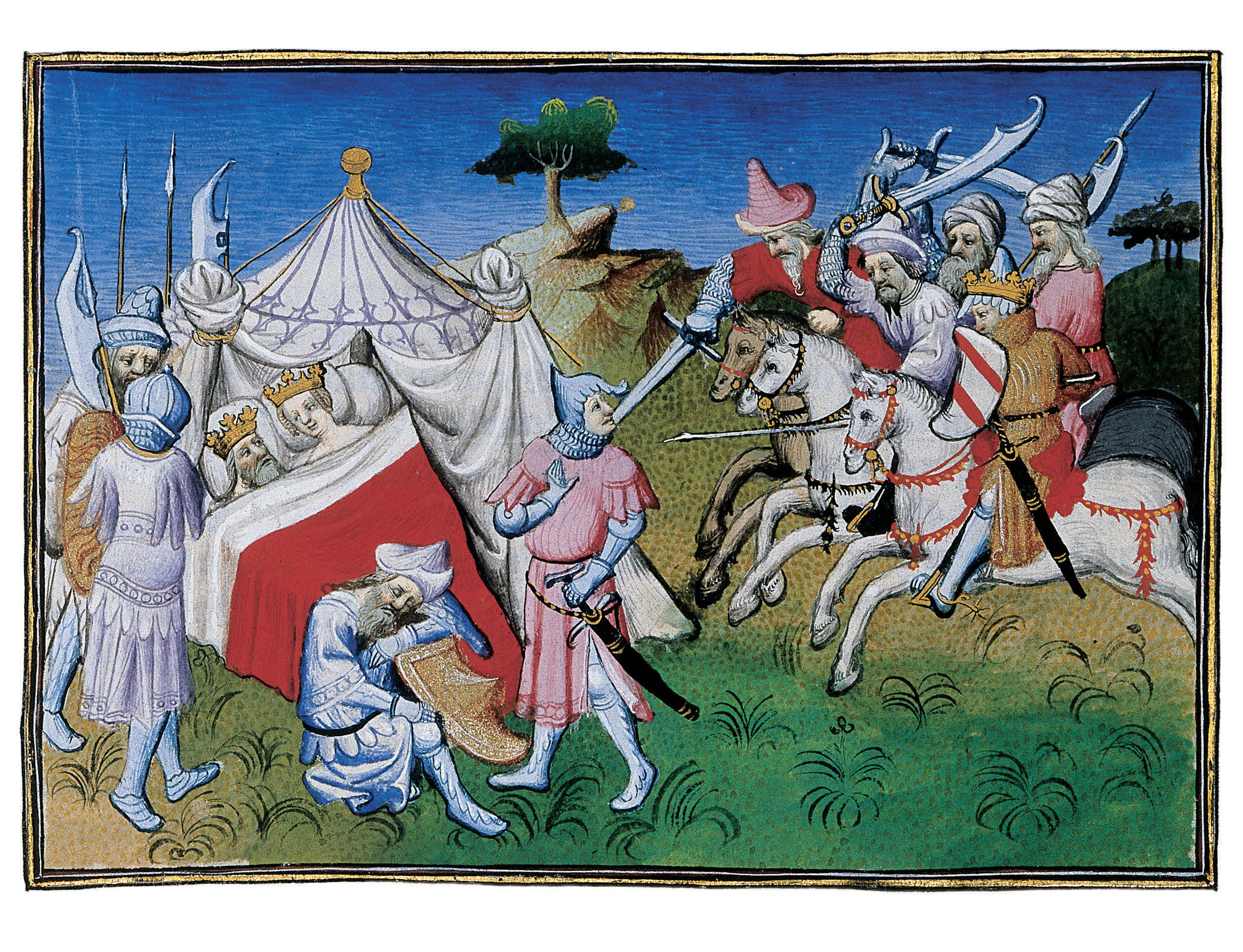
The Nestorian prince Nayan, who ruled over Manchuria and rebelled against Kublai Khan in 1287, is surprised in bed by the advancing army of Kublai Khan. (Illustrated manuscript of Marco Polo’s Book of the Wonders of the World from 1412. Bibliothèque Nationale de France, Paris. Ms. fr. 2810, fol. 34. RCC 18438.)
景教 (Nestorian) 王子乃颜 (Nayan) 统治满洲 (Manchuria),于1287年反叛忽必烈汗 (Kublai Khan),在床上遭忽必烈汗 (Kublai Khan) 推进中的军队突袭。(1412年马可·波罗 (Marco Polo)《世界奇迹之书》(Book of the Wonders of the World) 的插图抄本。法国国家图书馆 (Bibliothèque Nationale de France),巴黎 (Paris)。Ms. fr. 2810, fol. 34. RCC 18438.)
Marco Polo reported that its ruler, Prince Nayan, who was a distant cousin of Kublai Khan, rose up against his uncle, the emperor of China, in 1287. The Nestorian rebel appears to have been so powerful that the 72-year-old Kublai Khan personally set out for Manchuria, which he reached after twenty forced marches. Here he encountered the army of Prince Nayan, whose standard displayed the cross, for ‘Nayan was baptized and bore the cross on his banner. But that did not help him’, as Kublai Khan won victory, took Nayan prisoner, and had him executed.23 Many gravestones preserved in Manchuria testify to the presence of the
马可·波罗 (Marco Polo) 记载,其统治者乃颜王 (Prince Nayan) 是忽必烈汗 (Kublai Khan) 的远房堂兄弟,于1287年起兵反抗他的叔父——中国皇帝。这位景教 (Nestorian) 叛乱者似乎势力强大,以至于72岁的忽必烈汗 (Kublai Khan) 亲自出发前往满洲 (Manchuria),经过二十次强行军后抵达那里。在这里,他遭遇了乃颜王 (Prince Nayan) 的军队,其军旗上绘有十字架,因为“乃颜受过洗礼,并在他的旗帜上带有十字架。但这并没有帮到他”,忽必烈汗 (Kublai Khan) 获胜,俘虏了乃颜 (Nayan),并将其处死。23 满洲 (Manchuria) 保存下来的许多墓碑证明了……的存在
Church of the East in a region that lay more than 7000 kilometres, as the crow flies, from the patriarchal see.24
东方教会 (Ch. of E.) 位于一个距宗主教座直线距离超过7000公里的地区。24
Marco Polo continued: ‘After the defeat the Buddhists and Muslims couldn’t help but mock the Christians on account of the cross on Nayan’s standard: Just look how the cross of your God helped Nayan, a true servant of Christ! [When Kublai Khan learned of this] he sharply rebuked them: The cross properly did not help Nayan, since he was a nefarious traitor who rebelled against his ruler and deserved his fate. The cross of your God did good by not helping him oppose justice.’25 It speaks to the religious tolerance of the Mongols that Kublai Khan, who personally inclined towards Buddhism, did not bear a grudge against the Christians for this betrayal by a Christian vassal.
马可·波罗 (Marco Polo) 继续写道:“战败之后,佛教徒和穆斯林不禁拿乃颜 (Nayan) 军旗上的十字架来嘲笑基督徒:看看你们上帝的十字架是怎样帮助乃颜的,他可是基督 (Christ) 的真正仆人![忽必烈 (Kublai Khan) 得知此事后]严厉斥责他们:严格说来,十字架并没有帮助乃颜,因为他是一个邪恶的叛徒,反叛自己的君主,罪有应得。你们上帝的十字架没有帮助他对抗正义,这倒是做了好事。”25 忽必烈本人倾向佛教,却没有因一位基督徒附庸的背叛而对基督徒怀恨在心,这说明了蒙古人 (Mongols) 的宗教宽容。
Kublai Khan’s magnanimity is all the more surprising given that earlier one of the princes
忽必烈 (Kublai Khan) 的宽宏大量愈发令人惊讶,因为此前有一位王子
The Öngüt
汪古部 (Öngüt)
who was closely associated with the Nestorians had contested his right to the throne. The case concerned his younger brother Arikböge, another son of the Nestorian Sorqaqtani, who Rubruk implied was a Christian.26 Arikböge fought a four-year civil war with the help of a group of powerful Nestorians. Among these were the former imperial chancellor and finance minister of Möngke, Bulgai, as well as Möngke’s chief wife, Kutuktei, whose baptism Rubruk believed he had witnessed.27 When Arikböge surrendered in 1264, Kublai placed him under house arrest until his death in 1266, while he had Bulgai executed.28 Once again the Church of the East suffered the misfortune of being on the side of the loser in a political conflict.
此人与聂斯托利派 (Nestorians) 关系密切,曾争夺他的王位继承权。此事涉及他的弟弟阿里不哥 (Arikböge),即聂斯托利派的唆鲁禾帖尼 (Sorqaqtani) 的另一个儿子;鲁布鲁克 (Rubruk) 暗示他是一名基督徒。26 阿里不哥 (Arikböge) 在一批有权势的聂斯托利派信徒的帮助下,打了一场为期四年的内战。这些人中包括蒙哥 (Möngke) 的前任宰相兼财政大臣孛鲁合 (Bulgai),以及蒙哥 (Möngke) 的正妻忽都台 (Kutuktei);鲁布鲁克 (Rubruk) 认为他曾亲眼目睹她的洗礼。27 1264年阿里不哥 (Arikböge) 投降后,忽必烈 (Kublai) 将他软禁,直到他于1266年去世;同时,忽必烈处死了孛鲁合 (Bulgai)。28 东方教会 (Ch. of E.) 再次遭遇不幸,在政治冲突中站在了失败者一方。
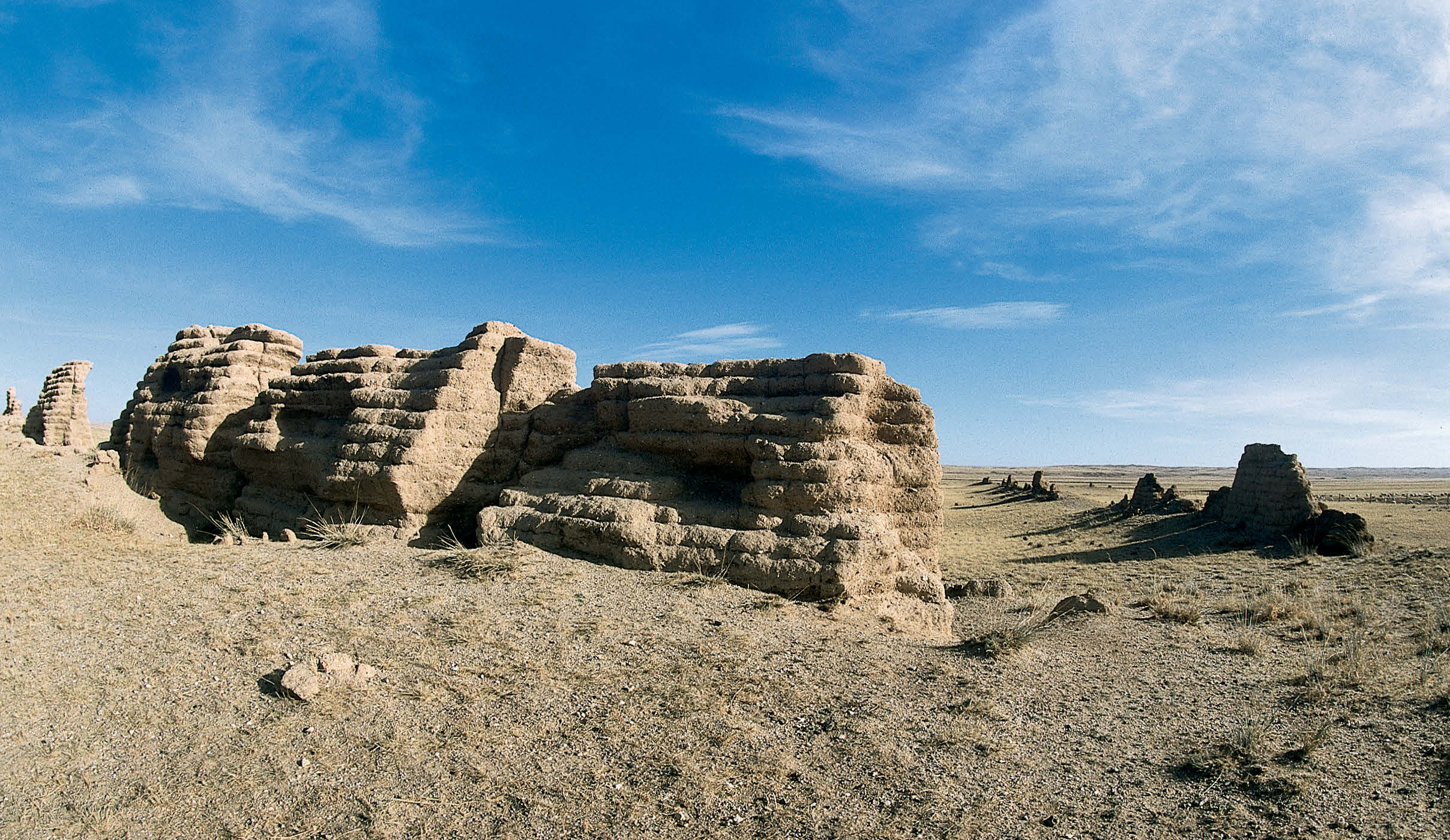
The city walls of Olon Sume-in Tor, Inner Mongolia, China. Olon Sume- in Tor was the capital of the majority Nestorian Öngüt, whose ruling family also belonged to the Church of the East. Since the king was also a bishop, he united secular and spiritual authority. In the 1930s and 1940s archaeologists found in the city many Nestorian gravestones, as well as the badly damaged ruins of a Nestorian church and of the Catholic Cathedral of Montecorvino, built in the Gothic style after 1295.54
中国内蒙古 (Inner Mongolia, China) 鄂伦苏木因托尔 (Olon Sume-in Tor) 的城墙。鄂伦苏木因托尔 (Olon Sume-in Tor) 是大多数信奉景教 (Nestorian) 的汪古部 (Öngüt) 的都城,其统治家族也属于东方教会 (Ch. of E.)。由于国王同时也是主教,他集世俗与宗教权力于一身。20世纪30年代和40年代,考古学家在该城发现了许多景教墓碑,以及一座景教教堂和孟高维诺 (Montecorvino) 天主教主教座堂 (Catholic Cathedral) 的严重损毁遗迹,后者建于1295年之后,为哥特式 (Gothic) 风格。54
With regard to the Turkic people of the Öngüt, the Church of the East stood on the side of the victors. The Öngüt, whose homeland lay on both sides of the great northern bow of the Yellow River in the eastern sections of the present provinces of Inner Mongolia and Ningxia and who were in large part Nestorian, positioned themselves from the very beginning on the side of Genghis Khan. Because they lived between the Great Wall of China and the eastern part of the Gobi Desert, they were of exceptional strategic importance for both the northern Chinese empire of the Jin and the emerging Mongol power, and for this reason the Jin had allied themselves with them as guardians of the Great
就汪古部 (Öngüt) 这一突厥民族而言,东方教会 (Ch. of E.) 站在胜利者一边。汪古部 (Öngüt) 的故土位于黄河 (Yellow River) 巨大北弯的两侧,即今内蒙古 (Inner Mongolia) 和宁夏 (Ningxia) 两省区的东部地带;他们中很大一部分是聂斯托利派 (Nestorian),从一开始就站在成吉思汗 (Genghis Khan) 一边。由于他们生活在中国长城 (Great Wall of China) 与戈壁沙漠 (Gobi Desert) 东部之间,他们对金朝 (Jin) 这个中国北方帝国和正在崛起的蒙古 (Mongol) 势力都具有极其重要的战略意义;也正因如此,金朝曾与他们结盟,让他们充当长城 (Great Wall) 的守卫者。
and married her young son Poyao Ho to his daughter Alakhai-Beki. After Poyao Ho’s death Alakhai ruled the land with an iron hand, and, as she herself was childless, she married two of her stepsons into the ruling Mongol families: Künbuka with Güyük’s eldest daughter and Aibuka with Kublai Khan’s youngest daughter, and Aibuka’s son Görgüz (George) first with Kublai Khan’s granddaughter and then with the daughter of the crown prince Timur (ruled 1294–1307). No one was bound so closely through marriage with the Mongol imperial house as was the Nestorian ruling family of the Öngüt.30 When the Nestorian monks Rabban Bar Sauma and his student Markos – the future patriarch Mar Yahallaha III (in office 1281–1317) – set off in 1278/1279 from their hermitage near Khan Baliq (Beijing) on a pilgrimage via the land route to Jerusalem, they travelled first to the Öngüt Empire, the homeland of the young Markos. Markos, born in 1245, was the son of the Nestorian archdeacon of the then northern capital of Kwashang (Olon Sume-in Tor), which lay about 130 kilometres north of Hohhot in Inner Mongolia.31 The travel report written in the early fourteenth century by a close friend of the future patriarch maintains: ‘When the people of the city and parents of Rabban Markos heard that these two monks had come, they welcomed them with gladness and delight and they escorted them with great honour to the church. And when the report of the arrival of the two monks reached the rulers Künbuka and Aibuka, they had them brought to their camp’, where they were given lavish gifts.32
……并将自己的女儿阿拉海别吉(Alakhai-Beki)嫁给她年幼的儿子博尧和(Poyao Ho)。博尧和去世后,阿拉海以铁腕统治这片土地。她自己没有子女,便安排两个继子与蒙古统治家族联姻:昆布哈(Künbuka)娶贵由(Güyük)的长女,阿依不花(Aibuka)娶忽必烈汗(Kublai Khan)的小女儿;阿依不花之子格尔格斯(Görgüz,即乔治〔George〕)先娶忽必烈的孙女,后来又娶皇太子铁穆耳(Timur,在位1294—1307年)的女儿。没有哪一家像汪古部(Öngüt)聂斯托利派统治家族那样,通过婚姻与蒙古皇室关系密切。30聂斯托利派修士拉班·巴尔·扫马(Rabban Bar Sauma)和他的学生马尔科思(Markos)——即未来的宗主教马尔·雅巴拉哈三世(Mar Yahallaha III,在位1281—1317年)——于1278/1279年从汗八里(Khan Baliq,今北京)附近的隐修所出发,沿陆路前往耶路撒冷朝圣。他们首先前往汪古部领地,也就是年轻的马尔科思的故乡。马尔科思生于1245年,是当时北都阔尚(Kwashang,今内蒙古呼和浩特以北约130公里的奥伦苏木〔Olon Sume-in Tor〕)聂斯托利派副主教(archdeacon)的儿子。31未来宗主教的一位密友在十四世纪初写下的旅行记述称:“城中居民和拉班·马尔科思的父母听说这两位修士来到,便欣喜欢迎,并以隆重礼仪陪他们前往教堂。昆布哈和阿依不花两位统治者听闻两位修士抵达后,便派人将他们请到营地”,并赠以厚礼。32
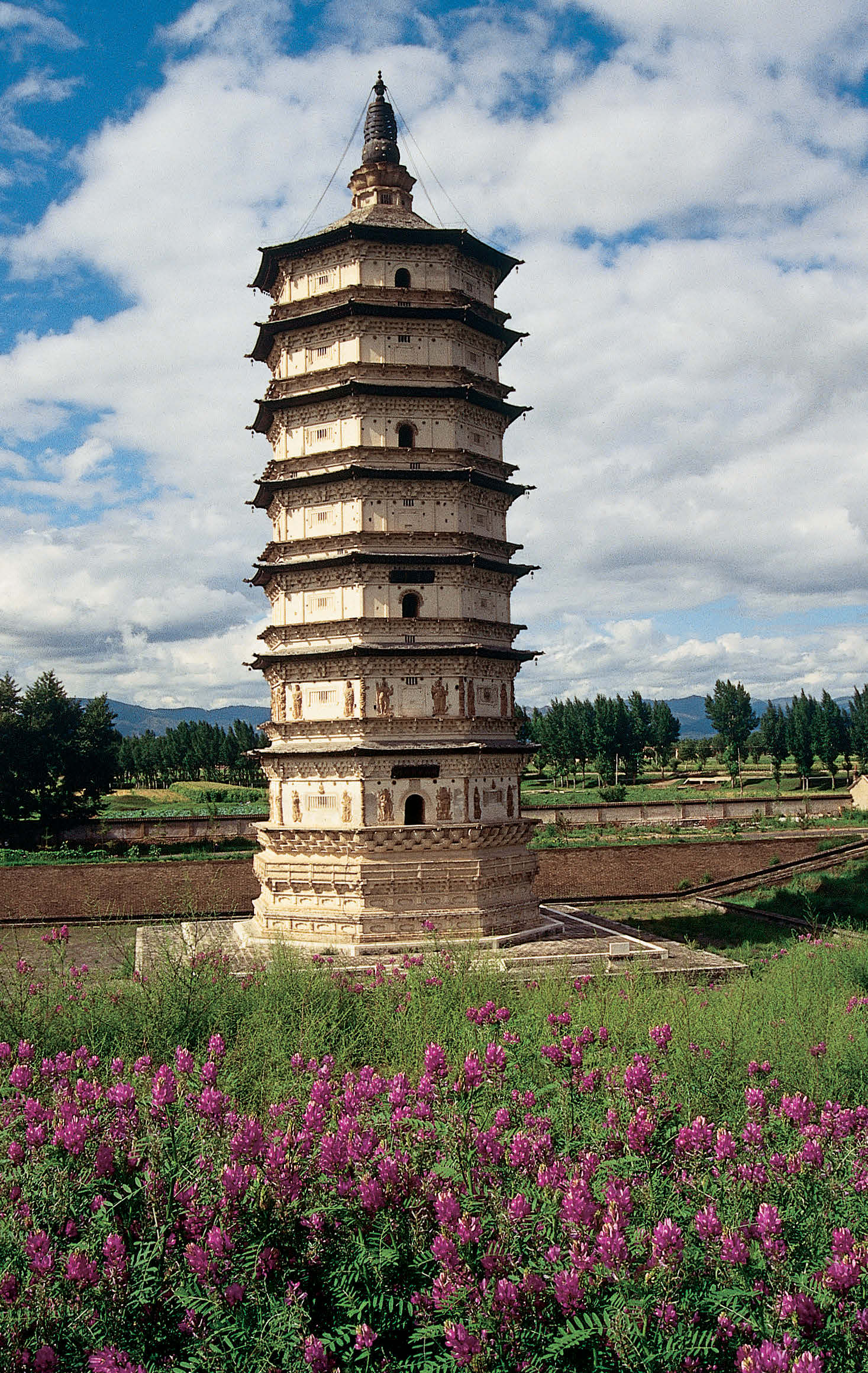
The Pagoda of the Complete Huayan Sutra, popularly known as Bei Ta, White Pagoda, built between 983 and 1031, near Hohhot, Inner Mongolia. In the thirteenth/fourteenth centuries, the town predecessing Hohhot belonged to the kingdom of the Öngüt and served at times as the winter residence of the Nestorian king. This accounts for the several Nestorian inscriptions from the Yuan Dynasty (1271–1368) found inside the Buddhist pagoda.55
万部华严经塔(The Pagoda of the Complete Huayan Sutra),俗称白塔(Bei Ta, White Pagoda),建于983年至1031年间,位于内蒙古(Inner Mongolia)呼和浩特(Hohhot)附近。在13至14世纪,呼和浩特的前身城镇属于汪古部(Öngüt)王国,有时作为景教国王(Nestorian king)的冬季驻地。这解释了为何在这座佛塔内部发现了若干元朝(Yuan Dynasty,1271–1368)景教(Nestorian)铭文。55
Wall. But when war broke out in 1204 between the Mongols of Genghis Khan and the equally powerful Naiman, and the prince of the Naiman asked the Öngüt to attack Genghis Khan from the rear, the Nestorian king Alaquch-tägin decided in favour of Genghis Khan and sent him an envoy named Yuhunan (John), who warned him of the Naiman attack. Alaquch-tägin paid for his changed allegiance with his life, as a few of his chieftains, who would have preferred an alliance with the Naiman, murdered him.29
[长城。]然而,1204 年,成吉思汗(Genghis Khan)的蒙古人与势力同样强大的乃蛮部发生战争,乃蛮王子请求汪古部(Öngüt)从后方袭击成吉思汗。聂斯托利派国王阿剌忽·帖吉因(Alaquch-tägin)于是决定支持成吉思汗,并派遣一名名叫尤哈南(Yuhunan,约翰)的使者前去警告他乃蛮人的袭击。阿剌忽·帖吉因因改变效忠对象而付出了生命代价:他的几名首领更愿与乃蛮结盟,遂将他杀害。29
Aibuka was followed on the Öngüt throne by his son Görgüz, who, as a loyal vassal of the Yuan emperors Kublai Khan and Timur, quelled numerous uprisings. In 1294 Timur granted him the title of prince, and in 1298 he was taken prisoner by the Chagataiid khan Du’a and executed. As prince of a compact, unconquered people, as military commander in a strategically
爱不花 (Aibuka) 之后,其子阔里吉思 (Görgüz) 继承汪古部 (Öngüt) 王位。作为元朝皇帝忽必烈 (Kublai Khan) 和铁穆耳 (Timur) 的忠诚藩臣,他平定了众多叛乱。1294年,铁穆耳 (Timur) 授予他王爵;1298年,他被察合台汗国可汗都哇 (Du’a) 俘虏并处死。作为一个团结一致、未被征服的民族的王,作为一位在战略上……的军事统帅,
Seven years later, in the summer of 1211, the Öngüt opened the door to China for the advancing Genghis Khan by allowing him to cross the Great Wall without opposition. Genghis Khan did not forget Alaquch-tägin’s help; he placed his widow on the Öngüt throne
七年后,即1211年夏天,汪古部 (Öngüt) 为正在推进的成吉思汗 (Genghis Khan) 打开了通往中国的大门,允许他未遇抵抗地越过长城 (Great Wall)。成吉思汗没有忘记阿剌兀思·特勤 (Alaquch-tägin) 的帮助;他将阿剌兀思·特勤的遗孀扶上了汪古部的王位。
Rome in 1288 about the existence of many Christians among the natives, the pope sent the Franciscan missionary and bishop John of Montecorvino (1247–1328) there around 1291. While the Franciscans Carpini and, to a lesser degree, Rubruk, who had visited the Mongol Empire earlier, were there primarily as diplomatic envoys and refrained from missionary activity, Montecorvino travelled for the sake of missionary work to Khan Baliq, which he reached in 1294.34 He was the first Catholic priest to visit China – exactly 659 years after the Nestorian Alopen. Thus began the tragic spectacle that lasted until the second half of the twentieth century: the Catholic Church advanced into regions with Nestorian Christian populations and there directed their missionary efforts primarily not towards the so-called heathens but rather towards the East Syrians. Instead of supporting the Church of the East that had been established there, the Catholic Church infiltrated the Christian communities by setting up parallel hierarchies based on the argument of universal papal authority. important buffer region between the capital Khan Baliq and the Mongolian heartland, and as son-in-law of two emperors, the Nestorian Görgüz was a powerful and politically influential individual. Marco Polo was also impressed by him: ‘King George is of the lineage of Prester John. It is the custom that these kings always obtain to wife either daughters of the Great Khan or other princesses of his family. The rulers are Christians, but there are also many Idolaters [Buddhists] and Mohammedans. King George is the sixth successor to Prester John.’ Marco Polo further describes how King George, together with one of Kublai’s sons, defeated the rebel Kaidu in a great battle.33 Of course, Marco Polo erred insofar as he traced George back to the Kerait prince Toghril, whom he equated with Prester John, since the two lines were not related to one another.
1288年,罗马(Rome)方面获悉当地居民中有许多基督徒,教宗遂于约1291年派方济各会传教士兼主教若望·孟高维诺(John of Montecorvino,1247—1328)前往当地。早先到访蒙古帝国(Mongol Empire)的方济各会士卡尔皮尼(Carpini),以及较少程度上的鲁布鲁克(Rubruk),主要是外交使节,并未从事传教活动;孟高维诺则为传教前往汗八里(Khan Baliq),于1294年抵达。34 他是第一位到访中国(China)的天主教司铎——恰好比聂斯托利派的阿罗本(Alopen)晚659年。由此开启了一段延续到二十世纪下半叶的悲剧:天主教会进入有聂斯托利派基督徒居住的地区,在那里开展传教时,主要对象并非所谓异教徒,而是东叙利亚人。天主教会没有支持当地已经建立的东方教会,反而以教宗普世权威为由,另立平行的教阶体系,渗入基督徒团体。作为首都汗八里与蒙古腹地之间重要的缓冲地区统治者,又是两位皇帝的女婿,聂斯托利派的葛尔吉斯(Görgüz)是一位权势显赫、政治影响力甚大的要人。马可·波罗(Marco Polo)也对他印象深刻:“乔治王出自祭司王约翰(Prester John)的世系。按惯例,这些国王总是娶大汗(Great Khan)的女儿或其家族中的其他公主为妻。统治者是基督徒,但也有许多拜偶像者[佛教徒]和穆罕默德教徒。乔治王是祭司王约翰的第六代继承人。”马可·波罗还记述乔治王如何与忽必烈(Kublai)的一名儿子联手,在一场大战中击败叛军海都(Kaidu)。33 当然,马可·波罗把乔治追溯到克烈部王子脱斡邻(Toghril),并将脱斡邻等同于祭司王约翰,这一点是错误的,因为两支世系彼此无关。
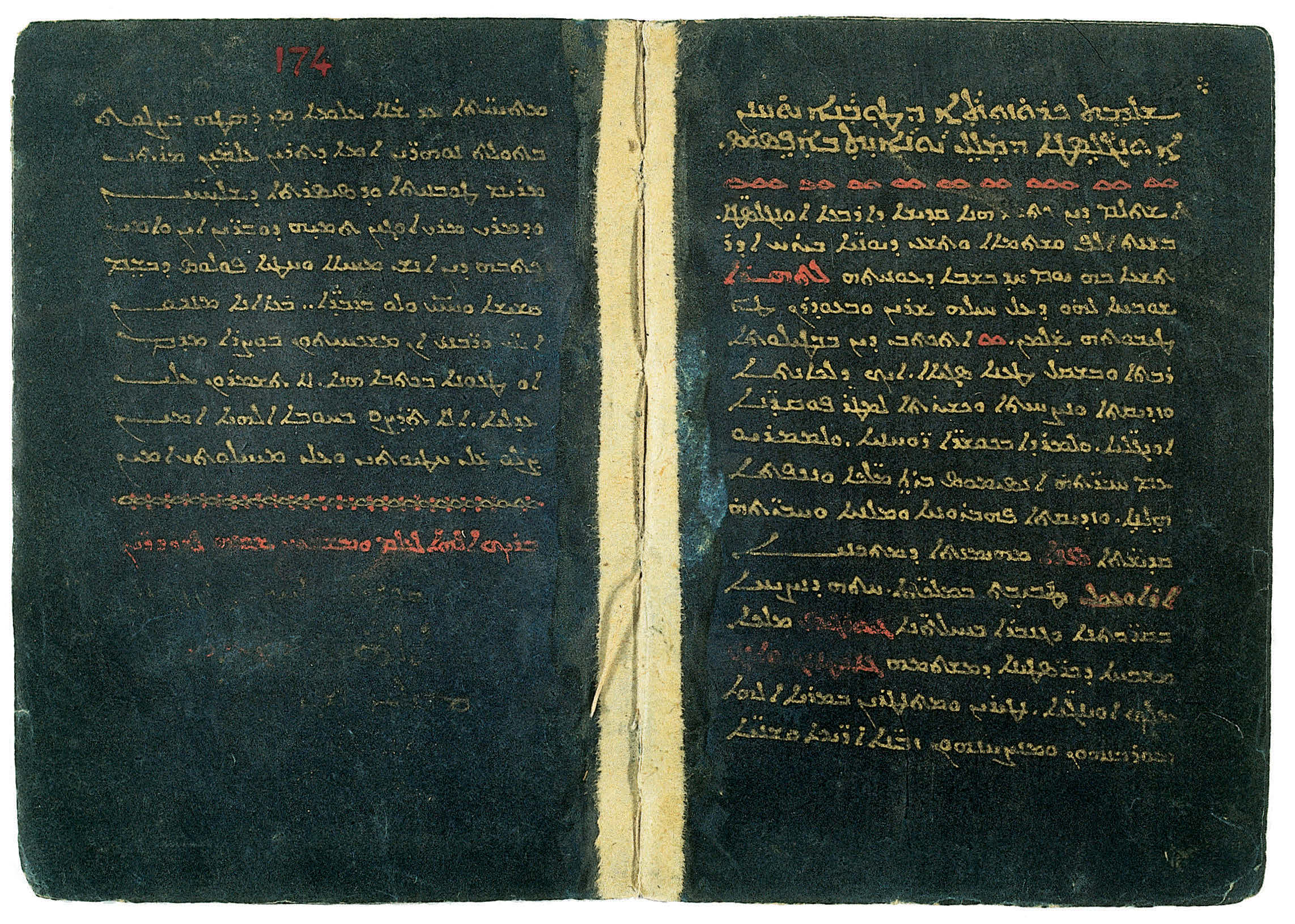
Colophon of a manuscript written in gold ink on blue-coloured paper. It belongs to an abbreviated Gospel book, based on the Peshitta, and is written in the Syriac language and Nestorian script. The colophon states that the book, measuring 18x13 centimetres and completed in March 1298, was written for ‘Sara, the believer, famous among the queens, sister of the illustrious among the warriors and hero among the combatants, George, the glorious king of the Christians, king of the Öngüt’. The book, written in Mesopotamia, never reached Queen Sara, and was kept until 1950 in the library of the Chaldean archdiocese of Amida (Diyarbakir) and since then in the Vatican Library. (Ms. Vat. Syr. 622, 173 v-174.) 56
一份以金墨书写在蓝色纸张上的手稿的题记 (colophon)。它属于一部以《别西大译本》(Peshitta) 为基础的简本福音书,以叙利亚语和聂斯托利字体 (Nestorian script) 写成。题记称,这部书尺寸为18×13厘米,完成于1298年3月,是为“信徒萨拉 (Sara),在众王后中闻名,是战士中的杰出者、斗士中的英雄、基督徒的荣耀之王、汪古部之王乔治 (George) 的姐妹”而写。这部书写于美索不达米亚 (Mesopotamia),但从未到达萨拉王后 (Queen Sara) 手中,1950年前一直保存在阿米达 (Amida) 的迦勒底总教区 (Chaldean archdiocese) 图书馆,此后则藏于梵蒂冈图书馆 (Vatican Library)。(Ms. Vat. Syr. 622, 173 v-174.) 56
The Church of the East got a foretaste of this when Montecorvino courted and soon ‘converted’ to Catholicism the then most powerful Nestorian in China, King George, and had a Catholic church constructed alongside the Nestorian church in Olon Sume. Thanks to George’s protection, he built another church in Beijing in 1299, and a third followed the next year. In a letter to the pope of 8 January 1305 he complained first about ‘the Nestorians, who are Christians in name only’ and who hindered him in his work. Then he boasted that he had baptized 6000 people, and for the school ‘I bought one after the other forty boys, the sons of pagans, and then baptized them’ – a missionary practice still used in the twenty-first century.35 Finally he emphasized the conversion of the Öngüt king: ‘Concerning the good King George, from the school of Nestorian Christians, he was converted by me to the truth
东方教会 (Ch. of E.) 对此已初尝其味:孟高维诺 (Montecorvino) 拉拢并很快使当时中国最有权势的景教徒 (Nestorian) 乔治王 (King George) ‘皈依’天主教,并让人在敖伦苏木 (Olon Sume) 的景教教堂旁修建了一座天主教堂。多亏乔治 (George) 的庇护,他于1299年在北京 (Beijing) 又建了一座教堂,次年又建了第三座。在1305年1月8日致教皇 (pope) 的一封信中,他首先抱怨‘那些景教徒,他们只是名义上的基督徒’,说他们妨碍他的工作。接着他夸口说,他已为6000人施洗,并且为了学校,‘我接连买了四十个男孩,都是异教徒的儿子,然后给他们施洗’——这种传教做法在二十一世纪仍在使用。35 最后,他强调了汪古部 (Öngüt) 国王的皈依:‘至于那位善良的乔治王 (King George),他出自景教基督徒学校,被我引归真理
It is an irony of history that the only concrete result of the European journey of Rabban Bar Sauma was the endangering of the position of the Church of the East in China! After Rabban Bar Sauma told Pope Nicolas IV in
历史的讽刺在于,拉班·扫马 (Rabban Bar Sauma) 欧洲之行的唯一具体结果,竟是危及东方教会 (Ch. of E.) 在中国的地位!在拉班·扫马 (Rabban Bar Sauma) 向教宗尼古拉四世 (Pope Nicolas IV) 讲述于
of the true Catholic faith. He brought over a great part of his people to the true Catholic faith and built a beautiful church. And this King George departed to the Lord six years ago [1298/1299] as a true Christian. He left a son and heir in the cradle who is nine years old. But King George’s brothers, since they were perfidious persons in the errors of Nestorius, subverted after the king’s death all whom had converted [to Catholicism], leading them back to their former schism. And the son of the aforementioned king [George] bears my name; I hope that he will copy his father’s footsteps.’36 the East Syrians as heretics is evident from, for instance, the report of the archbishop of Sultanyie in Iran, John of Cora. Around 1330 he wrote, ‘He [Archbishop Montecorvino] would have converted the whole country [China] to the Christian and Catholic faith if the Nestorians, false Christians and miscreants, had not hindered him.’ He then described the Nestorians as follows: ‘The Nestorians [are] schismatic Christians. These Nestorians are more than thirty thousand in China and are very rich people. They have very beautiful and orderly churches with crosses and images in honour of God and of the saints.’38 The intra-Christian rivalries did not go unnoticed in China. They put off the Mongol upper classes, while the Chinese regarded both Churches as foreign; the Church of the East was considered Mongol, even if also Asian, but the Catholic Church was seen as the Trojan horse of alien powers.
皈依真正的天主教信仰。他使自己的许多臣民也皈依真正的天主教信仰,并建造了一座美丽的教堂。乔治王(King George)作为一名真正的基督徒,于6年前〔1298/1299年〕归主。他留下一个尚在襁褓中的儿子和继承人,当时年仅9岁。然而,乔治王的兄弟们既然是陷于聂斯托利(Nestorius)谬误中的背信者,便在国王死后使所有已经改宗〔天主教〕的人背弃新信仰,重新回到原先的分裂状态。上述国王〔乔治〕的儿子与我同名;我希望他能效法父亲。”36 把东叙利亚人(East Syrians)视为异端,从例如伊朗(Iran)苏丹尼耶(Sultanyie)大主教科拉的约翰(John of Cora)的报告中便可清楚看出。约1330年,他写道:“若非聂斯托利派——这些虚假的基督徒和不信者——从中阻挠,〔蒙特科尔维诺(Montecorvino)总主教〕本可以使整个国家〔中国(China)〕皈依基督教和天主教信仰。”接着他这样描述聂斯托利派:“聂斯托利派〔是〕分裂教会的基督徒。在中国(China),这些聂斯托利派(Nestorians)有30,000多人,十分富有。他们拥有非常美丽、整洁的教堂,内有十字架和圣像,以尊崇上帝与圣徒。”38 中国人(Chinese)并未忽视基督教内部的竞争。此类竞争使蒙古上层阶级反感;中国人则认为这2个教会都是外来势力。东方教会被视为蒙古人的教会,尽管它也具有亚洲属性;天主教会则被看作外来势力的特洛伊木马。
Nestorian gravestone from Olon Sume, Museum of Beilingmiao, Inner Mongolia, China. The inscription in the Turkish language and Syriac script records the name of the deceased. It reads: ‘This is the grave of Awgin the Priest.’
景教 (Nestorian) 墓碑,出自敖伦苏木 (Olon Sume),藏于中国内蒙古 (Inner Mongolia, China) 百灵庙博物馆 (Museum of Beilingmiao)。铭文以突厥语和叙利亚文书写,记录了死者的姓名。上面写着:“这是阿夫金 (Awgin) 祭司的坟墓。”
Pope Clement V (†1314) was delighted and in 1307 named Montecorvino archbishop of Khan Balik, although Khan Balik had been a Nestorian metropolitan see since 1248. At the same time he sent seven bishops, three of whom reached Beijing in 1308.37 With the duplication of the hierarchies, Rome entered into open rivalry with the Church of the East, bringing an abrupt end to the Nestorians’ goodwill towards their European brothers in the faith. That the Catholic missionaries of the time condemned
教宗克雷芒五世 (Pope Clement V)(†1314)大喜,并于1307年任命孟高维诺 (Montecorvino) 为汗八里 (Khan Balik) 的大主教,尽管自1248年以来,汗八里一直是聂斯托利派 (Nestorian) 都主教区。与此同时,他派遣了七位主教,其中三位于1308年抵达北京 (Beijing)。37 随着教阶体系的重叠,罗马与东方教会 (Ch. of E.) 公开为敌,骤然终结了聂斯托利派信徒 (Nestorians) 对他们在信仰中的欧洲弟兄的善意。当时的天主教传教士谴责
Montecorvino’s report is historically accurate. After King George’s death the nobility, under the leadership of his brother John, returned to the Church of the East, and his son John, who had
孟高维诺 (Montecorvino) 的报告在历史上是准确的。国王乔治 (King George) 去世后,贵族们在其兄弟约翰 (John) 的领导下重归东方教会 (Ch. of E.),而他的儿子约翰 (John),他曾
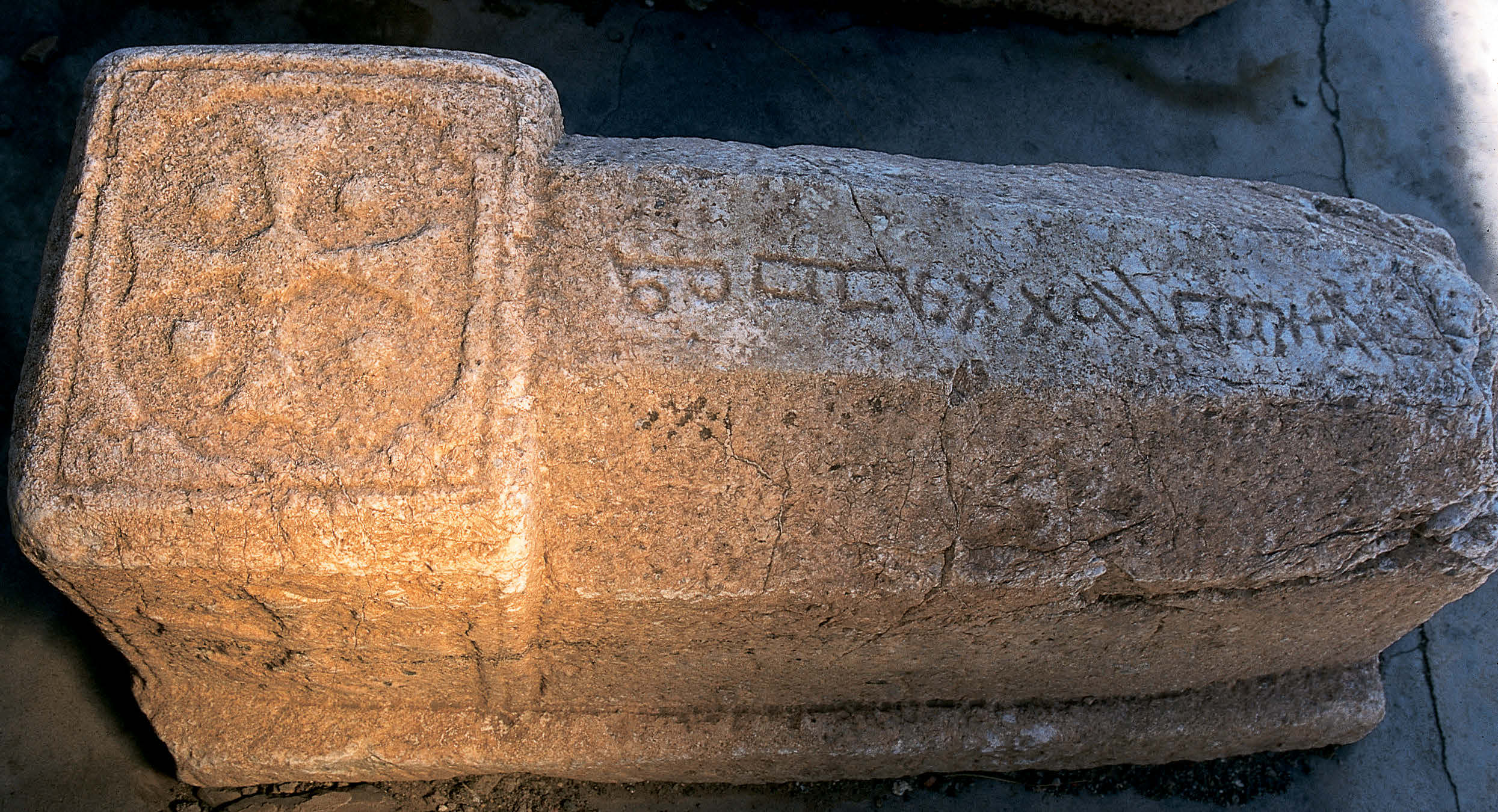
been baptized by Montecorvino, died in 1312 or 1314.39 Soon thereafter the Church began to lose believers among the Öngüt, as in the empire as a whole. As a consequence of a general Chinese influence taking hold in the Mongol ruling class, Christian Öngüt converted to Confucianism, Taoism or Buddhism.40 As in all of China, Christianity disappeared shortly after the fall of the Yuan Dynasty in 1368. Surprisingly, around 1930 among the Mongol tribe of the Erküt, in the region of the Ordos, A. Mostaert encountered religious ideas that clearly accorded with Nestorian Christianity, although the Erküt who were questioned were unaware of this connection.41 the city walls and bearing one or more Maltese crosses attest to the Christian past of Olon Sume. In contrast to the grave markers of Kyrgyzstan, which were unworked but naturally polished river stones or boulders, or the altar-like steles and structures resembling sarcophagus lids found in southern China, those of Olon Sume resembled coffins. On the upper long side they bore short inscriptions in the Turkish language and East Syriac script, and the remaining sides were often adorned with garlands or floral patterns. The discovery of additional dozens of gravestones in several ruins, as much as seventy kilometres from Olon Sume, as well as the widely distributed crosses from the Ordos, indicate that Christianity was at that time widespread among the Öngüt and not restricted merely to the urban nobility.42
曾由孟高维诺 (Montecorvino) 施洗,卒于1312年或1314年。39 此后不久,教会开始失去汪古部 (Öngüt) 中的信徒,正如在整个帝国中一样。由于一种普遍的中国影响在蒙古统治阶层中逐渐占据上风,汪古部 (Öngüt) 的基督徒改信了儒教、道教或佛教。40 与全中国一样,基督教在1368年元朝 (Yuan Dynasty) 灭亡后不久便消失了。令人惊讶的是,约1930年,在鄂尔多斯 (Ordos) 地区的额尔库特 (Erküt) 蒙古部落中,田清波 (A. Mostaert) 遇到了显然与景教 (Nestorian Christianity) 相合的宗教观念,尽管被询问的额尔库特人 (Erküt) 并未意识到这种联系。41 城墙以及带有一个或多个马耳他十字的遗存,都证明了敖伦苏木 (Olon Sume) 的基督教历史。与吉尔吉斯斯坦 (Kyrgyzstan) 的墓碑不同——那些墓碑是未经加工但经自然磨光的河石或巨砾——也与在中国南方发现的类似祭坛的碑刻和形似石棺盖的结构不同,敖伦苏木 (Olon Sume) 的墓碑则形似棺材。在其上方的长边上,刻有突厥语 (Turkish language) 和东叙利亚文 (East Syriac script) 的简短铭文,其余各面则常饰有花环或花卉图案。在若干遗址中又发现了数十块墓碑,这些遗址距敖伦苏木 (Olon Sume) 远达七十公里,再加上鄂尔多斯 (Ordos) 广泛分布的十字架,都表明当时基督教在汪古部 (Öngüt) 中广泛传播,并不仅限于城市贵族。42
Since the Öngüt were in part settled and involved in trade, they built cities, among them the northern capital of Olon Sume-in Tor, the ancient Kwashang, and the southern near present Hohhot. While the latter remained occupied after the fall of the Yuan Dynasty, Olon Sume was abandoned after the repeated destructions by the new dynasty of the Ming (1368–1644), with the exception of a brief resettlement at the end of the sixteenth century. The city centre of Olon Sume, which had been surrounded by a clay wall, is partially preserved as ruins. Within the 960x570-metre-wide and as much as 5-metre-high wall, many large piles of bricks and numerous pieces of green- and yellow-glazed roof tiles lie atop several foundations made of solid stone or brick. Archaeologists have identified the ruins of the royal palace, a Buddhist temple, the great Nestorian church and the Catholic church of Montecorvino, built in 1295, with a cruciform layout and tiles decorated in the Gothic style with a relief pattern of flowers. The poor preservation of the buildings may also be attributed to the fact that the Buddhist monastery of Beling Miao, thirty kilometres away, was constructed out of bricks from Olon Sume. Many stone monoliths found both within the environs of the Nestorian church and outside
由于汪古部 (Öngüt) 部分定居并从事贸易,他们建造了城市,其中包括北部的都城敖伦苏木-因托尔 (Olon Sume-in Tor)、古代的夸尚 (Kwashang),以及南部靠近今呼和浩特 (Hohhot) 的城市。后者在元朝 (Yuan Dynasty) 灭亡后仍有人居住,而敖伦苏木 (Olon Sume) 则在遭到新建立的明朝 (Ming, 1368–1644) 的反复破坏后被废弃,只有16世纪末有过短暂的重新定居。敖伦苏木 (Olon Sume) 的城中心曾被一道土墙环绕,现部分作为遗址保存下来。在这道960×570米、高可达5米的墙内,许多大堆砖块和大量绿釉、黄釉屋瓦碎片散落在若干由坚固石头或砖砌成的地基之上。考古学家已辨认出王宫、一座佛教寺庙、景教大教堂以及孟高维诺 (Montecorvino) 天主教堂的遗址;后者建于1295年,呈十字形布局,其瓦片以哥特式风格装饰,带有花卉浮雕图案。这些建筑保存状况不佳,也可能归因于三十公里外的百灵庙 (Beling Miao) 佛教寺院是用敖伦苏木 (Olon Sume) 的砖块建造的。在景教教堂周边及其外部都发现了许多石柱。
The Naiman, Uigurs and Tangut
乃蛮人 (Naiman)、回鹘人 (Uigurs) 和党项人 (Tangut)
To the west of the Kerait there stretched from western Mongolia to eastern Kazakhstan the homeland of the Naiman, a confederation of eight Turko-Mongol tribes.43 The Naiman were partly Nestorians, too, although the shamans also exercised great influence among them.44 After the defeat of the Kerait, the Naiman were the sole remaining independent power in Mongolia. Genghis Khan controlled the north-east and the Christian Naiman the south-west. Like a magnet they drew the tribes that had been conquered by Genghis Khan, as long as they had not submitted. The decisive battle took place in 1204 near the future Karakorum, where Genghis Khan destroyed the Naiman army. The prince of the Naiman fell, and only his son Küchlüg could escape. The Mongols went to war against him again 14 years later.
在克烈部 (Kerait) 以西,乃蛮部 (Naiman) 的故土从蒙古西部一直延伸到哈萨克斯坦东部;乃蛮部是由八个突厥-蒙古部落组成的联盟。43 乃蛮部也部分信奉聂斯托利派 (Nestorians),不过萨满 (shamans) 在他们中间也拥有很大影响力。44 克烈部被击败后,乃蛮部成为蒙古唯一尚存的独立势力。成吉思汗 (Genghis Khan) 控制着东北部,而信奉基督教的乃蛮部则控制着西南部。他们像磁石一般吸引着那些已被成吉思汗征服却尚未归顺的部落。决定性战役于1204年发生在未来的哈拉和林 (Karakorum) 附近,成吉思汗在此摧毁了乃蛮军队。乃蛮王子阵亡,只有其子屈出律 (Küchlüg) 得以逃脱。14年后,蒙古人再次对他开战。
Also among the prisoners was Tatatunga, the Uigur keeper of the seal of the fallen Naiman king, as the Naiman had adopted the Uigur script. The Uigur script had developed out of
俘虏中还有塔塔统阿 (Tatatunga),他是已败亡的乃蛮 (Naiman) 王的掌印官,一位回鹘 (Uigur) 人,因为乃蛮人已采用回鹘文字。回鹘文字是从……发展而来的
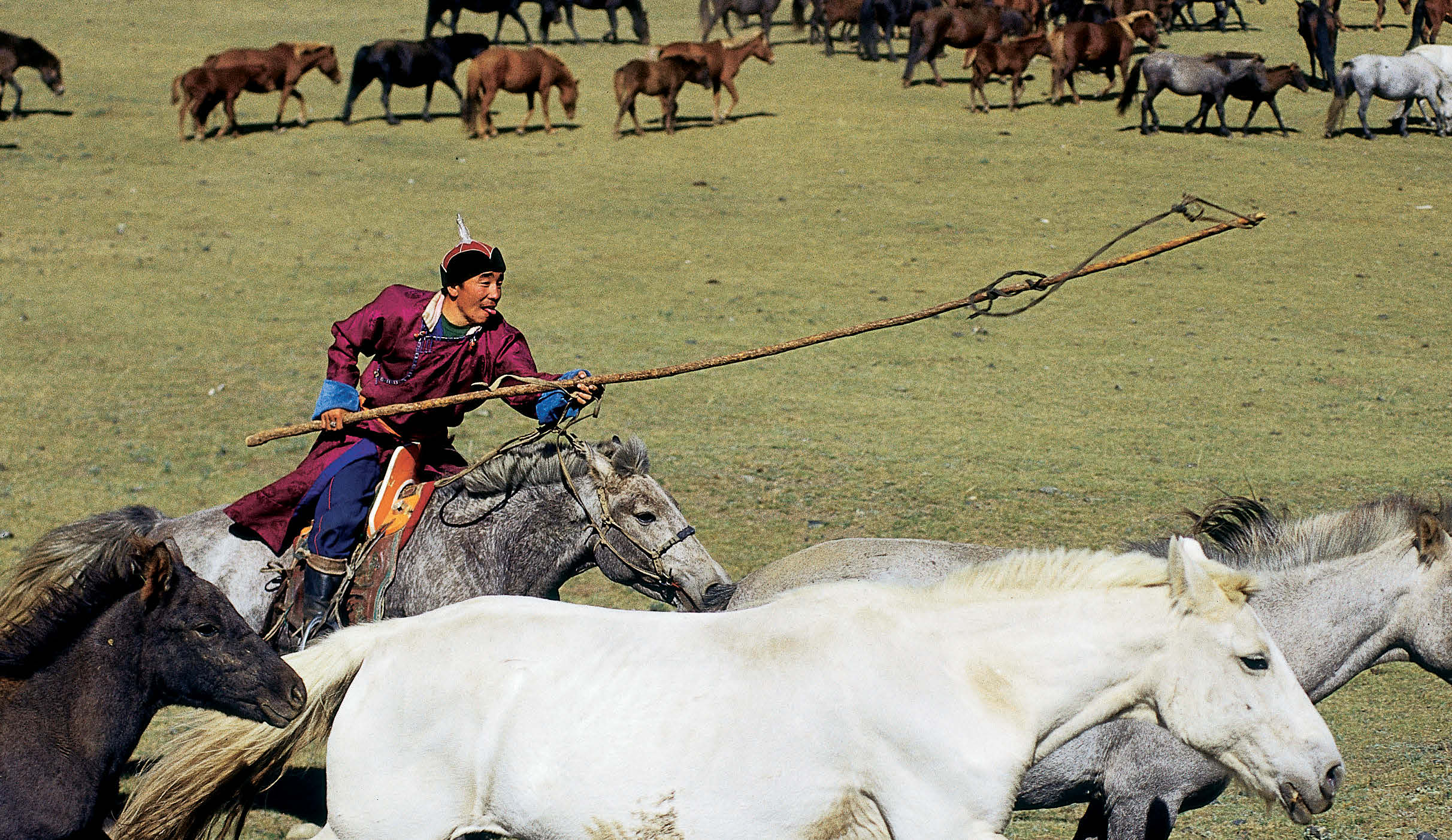
Just as he would have a thousand years ago, a Mongolian horseman captures horses with a noose attached to a four-metre-long pole. Central Mongolia belonged to the grazing lands of the Keraites and Naiman, who were, in part, Nestorian. the Sogdian, which, like Syriac, was derived from the Aramaic consonant alphabet. Uigur was originally written horizontally from right to left, but under influence from Chinese it began to be written vertically from top to bottom. Also an influence by the vertical spelling of ancient Syriac is possible, since it was used in the Levant for stone inscriptions and painted labellings on walls.45 Genghis Khan recognized the value of the script and commissioned Tatatunga to use the Uigur alphabet to write in Mongolian. Two years later he ordered him to assist his adoptive son Shigi Khutuku to put in writing the Mongol common law in a Blue Book called köke debter. The new Mongol script was also used to codify the Great Yasa, the secret directives for ruling and conducting war. The adaptation of the Uigur script was further developed by the Tibetan scholar Sakya Pandita, who lived in Karakorum from 1247 to 1251, and it continued to be refined into the eighteenth century. However, the Phagspa script, commissioned by Kublai Khan and created by Sakya Pandita’s nephew Phagspa out of the Tibetan seal script, did not gain acceptance and was used only until the fall of the Yuan Dynasty in 1386.46 A few Nestorian gravestones in the southern Chinese coastal city of Zaitun are inscribed in Phagspa.47 In the seventeenth century the Kalmyk, Buryat and Manchurian scripts were derived from the vertically written Mongol alphabet.
正如一千年前那样,一名蒙古骑手用系在四米长杆上的套索套马。蒙古中部曾是克烈部 (Keraites) 和乃蛮部 (Naiman) 的牧场,他们部分信奉景教 (Nestorian)。粟特文 (Sogdian) 与叙利亚文 (Syriac) 一样,源自阿拉米语 (Aramaic) 辅音字母表。回鹘文 (Uigur) 最初从右向左横写,但在汉语影响下开始自上而下竖写。古叙利亚文竖写方式的影响也有可能,因为它在黎凡特 (Levant) 被用于石碑铭文和墙壁彩绘标识。45 成吉思汗 (Genghis Khan) 认识到这种文字的价值,命塔塔统阿 (Tatatunga) 用回鹘字母书写蒙古语。两年后,他命他协助其养子失吉忽秃忽 (Shigi Khutuku) 将蒙古习惯法记录成文,编成一部名为《青册》(köke debter) 的蓝皮书。新的蒙古文字还被用来编纂《大扎撒》(Great Yasa),即统治与作战的秘密指令。回鹘文的改编由藏族学者萨迦班智达 (Sakya Pandita) 进一步发展,他于1247年至1251年居住在哈拉和林 (Karakorum),该文字一直完善到18世纪。然而,由忽必烈 (Kublai Khan) 下令创制、由萨迦班智达之侄八思巴 (Phagspa) 根据藏文印章体创造的八思巴文 (Phagspa script),未获接受,仅使用至1386年元朝 (Yuan Dynasty) 灭亡。46 中国南方沿海城市刺桐 (Zaitun) 的几方景教墓碑以八思巴文镌刻。47 17世纪,卡尔梅克文 (Kalmyk)、布里亚特文 (Buryat) 和满文 (Manchurian) 均由竖写的蒙古字母衍生而来。
The Turkic Uigurs, who lived south-west of the conquered Naiman in today’s province of Xinjiang and were highly developed culturally,
突厥回鹘人 (Turkic Uigurs) 居住在被征服的乃蛮人 (Naiman) 西南方、即今新疆省 (Xinjiang) 境内,且文化高度发达,
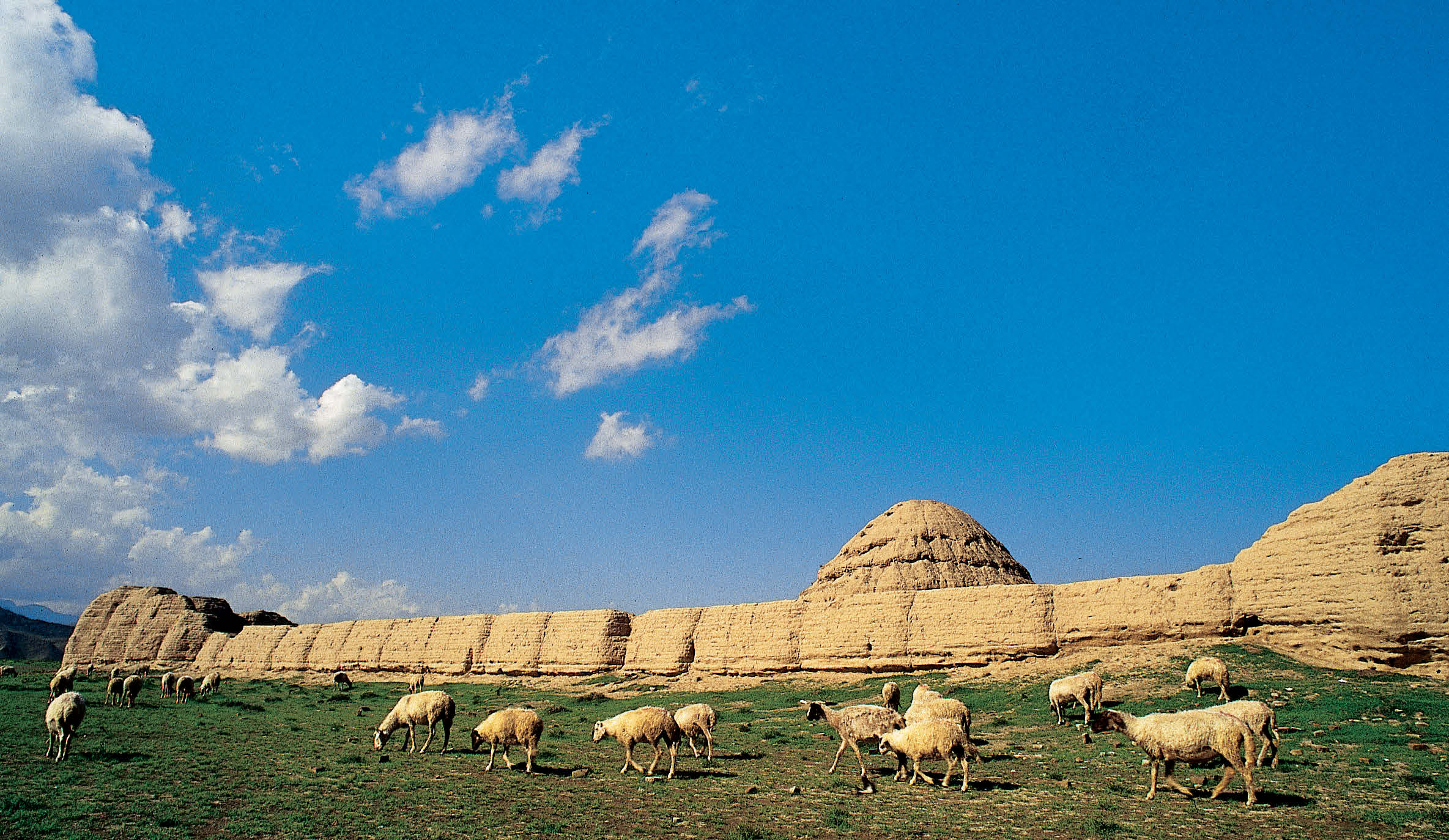
Outer wall of the princes’ necropolis of the Xi Xia Dynasty (1032–1227) near Yinchüan, Ningxia province, China. Many Nestorian communities lived in the realm of the Tangut until the fourteenth century. were for their part mostly Buddhist, with only minorities of Nestorians and Manichaeans, as well as Muslims in the west. The numerous Uigur Turkic documents found in the Turfan basin attest to the spread of Christianity at that time.48 In light of the relentless advance of the invincible Mongols, the Uigur king Bartchuq, who was a vassal of the Kara Khitai Empire, decided in 1209 voluntarily to place himself under the protection of Genghis Khan, which allowed his mostly settled people and the cities to escape destruction.49 eastern Tibetan people called the Tangut and was in its majority Buddhist, but had large Nestorian and Muslim minorities. Rubruk referred that the Nestorians had no crucifix and described a statue of the archangel Michael,50 while Marco Polo – who, in 1273, encountered Nestorians and churches in several cities of Eastern Turkistan, Tangut and even in Xining, on the border with Tibet – saw in the present city of Zhangye ‘three lovely [Nestorian] churches’.51 The pilgrim monks Rabban Bar Sauma and Rabban Markos travelled to Tangut some five years later. ‘They reached the city of Tangut [today Yinchuan in Ningxia]. When the people heared that Rabban Sauma and Rabban Markos had come in order to go to Jerusalem, they went forth eagerly to meet them, men and women, old and young, for the
中国宁夏省银川 (Yinchüan) 附近的西夏王朝 (Xi Xia Dynasty)(1032–1227)王族墓地的外墙。许多景教社群 (Nestorian communities) 一直生活在唐古特 (Tangut) 的疆域内,直到十四世纪。他们则大多为佛教徒,只有少数景教徒 (Nestorians) 和摩尼教徒 (Manichaeans),以及西部的穆斯林 (Muslims)。在吐鲁番盆地 (Turfan basin) 发现的众多回鹘突厥语文献 (Uigur Turkic documents),证明了当时基督教的传播。48 鉴于不可战胜的蒙古人不断推进,作为西辽帝国 (Kara Khitai Empire) 附庸的回鹘王巴尔楚克 (Bartchuq) 于1209年决定自愿接受成吉思汗 (Genghis Khan) 的保护,这使他那大多定居的人民和城市免遭毁灭。49 被称为唐古特 (Tangut) 的东部藏人,其大多数为佛教徒,但也有规模可观的景教徒 (Nestorians) 和穆斯林 (Muslims) 少数群体。鲁布鲁克 (Rubruk) 提到景教徒 (Nestorians) 没有十字架,并描述了一尊天使长米迦勒 (archangel Michael) 的雕像,50 而马可·波罗 (Marco Polo)——他于1273年在东突厥斯坦 (Eastern Turkistan)、唐古特 (Tangut) 乃至与西藏 (Tibet) 接壤的西宁 (Xining) 的若干城市中遇到了景教徒 (Nestorians) 和教堂——则在今张掖市 (Zhangye) 看到了“三座可爱的[景教 (Nestorian)]教堂”。51 大约五年后,朝圣僧侣拉班·扫马 (Rabban Bar Sauma) 和拉班·马可斯 (Rabban Markos) 前往唐古特 (Tangut)。“他们到达了唐古特城 (Tangut) [今宁夏 (Ningxia) 银川 (Yinchuan)]。当人们听说拉班·扫马 (Rabban Sauma) 和拉班·马可斯 (Rabban Markos) 是为了前往耶路撒冷 (Jerusalem) 而来时,男女老少都热切地出去迎接他们,因为
A more serious opponent than the Uigur was the empire of Xi Xia, which bordered them to the east and corresponded to the modern provinces of Gansu, Ningxia and the western region of Inner Mongolia. It had been founded by the
比回鹘 (Uigur) 更为严重的对手是西夏 (Xi Xia) 帝国,它东面与回鹘接壤,相当于今天的甘肃 (Gansu)、宁夏 (Ningxia) 和内蒙古 (Inner Mongolia) 西部地区。它由
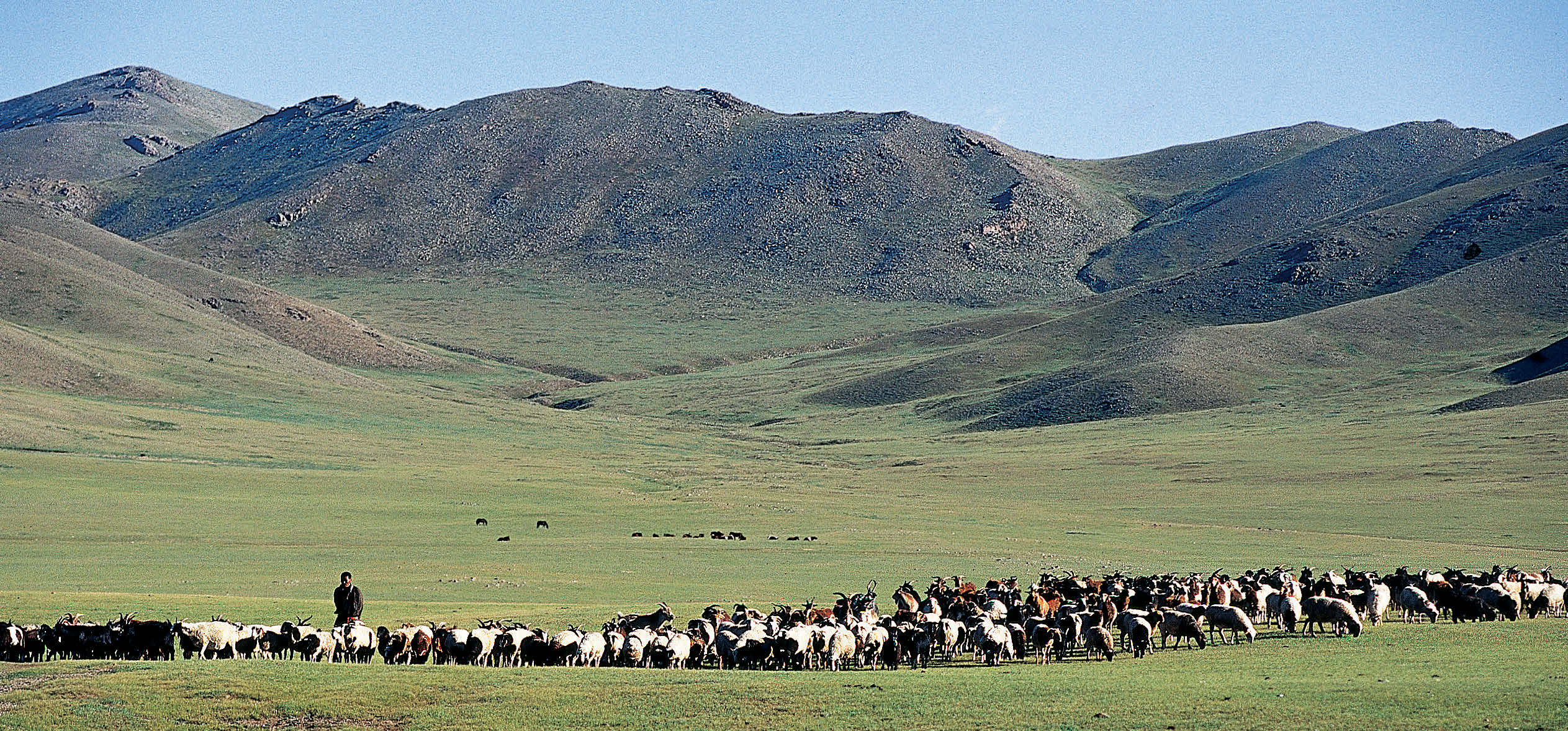
Shepherd in western Mongolia, homeland of the formerly Nestorian Naiman. people of Tangut were ardent believers and their minds were pure.’52
蒙古西部的牧羊人, 昔日信奉聂斯托利派 (Nestorian) 的乃蛮人 (Naiman) 的故乡。唐古特人 (Tangut) 曾是热忱的信徒,他们的 心灵纯洁。’52
After the conquest and plundering of Choresm, Genghis Khan took terrible revenge for this offensive insubordination. In the autumn of 1226 he attacked Xi Xia and defeated the Tangut in several battles. Although Genghis Khan died before the end of the war in 1227, prior to his death he ordered that the Tangut capital be razed to the ground and all its inhabitants massacred – which is what happened. In his excavations of 1908–1909 in Kara Khoto, 630 kilometres north-west of Yinchüan, the Russian scholar P. K. Kozlov discovered several Nestorian manuscript fragments in the Turkish language and Estrangela script, which show that there was an East Syrian community on the Tangut border with Mongolia as well.54
在征服并劫掠花剌子模 (Choresm) 之后,成吉思汗 (Genghis Khan) 对这种无礼的抗命进行了可怕的报复。1226年秋,他进攻西夏 (Xi Xia),并在数次战役中击败党项人 (Tangut)。尽管成吉思汗在1227年战争结束前去世,但他在去世前下令将党项都城夷为平地,并屠杀所有居民——而这也确实发生了。1908—1909年,俄国学者科兹洛夫 (P. K. Kozlov) 在银川 (Yinchüan) 西北630公里处的黑水城 (Kara Khoto) 进行发掘时,发现了若干件用突厥语 (Turkish language) 和埃斯特兰格拉字体 (Estrangela script) 写成的景教 (Nestorian) 手稿残片,这些残片表明,在党项 (Tangut) 与蒙古 (Mongolia) 接壤的边境地区同样存在一个东叙利亚 (East Syrian) 社群。54
After several Mongol military campaigns between 1205 and 1209 the Tangut king – whose capital near present Yinchüan Genghis Khan could not capture – acknowledged Mongol sovereignty and made a commitment to military aid. But in 1219, when Genghis Khan ordered the Tangut to give him troops for the beginning campaign against Shah Mohammed II of Choresm (†1220/21), whose empire stretched from the Caucasus to India and Samarqand, they did not think to fulfil their obligation to provide assistance. Moreover, the commander-in-chief of Xi Xia, General Asa Gambu, mocked the Mongol ambassadors. ‘If his [Genghis Khan’s] troops do not suffice, he does not deserve to be ruler.’53
1205年至1209年间,在数次蒙古军事行动之后,党项国王 (Tangut king)——其都城位于今银川 (Yinchüan) 附近,成吉思汗 (Genghis Khan) 未能攻占——承认了蒙古宗主权,并承诺提供军事援助。但到了1219年,当成吉思汗 (Genghis Khan) 命令党项人 (Tangut) 为他提供军队,以发动对花剌子模的沙阿穆罕默德二世 (Shah Mohammed II of Choresm)(†1220/21)的初期战役时——后者的帝国从高加索 (Caucasus) 延伸至印度 (India) 和撒马尔罕 (Samarqand)——他们却无意履行提供援助的义务。此外,西夏 (Xi Xia) 军统帅阿沙敢不将军 (General Asa Gambu) 还嘲弄了蒙古使节。“如果他的[成吉思汗 (Genghis Khan) 的]军队不足,他就不配做统治者。”53
The Nestorian Küchlüg and the Turkic tribes of present Kyrgyzstan
景教徒屈出律 (Küchlüg) 与今吉尔吉斯斯坦的突厥部落
Nestorian Christianity were able to expand.
聂斯托利派基督教 (Nestorian Christianity) 得以扩展。
The Nestorian refugee Küchlüg succeeded in winning the favour of the elderly Gur Khan Yelü Zhilugu (ruled 1178–1211), who gave him his Buddhist daughter. But in 1210/1211 the power- hungry Küchlüg overthrew his father-in-law, and ruled over the now weakened empire of Kara Khitai until his death in 1218. The usurper intensified the anti-Islamic policies of his predecessor and forced the Muslims of Kashgar and Khotan to convert to either Nestorianism or Buddhism. He had the contradictory imam of Khotan crucified. When Genghis Khan finally pursued his old enemy Küchlüg in 1218, the Muslims of Kara Khitai rebelled and handed the cities of Balasagun and Kashgar over to the Mongols without a fight. With Küchlüg, who was killed while fleeing, the final independent Nestorian Mongol prince passed away.57
聂斯托利派流亡者屈出律 (Küchlüg) 成功赢得了年迈的古儿汗耶律直鲁古 (Gur Khan Yelü Zhilugu,1178–1211年在位) 的宠信,后者将自己信奉佛教的女儿嫁给了他。但在1210/1211年,权欲熏心的屈出律 (Küchlüg) 推翻了自己的岳父,并统治了此时已被削弱的西辽 (Kara Khitai) 帝国,直至1218年去世。这位篡位者变本加厉地推行其前任的反伊斯兰政策,迫使喀什噶尔 (Kashgar) 和于阗 (Khotan) 的穆斯林改宗聂斯托利派或佛教。他下令将那位与他意见相左的于阗伊玛目 (imam) 钉死在十字架上。当成吉思汗 (Genghis Khan) 最终于1218年追击其宿敌屈出律 (Küchlüg) 时,西辽 (Kara Khitai) 的穆斯林发动叛乱,未作抵抗便将八剌沙衮 (Balasagun) 和喀什噶尔 (Kashgar) 两城交给了蒙古人。随着在逃亡途中被杀的屈出律 (Küchlüg) 死去,最后一位独立的聂斯托利派蒙古王公也退出了历史舞台。57
When Genghis Khan conquered the tribal alliance of the Naiman, Küchlüg, son of the fallen king, succeeded in escaping to the west. His odyssey concluded in Balasagun, capital of the Kara Khitai Empire, which lay in the valley of the Chu in the Land of Seven Rivers Semirjetschie, to the east of the modern capital of Kyrgyzstan, Bishkek. The rulers there were descendants of the Mongol people of the Khitai, who ruled northern China from 907 to 1125 under the name of the Liao Dynasty. When they were driven out by the Manchurian Jin, a minority of the strongly Chinese-influenced Khitai fled to the west and around 1130 took northern Kyrgyzstan away from the Islamic Karakhanids of Kashgaria. The Kara Khitai then conquered Transoxania and Kashgaria.55 The overwhelming victory of the non-Muslim khan Yelü Dashi (ruled 1130–1143) over the two powerful Muslim rulers Rukn ad-Din Mahmud of Samarqand in 1137 and his feudal lord, the sultan of the Seljuks Sanjar, in 1141 presumably provided fertile ground for the myth of the Christian priest-king John. Around 1145 the historian Otto of Freising (1111–1158) reported that an East Syrian presbyter John defeated Muslim kings in Asia and intended to liberate Palestine. That Yelü Dashi was not Christian but rather Buddhist played no role, since at that time Europe did not know of Buddhism and assumed that the successful enemy of the Muslims must necessarily be a Christian prince.56 Now the possibility appeared to the European princes of winning as an ally in the fight against Islam this mysterious Asian ruler. In fact the rulers of Kara Khitai were unique, in that, for the first time in history, the Islamicization of a society was stopped and for a time held at bay. Although the majority of the Turkic peoples of the Kara Khitai Empire remained Muslim, both Chinese Buddhism and
当成吉思汗 (Genghis Khan) 征服乃蛮 (Naiman) 部落联盟时,覆亡之王的儿子屈出律 (Küchlüg) 成功逃往西方。他的漂泊之旅终结于八剌沙衮 (Balasagun),即西辽帝国 (Kara Khitai Empire) 的首都;该城位于七河地区 (Semirjetschie) 的楚河 (Chu) 谷地,在今吉尔吉斯斯坦 (Kyrgyzstan) 首都比什凯克 (Bishkek) 以东。那里的统治者是契丹 (Khitai) 这一蒙古语族民族的后裔,他们曾于907年至1125年以辽朝 (Liao Dynasty) 之名统治中国北方。当他们被女真金朝 (Manchurian Jin) 驱逐时,深受汉文化影响的契丹人中的少数西逃,并于约1130年从喀什噶尔 (Kashgaria) 的伊斯兰喀喇汗王朝 (Karakhanids) 手中夺取了吉尔吉斯斯坦北部。西辽 (Kara Khitai) 随后征服了河中地区 (Transoxania) 和喀什噶尔 (Kashgaria)。55 非穆斯林可汗耶律大石 (Yelü Dashi)(1130–1143年在位)于1137年对撒马尔罕 (Samarqand) 的强大穆斯林统治者鲁克恩·丁·马哈茂德 (Rukn ad-Din Mahmud)、并于1141年对其封建宗主——塞尔柱 (Seljuks) 苏丹桑贾尔 (Sanjar) 取得的压倒性胜利,大概为基督徒祭司王约翰 (John) 的传说提供了肥沃土壤。约1145年,历史学家弗赖辛的奥托 (Otto of Freising)(1111–1158)报道称,一位东叙利亚长老约翰 (John) 在亚洲击败了穆斯林诸王,并意图解放巴勒斯坦 (Palestine)。耶律大石并非基督徒而是佛教徒,这一点无关紧要,因为当时欧洲并不知道佛教,并认定穆斯林的胜利敌人必定是一位基督徒王子。56 如今,欧洲诸侯似乎有可能争取这位神秘的亚洲统治者作为对抗伊斯兰 (Islam) 的盟友。事实上,西辽 (Kara Khitai) 的统治者是独一无二的,因为历史上第一次,一个社会的伊斯兰化被阻止,并在一段时间内被遏制。尽管西辽帝国 (Kara Khitai Empire) 的突厥诸民族 (Turkic peoples) 大多数仍为穆斯林,但汉传佛教 (Chinese Buddhism) 和
After Genghis Khan’s death the Land of Seven Rivers came under the control of his second son Chagatai (†1242), who supported the Christians. The regions along the Chu and Talas rivers, however, were involved in power struggles among the Mongols, which led to the decline of trade and agriculture. As a conse-quence of the advancing desertification, arable land became pasture, so a nomadic society replaced the earlier agrarian and urban culture. Then, in 1338 and 1339, the plague brought an end to the Nestorian community of the Chu valley, since it carried off practically all the entire settled population, as one can conclude from the great number of gravestones dating from this time. At the same time the Muslim sultan Ali massacred a Roman Catholic bishop and six missionaries in the region of Almalik.58 The last of the about 650 known Christian gravestones of Kyrgyzstan dates from 1345, the last one of Almalik from 1372.59
成吉思汗 (Genghis Khan) 去世后,七河地区 (Land of Seven Rivers) 落入其次子察合台 (Chagatai)(†1242)的控制之下,察合台支持基督徒。然而,楚河 (Chu) 和塔拉斯河 (Talas) 沿岸地区卷入了蒙古人之间的权力斗争,导致贸易和农业衰落。随着荒漠化日益加剧,耕地变为牧场,于是游牧社会取代了早先的农耕与城市文化。随后,在1338年和1339年,瘟疫终结了楚河流域 (Chu valley) 的聂斯托利派 (Nestorian) 社群,因为它几乎夺去了全部定居人口的生命;从这一时期数量众多的墓碑可以推断出这一点。与此同时,穆斯林苏丹阿里 (Ali) 在阿力麻里 (Almalik) 地区屠杀了罗马天主教 (Roman Catholic) 主教一名和传教士六名。⁵⁸ 吉尔吉斯斯坦 (Kyrgyzstan) 已知约650块基督教墓碑中,最后一块的年代为1345年,阿力麻里的最后一块则为1372年。⁵⁹
That Nestorian Christianity flourished in the Chagatai Khanate – that is, the region ruled by the descendants of Chagatai – is clear from historical travel narratives and archaeological
景教 (Nestorian Christianity) 在察合台汗国 (Chagatai Khanate)——即由察合台 (Chagatai) 后裔统治的地区——的兴盛,从历史旅行叙事和考古
discoveries. Marco Polo, who erroneously called Chagatai a Christian, told of the Nestorian Christians and their churches in Samarqand, Kashgar and Yarkand.60 In fact, around 1180 Patriarch Elias III (in office 1176–1190) added to the metropolitans of Samarqand and Turkistan a Metropolitan John for Kashgar in the far west of Xinjiang.61 Around 1281 and 1350 Almalik, 500 kilometres north of Kashgar on the River Ili, shared the metropolitan see with Beshbaliq.62 When Rabban Bar Sauma and Rabban Markos visited Kashgar six or seven years after Marco Polo, ‘the city was empty of its inhabitants, because it had been plundered by the enemy’.63 However, in 1340 Kashgar was again cited as a metropolitan see. Additionally, until the twelfth century there were Christian communities in Khotan and Asku.64 As the Portuguese Jesuit Bento de Goes (1562–1607) reported, in 1604 the Muslim ruler of Kashgar was aware that his predecessors had been Christians.65
发现。马可·波罗 (Marco Polo) 错误地将察合台 (Chagatai) 称为基督徒,他讲述了撒马尔罕 (Samarqand)、喀什噶尔 (Kashgar) 和叶尔羌 (Yarkand) 的聂斯托利派基督徒及其教堂。60 事实上,约1180年,宗主教以利亚三世 (Elias III)(在位1176–1190年)在撒马尔罕和突厥斯坦 (Turkistan) 的都主教之外,又为新疆 (Xinjiang) 最西部的喀什噶尔增设了一位都主教约翰 (John)。61 约1281年和1350年,位于喀什噶尔以北500公里、伊犁河 (Ili) 畔的阿力麻里 (Almalik) 与别失八里 (Beshbaliq) 共用一个都主教教座。62 当拉班·扫马 (Rabban Bar Sauma) 和拉班·马库斯 (Rabban Markos) 在马可·波罗之后六七年到访喀什噶尔时,“该城已空无居民,因为它已被敌人劫掠”。63 然而,1340年喀什噶尔再次被提及为一个都主教教座。此外,直到12世纪,于阗 (Khotan) 和阿克苏 (Asku) 仍有基督徒社群。64 正如葡萄牙耶稣会士鄂本笃 (Bento de Goes)(1562–1607年)所报告,1604年喀什噶尔的穆斯林统治者知道其前任曾是基督徒。65
Nestorian gravestone of a woman, Historical Museum of Tashkent, Uzbekistan. The stone remembers ‘Qushtans, the mother of Ispahsalar’ [Persian army leader] and is dated 1573 of the Seleucian calendar, which corresponds to our year 1261/62. The word Qushtans is not a personal name, but is a Sogdian loan-word meaning ‘female teacher’.57
一位女性的聂斯托利派 (Nestorian) 墓碑, 塔什干历史博物馆 (Historical Museum of Tashkent), 乌兹别克斯坦 (Uzbekistan)。石碑上记载着 “库什坦斯 (Qushtans),伊斯帕赫萨拉尔 (Ispahsalar) 之母” [波斯军队统帅],其年代为 塞琉古历 (Seleucian calendar) 1573 年, 相当于公元 1261/62 年。 库什坦斯 (Qushtans) 一词并非人名, 而是粟特语借词, 意为“女教师”。57
Most of the archaeological evidence for the spread of Nestorian Christianity in the khanate of Chagatai comes from the Land of Seven Rivers. There are the approximately 610 gravestones, which were found in the late nineteenth century in the Chu valley in the two medieval cemeteries of Karajigak, ten kilometres south-east of Bishkek, and Burana near Tokmak, 62 kilometres east of Bishkek. Unfortunately, nearly 500 gravestones were lost in a museum fire in 1939. A few isolated discoveries followed later in the neighbouring regions of Krasnaja Rejka and Kok-Djar, as well as in Saruu on the south-eastern bank of Lake Issyk-Kul and in the diocesan centre of Almalik, which was the capital of Chagatai and his successors.66 In total 210 to 225 gravestones are still extant.67 The earliest gravestones are dated to the years 1095 and 1115 but they are found in large numbers only beginning with 1250, permitting the conclusion that a small Nestorian community was already flourishing here in the period of the Kara Khitai but was later enlarged due either to missionary activity or to the arrival of Christian settlers. A cross is carved into each gravestone, and many bear inscriptions. These Christians of Turkic descent inscribed their gravestones in the Estrangela script, mostly in the Syriac language
关于聂斯托利派基督教 (Nestorian Christianity) 在察合台汗国 (khanate of Chagatai) 传播的考古证据,大多来自七河地区 (Land of Seven Rivers)。约有610块墓碑,于19世纪晚期在楚河河谷 (Chu valley) 的两处中世纪墓地被发现:一处是比什凯克 (Bishkek) 东南十公里处的卡拉吉加克 (Karajigak),另一处是比什凯克 (Bishkek) 以东62公里、托克马克 (Tokmak) 附近的布拉纳 (Burana)。不幸的是,近500块墓碑在1939年的一场博物馆火灾中遗失。后来,在邻近的克拉斯纳亚列奇卡 (Krasnaja Rejka) 和科克-贾尔 (Kok-Djar) 地区,以及伊塞克湖 (Lake Issyk-Kul) 东南岸的萨鲁 (Saruu) 和阿力麻里 (Almalik) 教区中心,又有一些零星的发现;阿力麻里曾是察合台 (Chagatai) 及其后继者的都城。66 总计有210至225块墓碑仍然存世。67 最早的墓碑可追溯至1095年和1115年,但它们直到1250年之后才大量出现,这使人得以推断:在西辽 (Kara Khitai) 时期,这里已经有一个小型的聂斯托利派社群在兴盛发展,但后来或因传教活动,或因基督教定居者的到来而扩大。每块墓碑上都刻有十字架,许多还带有铭文。这些突厥裔基督徒用埃斯特兰格拉字体 (Estrangela script) 在其墓碑上刻写铭文,且大多使用叙利亚语 (Syriac language)。
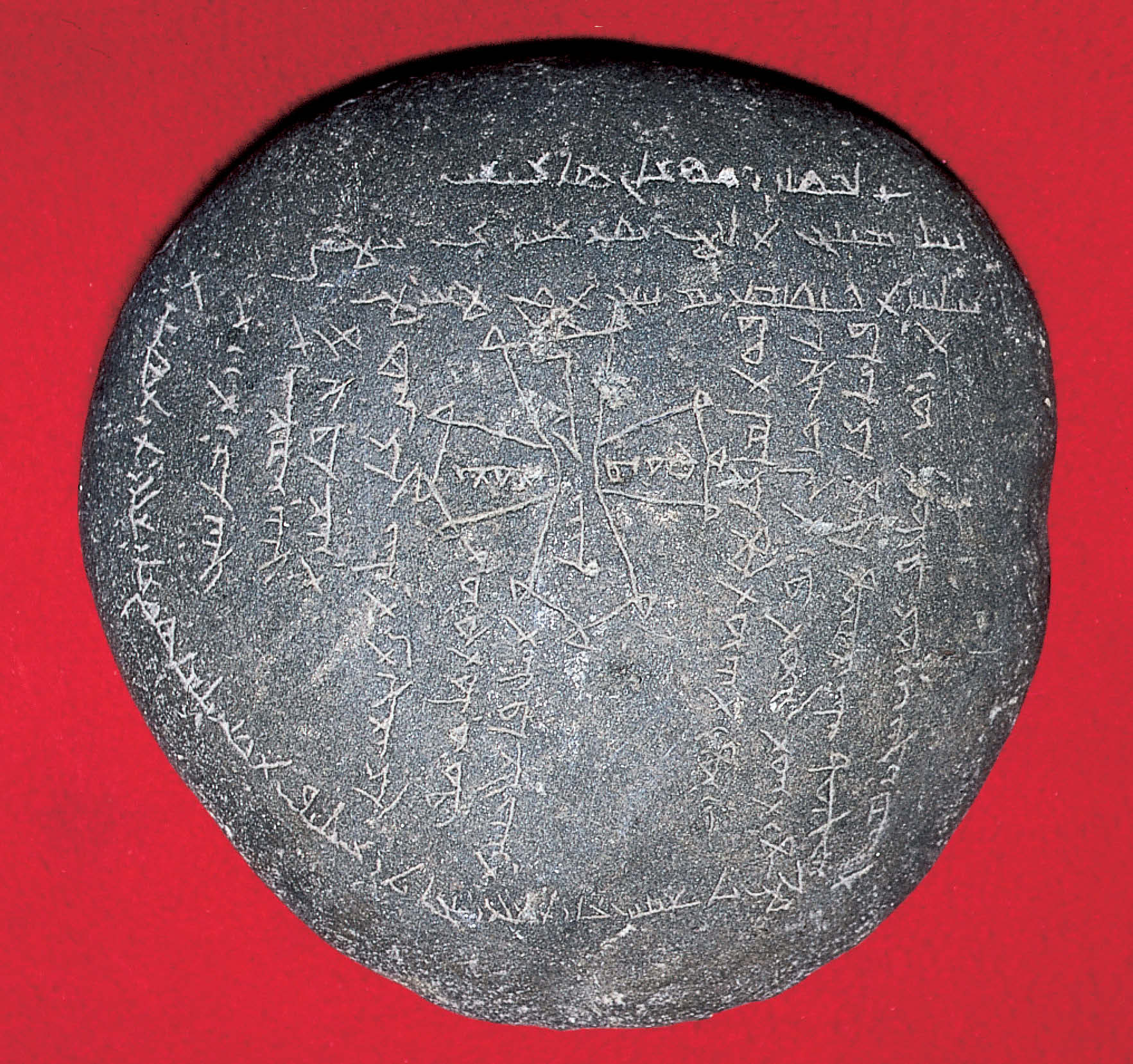
The myth of Prester John and the encounter of Catholic monks with Nestorians in Mongolia and occasionally, in the region of Almalik, in Turkic, which suggests that Syriac was the liturgical language.68
祭司王约翰 (Prester John) 的传说,以及天主教修士与在蒙古 (Mongolia)、偶尔在阿力麻里 (Almalik) 地区、使用突厥语 (Turkic) 的聂斯托利派 (Nestorians) 的相遇,这表明叙利亚语 (Syriac) 是礼仪语言。68
(Opposite bottom) Nestorian gravestone, Toktogul Satulganov Museum, Bishkek, Kyrgyzstan. The gravestone, discovered in 1963 near Saruu on the southern shore of Lake Issyk-Kul, bears a lengthy inscription in the Turkish language and Syriac script, which reads as follows: ‘According to the reckoning of King Alexander, it was in the year 1647 [i.e. 1335], on the fourteenth of December…at the first light of dawn, in the year of the mouse, Khan Jenkshi set himself upon the throne, at the head of the empire [of the territory of the Chagatanids] and prepared for this Alma Khatun a commemoration [?], she was a new bride [?]…this woman fled in the year of the pig…she died at exactly age twenty-six…May a memorial be built to her and may she never be forgotten by her friends.’ 58 The young Nestorian woman, who bore the honorific title ‘khatun’, was the wife of Khan Jenkshi (ruled 1335–1338/1339), who came to power because his predecessor and grandfather Tarmashirin (ruled 1326–1334) converted to Islam, inciting the ire of the nomads around Lake Issyk-Kul. They rebelled and elevated the young Jenkshi as their khan. The memorial to Alma Khatun, who died before 14 December 1335, shows that Nestorian women could still in the fourteenth century gain entry into the ruling family of the Ulus of Chagatai, by means of marriage. Khan Jenkshi supported the Nestorians and the Catholic missionaries and had one of his sons baptized with the name John. After his early death around 1338/ 1339 many Christians of Almalik were massacred by the Muslim Sultan Ali.59
(对页底部)聂斯托利派 (Nestorian) 墓碑,吉尔吉斯斯坦 (Kyrgyzstan) 比什凯克 (Bishkek) 的托克托古尔·萨图尔加诺夫博物馆 (Toktogul Satulganov Museum)。这块墓碑于1963年在伊塞克湖 (Lake Issyk-Kul) 南岸萨鲁 (Saruu) 附近被发现,上面刻有一段用突厥语 (Turkish language) 和叙利亚文 (Syriac script) 写成的长铭文,内容如下:“按照亚历山大国王 (King Alexander) 的纪年,时值1647年 [即1335年],12月14日……在黎明初现之时,在鼠年,真克希汗 (Khan Jenkshi) 登上了王位,成为帝国 [察合台人 (Chagatanids) 领地] 的首领,并为这位阿尔玛·哈敦 (Alma Khatun) 准备了一场纪念[?],她是一位新嫁娘[?]……这位妇女在猪年出逃……她去世时正好二十六岁……愿为她建一座纪念碑,愿她永不被她的朋友们遗忘。’58 这位年轻的聂斯托利派 (Nestorian) 妇女拥有“哈敦 (khatun)”的尊号,她是真克希汗 (Khan Jenkshi)(在位1335–1338/1339年)的妻子。真克希汗之所以掌权,是因为他的前任兼祖父塔尔马希林 (Tarmashirin)(在位1326–1334年)皈依了伊斯兰教,激起了伊塞克湖 (Lake Issyk-Kul) 周边游牧民的愤怒。他们发动叛乱,拥立年轻的真克希 (Jenkshi) 为汗。阿尔玛·哈敦 (Alma Khatun) 于1335年12月14日之前去世,对她的纪念表明,在14世纪,聂斯托利派 (Nestorian) 妇女仍能通过婚姻进入察合台兀鲁思 (Ulus of Chagatai) 的统治家族。真克希汗 (Khan Jenkshi) 支持聂斯托利派信徒和天主教传教士 (Catholic missionaries),并让他的一个儿子受洗,取名约翰 (John)。在他于约1338/1339年早逝后,阿力麻里 (Almalik) 的许多基督徒被穆斯林苏丹阿里 (Sultan Ali) 屠杀。59
The Mongol campaigns of war and plunder that followed the death of Küchlüg were directed mainly against Muslim states such as Choresm, but the Christian Nestorians suffered severely on account of the terrible fighting. This was all the more so because at the time the Nestorians lived principally in cities; every city that mounted an opposition to the Mongols was levelled and its entire population massacred. The Mongol toleration in religious affairs ceased in times of war, as soon as opposition emerged. In the course of the systematic plundering and destruction of Khorassan and Afghanistan between 1220 and 1222, the following cities were destroyed and their inhabitants murdered: Gurgentch with 1,250,000 dead, Nishapur with 500,000 to 1,500,000 dead, Merv with 700,000 to 1,300,000 dead, Bamyan with 500,000 dead – here the Mongols also killed all dogs and cats – Herat with 1,600,000 dead, Ghazna and Balkh with hundreds of thousands dead each. Samarqand and Bukhara were completely plundered, and the male inhabitants were sacrificed as human shields at the vanguard of the next attack on a city. After each conquest the Mongols left behind piles of debris and fields of corpses; in total the approximately 150,000 Mongol warriors murdered, according to Juvaini, about 6,000,000 people.69 The additional mass deportations, however, encouraged the spread of Islam into west and central China.
屈出律(Küchlüg)死后,蒙古人发动了一系列战争和劫掠,主要针对花剌子模(Choresm)等穆斯林国家;但由于战事惨烈,基督徒聂斯托利派也遭受重大损失。他们当时主要居住在城市,情况尤其如此:凡抵抗蒙古人的城市都被夷为平地,全城居民遭到屠杀。战时一旦出现抵抗,蒙古人便不再宽容宗教。1220至1222年间,呼罗珊(Khorassan)和阿富汗遭到有系统的劫掠和毁灭,以下城市被摧毁,居民被杀:玉龙杰赤(Gurgentch),死者1,250,000人;尼沙普尔(Nishapur),死者500,000至1,500,000人;梅尔夫(Merv),死者700,000至1,300,000人;巴米扬(Bamyan),死者500,000人——蒙古人还杀光了当地所有猫狗;赫拉特(Herat),死者1,600,000人;加兹尼(Ghazna)和巴尔赫(Balkh)各有数十万人死亡。撒马尔罕(Samarqand)和布哈拉(Bukhara)遭到彻底劫掠,男性居民被迫充当前锋,在下一场攻城战中充当人肉盾牌。每次征服之后,蒙古人留下的都是废墟和遍地尸体;据志费尼(Juvaini)记载,约150,000名蒙古战士总共杀害了约6,000,000人。69然而,随之而来的大规模强制迁徙,却推动了伊斯兰教向中国西部和中部传播。
The background to the creation of the myth of a powerful Christian priest-king in Asia is formed by the Crusades, which began in 1097 to liberate Jerusalem from the Muslims, who were preventing European pilgrims from making their journey. After the establishment of the Frankish earldoms of Edessa and Antioch in 1098 and the rapid conquest of Jerusalem in 1099, Muslim opposition hardened. In 1144 the first Crusader state, the earldom of Edessa, was lost to the ruler of Mosul and Aleppo, Zengi (†1146), which inspired the beleaguered Crusaders to seek out allies. It is no coincidence that, just one year later, the historian Otto von Freising for the first time reported that a virtuous and pious Christian king in Asia had defeated Muslim rulers.70 After von Freising gave a second version of his ‘report’ to Emperor Frederick Barbarossa I in 1157, the forged Letter of Prester John to Emperor Manuel I Komnenos (ruled 1143–1180), commissioned by the imperial chancellor Rainald of Dassel, appeared between 1160 and 1165.71
亚洲一位强大的基督教祭司王传说的产生背景,由十字军东征 (Crusades) 所构成。十字军东征始于1097年,旨在从穆斯林手中解放耶路撒冷 (Jerusalem),因为穆斯林阻止欧洲朝圣者前往朝圣。1098年法兰克人的埃德萨 (Edessa) 和安条克 (Antioch) 伯爵领建立,以及1099年耶路撒冷被迅速征服之后,穆斯林的抵抗更加强硬。1144年,第一个十字军国家——埃德萨伯爵领——落入摩苏尔 (Mosul) 和阿勒颇 (Aleppo) 的统治者赞吉 (Zengi, †1146) 之手,这促使陷入困境的十字军寻求盟友。仅仅一年之后,历史学家弗赖辛的奥托 (Otto von Freising) 首次报道说,亚洲有一位德行高尚、虔诚的基督教国王击败了穆斯林统治者,这并非巧合。70 在弗赖辛的奥托于1157年将其“报道”的第二个版本呈交给皇帝腓特烈·巴巴罗萨一世 (Frederick Barbarossa I) 之后,由帝国宰相达塞尔的雷纳德 (Rainald of Dassel) 授意伪造的《祭司王约翰致皇帝曼努埃尔一世·科穆宁的书信》(Letter of Prester John to Emperor Manuel I Komnenos,1143–1180年在位) 于1160年至1165年间出现。71
The material for this was supplied by the Nestorians living in Syria and Palestine, who told the Crusaders about the Christian princes among the Turko-Mongol peoples. Since Prester John was for Europeans an incomprehensible, mythic figure, over a long period of time several real Christian princes served as background figures. Among them were the Kerait prince, not known by name, who professed Christianity in 1007; his later successors Mark, Cyriacus and Toghril Khan; the king of Kara Kithai Yelü Dashi; and Gur Khan Küchlüg.72 Historically verified contact of the Crusaders with the Nestorians occurred between 1217 and 1221, when Bishop Jacob of Vitry (†1240) accompanied the Fifth Crusade to Egypt and met East Syrians in Damietta. In his letters he referred to the Christian subjects
Let’s compose final: 这方面的材料由居住在叙利亚 (Syria) 和巴勒斯坦 (Palestine) 的聂斯托利派信徒 (Nestorians) 提供,他们向十字军讲述了突厥-蒙古诸民族中的基督教王公。由于祭司王约翰 (Prester John) 对欧洲人来说是一个难以理解的神话式人物,在很长一段时间里,若干真实的基督教王公充当了背景人物。他们包括一位名字不详的克烈部王子 (Kerait prince),他于1007年信奉基督教;他后来的继承者马可 (Mark)、西里亚库斯 (Cyriacus) 和脱斡邻勒汗 (Toghril Khan);哈剌契丹 (Kara Kithai) 国王耶律大石 (Yelü Dashi);以及古儿汗屈出律 (Gur Khan Küchlüg)。72 十字军与聂斯托利派信徒 (Nestorians) 之间有历史证实的接触发生于1217年至1221年间,当时维特里的雅各主教 (Jacob of Vitry)(†1240)随第五次十字军东征前往埃及 (Egypt),并在达米埃塔 (Damietta) 遇到了东叙利亚人 (East Syrians)。他在书信中提到了那些基督教臣民
The long-term consequences appear just as dramatic, as the oasis lands of Khorassan and Afghanistan, renowned for their fertility, literally turned to desert. Whole regions were depopulated, the irrigation canals fell into ruin and arable land turned fallow. The deserts found today in Khorassan and Afghanistan are not all natural phenomena but, rather, were created by the hand of man, the consequence of a campaign of nomadic raids of gigantic proportions.
长期后果同样极具戏剧性:以土地肥沃著称的呼罗珊 (Khorassan) 和阿富汗 (Afghanistan) 的绿洲地带,真的变成了沙漠。整个地区变得荒无人烟,灌溉渠毁坏失修,耕地荒废。今天在呼罗珊 (Khorassan) 和阿富汗 (Afghanistan) 见到的沙漠并非全都是自然现象,而是由人手造成的,是规模巨大的游牧民族劫掠行动的结果。
of the priest-king as Nestorians and described a King David, who was a great-grandson of Prester John and had conquered Kashgar, Bukhara and Samarqand. Now Genghis Khan, who had stormed Bukhara and Samarqand in 1220, stood behind the mythical Christian king.73 At first, on account of the innaccurate reports, the Western European princes and the pope could regard the advancing Mongols as potential allies against the Islamic states of the Middle East, but the attacks on the Christian kingdoms and principalities of Georgia in 1221 and Russia in 1223, as well as the destruction between 1237 and 1241 of most of the cities of Russia, the Ukraine, Hungary, Poland, Bohemia, Moravia and Dalmatia, taught them better. The Mongols were no pious Christians but rather a warrior people whose army had achieved an incomparably higher level of organization and discipline than had those of Western Europe. Only Ögödei’s death in 1241 saved Western Europe from destruction, since the election of a new great khan required the presence of the leading princes and officers – the Mongolian horsemen disappeared with as much haste as they had burst forth from the barren steppes. In order to salvage the myth of John, the chronicler Alberich of Troisfontaine (†1259) ‘reported’ that King John had been killed in an uprising, which left open the option of looking for his heirs.74 hoped to be able to win the Nestorians back to the ‘true faith’.
将祭司王视为聂斯托利派 (Nestorians),并描述了一位大卫王 (King David),他是祭司王约翰 (Prester John) 的曾孙,曾征服喀什噶尔 (Kashgar)、布哈拉 (Bukhara) 和撒马尔罕 (Samarqand)。如今,曾在1220年攻陷布哈拉 (Bukhara) 和撒马尔罕 (Samarqand) 的成吉思汗 (Genghis Khan),站到了这位神话中的基督教国王背后。73 起初,由于这些不准确的报道,西欧诸王公和教皇可能将推进中的蒙古人视为对抗中东伊斯兰国家的潜在盟友,但1221年对格鲁吉亚 (Georgia) 的基督教王国和公国的攻击、1223年对罗斯 (Russia) 的攻击,以及1237年至1241年间对罗斯 (Russia)、乌克兰 (Ukraine)、匈牙利 (Hungary)、波兰 (Poland)、波希米亚 (Bohemia)、摩拉维亚 (Moravia) 和达尔马提亚 (Dalmatia) 大多数城市的毁灭,使他们有了更清醒的认识。蒙古人并非虔诚的基督徒,而是一个武士民族,其军队在组织性和纪律性上达到了西欧军队无法比拟的更高水平。只有窝阔台 (Ögödei) 在1241年的去世才使西欧免于毁灭,因为选举新的大汗需要主要王公和将领在场——蒙古骑兵以他们从荒芜草原突然出现时同样的匆忙消失了。为了挽救约翰 (John) 的传说,编年史家特鲁瓦方丹的阿尔贝里克 (Alberich of Troisfontaine, †1259) “记载”说,约翰王 (King John) 在一场起义中被杀,这就为寻找他的继承人留下了余地。74 他们希望能使聂斯托利派 (Nestorians) 重新回归“真信仰”。
Ruin A of the complex of Khukh Burd Süme, central Mongolia. The floorplan of the two-storey building, which rises as high as seven metres, is cruciform. A palace was constructed here in the seventeenth century atop the ruins of an older temple from the eleventh/twelfth centuries.60 Since at that time Buddhism had not yet gained a foothold in Mongolia, and adherents of shamanistic Tengrism erected no permanent sacred buildings, the question arises of whether a Christian-Nestorian shrine was originally found here in the area of the Christian Kerait.
蒙古中部呼赫布尔德苏梅 (Khukh Burd Süme) 建筑群的 A 遗址。这座两层建筑高达七米,其平面图呈十字形。17世纪时,这里在11/12世纪一座更古老寺庙的废墟之上修建了一座宫殿。60 由于当时佛教尚未在蒙古站稳脚跟,而萨满教腾格里信仰 (Tengrism) 的信徒并未建造永久性的宗教建筑,因此便产生了这样一个问题:这里是否原本是基督教克烈部 (Christian Kerait) 地区的一处基督教聂斯托利派圣所?
Pope Innocent IV seized the initiative and sent four delegations in rapid succession. While Laurent of Portugal, named in 1245, presumably only got as far as the Mongol encampment on the Caspian Sea, John of Plano Carpini (1182–1252) reached his goal, as he first met Batu (†1255), the khan of the Mongol Golden Horde, whose rule encompassed Russia and the Caucasus, and then late in the summer of 1246 attended the inaugur- ation of Great Khan Güyük at Karakorum. Caprini was surprised not only by the presence of numerous Christians of various confessions in the great khan’s camp but also by the fact that Nestorians held the highest state offices. Among them were the imperial chancellor Chinkai (†1251/1252), who independently ruled northern China, ‘where no edict could be proclaimed without the approval of Chinkai written in Uigur’, and Güyük’s tutor, military commander, and imperial administrator, Qadaq (†1251/1252).75 However, even though Güyük surrounded himself with Nestorian ministers, he never came
教宗英诺森四世 (Pope Innocent IV) 率先采取行动,迅速接连派出四个使团。1245 年获任命的葡萄牙的劳伦特 (Laurent of Portugal) 大概只抵达了里海 (Caspian Sea) 畔的蒙古营地,而柏朗嘉宾 (John of Plano Carpini, 1182–1252) 则达到了目的:他先会见了拔都 (Batu, †1255),即蒙古金帐汗国 (Golden Horde) 的汗,其统治范围涵盖俄罗斯 (Russia) 和高加索 (Caucasus),随后又于 1246 年夏末在哈拉和林 (Karakorum) 出席了大汗贵由 (Güyük) 的即位典礼。 柏朗嘉宾 (Caprini) 不仅惊讶于大汗营帐中有众多不同教派的基督徒,也惊讶于聂斯托利派 (Nestorians) 担任最高国家官职。他们之中包括帝国宰相镇海 (Chinkai, †1251/1252),他独立统治中国北方,“在那里,没有镇海以回鹘文 (Uigur) 写成的批准,任何敕令都无法颁布”;还有贵由 (Güyük) 的师傅、军事统帅和帝国行政官哈达克 (Qadaq, †1251/1252)。75 然而,尽管贵由 (Güyük) 身边任用了聂斯托利派大臣,他却从未……
Western Europe was aware of the impending danger of the feared Mongols. Although the Mongol princes were not Christians, they had destroyed the powerful Islamic empire of Choresm; additionally, many Christians lived under their rule. The rumour also persisted that the Mongol rulers were prepared to accept the Christian faith. These factors and the loss of Jerusalem again to Islam in 1244 inspired Pope Innocent IV (in office 1243–1254) and King Louis IX of France (ruled 1226–1270) to initiate direct contact with the Mongol great khans, in order to keep them out of Europe and to explore the possibilities of a strategic alliance. The pope also
西欧 (Western Europe) 已意识到令人畏惧的蒙古人即将带来的危险。尽管蒙古诸王并非基督徒,但他们已摧毁了强大的花剌子模 (Choresm) 伊斯兰帝国;此外,许多基督徒生活在他们的统治之下。还有传闻一直流传,称蒙古统治者准备接受基督教信仰。这些因素,以及1244年耶路撒冷 (Jerusalem) 再次落入伊斯兰教之手,促使教宗英诺森四世 (Innocent IV)(在位1243–1254年)和法国 (France) 国王路易九世 (Louis IX)(统治1226–1270年)主动与蒙古大汗建立直接接触,以便将他们挡在欧洲 (Europe) 之外,并探讨结成战略联盟的可能性。教宗还
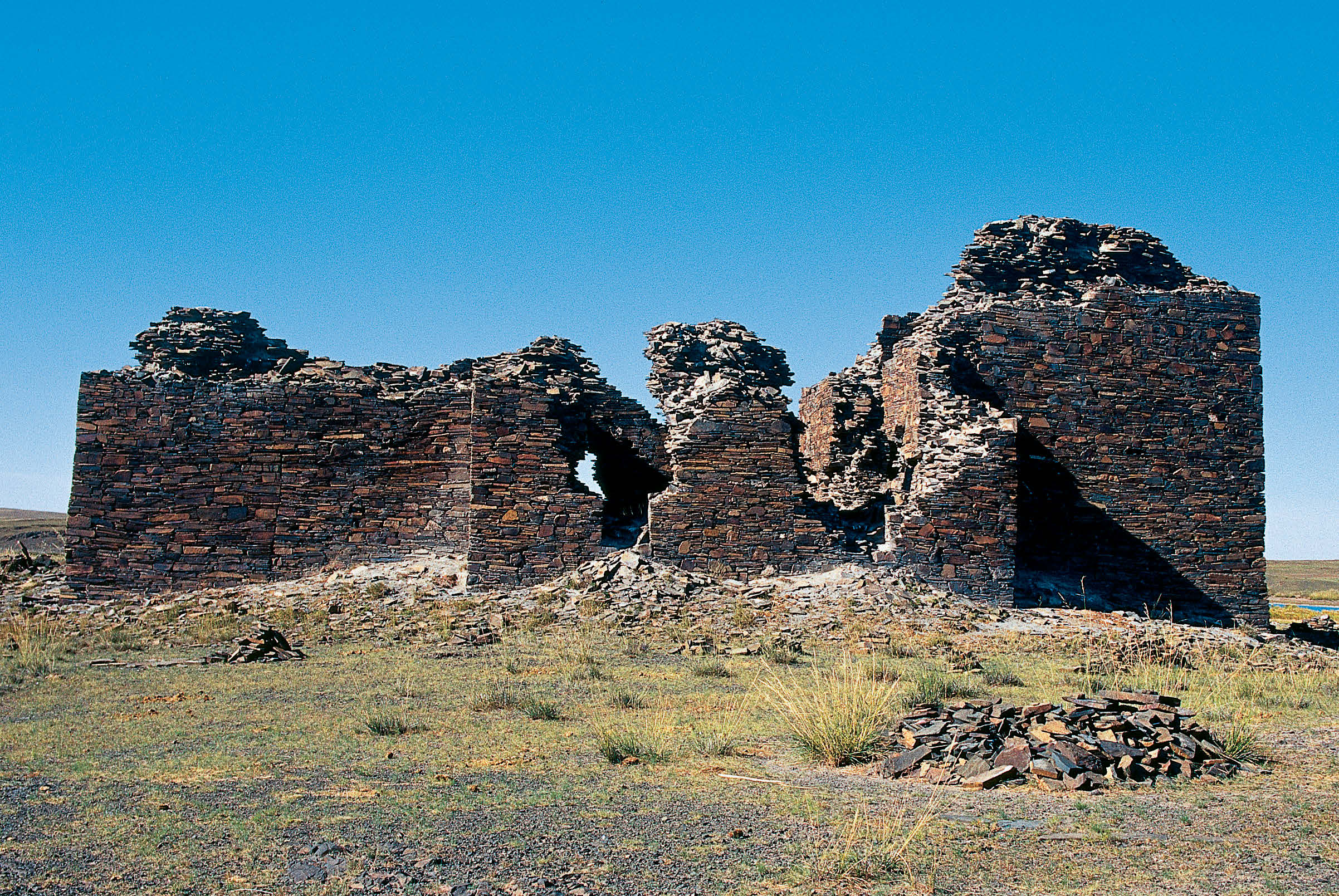
close to considering being baptized or supporting the Crusaders. To the contrary, his two letters to the pope include barely concealed threats of war: ‘This is a decree to the great pope. You sent us an offer of your submission, which we have accepted. You have said that I should become a trembling Christian, worship God, and become an ascetic. How do you know whom God absolves and whom He shows mercy? From the rising of the sun to its setting, all lands have been made subject to me. Who could do this contrary to the command of God? Thus, if you accept peace, you Pope in person at the head of the monarchs, all of you without exception, must come to tender us service and pay us hommage. But if you should not believe our letters and the command of God, then we shall know for certain that you wish to have war. Only God knows what will happen.’76 Güyük’s reply reveals the limits of the influence of the Nestorian dignitaries, who were evidently well disposed towards their European fellow believers. Güyük’s early death after only two years of rule spared Europe from a third campaign, as his successors Möngke and
接近于考虑受洗或支持十字军。相反,他写给教皇的两封信中包含着几乎不加掩饰的战争威胁:“这是致大教皇的敕令。你向我们送来了归顺的提议,我们已接受。你说我应当成为一个战战兢兢的基督徒,敬拜上帝,并成为苦修者。你怎知上帝赦免谁、怜悯谁?从日出之地到日落之处,万邦都已臣服于我。若非奉上帝之命,谁能做到这一点?因此,若你接受和平,你教皇本人,作为诸王之首,你们所有人无一例外,都必须前来为我们效劳并向我们称臣。但若你不相信我们的书信和上帝的命令,那么我们就会确知,你希望开战。只有上帝知道将会发生什么。”76 贵由 (Güyük) 的答复揭示了聂斯托利派 (Nestorian) 显贵影响力的限度,他们显然对其欧洲教友抱有好感。贵由 (Güyük) 在位仅两年便早逝,使欧洲免遭第三次征伐,因为他的继任者蒙哥 (Möngke) 和
Kublai no longer oriented their policies towards the west but rather towards the east.
忽必烈 (Kublai) 不再将其政策面向西方,而是转向东方。
Less skilful than Carpini were the two Dominicans Ascelin of Cremona and Simon of St Quentin, who spoke before General Baiju in Armenia in 1247. Their arrogant behaviour enraged the commander, who condemned them to death; they owed their reprieve to the arrival of Baiju’s superior, Eljigidei. He sent them back with a letter to the pope and accompanied by the Mongol Nestorian Sarkis. A year later Eljigidei, who was planning an attack on Baghdad for the summer of 1249, sent two Nestorians from northern Iraq, Mark and David, to Cyprus to King Louis IX of France. He offered Louis a military alliance against the Muslim opponents of the Crusaders and asked the pious Christian king to see to the protection of all the Christians living in the Crusaders states, including the Nestorians.77 When the two Nestorians erroneously told Louis that Güyük’s mother Töregene was a Christian, he decided to send the Dominican Andrew de Longjumeau, who had travelled to Tabriz in 1246/1247, to Eljigidei and the Great Khan. When he reached Mongolia in 1250, he met Güyük’s widow Oghul Qimish, who was serving as regent. Her response was cool, as she refused all military alliances and instead demanded tribute.78
1247 年,在亚美尼亚觐见拜住将军(General Baiju)的两名多明我会士——克雷莫纳的阿斯切林(Ascelin of Cremona)和圣康坦的西蒙(Simon of St Quentin)——远不如卡尔皮尼(Carpini)圆融。他们傲慢的举止激怒了将军,他判处二人死刑;拜住的上级额勒吉吉台(Eljigidei)到来后,他们才得以获释。他派二人带着一封给教宗的信返回,并让蒙古聂斯托利派人士萨尔吉斯(Sarkis)同行。一年后,正筹划于 1249 年夏季进攻巴格达的额勒吉吉台,派遣来自伊拉克北部的两名聂斯托利派人士马可(Mark)和大卫(David)前往塞浦路斯,拜见法兰西国王路易九世(Louis IX)。他向路易提出与十字军结成军事同盟,共同对抗穆斯林敌手,并请求这位虔诚的基督教国王保护居住在十字军诸国境内的所有基督徒,包括聂斯托利派人士。77 两名聂斯托利派人士误告路易,说贵由(Güyük)的母亲脱列哥那(Töregene)是基督徒,于是路易决定派遣多明我会士隆瑞莫的安德鲁(Andrew de Longjumeau)前往额勒吉吉台和大汗处;安德鲁曾于 1246/1247 年前往大不里士。1250 年,他抵达蒙古,见到了贵由遗孀斡兀立·海迷失(Oghul Qimish),她当时摄政。她态度冷淡,拒绝所有军事同盟,转而要求进贡。78
Only three stone tortoises, which serve as the bases of steles, recall the one- time capital of the Mongol Empire, Karakorum. The excavations begun by German archaeologists in 2000 have still not found the Nestorian church described by Rubruk.57a
只有三只石龟——它们充当石碑的基座——令人想起蒙古帝国昔日的都城哈拉和林 (Karakorum)。德国考古学家于2000年开始的发掘,至今仍未发现鲁布鲁克 (Rubruk) 所描述的景教教堂。57a
Catholic Europe not only misjudged the Mongol rulers and their policies, it also showed little understanding of its rediscovered sister Churches. In this regard, the Dominicans condemned Princess Sorqaqtani’s Nestorian confessor and long-time representative for Christian affairs, Rabbanata (†1259), whom they met in Tabriz, as ‘a usurer, magician, and heretic doomed to hell’.79 Presumably it was Rabbanata’s support for the East Syrians living in the Crusader states that raised the ire of the Dominicans. During de Longjumeau’s first visit to Tabriz, Rabbanata had given him a letter addressed to the pope, in which he requested
天主教欧洲 (Catholic Europe) 不仅误判了蒙古统治者及其政策,而且对其重新发现的姐妹教会也缺乏了解。在这方面,多明我会士 (Dominicans) 将他们在 大不里士 (Tabriz) 遇到的、唆鲁禾帖尼公主 (Sorqaqtani) 的聂斯托利派 (Nestorian) 告解神父兼长期负责基督教事务的代表拉巴纳塔 (Rabbanata)(†1259)斥为“放高利贷者、术士和注定下地狱的异端”。79 据推测,正是拉巴纳塔 (Rabbanata) 对居住在十字军国家 (Crusader states) 的东叙利亚人 (East Syrians) 的支持,激起了多明我会士的愤怒。在德·隆瑞莫 (de Longjumeau) 首次访问大不里士 (Tabriz) 期间,拉巴纳塔 (Rabbanata) 曾交给他一封致教皇的信,信中他请求
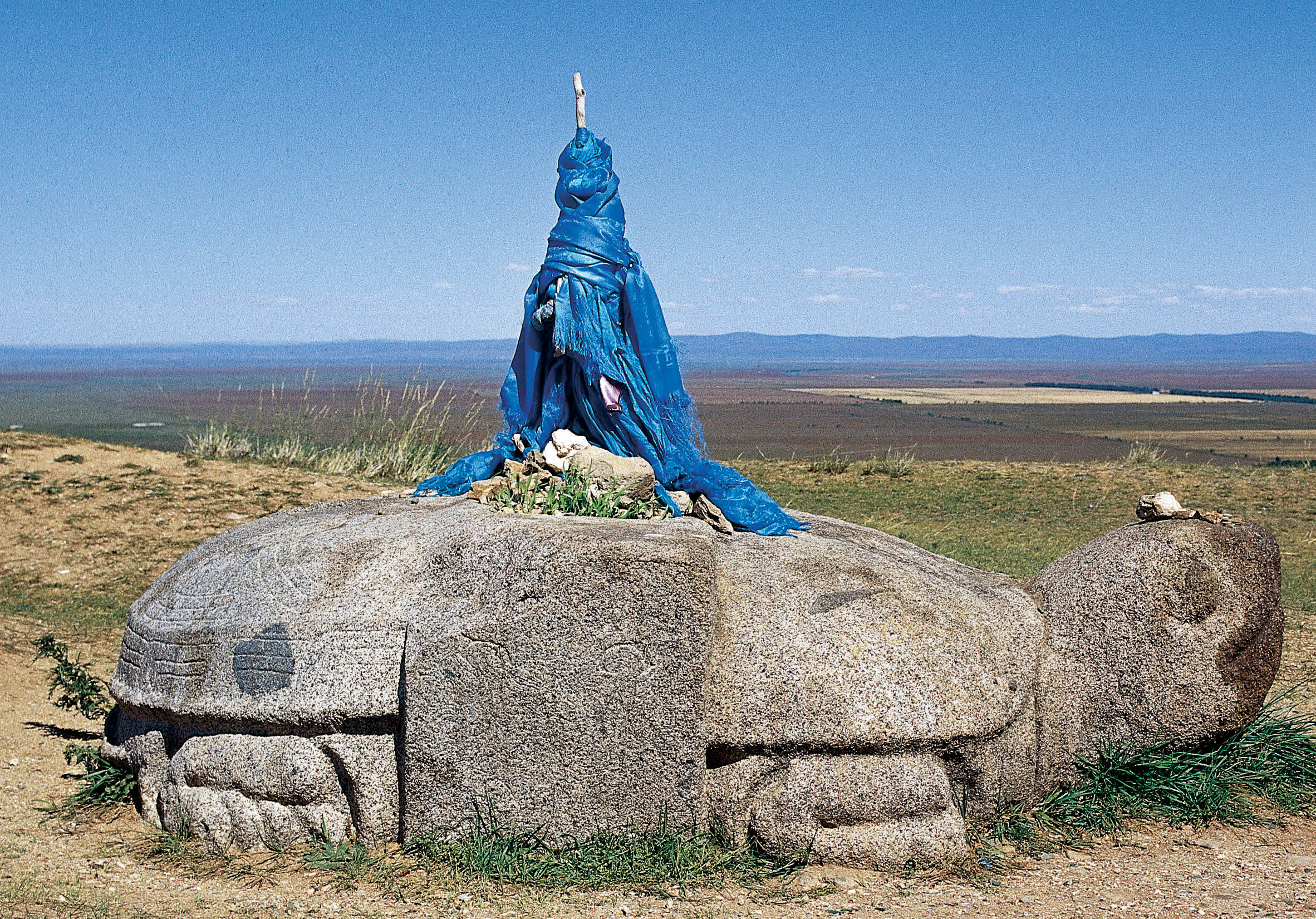
ecumenical unity in prayer and demanded that the Crusaders no longer harass the Nestorians living in the areas under their control.80 Although Catholic Europe appeared before the Mongols as a supplicant, it was unable to overcome its confessional arrogance and prejudices regarding the Oriental Christians. The Armenians, however, acknowledged Rabbanata’s merits without reservation, although they, as Miaphysites, rejected East Syrian Christology. Rabbanata had been sent to the Caucasus and Azerbaijan equipped with wide-ranging authority from Ögödei, in order to prevent the massacre of unarmed Christians of every confession. The Armenian chronicler Kirakos wrote: ‘He established churches in the Muslim cities, where it had until then been forbidden to utter the name of Christ. He built churches, raised crosses, and ordered the holding of worship services with processions, candles, and singing. All the Mongol troops showed him honour.’81 irreparably destroyed the Mongol world empire and saved Islamic Egypt from the fate of Baghdad.
在祈祷中的普世合一,并要求十字军 (Crusaders) 不再骚扰居住在其控制地区内的聂斯托利派 (Nestorians) 信徒。80 尽管天主教欧洲 (Catholic Europe) 以恳求者的姿态出现在蒙古人 (Mongols) 面前,却无法克服其在教派上的傲慢以及对东方基督徒 (Oriental Christians) 的偏见。 然而,亚美尼亚人 (Armenians) 毫无保留地承认拉班纳塔 (Rabbanata) 的功绩,尽管他们作为米亚弗西派 (Miaphysites) 拒绝东叙利亚基督论 (East Syrian Christology)。 拉班纳塔 (Rabbanata) 曾被派往高加索 (Caucasus) 和阿塞拜疆 (Azerbaijan),并携有窝阔台 (Ögödei) 授予的广泛权力,目的是防止对各个教派手无寸铁的基督徒的屠杀。 亚美尼亚编年史家基拉科斯 (Kirakos) 写道:“他在穆斯林城市中建立了教堂,而此前在那里连基督 (Christ) 之名都不许提及。他建造教堂,竖起十字架,并下令举行带有游行、蜡烛和歌唱的礼拜仪式。所有蒙古军队都向他表示敬意。”81 无可挽回地摧毁了蒙古世界帝国,并使伊斯兰埃及 (Islamic Egypt) 免遭巴格达 (Baghdad) 的命运。
Rubruk stayed with the Mongols for the first half of 1254, first in Möngke’s yurt camp and then in the capital Karakorum. Here the Nestorian clergy received him warmly. ‘The cross raised high with the flag, we proceeded to the church. The Nestorians met us in a procession. Entering the church, we found it prepared for Mass. After it had been celebrated, everyone received communion. They also asked me if I wanted it.’84 The Nestorians not only invited the Catholic Rubruk to the ecumenical communion but also allowed him to use the church so he could baptize three Catholic children. At Easter they then invited all Christians of various confessions – Armenians, Georgians, Melkite Alans, Russians, Hungarians and Western Europeans – to a shared worship service. Nevertheless, in his travel narrative Rubruk made disparaging remarks about the Nestorian priests: they were drunkards, ignorant, corrupt, greedy, at the death of their wives they would remarry, and their bishops would ordain boys as priests.85 He also complained that the Nestorians had removed the crucified figure from a silver cross that had been fashioned by the Karakorum silversmith William for Chancellor Bulgai. However, he acknowledged that at Easter they ‘baptized more than sixty people in very proper form’.86
1254年上半年,鲁布鲁克 (Rubruk) 与蒙古人待在一起,先是在蒙哥 (Möngke) 的毡帐营地,随后在首都哈拉和林 (Karakorum)。在这里,聂斯托利派 (Nestorian) 教士热情接待了他。“十字架与旗帜一同高擎,我们向教堂行进。聂斯托利派信徒列队迎接我们。进入教堂后,我们发现那里已为弥撒准备就绪。弥撒举行完毕后,所有人都领了圣体。他们还问我是否愿意领受。”84 聂斯托利派信徒不仅邀请天主教徒鲁布鲁克 (Rubruk) 参加普世性的圣餐礼,还允许他使用教堂,以便为三名天主教儿童施洗。到了复活节,他们又邀请各教派的基督徒——亚美尼亚人、格鲁吉亚人、梅尔基特派的阿兰人 (Melkite Alans)、俄罗斯人、匈牙利人和西欧人——参加共同的礼拜仪式。尽管如此,鲁布鲁克 (Rubruk) 在其游记中对聂斯托利派司铎作了贬损性描述:他们酗酒、无知、腐败、贪婪,妻子去世后会再婚,而他们的主教还会按立男童为司铎。85 他还抱怨说,聂斯托利派信徒从哈拉和林 (Karakorum) 银匠威廉 (William) 为大臣布尔盖 (Bulgai) 制作的一枚银十字架上取下了被钉十字架的苦像。然而,他承认,他们在复活节“以非常规范的方式为六十多人施洗”。86
Despite the rejection of Oghul Qimish, King Louis did not lose heart and sent the Franciscan William of Rubruk to the great khan. In the summer of 1253, in the territory of the Golden Horde near the river Volga, he met the eldest son of Batu Khan, Sartaq, who was a Nestorian. He ruled only briefly, however, from 1255 to 1256, since his Muslim uncle and successor Berke (ruled 1257–1266) had him poisoned.82 Although it escaped Rubruk’s notice that Sartaq was a Christian, he did notice his uncle’s conversion to Islam.83 In this conversion lay the seed of the conflict between the two western Mongol empires: the Golden Horde, which was slowly Islamicized, and the Iranian Il-Khans, who inclined more towards Buddhism and Christianity. Less than four years after taking power, Berke entered into a military alliance with the arch-enemy of the Il-Khans, the Islamic Mamluks of Egypt. Religious convictions were stronger than family and tribal ties, which
尽管遭到斡兀立·海迷失 (Oghul Qimish) 的拒绝,路易国王 (King Louis) 并未灰心,仍派遣方济各会士鲁布鲁克的威廉 (William of Rubruk) 前往大汗处。1253年夏,在伏尔加河 (Volga) 附近的金帐汗国 (Golden Horde) 领土内,他遇见了拔都汗 (Batu Khan) 的长子撒里答 (Sartaq),后者是一名聂斯托利派信徒 (Nestorian)。然而,他仅在1255年至1256年间短暂统治,因为他的穆斯林叔父兼继任者别儿哥 (Berke)(在位1257–1266年)将他毒死。82 尽管鲁布鲁克 (Rubruk) 没有注意到撒里答 (Sartaq) 是基督徒,但他确实注意到了其叔父皈依伊斯兰教。83 正是在这一皈依中,埋下了两个西部蒙古帝国之间冲突的种子:逐渐伊斯兰化的金帐汗国 (Golden Horde),以及更倾向于佛教和基督教的伊朗 (Iran) 的伊儿汗 (Il-Khans)。掌权不到四年,别儿哥 (Berke) 就与伊儿汗 (Il-Khans) 的宿敌、埃及 (Egypt) 的伊斯兰马穆鲁克 (Mamluks of Egypt) 缔结了军事同盟。宗教信念比家族和部落纽带更为强大,而
To all appearances Rubruk remained in solidarity with the Nestorians. When in 1254 Möngke ordered a great theological disputation at Pentecost between Christians, Muslims, Buddhists and an Uigur Manichaean, the Nestorians chose Rubruk as their spokesman. They presented a united front with the Muslims against the Buddhist by defending the oneness of God. Then the Nestorians debated with the Manichaean and the Muslims. Then, on Pentecost Sunday, Möngke summoned Rubruk and the leading Buddhists and explained to them
从各方面看,鲁布鲁克 (Rubruk) 始终与聂斯托利派 (Nestorians) 保持一致。1254年,蒙哥 (Möngke) 下令在五旬节 (Pentecost) 举行一场基督徒、穆斯林、佛教徒与一名回鹘 (Uigur) 摩尼教徒之间的大规模神学辩论,聂斯托利派推选鲁布鲁克 (Rubruk) 作为他们的代言人。他们与穆斯林结成统一战线,通过捍卫上帝的唯一性来对抗佛教徒。随后,聂斯托利派与摩尼教徒和穆斯林展开辩论。然后,在五旬节星期日,蒙哥 (Möngke) 召见鲁布鲁克 (Rubruk) 和佛教徒领袖,并向他们解释
Map of East Asia as mural painting in the Sala delle Mappe, also called the Sala dello Scudo, in the Palace of the Doges in Venice, sixteenth century, restored in the eighteenth century. On the map, on which north is below and south above, the old capital of the Mongol Empire, Caracoran (Karakorum), appears in the lower centre and the new capital, Cambalu (Beijing), to the left of it. unthinkable happened. Möngke died, and the Golden Horde threatened the northern border of Iran. Hülägü returned to Iran with most of the troops, and left his Nestorian general Kitbuqa with only a small army. When the Mameluk commander and future Sultan Baibars (r. 1260- 77) of Egypt asked the Crusaders for support against the Mongol invader, the Frankish barons helped Baibars by allowing him free passage through their territory. Baibars, who was originally a Kipchak horse warrior, subsequently defeated the outnumbered Kitbuqa at Ain Jalut near Nazareth and had him beheaded. Baibars ‘thanked’ the Crusaders for their help by seizing most of the coastal cities, such as Jaffa, Caesarea and Antioch. From then on the Mongol Il- Khanate of Iran was on the defensive, and – what his position on religion using the analogy of the five fingers.87
东亚地图,作为壁画,位于威尼斯 (Venice) 总督宫 (Palace of the Doges) 内的地图厅 (Sala delle Mappe),又称盾牌厅 (Sala dello Scudo),十六世纪,十八世纪修复。在这幅地图上,北方在下、南方在上,蒙古帝国 (Mongol Empire) 的旧都哈拉和林 (Caracoran, Karakorum) 出现在下方中央,新都汗八里 (Cambalu,即北京) 出现在其左侧。难以想象的事情发生了。蒙哥 (Möngke) 去世,金帐汗国 (Golden Horde) 威胁伊朗 (Iran) 北部边境。旭烈兀 (Hülägü) 率大部分军队返回伊朗 (Iran),只留下他的聂斯托利派 (Nestorian) 将领怯的不花 (Kitbuqa) 统领一支小规模军队。当埃及 (Egypt) 的马穆鲁克 (Mameluk) 指挥官、未来的苏丹拜巴尔斯 (Baibars,在位 r. 1260–77) 请求十字军 (Crusaders) 支持以对抗蒙古入侵者时,法兰克男爵 (Frankish barons) 通过允许他自由通过其领地来帮助拜巴尔斯 (Baibars)。拜巴尔斯 (Baibars) 原本是一名钦察 (Kipchak) 骑兵战士,随后在拿撒勒 (Nazareth) 附近的艾因贾鲁特 (Ain Jalut) 击败了寡不敌众的怯的不花 (Kitbuqa),并下令将其斩首。拜巴尔斯 (Baibars) 通过夺取雅法 (Jaffa)、凯撒利亚 (Caesarea) 和安条克 (Antioch) 等大部分沿海城市,“感谢”十字军 (Crusaders) 的帮助。从那时起,伊朗 (Iran) 的蒙古伊儿汗国 (Il-Khanate) 便处于守势,并且——他如何用五指的类比来表明自己的宗教立场。87
With regard to politics, Rubruk’s mission was a failure, as Möngke’s letter to King Louis reiterated Güyük’s demand: ‘As soon as you [Christian princes] are willing to obey us, send envoys to us. Then we will be certain if you want to have war or peace with us.’88 He made no mention of the French offer of an anti-Muslim alliance. The Mongol armies still appeared unbeatable, and the advance of Hülägü, Möngke’s brother, against the remaining Muslim powers unstoppable. In fact, in 1256/1257 the Mongols stormed and destroyed the fortresses of the feared Assassins and in 1258 conquered Baghdad, after which Damascus fell and the Mongols pushed on to Gaza – but then the
在政治方面,鲁布鲁克 (Rubruk) 的使命是一次失败,因为蒙哥 (Möngke) 致路易国王 (King Louis) 的信重申了贵由 (Güyük) 的要求:“一旦你们[基督教诸侯]愿意服从我们,就派使者到我们这里来。那时我们就会确定,你们是想与我们开战还是和平相处。”88 他未提及法国提出的反穆斯林联盟建议。蒙古军队看起来仍然不可战胜,而蒙哥 (Möngke) 的兄弟旭烈兀 (Hülägü) 对残余穆斯林势力的推进也势不可挡。事实上,1256/1257年,蒙古人攻陷并摧毁了令人畏惧的阿萨辛派 (Assassins) 的堡垒;1258年又征服了巴格达 (Baghdad),此后大马士革 (Damascus) 陷落,蒙古人继续推进至加沙 (Gaza)——但随后
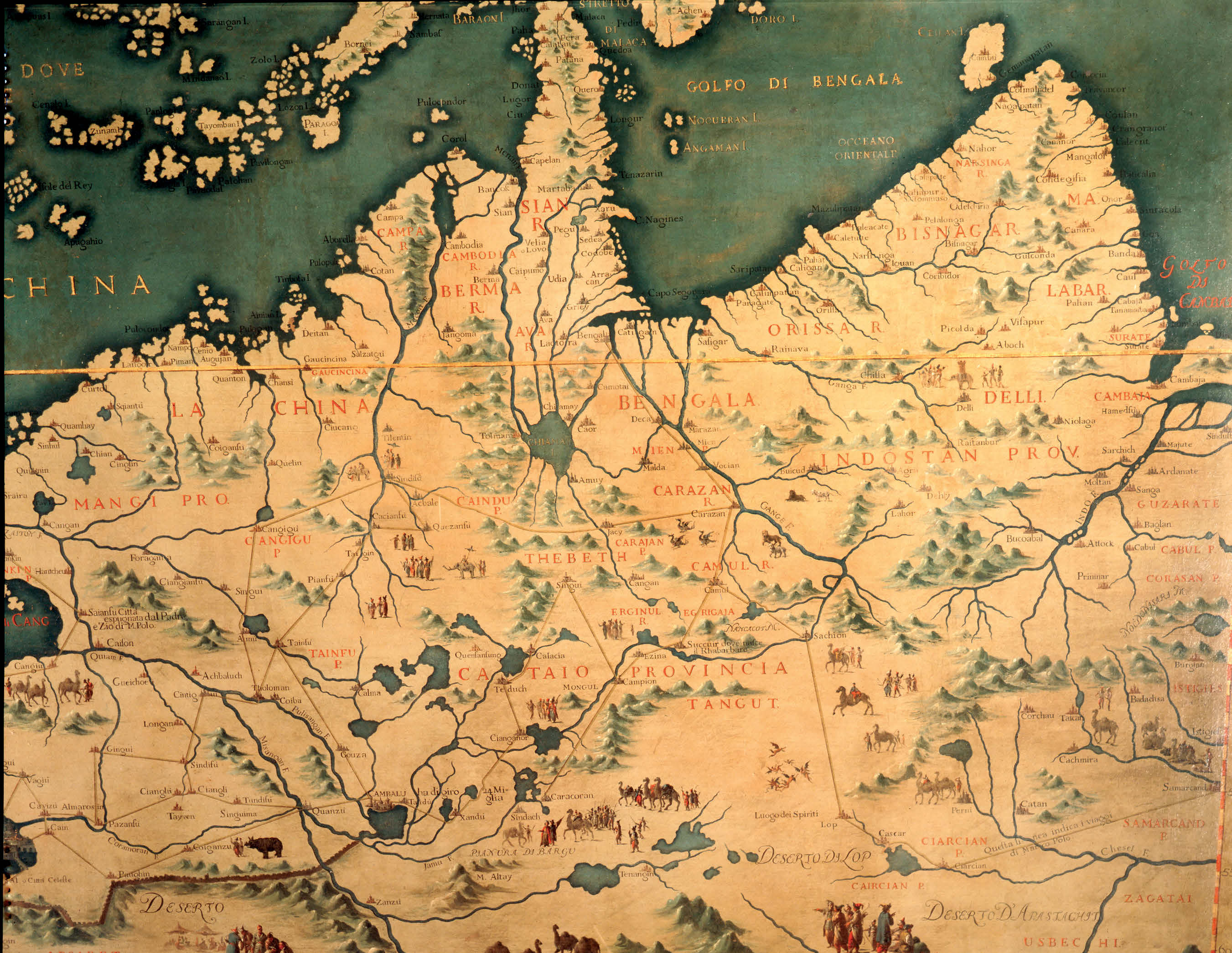
a reversal of fortune – appeared before Western Europeans, scorned just a few years earlier, as supplicants. For the Church of the East, however, the Muslim victory at Ain Jalut had serious long- term consequences.89
命运的逆转——就在几年前还遭人蔑视,如今却以恳求者的身份出现在西欧人面前。然而,对东方教会 (Ch. of E.) 而言,穆斯林在艾因贾鲁特 (Ain Jalut) 的胜利却产生了严重的长期后果。89
The most famous and influential Mongol princess was the niece of the vanquished Kerait king Toghril, Soqaqtani-Beki (†1252), whom Genghis Khan married to his son Tolui, while he married her sister Ibaka-Beki and gave her other sister, Bektumish-Beki, to his son Jöchi. Sorqaqtani not only gave birth to the Great Khan Möngke, Great Khan and Emperor Kublai Khan, his rival Arikböge, and Il-Khan Hülägü, she also was able, after the 1249 death of Great Khan Güyük, who came from the house of Ögödei, to change the succession to the house of her husband Tolui, who had died in 1232 – the house she led. Thus she succeeded in outmanoeuvring Güyük’s widow Oghul Qimish, who was serving as regent and wanted to place her nephew Shiramon on the throne. Before Sorqaqtani, the regent Töregene had already been able to help her son Güyük take the throne.91 In this way the clans of Ögödei, Jöchi and Chagatai were passed over, and Möngke was elected Great Khan in 1251. Almost twenty years earlier, after Tului’s death, Great Khan Ögödei had tried in vain to persuade Sorqaqtani to wed his son Güyük. In 1310, almost sixty years after her death, she was posthumously granted the title of empress, and liturgies according to the East Syrian rite were celebrated in the capital Beijing and in her burial chapel in present-day Zhangye in the province of Gansu.92
最著名、最具影响力的蒙古公主是被击败的克烈部王脱斡邻 (Toghril) 的侄女唆鲁禾帖尼·别吉 (Soqaqtani-Beki, †1252)。成吉思汗将她嫁给了其子拖雷 (Tolui),同时娶了她的姐妹亦巴合·别吉 (Ibaka-Beki),并将她的另一位姐妹别克秃迷失·别吉 (Bektumish-Beki) 嫁给了其子术赤 (Jöchi)。唆鲁禾帖尼 (Sorqaqtani) 不仅生下了大汗蒙哥 (Möngke)、大汗兼皇帝忽必烈汗 (Kublai Khan)、忽必烈的对手阿里不哥 (Arikböge) 以及伊儿汗旭烈兀 (Il-Khan Hülägü),而且在来自窝阔台家族的大汗贵由 (Güyük) 于1249年去世后,她还得以将继承权转归她丈夫拖雷 (Tolui) 的家族——即她所领导的家族;拖雷已于1232年去世。因此,她成功智胜了贵由的遗孀斡兀立海迷失 (Oghul Qimish);后者当时担任摄政,并想将自己的侄子失烈门 (Shiramon) 推上汗位。在唆鲁禾帖尼之前,摄政脱列哥那 (Töregene) 已经得以帮助其子贵由 (Güyük) 登上汗位。91 这样一来,窝阔台 (Ögödei)、术赤 (Jöchi) 和察合台 (Chagatai) 诸家族均被越过,蒙哥 (Möngke) 于1251年被选为大汗。差不多二十年前,在拖雷 (Tului) 去世后,大汗窝阔台 (Ögödei) 曾徒劳地试图说服唆鲁禾帖尼 (Sorqaqtani) 嫁给其子贵由 (Güyük)。1310年,即她去世近六十年后,她被追封为皇后,并按东叙利亚礼 (East Syrian rite) 在都城北京 (Beijing) 以及她位于今甘肃省张掖 (Zhangye) 的墓葬礼拜堂中举行了礼拜仪式。92
Nestorian Mongol princesses and high-ranking Nestorian dignitaries
聂斯托利派 (Nestorian) 蒙古公主与聂斯托利派高级显贵
At the time of the Mongol Great Khans and the Yuan Dynasty (1271–1368), the Church of the East found itself in the forecourt of power, so to speak. The goodwill shown towards Christianity rested on three pillars: first, the traditional religious toleration of the Mongol rulers, which benefited all faiths; second, the far-reaching marital alliances established over several generations between the family of Genghis Khan and the Turko-Mongol tribes of Christian faith; and, third, the high educational level of the Nestorians. In particular, the three great khans who succeeded Genghis Khan, Ögödei, Güyük and Möngke, prized the services of Nestorians who could read and write. Under the founder of the Yuan Dynasty, Kublai Khan (ruled 1260–1294), two additional motives emerged for the preference for Nestorians. First, after the conquest of southern China, completed in 1279, Kublai divided society into four social classes: at the top Mongols, then foreigners such as Central Asians and Iranians, third northern Chinese, and finally southern Chinese. In the appointment to high office, the first two classes enjoyed the advantage. The Nestorians, whose numbers were small in comparison to the total population of China, were disproportionately represented in the two upper classes and hardly found at all in the lower classes. Second, the emperor harboured a certain mistrust towards Muslims because the concept of holy war, laid out in the Koran, contradicted the Mongol principle of religious toleration.90
在蒙古大汗 (Mongol Great Khans) 与元朝 (Yuan Dynasty, 1271–1368) 时代,东方教会 (Church of the East) 可以说已置身于权力的前庭。对基督教所表现出的善意建立在三大支柱之上:第一,蒙古统治者传统的宗教宽容,这一宽容使所有信仰都从中受益;第二,成吉思汗 (Genghis Khan) 家族与信奉基督教的突厥-蒙古部落 (Turko-Mongol tribes) 之间历经数代建立起来的深远联姻;第三,聂斯托利派信徒 (Nestorians) 较高的教育水平。尤其是继承成吉思汗的三位大汗——窝阔台 (Ögödei)、贵由 (Güyük) 和蒙哥 (Möngke)——都看重能读会写的聂斯托利派信徒的服务。在元朝 (Yuan Dynasty) 的创立者忽必烈汗 (Kublai Khan,1260–1294 年在位) 治下,对聂斯托利派信徒的偏爱又出现了两个额外动因。第一,在 1279 年完成对中国南方的征服之后,忽必烈将社会划分为四个社会等级:最上层是蒙古人,其次是中亚人和伊朗人等外来者,第三是北方汉人,最后是南方汉人。在任命高级官职时,前两个等级享有优势。聂斯托利派信徒的人数与中国总人口相比很少,却在这两个上层等级中所占比例过高,而在下层等级中几乎不见踪影。第二,皇帝对穆斯林 (Muslims) 怀有一定的不信任,因为《古兰经》 (Koran) 中所阐述的圣战 (holy war) 观念与蒙古人的宗教宽容原则相矛盾。90
Sorqaqtani was an extraordinary individual, who carefully prepared her sons for their future roles and had great diplomatic skills. The Miaphysite bishop and historian Bar Hebraeus (†1286) wrote of her: ‘This queen raised her sons so well that all the princes marvelled at her power of administration. [She had led the clan of Tolui since 1232.] She was a Christian, sincere and true like [Queen] Helena. A certain poet said, if I were to see a second woman like her, I should say that the race of women was far superior to that of men.’93 It should be added that the social status of women among the Mongols was incomparably better than it was in China, for instance, or
唆鲁禾帖尼 (Sorqaqtani) 是一位非凡人物,她悉心为儿子们未来的角色做好准备,并拥有高超的外交才能。米亚弗西派 (Miaphysite) 主教兼历史学家巴尔·赫卜拉乌斯 (Bar Hebraeus)(†1286)曾这样写到她:“这位皇后把儿子们教养得如此之好,以致所有王公都惊叹于她的治理才能。[她自1232年起便统领拖雷 (Tolui) 的部众。]她是一名基督徒,像[皇后]海伦娜 (Helena) 一样真诚而忠实。某位诗人说过,倘若我能见到第二个像她这样的女人,我就要说女性这一族类远胜于男性。”93 还应补充的是,蒙古人当中女性的社会地位,比在中国的情况无可比拟地更优越,举例来说,或
in the Muslim societies. It is a phenomenon observed among many nomadic peoples that the woman is equal to the man in her area of life, and has wide-ranging responsibi-lities not only in household affairs but also in the management of the herds.
在穆斯林社会中。在许多游牧民族中可以观察到一种现象:女性在其生活领域中与男性平等,并且不仅在家务事中,而且在畜群管理方面也承担着广泛的责任。
Ögödei and that of Tolui, they took the side of Güyük’s widow Oghul Qimish and supported the Ögödei’s clan. But when, thanks to his mother Sorqaqtani, Möngke prevailed, he had both ministers executed in 1251/1252. However, this did not prevent Chinkai’s descendants from holding high state offices during the Yuan Dynasty.96 The Nestorian Bulgai had a similar biography. He served Möngke as finance and interior minister; in the latter function he was responsible for the great khan’s security. The Muslim historian Juvaini reported that Bulgai appeared at the Möngke’s enthronement as the ‘leader of all ministers’ – that is, as prime minister.97 But, like Chinkai and Qadaq, after Möngke’s death he chose the wrong side. He supported the loser Arikböge against his brother Kublai Khan, who had him executed in 1264.
窝阔台 (Ögödei) 系和拖雷 (Tolui) 系站在贵由 (Güyük) 的遗孀斡兀立海迷失 (Oghul Qimish) 一边,支持窝阔台家族。但是,当蒙哥 (Möngke) 因其母唆鲁禾帖尼 (Sorqaqtani) 而得势后,他于1251/1252年将两位大臣处死。然而,这并未阻止镇海 (Chinkai) 的后裔在元朝 (Yuan Dynasty) 担任高级官职。96 景教徒孛鲁合 (Bulgai) 也有类似的经历。他在蒙哥 (Möngke) 手下担任财政与内政大臣;在后一职位上,他负责大汗的安全。穆斯林历史学家志费尼 (Juvaini) 记载,孛鲁合 (Bulgai) 在蒙哥 (Möngke) 即位时以“众大臣之长”的身份出现——也就是作为宰相。97 但是,像镇海 (Chinkai) 和哈达克 (Qadaq) 一样,蒙哥 (Möngke) 死后他站错了队。他支持失败者阿里不哥 (Arikböge) 对抗其兄忽必烈汗 (Kublai Khan),后者于1264年将他处死。
Sorqaqtani’s cousin Dokuz Khatun (†1265), likewise a pious Nestorian, was a still more resolute champion of her religion. Dokuz Khatun was at first like Sorqaqtani married to Genghis Khan’s youngest son, Tului, and after his death she married one of the sons resulting from the marriage of Tului with her cousin, namely Hülägü, the conqueror of Mesopotamia. Dokuz Khatun’s niece, the Nestorian Tuqiti Khatun, also married Hülägü. Dokuz Khatun exercised great influence over her husband and arranged for him to have several churches built, in which the Buddhist Hülägü attended mass. She also saw to it that the discriminatory measures placed on Christians were lifted.94 Her son Abaqa (ruled 1265–1282) also had a Nestorian wife, named Nukdan Khatun, as did his son Arghun (ruled 1284–1291). This wife was Uruk Khatun, who had her son baptized with the name Nicholas, but he converted to Islam for political reasons and ruled under the name Oljaitu (ruled 1304–1316).95
唆鲁禾帖尼 (Sorqaqtani) 的表亲脱古思可敦 (Dokuz Khatun,†1265) 同样是一位虔诚的聂斯托利派 (Nestorian) 信徒,更是其宗教信仰更为坚定的捍卫者。脱古思可敦起初与唆鲁禾帖尼一样,嫁给了成吉思汗 (Genghis Khan) 的幼子拖雷 (Tului);他死后,她又嫁给了拖雷与她表亲(唆鲁禾帖尼)所生的一个儿子,即美索不达米亚 (Mesopotamia) 的征服者旭烈兀 (Hülägü)。脱古思可敦的侄女、聂斯托利派信徒图奇提可敦 (Tuqiti Khatun) 也嫁给了旭烈兀。脱古思可敦对丈夫施加了巨大影响,并安排为他修建了数座教堂,身为佛教徒的旭烈兀曾在这些教堂中参加弥撒。她还设法使针对基督徒的歧视性措施得以解除。94 她的儿子阿八哈 (Abaqa)(1265–1282 年在位)也娶了一位聂斯托利派信徒为妻,名叫努克丹可敦 (Nukdan Khatun);他的儿子阿鲁浑 (Arghun)(1284–1291 年在位)也是如此。这位妻子就是乌鲁克可敦 (Uruk Khatun),她让儿子受洗并取名为尼古拉斯 (Nicholas),但他后来出于政治原因皈依伊斯兰教,并以完者都 (Oljaitu) 之名进行统治(1304–1316 年在位)。95
General Kitbuqa, a Nestorian from the tribe of the Naiman or Kerait, also met with a violent death. As Hülägü’s best commander, he participated substantially in the 1258 conquest of Baghdad and the defeat of the powerful Assassin sect. After the conquests of Aleppo and Damascus, Hülägü appointed him governor there. The Christians greeted Kitbuqa and Hülägü as liberators sent by God to free them from six hundred years of Muslim bondage. For the Christians of Mesopotamia and Syria the appearance of the Nestorian General Kitbuqa seemed to herald a new era, in which they would for the first time have equal rights with the Muslims. They secretly hoped that Hülägü, under the influence of his Christian wife Dokuz Khatun, would convert to Christianity. To the oppressed Christians Kitbuqa appeared as a historic St George who stormed in from Asia to liberate and avenge them. They had gratefully noticed that, during the conquest of Baghdad and Aleppo, the Mongols had spared the Christians from the general massacre each time. For a short time there emerged the dream that Christians would rule the Middle East again and
怯的不花将军 (General Kitbuqa),一位来自乃蛮部 (Naiman) 或克烈部 (Kerait) 的聂斯托利派信徒 (Nestorian),也死于非命。作为旭烈兀 (Hülägü) 最得力的指挥官,他在很大程度上参与了1258年对巴格达 (Baghdad) 的征服以及击败强大的阿萨辛派 (Assassin sect)。在征服阿勒颇 (Aleppo) 和大马士革 (Damascus) 之后,旭烈兀任命他为当地总督。基督徒们把怯的不花和旭烈兀视为上帝派来的解放者,要将他们从六百年的穆斯林奴役中解救出来。对美索不达米亚 (Mesopotamia) 和叙利亚 (Syria) 的基督徒来说,聂斯托利派将军怯的不花 (Nestorian General Kitbuqa) 的出现似乎预示着一个新时代:在这个时代,他们将首次与穆斯林享有平等权利。他们暗中希望,旭烈兀 (Hülägü) 会在其基督徒妻子脱古思可敦 (Dokuz Khatun) 的影响下皈依基督教。对被压迫的基督徒而言,怯的不花 (Kitbuqa) 就像一位历史性的圣乔治 (St George),从亚洲席卷而来,要解放他们并为他们复仇。他们感激地注意到,在征服巴格达 (Baghdad) 和阿勒颇 (Aleppo) 期间,蒙古人 (Mongols) 每次都使基督徒免遭大屠杀。在短暂的一段时间里,出现了一个梦想:基督徒将再次统治中东 (Middle East),并且
Besides these princesses, the Nestorians Khan Sartaq and King Görgüz of the Öngüt, Nestorian ministers and military commanders also exercised considerable influence. Chief among these were Chinkai, born c.1171, and later Qadaq. Both were, first, long-time commanders under Genghis Khan, after which they served Ögödei and Güyük as ministers. After his military career Chinkai became governor of Altai, then state secretary under Ögödei and chancellor under Güyük, as which he ruled northern China practically independently. Qadaq, for his part, was Güyük’s tutor and rose to become imperial administrator. In the power struggle that broke out after Güyük’s death, between the house of
除这些公主外,聂斯托利派 (Nestorians) 可汗撒里答 (Sartaq)、汪古部 (Öngüt) 的王阔里吉思 (Görgüz),以及聂斯托利派大臣和军事将领也发挥了相当大的影响。其中最主要的是约1171年出生的镇海 (Chinkai),以及后来的哈达克 (Qadaq)。两人起初都是成吉思汗 (Genghis Khan) 麾下的长期指挥官,之后又作为大臣效力于窝阔台 (Ögödei) 和贵由 (Güyük)。军事生涯结束后,镇海 (Chinkai) 出任阿尔泰 (Altai) 总督,随后在窝阔台 (Ögödei) 治下任中书令,在贵由 (Güyük) 治下任丞相,并以此身份几乎独立地统治中国北方。哈达克 (Qadaq) 则曾是贵由 (Güyük) 的老师,后来升任帝国行政官。在贵由 (Güyük) 死后爆发的权力斗争中,在……家族与……之间
Mesopotamia for the first time. One can in fact speculate that a triple alliance of the Mongols with the Crusaders and Byzantium might have broken the sole remaining Muslim power, the Mamluks. This in turn might have inspired the Mongol Il-Khans to accept not Islam, which was alien to them, but rather Christianity, which was familiar on account of family relationships. But it worked out differently, as Kitbuqa was decisively defeated on 3 September 1260 at Ain Jalut, after which the victorious Mamluks conquered Damascus and carried out a bloodbath among the Christians as revenge.98 came from the Chu valley in Kyrgyzstan.99 A less militaristic path was chosen by the Nestorian Simeon Rabbanata (†1259), who was first Toghril Khan’s adviser and later provided pastoral guidance to Toghril’s niece Sorqaqtani.100 After 1233 Great Khan Möngke sent him as an authorized representative for Christian affairs to Azerbaijan and Armenia, where he successfully put an end to the murder of unarmed Christians. At the same time he had churches built in the region around Tabriz, which was hostile to Christians, and baptized many Mongols. Rabbanata worked to establish ecumenical dialogue with Rome, but because of the Roman high-handedness and inflexibility these efforts remained unsuccessful.101
首次进入美索不达米亚 (Mesopotamia)。事实上,人们可以推测,蒙古人 (Mongols) 与十字军 (Crusaders) 及拜占庭 (Byzantium) 的三方联盟,或许已经摧毁了唯一残存的穆斯林势力——马穆鲁克 (Mamluks)。这反过来或许会促使蒙古伊儿汗 (Il-Khans) 接受的不是对他们而言陌生的伊斯兰教 (Islam),而是因家族关系而熟悉的基督教 (Christianity)。但事态的发展截然不同:怯的不花 (Kitbuqa) 于1260年9月3日在艾因·贾鲁特 (Ain Jalut) 被决定性地击败,此后获胜的马穆鲁克 (Mamluks) 征服了大马士革 (Damascus),并对基督徒 (Christians) 进行了一场血腥屠杀作为报复。98 他来自吉尔吉斯斯坦 (Kyrgyzstan) 的楚河河谷 (Chu valley)。99 聂斯托利派的西缅·拉班纳塔 (Simeon Rabbanata)(†1259)选择了一条较少军事化的道路,他起初是脱斡邻汗 (Toghril Khan) 的顾问,后来为脱斡邻的侄女唆鲁禾帖尼 (Sorqaqtani) 提供牧养指导。100 1233年后,大汗蒙哥 (Möngke) 派他作为负责基督教事务的全权代表前往阿塞拜疆 (Azerbaijan) 和亚美尼亚 (Armenia),他在那里成功制止了对手无寸铁的基督徒的屠杀。与此同时,他让人在对基督徒怀有敌意的大不里士 (Tabriz) 周边地区修建教堂,并为许多蒙古人 (Mongols) 施洗。拉班纳塔 (Rabbanata) 致力于与罗马 (Rome) 建立大公对话,但由于罗马的专横与僵化,这些努力未能成功。101
The citadel of Aleppo, Syria, fell in 1260 to the Nestorian Mongol general Kitbuqa, whose ruler Hülägü was very well disposed towards the Church of the East. The Christians of Aleppo and Damascus celebrated the Mongols as liberators from the Islamic yoke. The present fortifications date back to the Ayyubid Sultan Zahir Ghazi (ruled 1193–1215); the Mamluks rebuilt them after the destructions of 1260 and 1400 in the years 1292 and 1402. The citadel was damaged in July 2015 during the Syrian Civil War.
叙利亚 (Syria) 的阿勒颇城堡 (Citadel of Aleppo) 于 1260 年落入聂斯托利派 (Nestorian) 蒙古将领怯的不花 (Kitbuqa) 之手,其统治者旭烈兀 (Hülägü) 对东方教会 (Ch. of E.) 十分友善。阿勒颇 (Aleppo) 和大马士革 (Damascus) 的基督徒将蒙古人视为把他们从伊斯兰枷锁下解放出来的解放者,并为此欢庆。现存的防御工事可追溯至阿尤布王朝 (Ayyubid) 苏丹扎希尔·加齐 (Zahir Ghazi)(在位 1193–1215 年);在 1260 年和 1400 年遭破坏之后,马穆鲁克人 (Mamluks) 又于 1292 年和 1402 年对其进行了重建。该城堡在 2015 年 7 月叙利亚内战 (Syrian Civil War) 期间遭到损坏。
Besides Kitbuqa other Nestorian military commanders are known by name, such as, for example, one Giwargis, one Sauma, who died in 1272 and one Yohannan Tegin, all three of whom
除怯的不花 (Kitbuqa) 外,还有其他聂斯托利派军事指挥官的名字为人所知,例如一位名叫吉瓦尔吉斯 (Giwargis) 的人、一位名叫扫马 (Sauma) 的人(卒于1272年),以及一位名叫约翰南·特金 (Yohannan Tegin) 的人,这三人全都
Under the dynasty of the Yuan (1271–1368)
在元朝 (Yuan) 统治下(1271–1368)
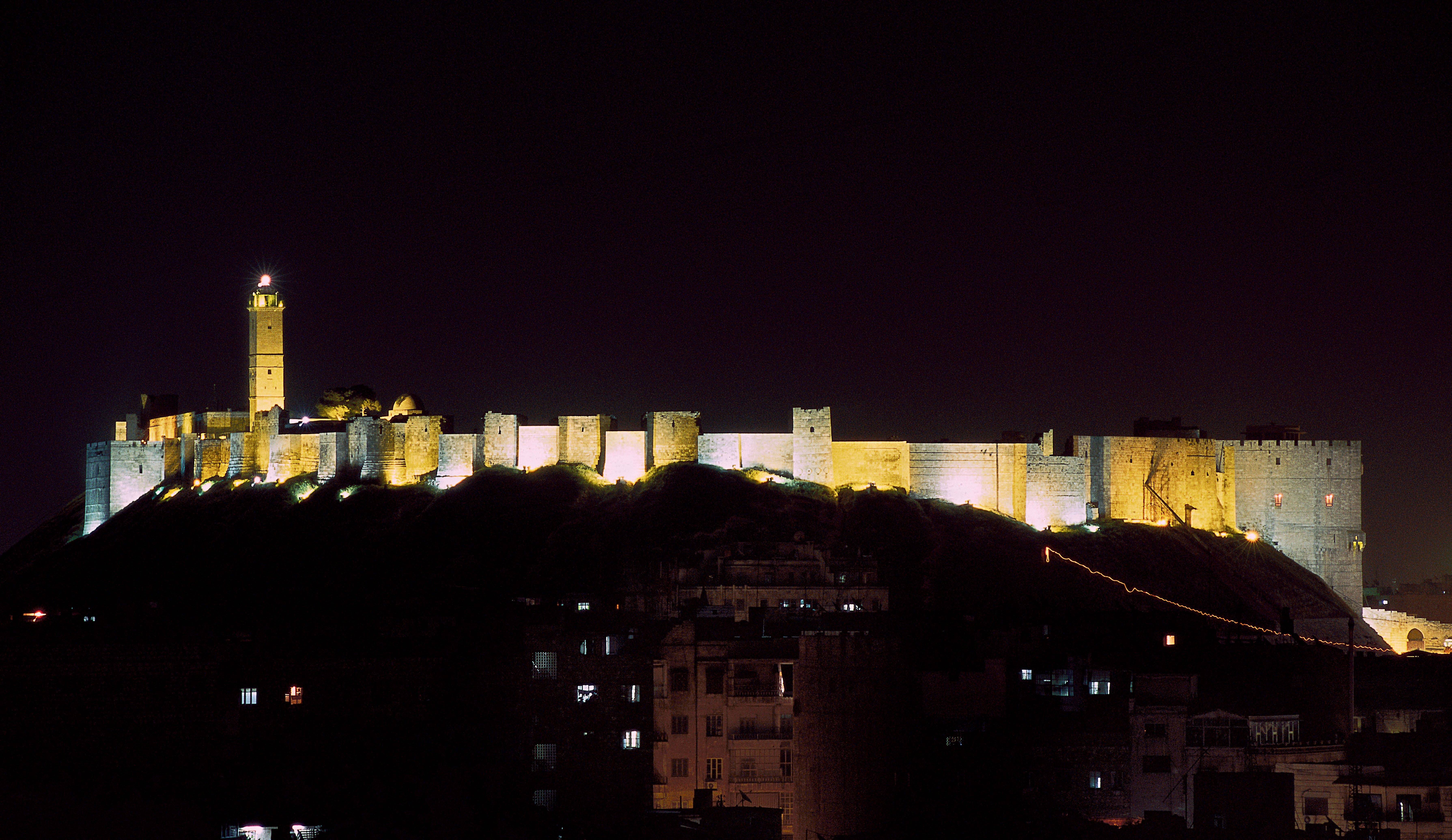
Nestorians also occupied high office, although their power was less than that of their forebears who had served the great khans. In China at that time Christians of all confessions were called Yelikewen, the phonetic rendering of the Mongol term Ärkä’ün. This was then connected to the Greek, with the accusative form the Nestorian Mar Sargis was an important participant. He came from Samarqand, and his father and both grandfathers were renowned physicians at the court of the great khan and the imperial family. From 1277 to 1280 or 1282 Mar Sargis served as vice-governor of the strategically important district of Zhenjiang at the juncture of the great canal with the Yangtze. A Chinese chronicle from 1333 reported: ‘One evening in a dream seven gates were opened and two angels addressed him: You must raise seven monasteries. When he awoke, he felt inspired, and then resigned office and devoted himself to building the monasteries.’105 Mar Sargis did have six monasteries constructed in the district of Zhenjiang and another in the port city of Hangzhou.106 In addition, three more Nestorian churches stood north of Zhenjiang in Yangzhou,107 an important river port on the great canal, and a total of six Christian churches were found in the port city of Zaitun, today Quanzhou in the province of Fujian.108 of the nominative
聂斯托利派人士也担任高级官职,不过他们的权势不及先辈——后者曾效力于大汗。在当时的中国(China),各派基督徒都被称为“也里可温”(Yelikewen),这是蒙古语“Ärkä’ün”的音译。这个称谓随后又与希腊语联系起来,采用宾格形式。聂斯托利派的马尔·萨尔吉斯是一位重要参与者。他来自撒马尔罕(Samarqand);他的父亲和两位祖父都是大汗(great khan)及皇室宫廷中著名的医师。1277年至1280年或1282年间,马尔·萨尔吉斯担任镇江(Zhenjiang)这一战略要地的副总管;镇江位于大运河与长江(Yangtze)交汇处。一部1333年的中国编年史记载:“一晚,他梦见七道门打开,两位天使对他说:你必须建造七座修道院。他醒来后深受感动,于是辞去官职,投身于修建修道院。”105 马尔·萨尔吉斯确实在镇江辖区内建造了六座修道院,并在港口城市杭州(Hangzhou)另建一座。106 此外,镇江以北的重要运河港口扬州(Yangzhou)还有三座聂斯托利派教堂;107 港口城市刺桐(Zaitun)——即今天福建省(Fujian)的泉州(Quanzhou)——则共有六座基督教堂。108 主格形式
, archon, which means ‘chief’, ‘leader’.102 Thus the Greek term was taken up first by Syriac, after which Nestorian Turko-Mongols adopted it into Uigur and Mongol, and it finally appeared in the vocabulary of Chinese administration.
,执政官 (archon),意为“首领”、“领袖”。102 因此,这个希腊语词首先被叙利亚语 (Syriac) 吸收,之后聂斯脱利派 (Nestorian) 突厥-蒙古人将其采纳进回鹘语 (Uigur) 和蒙古语 (Mongol),最终出现在中国行政词汇中。
The most important Nestorian who served the Yuan was the Syrian-born physician and astronomer Ai Xieh (Jesus, 1227–1308). Rabbanata introduced him to Güyük, after which Kublai Khan appointed him head of the office for Western astronomy and medicine. In 1284 Kublai Khan ordered the Nestorian, who was skilled in languages, to serve as translator for a high-ranking delegation to Il-Khan Arghun in Baghdad. From there Ai Xieh took to Pope Honorius IV (in office 1285–1287) a letter, in which the Mongol Il-Khan offered the pope an offensive military alliance against Egypt: ‘The land of Egypt lies between us, we will crush it. We are sending you these messengers and ask you to send an expedition and an army to the land of Egypt. We [will come] from our side and you from yours, so that we will crush them.’103 After his return Kublai named him head of the office for Christian religion in 1291, and in 1297 he was promoted to state minister. He received the posthumous title of a ‘loyal and learned prince of Fulin’. His five Nestorian sons also held high office; however, in 1330 his eldest son Elias was charged with rebellion and sorcery, and beheaded.104
在元朝任职的最重要的聂斯托利派 (Nestorian) 信徒,是出生于叙利亚的医生和天文学家爱薛 (Ai Xieh, Jesus, 1227–1308)。拉班·阿塔 (Rabbanata) 将他引荐给贵由 (Güyük),此后,忽必烈汗 (Kublai Khan) 任命他为西域星历、医药司 (office for Western astronomy and medicine) 长官。1284年,忽必烈汗 (Kublai Khan) 命令这位精通多种语言的聂斯托利派信徒担任前往巴格达 (Baghdad) 的伊儿汗阿鲁浑 (Il-Khan Arghun) 处的高级使团译员。爱薛 (Ai Xieh) 从那里带给教皇何诺四世 (Pope Honorius IV,在位 1285–1287) 一封信,信中蒙古伊儿汗向教皇提议结成进攻埃及的军事同盟:“埃及之地横亘于我们之间,我们将摧毁它。我们派这些使者前来,请你派一支远征军和军队前往埃及之地。我们[将]从我们这边来,你从你那边来,以便我们摧毁他们。”103 他返回后,忽必烈于1291年任命他为崇福司 (office for Christian religion) 长官,1297年,他升任宰相。他获谥“拂林忠献王” (loyal and learned prince of Fulin)。他的五个儿子都是聂斯托利派信徒,也都担任高官;然而,1330年,他的长子埃利亚斯 (Elias) 被控谋反和巫术,并被斩首。104
But time worked against the Church of the East, as the Mongol emperors of China, following the death of Kublai Khan in 1294, conformed themselves rather quickly to their Chinese milieu and took increasing attention to its requirements. In 1304 Taoists from Zhenjiang accused the Nestorians in a civil court of converting Taoists south of the Yangtze to Christianity. The verdict favoured the Taoists: ‘Yelikewen are prohibited from usurping precedence in public worship. South of the river [Yangtze] from old times there had only been Buddhism and Taoism, each with its jurisdiction, there had been no Yelikewen besides.’109 The Buddhist clergy of Zhenjiang were also upset about the obvious popularity of the Nestorian monasteries and complained to the central authorities, whereupon in 1311 (or 1309) two imperial decrees were issued. The first ordered: ‘The Yelikewen have taken it to themselves to build Monasteries of the Cross on
然而,时间对东方教会 (Ch. of E.) 不利:1294年忽必烈汗 (Kublai Khan) 去世后,中国的蒙古皇帝很快便适应了其中国环境,并越来越关注其需求。1304年,来自镇江 (Zhenjiang) 的道教徒在民事法庭上指控聂斯托利派 (Nestorians) 使长江 (Yangtze) 以南的道教徒皈依基督教。判决偏袒道教徒:“禁止也里可温 (Yelikewen) 在公共礼拜中僭越居先。该河 [长江] 以南,自古以来只有佛教和道教,各有其管辖范围,此外并无也里可温 (Yelikewen)。”109 镇江的佛教僧侣也对聂斯托利派修道院明显广受欢迎感到不满,并向中央当局抱怨,于是1311年(或1309年)颁布了两道敕令。第一道敕令命令:“也里可温 (Yelikewen) 擅自建造十字寺 (Monasteries of the Cross) 于
As a result of the Mongol conquest of southern China, accomplished between 1276 and 1279, the Church of the East was able to expand into the lower basin of the Yangtze, an expansion in which
由于蒙古于1276年至1279年间完成对中国南方的征服,东方教会 (Ch. of E.) 得以向长江下游流域扩展,而这一扩展

land belonging to the [Buddhist] monasteries; let the crosses be torn down and destroyed.’ The second decree added: ‘As for the Monasteries of the Cross, now that [the images] they modelled have been torn down and destroyed, let new images of Buddha be made and the walls painted afresh.’110 Thus did the seven monasteries founded by Mar Sargis pass with time into the hands of the Buddhists.
属于[佛教]寺院的土地;让十字架被拆毁、被摧毁。’第二道敕令补充说:‘至于十字架修道院 (Monasteries of the Cross),既然它们所塑造的[图像]已被拆毁、被摧毁,就让人制作新的佛陀像,并重新粉刷墙壁。’110 就这样,由圣萨尔吉斯 (Mar Sargis) 创立的七座修道院随着时间流逝落入了佛教徒手中。
Asia, no relevant discoveries are known, only a few unverifiable reports from travellers. While it is certainly possible that individual Nestorian traders lived temporarily in South-east Asia, there is no evidence for larger, permanent Christian communities.113
在亚洲 (Asia),尚无相关发现,仅有旅行者的一些无法证实的报告。尽管个别聂斯托利派 (Nestorian) 商人确实有可能曾短期居留于东南亚 (South-east Asia),但没有证据表明存在规模更大、永久性的基督教社群。113
Cross and lotus: a synthesis of Christian and Buddhist symbolism on the eastern coast of China
十字架与莲花:中国东部沿海基督教与佛教象征的融合
But the Mongol emperors did not only conform themselves to their cultivated Chinese surroundings. After Timur (ruled 1294–1307), there set in within the imperial family an unprecedented decline, which alternated back and forth between the poles of an unbridled hedonism and a blind devotion to Buddhism. Beguiled by his dissipated life, the last Mongol emperor, Toghan Timur (ruled 1333–1368) looked on idly as rebellions broke out in the south beginning in 1352, after which a Mongol prince from the clan of Ögödei rose up against the emperor, and thus dragged China into civil war – one Mongol army fought against another. Thus it was possible for powerful anti-Mongol movements to drive the Mongols from China and conquer the capital, Khan Baliq, in September 1368. Taking the place of the liberal-minded, cosmopolitan, religiously tolerant Mongols of the Yuan Dynasty was the isolationist and nationalistic dynasty of the Ming. Not only foreign civil servants and soldiers were expelled but also merchants and monks. With the fall of the Mongols Christianity disappeared for a second time from the Middle Kingdom.
但蒙古诸帝并非只是使自己适应于他们那文化昌明的汉地环境。铁穆耳 (Timur,1294–1307 年在位) 之后,皇室内部开始出现一种前所未有的衰落,这种衰落在一无节制的享乐主义与对佛教的盲目虔信这两个极端之间来回摇摆。最后一位蒙古皇帝妥懽帖睦尔 (Toghan Timur,1333–1368 年在位) 受其放荡生活所惑,坐视南方自 1352 年起爆发叛乱;此后,一位出自窝阔台 (Ögödei) 家族的蒙古王子起兵反抗皇帝,从而将中国拖入内战——一支蒙古军队与另一支蒙古军队相互厮杀。因此,强大的反蒙运动才得以将蒙古人逐出中国,并于 1368 年 9 月攻占首都汗八里 (Khan Baliq)。取代元朝 (Yuan Dynasty) 那些思想开明、具有世界主义情怀且宗教宽容的蒙古人的,是奉行孤立主义和民族主义的明朝 (Ming Dynasty)。被驱逐的不仅有外国文官和士兵,还有商人和僧侣。随着蒙古人的垮台,基督教第二次从中国消失。
The new rulers, the Ming, ordered not only the expulsion of foreign monks but also the destruction of their religious buildings. Thus in 1369 or 1389 in Zaitun, today Quanzhou in Fujian, six Christian churches were razed and the graves of adherents of foreign religions desecrated; the gravestones were used for construction of the city wall. Part of the old city wall was torn down in 1920 and the remainder in 1938. Ancient Muslim and Christian gravestones were found under the rubble. Today this unique collection includes over one hundred Muslim and about forty-five Christian gravestones.114
新的统治者明朝 (Ming) 不仅下令驱逐外国僧侣,还下令摧毁其宗教建筑。因此,在1369年或1389年,刺桐 (Zaitun),即今日福建 (Fujian) 的泉州 (Quanzhou),六座基督教教堂被夷为平地,外来宗教信徒的坟墓遭到亵渎;墓碑被用于修筑城墙。旧城墙的一部分于1920年被拆除,其余部分于1938年被拆除。在瓦砾下发现了古代穆斯林和基督徒的墓碑。如今,这一独特的收藏包括一百多块穆斯林墓碑和约四十五块基督徒墓碑。114
Under the Yuan Dynasty the city of Zaitun on the Yellow Sea in south-eastern China was the largest port of China. Here in 1292 Marco Polo embarked on his return journey. In this trading metropolis the Chinese met merchants from Burma, Java, Sumatra, Iran, the Middle East and Europe. Among the Christians several confessions were represented, such as Nestorians, Armenians and Catholics. In light of the international character of Zaitun, it is hardly surprising that Christian gravestones have been discovered here, as well as in other southern Chinese cities such as Yangzhou. Some resemble a decorated altar, others the lid of a sarcophagus with a gabled roof, on which is chiselled a cross on a lotus.115 With regard to scripts and languages, six types can be distinguished: 1, Chinese script and language; 2, bilingual in Chinese and Turkic
元朝时期,中国东南部黄海之滨的刺桐城 (Zaitun) 是中国最大的港口。1292年,马可·波罗 (Marco Polo) 在此启程踏上归途。在这座贸易大都市里,中国人遇见了来自缅甸 (Burma)、爪哇 (Java)、苏门答腊 (Sumatra)、伊朗 (Iran)、中东和欧洲的商人。基督徒中有若干教派,如聂斯托利派 (Nestorians)、亚美尼亚人 (Armenians) 和天主教徒 (Catholics)。鉴于刺桐 (Zaitun) 的国际化特征,在这里以及中国南方其他城市如扬州 (Yangzhou) 发现基督教墓碑,也就不足为奇了。有些像装饰过的祭坛,另一些则像带有山墙式屋顶的石棺盖,上面刻有莲花上的十字架。115 就文字和语言而言,可以区分出六种类型:1,汉文和汉语;2,汉文与突厥文双语。
Did the Church of the East reach Japan or South-east Asia? Much as been speculated about this.111 As far as Japan is concerned, a Mongol steel helmet with a silver cross on its side was found on the western coast.112 However, this discovery does not prove the existence of a Nestorian community, but only that a Christian officer of Kublai Khan lost his life here in the failed second attempt to invade Japan in 1281. As for South-east
东方教会 (Ch. of E.) 是否曾到达日本 (Japan) 或东南亚 (South-east Asia)?关于这一点已有许多猜测。111 就日本而言,在西海岸发现了一顶侧面带有银十字架的蒙古钢盔。112 然而,这一发现并不能证明存在一个聂斯托利派社群 (Nestorian community),只能证明忽必烈 (Kublai Khan) 的一名基督徒军官在1281年第二次入侵日本失败的行动中在此丧生。至于东南亚
language in Syriac script; 3, Syriac script and Turkic language; 4, Phagspa-Mongol script and Chinese language; 5, Uigur script and Turkic language; and 6, Latin. In three Nestorian inscriptions in the Turkic language the formula of the Trinity is written in Syriac.116 Since Turko- Mongol Nestorians generally used the Turkic language, while East Syrian merchants who had travelled by sea favoured Syriac or Arabic, it may be concluded that the majority of the Nestorian community of Zaitun was Turko-Mongols, who functioned there as middlemen. in China also a continual Christian presence from the Tang to the Yuan. The only positive evidence for such continuity is provided by the highly disputed travel report of the Jewish merchant Jacob of Ancona, who is said to have visited Zaitun in 1271 before Marco Polo. According to his narrative, the Nestorian Christians of Zaitun were aware that more than 600 years earlier a ‘certain priest Alofeno [Alopen] of Tatsin’ had come to China. However, the authenticity of the text is highly questionable.119
以叙利亚文 (Syriac script) 书写的语言;3,叙利亚文与突厥语 (Turkic language);4,八思巴-蒙古文 (Phagspa-Mongol script) 与汉语 (Chinese language);5,回鹘文 (Uigur script) 与突厥语;以及6,拉丁文 (Latin)。在三方以突厥语写成的景教 (Nestorian) 碑铭中,三位一体的表述是用叙利亚语写成的。116 由于突厥-蒙古 (Turko-Mongol) 景教徒通常使用突厥语,而经海路旅行的东叙利亚 (East Syrian) 商人则偏好叙利亚语或阿拉伯语,因此可以推断,刺桐 (Zaitun) 景教群体的大多数是突厥-蒙古人,他们在那里充当中间人。在中国,从唐 (Tang) 到元 (Yuan) 也一直有基督教持续存在。关于这种连续性的唯一正面证据,来自犹太商人安科纳的雅各 (Jacob of Ancona) 那份争议极大的旅行报告;据说他于1271年、在马可·波罗 (Marco Polo) 之前到访过刺桐 (Zaitun)。根据他的叙述,刺桐的景教基督徒知道,600多年前,一位“来自大秦 (Tatsin) 的某位祭司阿罗本 (Alofeno [Alopen])”曾来到中国。然而,该文本的真实性极可怀疑。119
With regard to the Manichaeans, they survived as a community in a form adapted to Buddhism until shortly after 1600. The only extant Manichaean temple in the world stands on Huo-piao hill in Zaitun. It owes its preserv- ation to a misunderstanding, as the faithful thought that the shrine dedicated to Mo-ni was in fact dedicated to Mu-ni – that is, Buddha Shakyamuni.120 The city of Zaitun, for its part, declined greatly in significance in 1528 when the Ming authorities closed the harbour and concentrated the international sea trade in Guangzhou (Canton).121
就摩尼教徒 (Manichaeans) 而言,他们作为一个适应佛教形式的社群存续下来,直到1600年后不久。世界上唯一现存的摩尼教寺庙 (Manichaean temple) 坐落在刺桐 (Zaitun) 的华表山 (Huo-piao hill) 上。它之所以得以保存,要归因于一场误解:信众以为这座供奉摩尼 (Mo-ni) 的神龛实际上供奉的是牟尼 (Mu-ni)——也就是释迦牟尼佛 (Buddha Shakyamuni)。120 就刺桐城 (Zaitun) 而言,1528年明朝当局 (Ming authorities) 关闭港口并将国际海上贸易集中到广州 (Guangzhou/Canton) 后,它的重要性大大衰落。121
The bilingual Chinese–Turkic grave stele is unusual because it was erected for a Nestorian Bishop Mar Solomon, who died in 1313 and who was described as ‘administrator of the Manichaeans and Nestorians in the district of Jiangnan’ – that is, the region south of the Jangtsekiang.117 In light of the thousand-year-old rivalry between Nestorians and Manicheans, it is quite astonishing that a Nestorian bishop also oversaw the Manichaean community. But we find the solution to the puzzle in Marco Polo’s Millione. He reports that around 1292 he and his uncle Maffeo encountered near Fuzhou, some 100 kilometres north of Zaitun, people of an unfamiliar religion. They questioned them and examined their sacred scriptures, which they interpreted as psalters. Thus the Polos identified them as Christians and advised them to have themselves registered as Christians in Beijing, in order to enjoy the privileges accorded to Christians.118 For this reason they were placed under the Nestorian bishop of southern China. Bishop Solomon must have noticed rather quickly, however, that his new charges were not Christians at all but Manichaeans. But as bishop he was also a state employee, and therefore had to oversee the Manichaeans too. In any case, the Manichaeans had succeeded, following the ban of 843, in fleeing not only to Gansu and Turkistan but also to the coastal region of southern China. Thus the question arises, whether there was not
这块汉文–突厥文双语墓碑非同寻常,因为它是为一位聂斯脱里派 (Nestorian) 主教马·所罗门 (Mar Solomon) 而立;他卒于1313年,并被描述为“江南 (Jiangnan) 地区摩尼教徒 (Manichaeans) 与聂斯脱里派教徒的管理者”——也就是长江 (Jangtsekiang) 以南地区。117 鉴于聂斯脱里派教徒与摩尼教徒之间长达千年的敌对,一位聂斯脱里派主教竟然也监管摩尼教社群,这相当令人惊讶。但我们在马可·波罗 (Marco Polo) 的《百万》(Millione) 中找到了这个谜题的答案。他记载,约1292年,他和叔父马菲奥 (Maffeo) 在福州 (Fuzhou) 附近,即刺桐 (Zaitun) 以北约100公里处,遇到了一些信奉陌生宗教的人。他们询问了这些人,并检视了他们的圣书,将其解读为诗篇集 (psalters)。因此,波罗一家认定他们是基督徒 (Christians),并建议他们在北京 (Beijing) 登记为基督徒,以便享有给予基督徒的特权。118 由于这个原因,他们被置于华南的聂斯脱里派主教 (Nestorian bishop of southern China) 管辖之下。然而,所罗门主教 (Bishop Solomon) 一定很快就注意到,他新管辖的这些人根本不是基督徒,而是摩尼教徒。但作为主教,他同时也是国家官员 (state employee),因此也不得不监管摩尼教徒。无论如何,在843年的禁令 (ban of 843) 之后,摩尼教徒不仅成功逃往甘肃 (Gansu) 和突厥斯坦 (Turkistan),还逃到了中国南方沿海地区 (coastal region of southern China)。因此问题产生了:是否并非……
The iconography of the Nestorian gravestones of southern China displays a fascinating synthesis of Christian, Buddhist, Taoist, Iranian and Hellenistic symbols. The cross usually sits on a lotus blossom, which is carried or surrounded by clouds; sometimes two winged angels flank the cross, or a kind of baldachin crowns the cross. The presence of the cross shows that these grave steles were Christian, as Manichaeans would never depict a cross on gravestones. While the bare cross symbolized the resurrection, the Buddhist lotus blossom represents both the rebirth and the purity of the spirit rooted in this life. As J. P. Brereton has shown, the lotus blossom served as a symbol of renewal among the Greeks, Romans and early Christians as well, and thus was used in funerals.122 The cloud is found in both Taoism and Buddhism; it symbolizes the rain that brings fertility, happiness and peace.
中国南方景教 (Nestorian) 墓碑的图像志展现出基督教、佛教、道教、伊朗和希腊化象征符号的引人入胜的融合。十字架通常位于一朵莲花之上,莲花由云朵承托或环绕;有时两个带翼天使分列十字架两侧,或一种华盖 (baldachin) 冠于十字架之上。十字架的存在表明这些墓碑属于基督教,因为摩尼教徒 (Manichaeans) 绝不会在墓碑上描绘十字架。无装饰的十字架象征复活,而佛教莲花则既代表重生,也代表植根于此生的精神纯洁。正如 J. P. 布里尔顿 (J. P. Brereton) 所表明的,莲花在希腊人、罗马人和早期基督徒中同样充当更新的象征,因此也被用于葬礼。122 云在道教和佛教中均可见;它象征带来丰饶、幸福与和平的雨。
In Christianity, however, the cloud heralds the transcendence of God; for instance, Yahweh leads Israel through the desert in the form of a pillar of cloud (Ex 13:21), he appears to Moses on Sinai in a cloud (Ex 24:16; 34:5), and the Son of Man will appear on clouds at the end of time (Mark 13:26). In China the baldachin represents heaven, and in Buddhism it is one of the Eight Lucky Symbols and signifies high status, as well as protection.
然而,在基督教中,云宣告了上帝的超越性;例如,雅威 (Yahweh) 以云柱的形式引领以色列人穿越旷野(《出埃及记》(Ex) 13:21),他在西奈 (Sinai) 的云中向摩西 (Moses) 显现(《出埃及记》(Ex) 24:16;34:5),人子 (Son of Man) 将在末日驾云降临(《马可福音》(Mark) 13:26)。在中国,华盖 (baldachin) 代表天,而在佛教中,它是八吉祥 (Eight Lucky Symbols) 之一,象征高贵地位以及庇护。
Nestorian gravestone from Zaitun (Quanzhou), China. Two angels are carrying a vessel, in whose lotus- shaped upper part is found a cross. Thirteenth/fourteenth centuries, 17.5x74 centimetres.61 (Maritime Museum Quanzhou.)
中国刺桐(Zaitun,即泉州,Quanzhou)的景教(Nestorian)墓碑。两位天使托着一个器皿,其莲花状的上部有一个十字架。十三/十四世纪,17.5×74厘米。61(泉州海外交通史博物馆,Maritime Museum Quanzhou。)
Nestorian gravestone from (Quanzhou), China. The angel with double wings holds in his folded hands a lotus blossom with a cross. The authenticity of this figure is debated. A nearly identical one was destroyed during the Cultural Revolution.62 (Maritime Museum Quanzhou.)
来自中国泉州 (Quanzhou) 的景教墓碑。双翼天使在交叠的双手间捧着一朵带有十字架的莲花。该人物形象的真实性存在争议。另一件几乎完全相同的墓碑在文化大革命期间被毁。62(泉州海外交通史博物馆 (Maritime Museum Quanzhou)。)
Finally, angels are familiar in several traditions of the Near East. In the earlier texts of the Old Testament, angels appear first as temporary embodiments of a divine revelation. After the Babylonian Exile, under Assyrian-Babylonian or Zoroastrian influence, they became autonomous spiritual intermediaries between God and the world. They serve as messengers of God, protect individuals and peoples, and praise God. Until the late fourth century Christianity rejected the depiction of winged angels, in order to avoid confusion with the numerous pagan winged victory goddesses, geniuses and cupids. Towards the end of the fourth century there appeared on Christian stone sarcophagi portrayals of two winged angels who flanked or supported the cross, the symbol for Christ’s defeat of death. Such flying angels, supporting the cross, are also found on Armenian and Georgian grave steles and on Coptic tympana and lintels. From the standpoint of iconography the proximity to analogous depictions from the Greco-Roman and Sassanian cultures is striking, as the only differences with the Christian portrayals are that the winged Nike figures are female and hold a laurel wreath instead of a cross.123 This motif was also adopted in the Buddhist cave monasteries of eastern Turkistan, in the form of flying wreath bearers in Kyzil and heavenly musicians, the so-called apsara, in Dunhuang. Finally, there is an equally striking resemblance in Zaitun itself, between the depiction of angels in the roof timbers of the Great Hall of the Buddhist Kayuan temple from the later thirteenth century and the reliefs on the twin pagodas there.124 It cannot be determined whether the Buddhist wooden figures influenced the design of the Nestorian gravestones or vice versa. On a couple of the steles of Zaitun the angels have moustaches and Mongol crowns or felt caps, which attests to the iconographic blending of Christian and Mongol traditions.125
最后,天使在近东 (Near East) 的若干传统中为人所熟悉。在《旧约》(Old Testament) 较早的文本中,天使最初表现为神启示的暂时化身。巴比伦之囚 (Babylonian Exile) 之后,在亚述-巴比伦 (Assyrian-Babylonian) 或琐罗亚斯德教 (Zoroastrian) 影响下,他们成为上帝与世界之间自主的属灵中介。他们充当上帝的使者,保护个人与族群,并赞美上帝。直到四世纪晚期,基督教 (Christianity) 一直拒绝描绘有翼天使,以避免与众多异教的有翼胜利女神、守护神和丘比特相混淆。到四世纪末,基督教石棺上出现了两位有翼天使的描绘,他们分列十字架两侧或托举十字架,十字架是基督战胜死亡的象征。这种托举十字架的飞行天使,也见于亚美尼亚 (Armenian) 和格鲁吉亚 (Georgian) 墓碑,以及科普特 (Coptic) 的门楣中心和过梁。从图像学角度看,其与希腊-罗马 (Greco-Roman) 和萨珊 (Sassanian) 文化中类似描绘的接近程度令人瞩目,因为与基督教描绘的唯一差别在于,有翼的尼刻 (Nike) 形象为女性,且手持月桂花冠而非十字架。123 这一母题也被东突厥斯坦 (Eastern Turkistan) 的佛教石窟寺院所采用,其形式为克孜尔 (Kyzil) 的飞行花环持者,以及敦煌 (Dunhuang) 的所谓飞天 (apsara) 天乐伎。最后,在刺桐 (Zaitun) 本地,十三世纪后期佛教开元寺 (Kayuan Temple) 大殿屋顶梁木上的天使描绘与当地双塔上的浮雕之间,也存在同样引人注目的相似性。124 目前无法确定是佛教木雕造像影响了景教 (Nestorian) 墓碑的设计,还是反之亦然。在刺桐 (Zaitun) 的若干石碑上,天使留有胡须,头戴蒙古 (Mongol) 冠或毡帽,这证明了基督教 (Christian) 与蒙古 (Mongol) 传统在图像上的融合。125
Two grave steles of Zaitun are unusual, as both feature an angel with two pairs of wings. On one he sits like a Buddhist bodhisattva in the meditation position beneath a large cross; in his hands he holds a lotus blossom, from which a cross emerges; clouds and garlands surround him.126 The second stele is similar, though the large upper cross is absent, and the angel sits in the ‘European’ style on a cloudbank; the future Buddha Maitreya, however, is also portrayed in this type of sitting position.127 The gravestones of Zaitun bring together in various ways significant iconographic elements of other religions and cultures, which represent inner peace, rein- carnation and the overcoming of death, to create under the sign of the cross a new, richly
刺桐 (Zaitun) 的两块墓碑非同寻常,因为二者都刻有一位长着两对翅膀的天使。在其中一块上,他像佛教菩萨一样,以禅定姿势坐在一个大十字架下方;他手中持有一朵莲花,莲花中显现出一个十字架;云彩和花环环绕着他。126 第二块墓碑与之相似,不过上方的大十字架没有出现,天使以“欧洲”风格坐在云层上;然而,未来佛弥勒 (Maitreya) 也以这种坐姿被描绘。127 刺桐 (Zaitun) 的墓碑以各种方式汇集了其他宗教与文化的重要图像志元素,这些元素代表着内心安宁、轮回与对死亡的克服,从而在十字架的标志下创造出一种新的、丰富的……
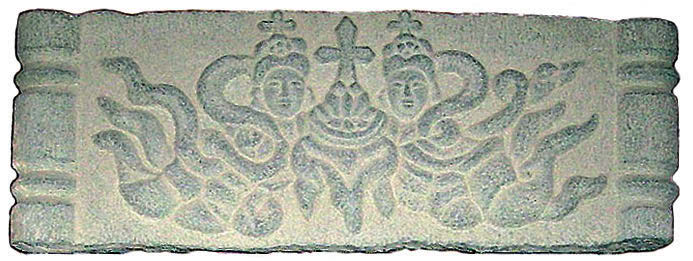
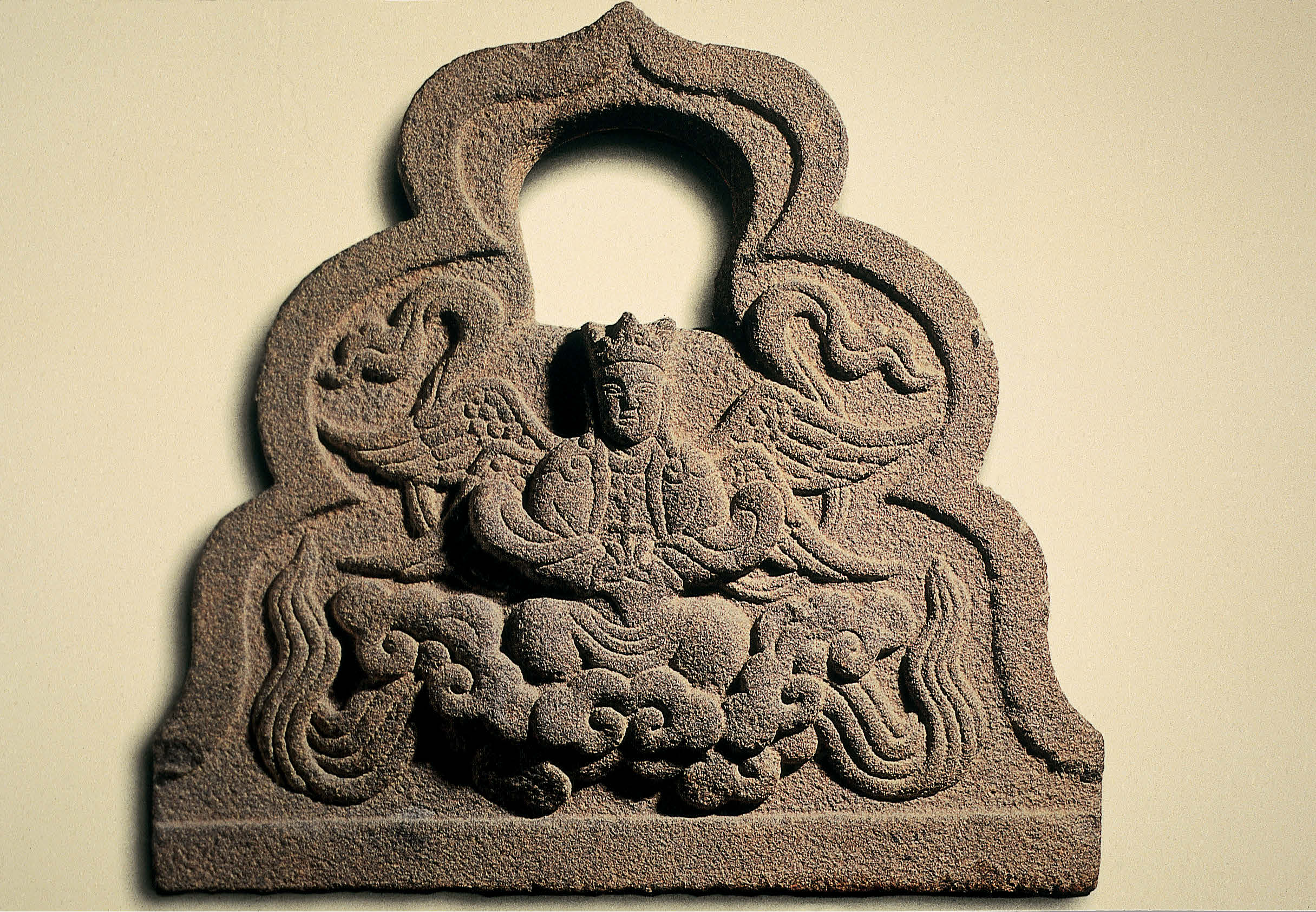
and, above all, Hülägü’s Nestorian chief wife Dokuz Khatun, the Christians of Baghdad were spared from the general massacre. As a sign of the esteem he enjoyed, Patriarch Makika received one of the caliphal palaces as his new residence, where he had a church built. In the north, Christians could also hope for a better future, since after the revolt of the majority Muslim city of Mosul in 1260/1261 the Nestorian general Samdaqu recaptured it, after which the Christian Zaki acted as governor.133 The most powerful Christian governor serving the Il-Khans was Mas’ud of Bar Qawta, who ruled Mosul from 1275 to 1277 and from 1284 to 1289. Perhaps he dreamt of building a Christian khanate encompassing north-eastern Mesopotamia, Kurdistan and Azerbaijan.134 symbolic unity.
而且,最重要的是,多亏了旭烈兀 (Hülägü) 的聂斯托利派正妻脱古思可敦 (Dokuz Khatun),巴格达 (Baghdad) 的基督徒才免遭大屠杀。作为他受到敬重的标志,牧首马基卡 (Makika) 获得了哈里发的一座宫殿作为新居所,并在那里让人修建了一座教堂。在北方,基督徒也可以寄望于更美好的未来,因为在1260/1261年穆斯林占多数的摩苏尔 (Mosul) 城发生叛乱之后,聂斯托利派将领萨姆达库 (Samdaqu) 重新夺回了该城,此后基督徒扎基 (Zaki) 担任总督。133 效力于伊儿汗 (Il-Khans) 的最有权势的基督徒总督是巴尔·卡夫塔的马斯乌德 (Mas’ud of Bar Qawta),他于1275年至1277年以及1284年至1289年统治摩苏尔。也许他梦想建立一个囊括美索不达米亚 (Mesopotamia) 东北部、库尔德斯坦 (Kurdistan) 和阿塞拜疆 (Azerbaijan) 的基督徒汗国。134 象征性的统一。
This Nestorian grave style was also adopted by Catholics at that time. One example is the grave of Bishop Andrea de Perugia, who had joined John of Montecorvino in 1308 at the behest of Pope Clement V and who died in 1332 in Zaitun.128 The other examples were discovered in Yangzhou; they are the Latin-inscribed grave steles of an Italian pair of siblings called de Vilione. The martyrdom of St Catherina, the Madonna and Jesus are engraved on the stele of Catherina (†1342), and scenes from the Last Judgement on that of Antonio (†1344).129 Although Nestorians and Catholics were at that time at odds, they remained connected through the design of their gravestones.
这种景教墓葬风格当时也为天主教徒 (Catholics) 所采用。一个例子是佩鲁贾的安德烈亚主教 (Bishop Andrea de Perugia) 的坟墓,他于1308年奉教宗克雷芒五世 (Pope Clement V) 之命与约翰·孟高维诺 (John of Montecorvino) 会合,并于1332年在刺桐 (Zaitun) 去世。128 其他例子发现于扬州 (Yangzhou);它们是一对姓德·维利奥内 (de Vilione) 的意大利兄妹的刻有拉丁文铭文的墓碑。圣加大利纳 (St Catherina) 的殉道、圣母 (Madonna) 与耶稣 (Jesus) 刻在加大利纳 (Catherina)(†1342)的墓碑上,而安东尼奥 (Antonio)(†1344)的墓碑上则刻有最后的审判 (Last Judgement) 的场景。129 尽管当时景教徒 (Nestorians) 与天主教徒不和,但他们通过墓碑的设计仍保持着联系。
While the Muslims regard the Mongol onslaught as a catastrophe, in which they lost their God-given pre-eminence, it meant for the Christians a providential liberation from the Islamic yoke. Moreover, the notable piety of Princess Dokuz Khatun and the Christian- friendly policies of Hülägü allowed the Nestorians to hope that the new rulers would convert to Christianity. The Armenian historian Stephanos Orbelian even praised Hülägü and Dokuz Khatun as ‘the new Constantine and Helena, the tools for the revenge against the enemies of Christ’.135 The efforts of the Il-Khans136 to form a military alliance with the European powers also motivated them towards policies favouring Christians. In any case, during the first forty years of Il-Khan reign Christians were no longer an oppressed minority but, rather, enjoyed equal rights with other religious groups. However, the Christians failed to see that the Mongol rulers devised their policies on religion according to strategic and political criteria and themselves, with the exception of the last Yuan emperors, separated their personal preferences from their politics. The Syrian Orthodox maphrian of the East (chief metropolitan) Bar Hebraeus (1225/
当穆斯林将蒙古人的进攻视为一场灾难,认为他们在这场灾难中丧失了神所赐的优越地位时,对基督徒而言,这却意味着天意般的解放,使他们摆脱了伊斯兰的枷锁。此外,脱古思可敦 (Dokuz Khatun) 公主显著的虔诚以及旭烈兀 (Hülägü) 对基督徒友好的政策,使聂斯托利派 (Nestorians) 得以希望新的统治者会皈依基督教。亚美尼亚历史学家斯特凡诺斯·奥尔贝利安 (Stephanos Orbelian) 甚至称赞旭烈兀 (Hülägü) 和脱古思可敦 (Dokuz Khatun) 为“新的君士坦丁 (Constantine) 和海伦娜 (Helena),即向基督之敌复仇的工具”。135 伊儿汗 (Il-Khans)136 为与欧洲列强结成军事同盟而作的努力,也促使他们推行有利于基督徒的政策。无论如何,在伊儿汗统治的最初四十年间,基督徒不再是一个受压迫的少数群体,而是与其他宗教群体享有平等权利。然而,基督徒未能看出,蒙古统治者是根据战略和政治标准来制定其宗教政策的,而且除最后几位元朝皇帝外,他们本人也将个人偏好与政治分开。叙利亚正教会 (Syrian Orthodox) 的东方马夫里安 (maphrian of the East,即首席都主教) 巴尔·希伯来 (Bar Hebraeus) (1225/
A final flourishing under the Mon gol Il-Khans of Iran
在伊朗 (Iran) 的蒙古伊儿汗 (Mongol Il-Khans) 统治下的最后繁荣
When Great Khan Möngke handed over rule of the only partially conquered Iran to his brother Hülägü in winter 1251-52, he indirectly inaugurated the final period of flourishing of the Church of the East. He ordered him to conquer the remaining Muslim powers of the Middle East, namely the Abbasid caliphs, the sect of the Assassins and the emirs of Syria and Egypt.130 The previous Mongolian incursions since 1235 had only been brutal raids, which also destroyed several Christian monasteries around Mosul.131 Despite the failures in Palestine and Syria, the conquest of Iran succeeded. Between 1256 and 1257 the fortresses of the Assassins south of the Caspian Sea fell or surrendered, which pleased both Muslim rulers and Crusaders, and early in 1258 Baghdad capitulated. Only when the situation became desperate did Caliph al- Mustasim (ruled 1242–1258) ask the Nestorian patriarch Makika II (in office 1257–1265) to negotiate with Hülägü.132 But it was too late. The conquerors invaded the city. Thanks to Makika
1251—1252年冬,大汗蒙哥 (Möngke) 将仅被部分征服的伊朗 (Iran) 的统治权交给其弟旭烈兀 (Hülägü) 时,他间接开启了东方教会 (Ch. of E.) 最后的繁荣期。他命令他征服中东 (Middle East) 尚存的穆斯林势力,即阿拔斯王朝哈里发 (Abbasid caliphs)、阿萨辛派 (Assassins) 以及叙利亚 (Syria) 和埃及 (Egypt) 的埃米尔 (emirs)。130 自1235年以来的历次蒙古入侵不过是残酷的劫掠,这些劫掠还摧毁了摩苏尔 (Mosul) 周边的若干基督教修道院。131 尽管在巴勒斯坦 (Palestine) 和叙利亚 (Syria) 遭遇失败,对伊朗 (Iran) 的征服却取得了成功。1256年至1257年间,里海 (Caspian Sea) 以南的阿萨辛派 (Assassins) 堡垒或陷落或投降,这令穆斯林统治者和十字军 (Crusaders) 都感到满意;1258年初,巴格达 (Baghdad) 投降。直到局势变得绝望时,哈里发穆斯塔西姆 (al-Mustasim)(在位1242—1258年)才请求聂斯托利派宗主教 (Nestorian patriarch) 马基卡二世 (Makika II)(任职1257—1265年)与旭烈兀 (Hülägü) 谈判。132 但为时已晚。征服者攻入该城。多亏马基卡 (Makika)
The fortress of Alamut, northern Iran, which was destroyed by the Nestorian army commander Kitbuqa in 1256 and was the headquarters of the Assassins – feared equally by Sunni Muslims and Christians – crowns this rock.
位于伊朗 (Iran) 北部的阿拉穆特 (Alamut) 要塞,于1256年被聂斯脱里派 (Nestorian) 军队指挥官怯的不花 (Kitbuqa) 摧毁,并曾是阿萨辛派 (Assassins) 的总部——逊尼派穆斯林和基督徒同样畏惧它——如今雄踞于这块岩石之上。
1226–1286) described this pragmatic attitude: ‘With the Mongols there is neither slave nor free man, neither believer nor pagan, neither Christian nor Jew; they regard all men as belonging to one and the same stock. All they demand is strenuous service and submission.’137
1226–1286)描述了这种务实态度:“在蒙古人中间,既无奴隶,也无自由人,既无信徒,也无异教徒,既无基督徒,也无犹太人;他们认为所有人同属一个族类。他们只要求竭尽全力的效劳与臣服。”137
Azerbaijan after Muslims attacked a procession he was leading.138 Like the Buddhists and the Jews, the Christians of Iran remained dependent on the goodwill of the rulers and were corre-spondingly vulnerable; they were finally a plaything of political interests. The escalating conflict – breaking out into open war on the northern border in 1262 – with the Golden Horde, which had been increasingly Islamicized since Khan Berke (ruled 1257–1266), also represented a latent threat to the Christians of Great Iran.
阿塞拜疆 (Azerbaijan),在穆斯林袭击了他所带领的游行队伍之后。138 与佛教徒和犹太人一样,伊朗 (Iran) 的基督徒仍然依赖于统治者的善意,并相应地处于脆弱境地;他们最终成为政治利益的玩物。与金帐汗国 (Golden Horde) 之间不断升级的冲突——该冲突于1262年在北部边境爆发为公开战争,而金帐汗国自别儿哥汗 (Khan Berke)(1257–1266年在位)以来日益伊斯兰化——也对大伊朗 (Great Iran) 的基督徒构成了潜在威胁。
Already after the deaths of Hülägü and Dokuz Khatun in 1265, however, there were the first signs that the Muslim majority would not accept their loss of status without a fight. When in late 1268 the Nestorian patriarch Mar Dinkha I (in office 1265–1281) wanted to baptize a Muslim, a mob from the city attacked him. He was able to flee to the house of the city governor and historian Ata Malik Juvaini (1226–1283), after which he left Baghdad and set up his residence in the citadel of Arbela. He later fled to Iranian
然而,早在1265年旭烈兀 (Hülägü) 和脱古思可敦 (Dokuz Khatun) 去世后,就已经出现了最初的迹象,表明穆斯林多数群体不会不经斗争就接受其地位丧失。1268年末,当聂斯托利派宗主教马尔·丁卡一世 (Mar Dinkha I)(在位1265–1281年)想要为一名穆斯林施洗时,城中一群暴徒袭击了他。他得以逃到城市总督兼历史学家阿塔·马利克·志费尼 (Ata Malik Juvaini)(1226–1283年)的家中,此后他离开巴格达 (Baghdad),在阿尔贝拉 (Arbela) 的卫城中定居。他后来逃往伊朗的
With regard to individual Il-Khans, Abaqa (ruled 1265–1282) and Arghun (ruled 1284–1291) were well disposed towards the Nestorians, for domestic and foreign political reasons and on account of their Christian wives. This goodwill is evident, for instance, in the fact that both khans
就个别伊儿汗 (Il-Khans) 而言,阿八哈 (Abaqa)(1265–1282年在位)与阿鲁浑 (Arghun)(1284–1291年在位)出于内政与外交上的政治原因,并由于他们的基督徒妻子,对聂斯托利派 (Nestorians) 颇有好感。这种好感显而易见,例如,两位汗都

had for their Georgian vassals coins minted bearing the Trinitarian formula ‘In the name of the Father, and the Son and the Holy Spirit, the only God’ in Arabic, with a cross integrated into the words.139 Under Abaqa the centre of the khanate moved farther to the north. While Hülägü had transferred his capital from Baghdad to Maragha in the south of the Iranian province of Azerbaijan, Abaqa chose Tabriz, which lay still closer to the threatened northern border. After Abaqa ended the war with the Golden Horde and fended off attacks from Transoxania, he turned towards the west. There Sultan Baibars (ruled 1260–1277), the victor at Ain Jalut, had more than once ravaged the Christian Armenian kingdom of Cilicia, which was closely allied with the Il-Khanate. After Abaqa offered Western European rulers a military alliance three times, all in vain, a joint Mongol–Armenian and Georgian army marched into Syria. But the battle against the Mamluks at Homs in 1281 ended in a defeat of the main Mongol army while the Christians who formed the right wing held their ground; soon thereafter Abaqa died.140 Mar Dinkha had used the favourable political circumstances to reorganize and strengthen the Church in Central Asia and China. At the same time he agreed to the offer of reconciliation made by the Miaphysite maphrian Bar Hebraeus, which was to bring an end to the seven-hundred- year-long disputes between the Church of the East and the Syrian Orthodox Church.
他们曾为其格鲁吉亚附庸铸造钱币,钱币上以阿拉伯语铸有三位一体套语“奉父、子、圣灵,独一上帝之名”,并将十字架融入文字之中。139 在阿八哈 (Abaqa) 治下,汗国的中心进一步北移。旭烈兀 (Hülägü) 曾将其都城从巴格达 (Baghdad) 迁至伊朗阿塞拜疆 (Azerbaijan) 省南部的马拉盖 (Maragha),而阿八哈 (Abaqa) 则选择了更靠近受到威胁的北部边境的大不里士 (Tabriz)。阿八哈 (Abaqa) 结束与金帐汗国 (Golden Horde) 的战争并击退来自河中地区 (Transoxania) 的进攻后,转而向西。在那里,艾因·贾鲁特 (Ain Jalut) 之战的胜利者苏丹拜巴尔斯 (Baibars)(在位 1260–1277 年)曾不止一次蹂躏与伊儿汗国 (Il-Khanate) 紧密结盟的奇里乞亚 (Cilicia) 基督教亚美尼亚王国。阿八哈 (Abaqa) 曾三次向西方欧洲统治者提议军事同盟,但均徒劳无功;此后,一支蒙古—亚美尼亚和格鲁吉亚联军进军叙利亚 (Syria)。但 1281 年在霍姆斯 (Homs) 对马穆鲁克 (Mamluks) 的战役以蒙古主力军队战败告终,而构成右翼的基督徒则坚守住了阵地;此后不久,阿八哈 (Abaqa) 去世。140 马尔·丁哈 (Mar Dinkha) 曾利用有利的政治形势,重组并加强中亚和中国的教会。与此同时,他接受了合性论派的马夫里安 (maphrian) 巴尔·希伯来 (Bar Hebraeus) 提出的和解提议,该提议旨在终结东方教会 (Ch. of E.) 与叙利亚正教会 (Syrian Orthodox Church) 之间长达七百年的争端。
Ahmed threw Patriarch Mar Yahballaha III (in office 1281–1317) into prison as revenge after two jealous bishops denounced him as the ringleader of the rebellion that had broken out. The patriarch owed his life and his release to the probably Nestorian mother of the king, Qutui Khatun. The Nestorians and the Mongol nobility, who rejected the forced Islamicization of Iran, initiated by Ahmed, now rallied around Aqaba’s rebellious son Arghun, who in 1284 defeated Ahmed and had him executed. Khan Arghun (ruled 1284–1291) succeeded in damming the flood of Muslim revolts, granting the Church of the East and the Christians a final and brief period of good fortune. Since Mar Yahballaha III, on account of his alleged or actual support for the rebelling party, just barely escaped death, he came to enjoy the friendship and esteem of Arghun. The patriarch transferred his see to Maragha and was able to rebuild the churches destroyed by Ahmed. A contemporary reported: ‘He enjoyed fame and power as no [patriarch] before him. The Mongols, the Il-khan, and his children bare their heads and bend their knees before him. His orders are carried out in the empire, and the Christians are elevated to great
艾哈迈德(Ahmed)把宗主教马尔·亚巴拉哈III(Mar Yahballaha III,任职1281—1317年)投入监狱,以报复2名嫉妒他的主教;这两人指控他是此前爆发的叛乱的主谋。宗主教得以保住性命并获释,要归功于国王之母库图伊哈敦(Qutui Khatun),她很可能是聂斯托利派信徒。聂斯托利派和蒙古贵族反对艾哈迈德发起的伊朗强制伊斯兰化政策,此时转而支持阿合马(Aqaba)叛逆的儿子阿儿浑(Arghun);阿儿浑于1284年击败艾哈迈德,并将其处死。阿儿浑汗(Khan Arghun,统治时期1284—1291年)成功遏制了穆斯林叛乱浪潮,使东方教会和基督徒迎来最后一段短暂的顺遂时期。马尔·亚巴拉哈III因被指控或确实支持叛乱一方而险些丧命;此后,他赢得了阿儿浑的友谊和敬重。宗主教将驻地迁至马拉盖(Maragha),并得以重建被艾哈迈德毁坏的教堂。一位同时代人记述道:“他享有的声望和权力,前所未有。蒙古人、伊儿汗(Il-khan)及其子女在他面前脱帽并屈膝。他的命令在帝国境内得到执行,基督徒也被提升到显赫的
Obverse of a dirham made of silver, which the Il-Khan Arghun (ruled 1284–1291) had minted for his vassal state, Georgia. The Arabic text reads: ‘In the name of the Father and the Son and the Holy Spirit, the only God’; a cross is stamped on the lower left. (Private collection.)
一枚银质迪拉姆 (dirham) 的正面,由伊儿汗阿鲁浑 (Il-Khan Arghun)(在位1284–1291年)为其附庸国格鲁吉亚 (Georgia) 铸造。阿拉伯文铭文为:“以圣父、圣子及圣灵之名,独一的上帝”;左下角压印有一个十字架。(私人收藏。)
The next two years made the Nestorians clearly aware of their vulnerability. Upon his accession to the throne, Abaqa’s brother Taqudar (ruled 1282–1284), who had been baptized with the name Nicholas, declared his conversion to Islam. He took the name Ahmed and began to destroy Buddhist temples and Christian churches or convert them into mosques, whereupon Nestorians and Buddhists appealed to Kublai Khan. Since he was angered and threatened to place sanctions on his nephew Ahmed,
接下来的两年使聂斯托利派 (Nestorians) 清楚地意识到自身的脆弱。阿八哈 (Abaqa) 的兄弟塔古达尔 (Taqudar)(1282–1284 年在位)登基时,曾受洗取名为尼古拉 (Nicholas),此时宣布皈依伊斯兰教。他改名为艾哈迈德 (Ahmed),并开始摧毁佛教寺庙和基督教堂,或将它们改建成清真寺,于是聂斯托利派 (Nestorians) 和佛教徒向忽必烈汗 (Kublai Khan) 申诉。由于忽必烈汗被激怒,并威胁要对其侄子艾哈迈德 (Ahmed) 实施制裁,
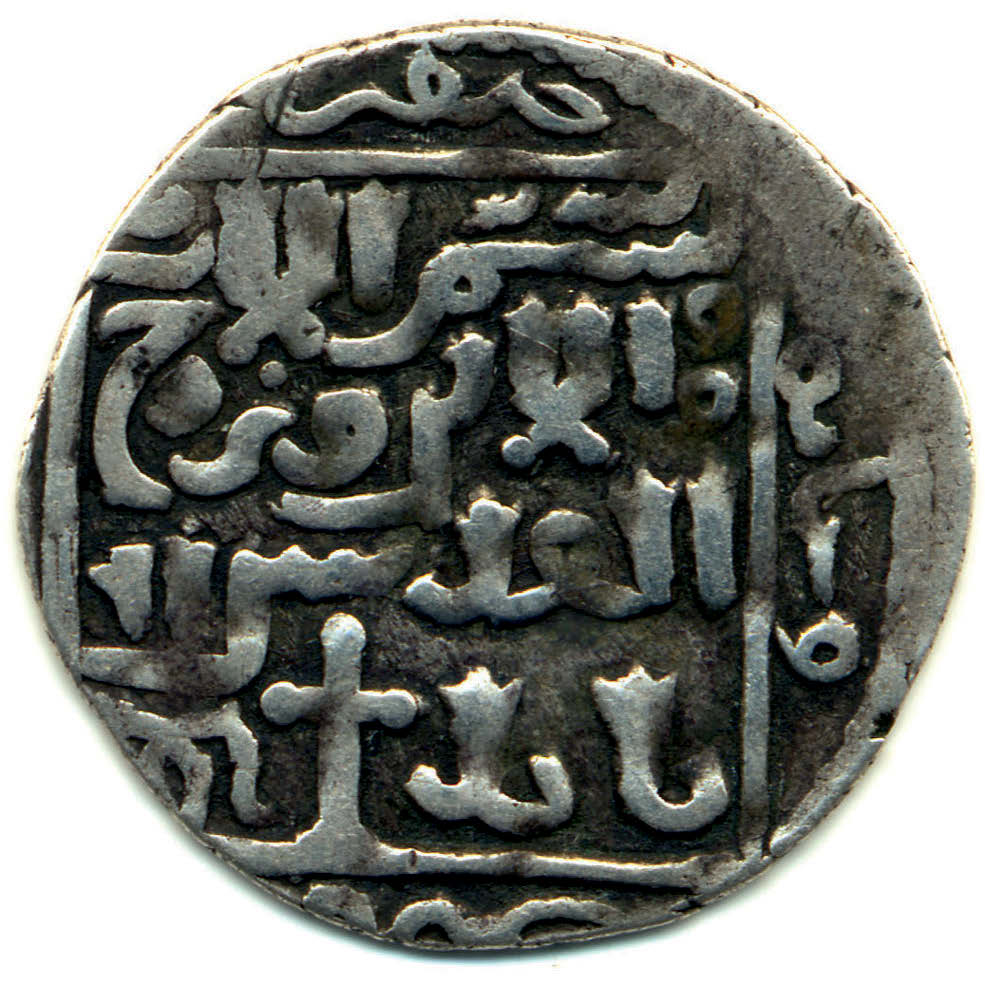
Gate to the shrine of Sheik Adi in Lalish, northern Iraq. As mentioned by Thomas of Marga in the ninth century, Lalish was originally a Nestorian monastery, which was seized around the twelfth century by the Yezidi, the so-called devil- worshippers, and elevated to their chief shrine. To the right of the gate’s arch there crawls a black snake, symbolizing the principle of evil, which has to be appeased. The Yezidi, who developed a highly syncretistic religion, incorporated Manichaean or Zoroastrian ideas, believing that it was more advantageous to appease the nearby Lucifer than serve the distant God.63 honour and power.’141
通往伊拉克北部拉利什 (Lalish) 的谢赫阿迪 (Sheik Adi) 圣殿的大门。正如马尔加的托马斯 (Thomas of Marga) 在九世纪所提到的,拉利什 (Lalish) 最初是一座聂斯托利派 (Nestorian) 修道院,约在十二世纪被雅兹迪人 (Yezidi),即所谓的魔鬼崇拜者,占据,并被提升为他们的主要圣地。在大门拱门的右侧,爬着一条黑蛇,象征着恶的本原,必须予以安抚。雅兹迪人 (Yezidi) 发展出一种高度混合主义的宗教,吸收了摩尼教 (Manichaean) 或琐罗亚斯德教 (Zoroastrian) 的思想,认为安抚近处的路西法 (Lucifer) 比侍奉遥远的上帝更为有利。63 尊荣与权力。’141
Despite the favour of the Il-Khan, in 1285 and 1286 ugly anti-Christian rioting broke out in Mosul, suggesting that, without state support, a terrible fate threatened the Christians. Another omen was the persecution of Jews that occurred upon Arghun’s death. The rage of the Muslims was incited by Arghun’s preferential treatment of Christians, Jews and Buddhists in appointments to high office and further inflamed by the strong position of the Jewish finance minister Sa’d ad- Daula. Sa’d was murdered, and the Jews cruelly persecuted. Arghun’s brother and successor Il- Khan Geikhatu (ruled 1291–1295), who personally inclined towards Buddhism, was also favourably disposed towards the Christians. He foundered, however, on the precipitous introduction in 1294 of paper money, in which he followed the example of his uncle Kublai Khan. Since he simultaneously forbade coins, trade collapsed and the cities were abandoned for lack of a food supply. The dis- affected population rallied around Prince Baidu (ruled 1295), who was secretly a Christian.142 But Arghun’s son Ghazan called for a rebellion, in which he was actively supported by the fanatical Muslim Nauruz and Islamic factions. After only six months of rule Baidu was executed, and
尽管有伊儿汗 (Il-Khan) 的恩宠,1285年和1286年,摩苏尔 (Mosul) 仍爆发了丑恶的反基督教骚乱,这表明若无国家支持,基督徒将面临可怕命运。另一个凶兆是阿鲁浑 (Arghun) 死后发生的对犹太人的迫害。穆斯林的怒火因阿鲁浑在高级官职任命中优待基督徒、犹太人和佛教徒而被激起,并因犹太财政大臣萨阿德·道拉 (Sa’d ad-Daula) 的强势地位而进一步加剧。萨阿德被谋杀,犹太人遭到残酷迫害。阿鲁浑的兄弟兼继任者伊儿汗海合都 (Geikhatu)(1291–1295年在位)本人倾向佛教,但也对基督徒抱有好感。然而,他因1294年贸然推行纸币而失败,此举效法其叔父忽必烈汗 (Kublai Khan)。由于他同时禁止硬币流通,贸易崩溃,城市因粮食供应匮乏而被废弃。心怀不满的民众聚集在拜都王子 (Baidu)(1295年在位)周围,他暗中是基督徒。142 但阿鲁浑之子合赞 (Ghazan) 号召叛乱,并得到狂热的穆斯林纳乌鲁兹 (Nauruz) 和伊斯兰派系的积极支持。拜都在位仅六个月后便被处死,而
Il-Khan Ghazan (ruled 1295–1304), who had converted from Buddhism to Islam, took the throne. The biographer of Mar Yahballah judged the death of Baidu to be ‘the proof that in very truth the abandonment of [the Church by] God had taken place’.143
伊儿汗合赞 (Il-Khan Ghazan)(1295–1304年在位)已从佛教改宗伊斯兰教,登上了王位。马·雅巴拉哈 (Mar Yahballah) 的传记作者判定拜都 (Baidu) 之死是“上帝确实已经抛弃了[教会]的明证”。143
Ghazan restored him to office. But a few months later Muslim gangs devastated the patriarchal see and the cathedral of Maragha. Nauruz also put back into effect the discriminatory clothing laws, according to which Christians and Jews had to wear a distinctive cloth on their turbans and a special belt.145 Although Ghazan had the powerful Nauruz executed in 1297 and thus eased the situation somewhat, the political and social outlook for Christians had darkened considerably. Nauruz opened for the Christians of Iran and Mesopotamia the doorway to hell, through which Tamerlane would push them.
合赞 (Ghazan) 让他官复原职。但几个月后,穆斯林帮派摧毁了宗主教区以及马拉盖 (Maragha) 的主教座堂。纳乌鲁兹 (Nauruz) 还重新实施了歧视性的服饰法令,根据这些法令,基督徒和犹太人必须在头巾上佩戴一块有辨识度的布片,并系一条特殊腰带。145 尽管合赞 (Ghazan) 于1297年处死了权势显赫的纳乌鲁兹 (Nauruz),从而使局势有所缓和,但基督徒的政治和社会前景已大为黯淡。纳乌鲁兹 (Nauruz) 为伊朗 (Iran) 和美索不达米亚 (Mesopotamia) 的基督徒打开了地狱之门,帖木儿 (Tamerlane) 将把他们推入其中。
Now the rage and envy of the Muslims towards the Christians, Jews, Zoroastrians and Buddhists, which had been building up for decades, was released. Under Nauruz’s leadership churches, synagogues, fire temples and Buddhist shrines were systematically destroyed, and Christian and Buddhist monks were massacred.144 Nauruz had Patriarch Yahballaha III tortured; he was saved from death only by the intervention of the Armenian king Hethum II, after which
如今,穆斯林对基督徒、犹太人、琐罗亚斯德教徒 (Zoroastrians) 和佛教徒的愤怒与嫉妒,在积聚了数十年之后终于爆发。在纳乌鲁兹 (Nauruz) 的领导下,教堂、犹太会堂、火庙和佛教圣所被系统性地摧毁,基督教和佛教僧侣遭到屠杀。144 纳乌鲁兹 (Nauruz) 对宗主教雅巴拉哈三世 (Yahballaha III) 施以酷刑;他仅因亚美尼亚国王海屯二世 (Hethum II) 的干预才免于一死,此后
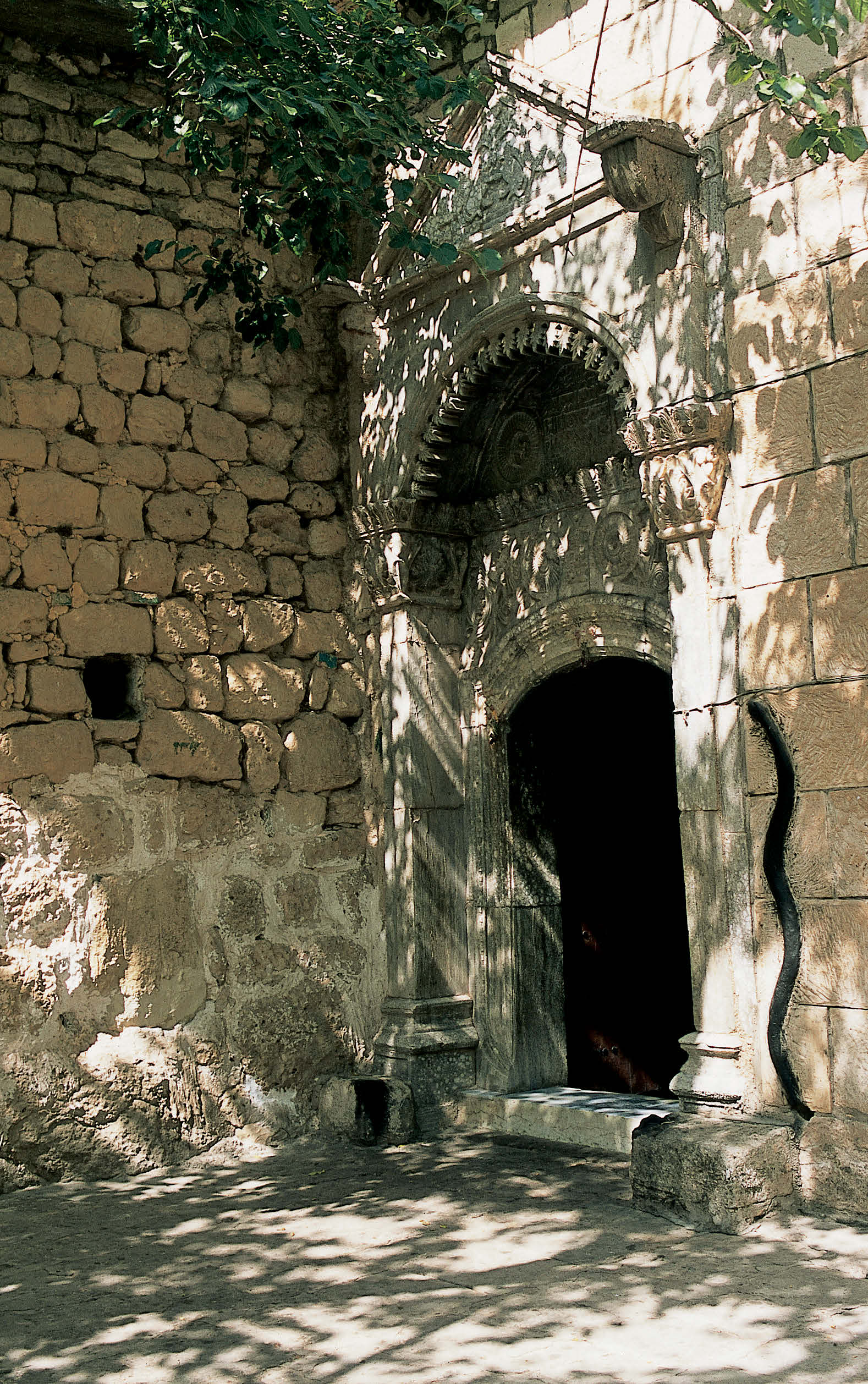
The chance for an alliance between the Mongol Il-Khanate and Europe envoy to Western Europe. The monk first met Emperor Andronicus II (ruled 1282–1328) in Constantinople and then embarked for Naples. In Rome, where he saw the Mandylion robbed in 1204 by the Crusaders from Constantinople, Pope Honorius had just died, so the cardinals gathered there received him.150 He explained to them the Asian mission of the Church of the East and that many Mongols, Turkic tribes and Chinese were Christians, among them queens and young princes. With this and subsequent conversations with the newly elected Pope Nicholas IV, he entirely unintentionally awoke the interest of Rome in a mission to China. Rabban Bar Sauma then set out for Paris to visit King Philip the Fair and to Bordeaux to meet King Edward I of England. Although both kings received the Mongol envoy with signs of the greatest respect, they did not want to undertake another crusade, although Arghun had promised that in the case of the conquest of Jerusalem he would have himself baptized there.151
蒙古伊儿汗国 (Mongol Il-Khanate) 与欧洲 (Europe) 之间结盟的机会,促成了一位派往西欧 (Western Europe) 的使者。这位修士先在君士坦丁堡 (Constantinople) 会见了安德洛尼卡二世皇帝 (Emperor Andronicus II,1282–1328年在位),随后启程前往那不勒斯 (Naples)。在罗马 (Rome),他见到了1204年被十字军 (Crusaders) 从君士坦丁堡劫走的曼迪利翁 (Mandylion);教皇洪诺留 (Pope Honorius) 刚刚去世,因此聚集在那里的枢机主教们接待了他。150 他向他们解释了东方教会 (Ch. of E.) 在亚洲的传教使命,并说明许多蒙古人 (Mongols)、突厥部落 (Turkic tribes) 和中国人 (Chinese) 都是基督徒,其中包括王后和年轻的王子们。通过这次以及随后与新当选的教皇尼古拉四世 (Pope Nicholas IV) 的交谈,他完全无意中唤起了罗马对赴华传教的兴趣。拉班·扫马 (Rabban Bar Sauma) 随后启程前往巴黎 (Paris) 拜访“美男子”腓力国王 (King Philip the Fair),并前往波尔多 (Bordeaux) 会见英格兰国王爱德华一世 (King Edward I of England)。尽管两位国王都以极其尊敬的表示接待了这位蒙古使者,但他们不愿再发动一次十字军东征,尽管阿鲁浑 (Arghun) 曾承诺,一旦攻占耶路撒冷 (Jerusalem),他将在那里受洗。151
The Armenian king Hethum I (†1269) travelled to Karakorum as early as 1253, in order to recognize Mongol sovereignty. From then on the Christian kingdoms of Armenia and Georgia were the most reliable allies of the Il-Khans. For them the shared military campaign against the Muslim states had the significance of crusades. But the Christian allies were poor in numbers, which is why Hülägü had sought allies in Western Europe after the loss of Syria to the Mamluks and sent a delegation to Pope Urban IV in 1264.146 From then on for forty years the proud Mongols were supplicants before the popes and the European kings; the East, all-powerful just a few years before, sought cooperation from the West. Hülägü’s successor Abaqa undertook further attempts to rekindle the interest in Palestine that had died out in Europe, and he sent delegations in 1267 and 1269. It was incomprehensible to the Mongols that the eighth crusade, led by King Louis IX of France, made its landing in Tunisia instead of Palestine or Syria.147 Nevertheless, in 1274 the Il-Khan dispatched Mongol emissaries to the Second Council of Lyons. Their offer of a military alliance represented one of the final opportunities to save the beleaguered Crusaders. But Pope Gregory X (†1276) equivocated and gave Abaqa a non-committal reply. Additional letters to the pope, to King Edward I of England and to James of Aragon in 1276 and 1277 went unanswered.148
亚美尼亚国王海屯一世 (Hethum I, †1269) 早在1253年就前往哈拉和林 (Karakorum),以承认蒙古宗主权。此后,亚美尼亚和格鲁吉亚 (Georgia) 的基督教王国成为伊儿汗 (Il-Khans) 最可靠的盟友。对他们而言,针对穆斯林诸国的共同军事行动具有十字军东征的意义。但基督教盟友人数稀少,因此,在叙利亚被马穆鲁克 (Mamluks) 夺取后,旭烈兀 (Hülägü) 曾在西欧寻求盟友,并于1264年派遣使团前往教宗乌尔班四世 (Pope Urban IV) 处。146 此后四十年间,骄傲的蒙古人成了教宗和欧洲诸王面前的恳求者;几年前还权倾一时的东方,如今却向西方寻求合作。旭烈兀的继任者阿八哈 (Abaqa) 进一步尝试重新唤起欧洲对巴勒斯坦 (Palestine) 已然消退的兴趣,并于1267年和1269年派遣使团。蒙古人无法理解,由法国国王路易九世 (Louis IX) 率领的第八次十字军东征,为何在突尼斯 (Tunisia) 登陆,而不是在巴勒斯坦或叙利亚 (Syria)。147 尽管如此,1274年伊儿汗仍派遣蒙古使节前往第二次里昂大公会议 (Second Council of Lyons)。他们提出的军事联盟,是拯救陷入困境的十字军的最后机会之一。但教宗格列高利十世 (Pope Gregory X, †1276) 含糊其辞,给阿八哈的回复不置可否。1276年和1277年,写给教宗、英格兰国王爱德华一世 (Edward I) 以及阿拉贡的詹姆斯 (James of Aragon) 的更多信件均未得到答复。148
Despite this diplomatic failure, Arghun ordered in 1289 the Genoese Buscarel of Gisolf once more to present to King Philip and King Edward a concrete plan. The letter, written in the Mongol language and Uigur script, referred to Rabban Bar Sauma’s mission and declared: ‘Calling upon heaven, we will begin a campaign in the last winter month of the year of the panther [January 1291] and set up camp before Damascus around the fifteenth day of the first spring month [20 February 1291]. If you [king] send your troops at the stated time, and we, with the help of heaven, defeat these people and conquer Jerusalem, we will hand it over to you. If your troops arrive late, what good will this plan be?’152 Once again no alliance came to pass. In 1290, in light of the indeterminate responses, Arghun undertook a fourth and final attempt and dispatched the Christian officer Zagan. At the same time as Zagan was holding forth in Europe the last Crusader fortress, in Acre, fell to the Mamluks,
尽管这次外交失败,阿鲁浑 (Arghun) 仍在1289年再次命令热那亚人吉索尔夫的布斯卡雷尔 (Buscarel of Gisolf) 向国王腓力 (King Philip) 和国王爱德华 (King Edward) 呈交一份具体计划。这封信以蒙古语和回鹘文写成,提及了拉班·扫马 (Rabban Bar Sauma) 的使命,并宣称:“我们呼求上天,将在豹年 (year of the panther) 冬季最后一个月 [1291年1月] 开始一场战役,并于春季第一个月第十五日前后 [1291年2月20日] 在大马士革 (Damascus) 城前扎营。如果您 [国王] 在所述时间派遣军队,而我们若在上天帮助下击败这些人并攻占耶路撒冷 (Jerusalem),我们就会把它交给您。如果您的军队迟到,此计划又有何用?’152 联盟再次未能实现。1290年,鉴于这些含糊不定的答复,阿鲁浑 (Arghun) 进行了第四次、也是最后一次尝试,并派遣了基督徒军官扎甘 (Zagan)。就在扎甘 (Zagan) 在欧洲游说之际,最后一座十字军堡垒阿卡 (Acre) 落入马穆鲁克 (Mamluks) 之手,
After the failed attempt to retake Syria in 1281, Abaqa’s son and successor Arghun began diplomatic efforts. In the first mission to Pope Honorius IV (†1287) in 1285 the Il-Khan sought an offensive military alliance against Egypt, to attack it from both sides.149 Two years later, at the recommendation of Patriarch Mar Yahballaha III, Arghun sent the Nestorian vicar general Rabban Bar Sauma, of Öngüt descent, as an
1281年夺回叙利亚的尝试失败后,阿八哈 (Abaqa) 之子兼继任者阿鲁浑 (Arghun) 开始展开外交努力。在1285年首次出使教宗洪诺留四世 (Pope Honorius IV)(†1287)时,这位伊儿汗 (Il-Khan) 寻求与对方结成针对埃及 (Egypt) 的进攻性军事同盟,以便从两面夹击它。149 两年后,在宗主教马尔·雅巴拉哈三世 (Patriarch Mar Yahballaha III) 的推荐下,阿鲁浑 (Arghun) 派遣汪古部 (Öngüt) 出身的聂斯托利派总代理拉班·扫马 (Rabban Bar Sauma) 作为一位
on 28 May 1291, and thus the last Christian bridgehead in Palestine was lost. The age of the Crusades had finally come to an end.
1291年5月28日,巴勒斯坦 (Palestine) 最后的基督教桥头堡就此丧失。十字军东征 (Crusades) 的时代终于结束了。
The 1302 letter of the patriarch of the Church of the East, Mar Yahballaha III (in office 1281–1317), to Pope Boniface VIII. The cruciform, red seal of the patriarch is in the Uigur language and Syriac script. It confirms in the name of the Great Khan Möngke the authority of the patriarch over all Christians and decrees that no Christian may travel to the Great Khan without a letter stamped with the patriarchal seal. (Vatican Secret Archives, A. A. Arm. I-XVIII, 1800, 1.) 64
东方教会 (Ch. of E.) 宗主教马·雅巴拉哈三世 (Mar Yahballaha III)(在位 1281–1317 年)于 1302 年致教宗波尼法爵八世 (Pope Boniface VIII) 的信。宗主教的十字形红色印玺以回鹘语 (Uigur) 和叙利亚文字 (Syriac script) 写成。它以大汗蒙哥 (Möngke) 的名义确认该宗主教对所有基督徒的权威,并规定:任何基督徒若无加盖宗主教印玺的信函,不得前往大汗处。(Vatican Secret Archives, A. A. Arm. I-XVIII, 1800, 1.) 64
Although the Christian princes consistently rejected the Mongol offers of alliance, after his unsuccessful delegation of 1299 the Muslim
尽管基督教诸侯始终拒绝蒙古的结盟提议,但在其1299年出使失败之后,这位穆斯林
Il-Khan Ghazan, who was involved in an ongoing border war with the Mamluks, made one last attempt in 1302. He promised Pope Boniface VIII, King Edward I of England and James II of Aragon that in the event of a military alliance against Egypt he would renounce Islam and be baptized.153 This opportunity also passed by untaken, and in 1303 Ghazan suffered a complete defeat at Damascus. In light of the obvious lack of European interest in an anti-Islamic alliance, Ghazan remained a Muslim. The next diplomatic initiative, made by Il-Khan Oljeitu (ruled 1304–1316) in 1305, sought from King Philip the Fair of France no longer an alliance but, instead, just friendly relations.154 And so the window of opportunity for a possible re- Christianization of the region that is now Iran and Iraq closed for ever, sealing the long-term fate of the Christians there.
伊儿汗合赞 (Il-Khan Ghazan) 当时正与马穆鲁克 (Mamluks) 陷入一场持续不断的边境战争,他在1302年作了最后一次尝试。他向教宗博尼法斯八世 (Pope Boniface VIII)、英格兰国王爱德华一世 (King Edward I of England) 和阿拉贡国王海梅二世 (James II of Aragon) 承诺,一旦结成针对埃及的军事联盟,他将放弃伊斯兰教并接受洗礼。153 这一机会同样未被把握,而1303年,合赞在大马士革遭遇彻底失败。鉴于欧洲对反伊斯兰联盟明显缺乏兴趣,合赞仍保持穆斯林身份。下一次外交举措由伊儿汗完者都 (Il-Khan Oljeitu)(1304–1316年在位)于1305年发起,它向法国国王美男子腓力 (King Philip the Fair of France) 寻求的不再是联盟,而只是友好关系。154 于是,如今伊朗和伊拉克所在地区可能重新基督教化的机会之窗永远关闭了,从而决定了那里基督徒的长期命运。
Rabban Bar Sauma and Rabban Markos – Nestorian ‘Marco Polos’ from Asia
拉班·扫马 (Rabban Bar Sauma) 与拉班·马可 (Rabban Markos)——来自亚洲的景教‘马可·波罗’ (Nestorian ‘Marco Polos’)
At the same time as the Polos were living in China a Nestorian Öngüt travelled from Beijing to Baghdad, Constantinople, Rome and France, where he met the pope and two kings – he was a kind of Asian Marco Polo in reverse. He was Rabban Bar Sauma, who was born around 1225, the son of Shiban, the Öngüt visitor subordinate to the bishop – living in Khan Baliq.155 Although his parents had him married, ‘he [as a twenty- year-old] cast off the shadows of this world’.156 He received the tonsure from Metropolitan Giwargis and shut himself up in a cell for seven years, after which he moved to a cave near the
当波罗一家 (the Polos) 在中国生活时,一位聂斯托利派 (Nestorian) 的汪古部 (Öngüt) 人从北京 (Beijing) 前往巴格达 (Baghdad)、君士坦丁堡 (Constantinople)、罗马 (Rome) 和法国 (France),并在那里会见了教宗和两位国王——他堪称一个反向的亚洲马可·波罗 (Marco Polo)。他就是拉班·扫马 (Rabban Bar Sauma),约生于1225年,是失班 (Shiban) 之子;失班是那位住在汗八里 (Khan Baliq) 的、隶属于主教的汪古部巡视员 (visitor)。155 尽管他的父母已为他娶妻,但“他[在二十岁时]抛弃了此世的阴影”。156 他从都主教 (Metropolitan) 吉瓦尔吉斯 (Giwargis) 接受了剃发礼,并把自己关在一间小室中七年,之后他迁到靠近……的洞穴
Monastery of the Cross in the Fang-shan district south of the capital. After a few years the son of the archdeacon of Olon Sume, whose name was Markos, came to the hermit with the desire to
都城以南房山 (Fang-shan) 区的十字架修道院 (Monastery of the Cross)。几年后,敖伦苏木 (Olon Sume) 总执事 (archdeacon) 之子,名叫马可 (Markos),来到这位隐修士那里,意欲……
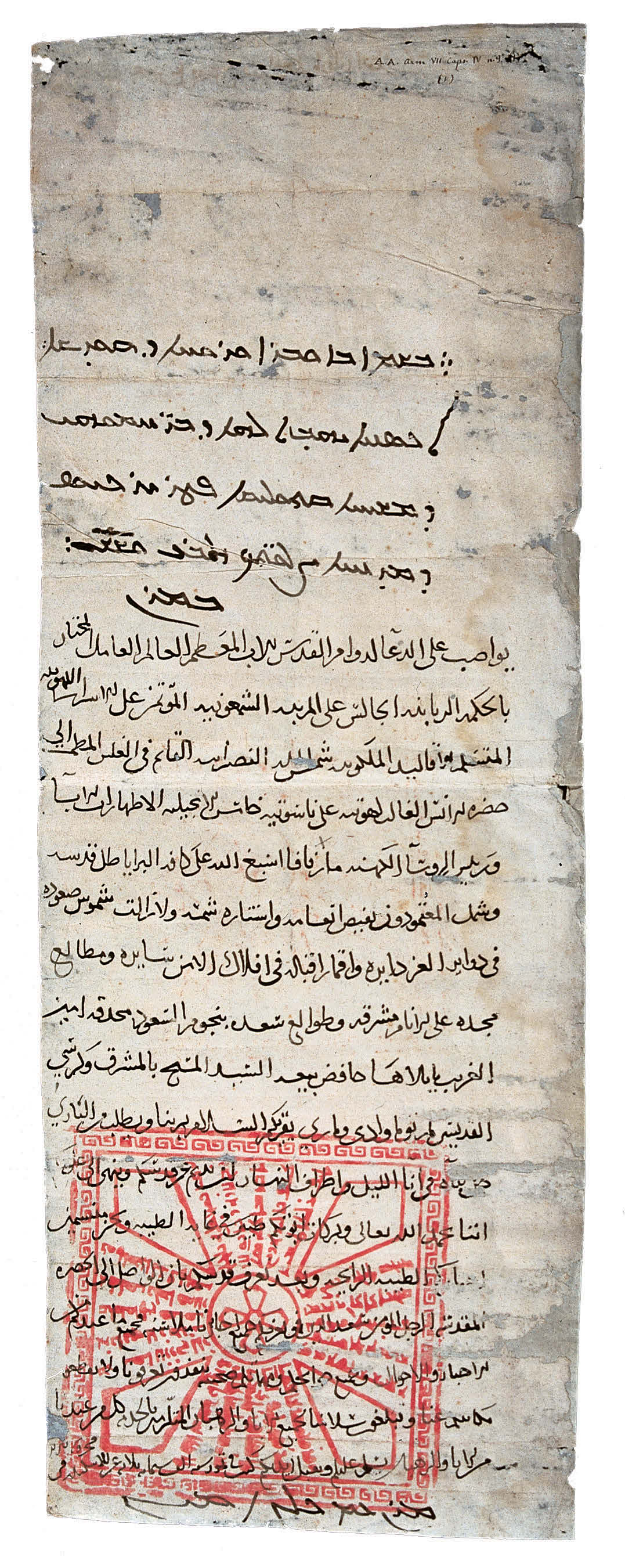
for he had other plans: ‘This is not the time for a journey to Jerusalem. You have received blessings of all the Houses of God and the relics which are in them. When a man visits them with a pure heart, the service thus paid to them is in no way less than that of a pilgrimage to Jerusalem. I have now decided to consecrate Markos metropolitan of Cathai and Ong [which is northern China and the Öngüt]. As for Rabban Bar Sauma, I’m going to make you vicar general, and I’m going to send the two of you back to your own country.’157 He gave to Markos the new name Yahballaha, which means ‘divinely given’. Wars in Central Asia made their return trip impossible, so they waited in a monastery near Mosul. But when Mar Dinkha died soon thereafter, the electing body, acting out of political considerations, chose the Turko-Mongol Yahballaha as the new patriarch. Abaqa confirmed the election and gave him the seal that Great Khan Möngke had granted as a sign of the authority of the patriarchal see. The new patriarch Yahballaha III was installed on 2 November 1281.
他另有打算:“现在不是前往耶路撒冷 (Jerusalem) 的时候。你已经领受了所有上帝之家 (Houses of God) 及其中的圣髑的祝福。当一个人以纯洁的心朝拜它们时,由此向它们所行的敬礼,绝不亚于前往耶路撒冷 (Jerusalem) 朝圣。我现在已决定祝圣马可斯 (Markos) 为契丹 (Cathai) 与汪古 (Ong) 的都主教 [即中国北方和汪古部 (Öngüt)]。至于拉班·扫马 (Rabban Bar Sauma),我要任命你为总代理 (vicar general),并派你们二人返回自己的国家。”157 他给马可斯 (Markos) 取新名雅巴拉哈 (Yahballaha),意为“神所赐予的”。中亚的战争使他们无法返回,于是他们在摩苏尔 (Mosul) 附近的一座修道院中等待。但不久之后,马尔·丁哈 (Mar Dinkha) 去世,选举机构出于政治考量,选择了突厥-蒙古人雅巴拉哈 (Yahballaha) 为新任宗主教。阿八哈 (Abaqa) 确认了这次选举,并将大汗蒙哥 (Möngke) 授予的、作为宗主教座权威标志的印玺交给了他。新宗主教雅巴拉哈三世 (Yahballaha III) 于1281年11月2日就任。
Upper section of the front of a Nestorian stone stele in Fang Shan, China. The seven characters state: ‘To proclaim on this stele the imperial edict that this is the Monastery of the Cross.’ At the very top a cross is clearly visible. In the district of Fang Shan, which lies c. fifty kilometres south-west of Beijing, two stone blocks and two large inscribed steles were found in 1919. Both blocks bear a cross on the front, and one features four Syriac inscriptions, as well. One of them quotes Psalm 34:5 from the Peshitta: ‘Look to him and hope in him’.65 The smaller of the two steles dates from 960 and celebrates the reconstruction of the monastery, completed in 952. This new monastery was Buddhist; the religious affiliation of the old one was not given. The larger, 273-centimetre- high stele is inscribed on both sides. The front, dating from 1365, reports on the restoration of the monastery completed in 1357. It states that ‘a long time ago a [Christian?] priest from the western lands came here’ – did that happen during the time of the Tang Dynasty – that is, before 907? In conclusion, the calligraphic inscription praises the wise edict of Emperor Timur (ruled 1333–1368), who enabled the reconstruction of the Nestorian monastery. The back side, from 1382, reports that inhabitants of the surrounding villages had set right the stele, which had fallen down.66
中国房山 (Fang Shan) 一通景教(Nestorian)石碑正面上部。七个汉字写道:“在此碑上宣示敕令:此乃十字寺 (Monastery of the Cross)。”在最顶端,一个十字架清晰可见。在位于北京西南约五十公里处的房山区 (Fang Shan),1919年发现了两块石块和两通大型刻铭石碑。两块石块正面均刻有十字架,其中一块还带有四段叙利亚文 (Syriac) 铭文。其中一段引用了《别西大译本》(Peshitta)中的《诗篇》34:5:“仰望他,并寄望于他。”65 两通石碑中较小的一通年代为960年,纪念该修道院于952年完成的重建。这座新修道院属于佛教;旧修道院的宗教归属则未予说明。较大的一通高273厘米,两面均有铭文。其正面年代为1365年,记述了该修道院于1357年完成的修复。碑文称:“很久以前,一位来自西方之地的[基督徒?]司铎来到此处”——此事是否发生在唐朝 (Tang Dynasty) 时期——也就是907年之前?最后,书法铭文赞扬了妥懽帖睦尔皇帝 (Emperor Timur,1333–1368年在位) 的英明敕令,正是这道敕令使景教修道院得以重建。背面年代为1382年,记述周围村庄的居民扶正了这通已经倒下的石碑。66
When Arghun asked Mar Yahballaha for a suitable ambassador to Western Europe in 1287, he recommended his one-time companion Rabban Bar Sauma. During his first visit to Rome, the Nestorian vicar general presented the gathering of cardinals with an unimpeachable Dyophysite creed: ‘In His [Christ’s] divinity He is eternally of the Father; in His humanity he was born in time of Mary; the union is inseparable and indivisible for ever. The Son of this union is perfect God and perfect man – two natures and two hypostases in one parsopa.’158 When the cardinals accepted this Christological declaration – although it was heretical in the Catholic context – and sought to question Rabban Sauma about the disputed filioque, he fended them off with the statement: ‘I have come from remote countries neither to discuss nor to instruct in matters of the Faith, but I came that I might make known the words of King [Arghun] and the Catholicos.’159 become a monk. In 1263 Markos was ordained as a monk by Metropolitan Nestorius and lived with his teacher in the hermitage of the cross. Some fifteen years later they departed on a pilgrimage to the graves of the saints and patriarchs in Mesopotamia and to Jerusalem. Following, so to speak, in the footsteps of Marco Polo, they travelled to Tangut, Khotan and Kashgar, later to Talas in the Land of Seven Rivers and to Tus in Khorassan, and then to Maragha to meet Patriarch Dinkha I. They journeyed on and visited the most important monasteries and pilgrimage sites of Mesopotamia, but the dangerous situation on the western border prevented them from reaching their final goal of Jerusalem.
1287年,阿儿浑(Arghun)向马尔·雅巴拉哈(Mar Yahballaha)询问派往西欧的合适使者人选,他推荐了昔日同伴拉班·巴尔·扫马(Rabban Bar Sauma)。首次访问罗马期间,这位聂斯托利派代理总主教向枢机主教团陈述了一份无可指摘的二性论信经:“按其神性而言,祂(基督)永恒地出自圣父;按其人性而言,祂由马利亚在时间中诞生;二者的结合永不分离、永不分割。结合而成的圣子既是完美的神,也是完美的人——两个本性、两个位格,合于一个帕尔索帕(parsopa)。”158枢机主教们接受了这项基督论声明——尽管在天主教语境下它属于异端——并试图就有争议的“圣灵也由子而出”(filioque)条款询问拉班·扫马;他以如下答复避开了问题:“我从遥远国度而来,并非为了讨论或讲授信仰问题,而是为了传达国王〔阿儿浑〕和宗主教的话。”159……成为修士。1263年,马尔科思(Markos)由都主教聂斯托利(Nestorius)按立为修士,并与老师住在十字架隐修所。约十五年后,他们出发朝圣,前往美索不达米亚的圣人和宗主教陵墓以及耶路撒冷。他们可谓追随马可·波罗(Marco Polo)的足迹,前往唐兀(Tangut)、于阗(Khotan)和喀什(Kashgar),后来又到七河之地(Land of Seven Rivers)的塔拉斯(Talas)、呼罗珊的图斯(Tus),然后抵达马拉盖(Maragha)拜见宗主教丁哈一世(Dinkha I)。他们继续前行,探访美索不达米亚最重要的修道院和朝圣地,但西部边境局势危险,阻止他们抵达最终目的地耶路撒冷。
In 1280 Mar Dinkha summoned them to return,
1280年,马尔丁哈 (Mar Dinkha) 召他们返回,
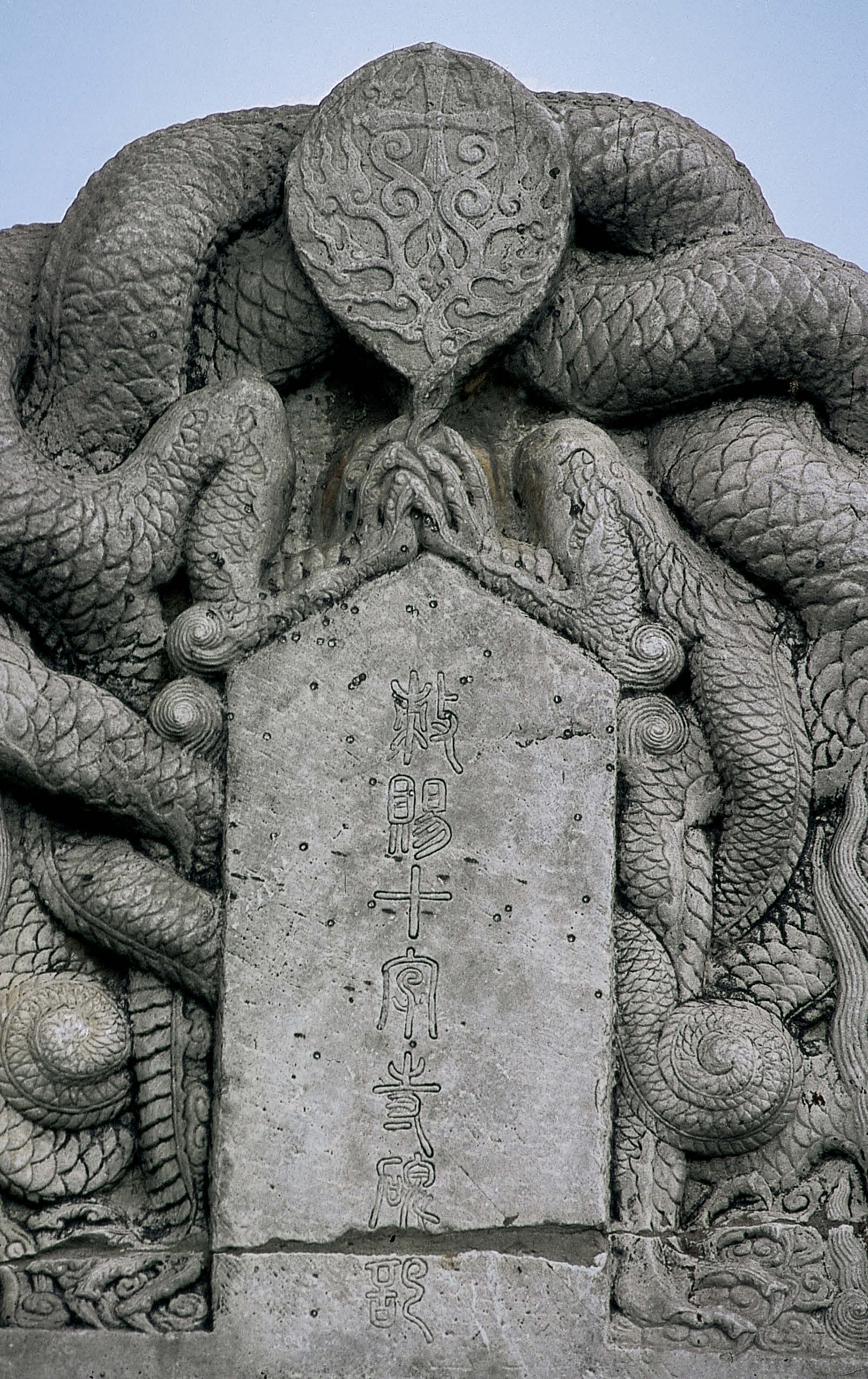
Aerial view of the citadel of Arbil (Arbela), northern Iraq, in which Nestorian refugees and protective troops barricaded themselves from 1297 to 1310.
伊拉克北部埃尔比勒(Arbil,即阿尔贝拉 Arbela)城堡的鸟瞰图,1297年至1310年间,聂斯托利派难民和护卫部队曾在此筑垒据守。
Half a year later the bitterly disappointed Rabban Bar Sauma returned to Rome, as neither the king of France nor the king of England had shown concrete interest in conquering Jerusalem with the Mongols. Although the newly elected Pope Nicholas IV permitted the Mongol vicar general to participate in all the services of the Holy Week and celebrate a Mass in Rome according to the Nestorian rite, he, too, made no commitment. Rabban Bar Sauma died in 1294 in Baghdad. of power by Ghazan, who commanded the destruction of all non-Muslim houses of worship. The patriarch was imprisoned and tortured, and this time he owed his life to King Hethum II of Armenia, who was then in Maragha. After Mar Yahballaha was permitted to return to his position in 1296, Muslims plundered and destroyed his patriarchal residence and forced him to flee. Simultaneously Nauruz tried, with help from Kurds, to drive the Nestorians out of the fortified citadel of the city of Arbil. When Ghazan deprived the fanatical Nauruz of power, the situation eased somewhat. Now the Il-Khan suggested to the patriarch that the Christians leave the mighty citadel, as well as the city of Arbil, and settle in another location. But Arbil was the last base of the beleaguered Christians.
半年后,深感失望的拉班·扫马 (Rabban Bar Sauma) 返回罗马 (Rome),因为法国国王和英格兰国王都未表现出与蒙古人一同征服耶路撒冷 (Jerusalem) 的具体兴趣。尽管新当选的教宗尼古拉四世 (Pope Nicholas IV) 允许这位蒙古总代理参加圣周 (Holy Week) 的所有礼拜,并按照聂斯托利派礼仪 (Nestorian rite) 在罗马 (Rome) 举行弥撒,但他同样未作出任何承诺。拉班·扫马 (Rabban Bar Sauma) 于1294年在巴格达 (Baghdad) 去世。 被合赞 (Ghazan) 剥夺权力;合赞下令摧毁所有非穆斯林的礼拜场所。宗主教被监禁并遭受酷刑,这一次他因亚美尼亚国王海屯二世 (King Hethum II of Armenia) 而保住性命,后者当时正在马拉盖 (Maragha)。1296年,马·雅巴拉哈 (Mar Yahballaha) 获准恢复职位后,穆斯林洗劫并毁坏了他的宗主教府邸,迫使他逃亡。与此同时,瑙鲁兹 (Nauruz) 在库尔德人的帮助下,试图将聂斯托利派信徒逐出阿尔比勒 (Arbil) 城的设防堡垒。当合赞 (Ghazan) 剥夺狂热的瑙鲁兹 (Nauruz) 的权力后,局势有所缓和。此时,伊儿汗 (Il-Khan) 向宗主教建议,基督徒离开这座坚固的堡垒以及阿尔比勒 (Arbil) 城,迁往他处定居。但阿尔比勒 (Arbil) 是这些饱受围困的基督徒最后的据点。
Mar Yahballaha’s stormy patriarchate was marked by the struggle for the preservation of the Church of the East and for the safety of the Christians. After he avoided death under Il- Khan Ahmed only thanks to the intervention of the mother of the king, Qutui Khatun, a dozen peaceful years went by before the seizure
马尔·雅巴拉哈 (Mar Yahballaha) 动荡不安的宗主教任期,以维护东方教会 (Ch. of E.) 和保障基督徒安全而进行的斗争为标志。他在伊儿汗艾哈迈德 (Il-Khan Ahmed) 治下仅因国王之母忽都鲁·哈敦 (Qutui Khatun) 的干预才免于一死;此后,在……的夺取之前,十来个和平年头过去了。
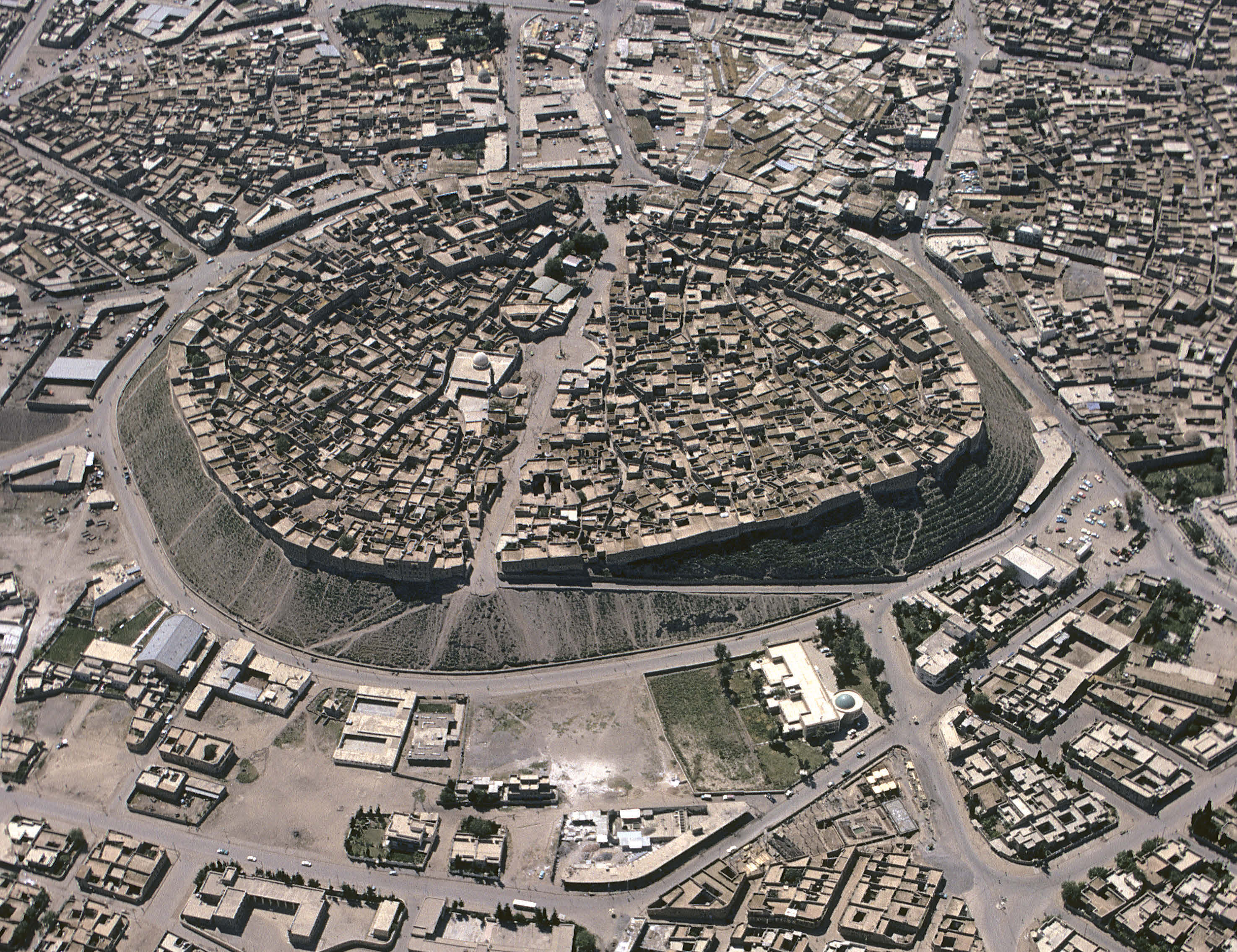
In his reply the despairing patriarch recounted the places he had been forced to flee, namely Baghdad and Maragha, after which he lamented the fate of other churches: ‘In Tabriz there remains only a flat plot of ground with no building on it; in Hamadan, it is impossible to point the place whereon the monastery and the church stood. There remain now the monastery and the church of Arbil and one hundred souls. Do you wish to scatter them also and to plunder them? What is the good of life to me? Let my lord the king command either that I return to the East, whence I came, or that I go to the country of the Franks and bring my life to an end there.’160 Ghazan relented, and the Nestorians retained their fortress.
绝望的宗主教在答复中叙述了他被迫逃离的地方,即巴格达 (Baghdad) 和马拉盖 (Maragha),随后又哀叹其他教会的命运:“在大不里士 (Tabriz),只剩下一块平坦的空地,上面没有任何建筑;在哈马丹 (Hamadan),已无法指出修道院和教堂曾经矗立的位置。如今只剩下阿尔比勒 (Arbil) 的修道院和教堂,以及一百名信徒。你也要把他们驱散并掠夺他们吗?生命对我还有什么益处呢?愿我主国王下令,要么让我回到我来自的东方,要么让我前往法兰克人 (Franks) 的国度,在那里了结我的生命。”160 合赞 (Ghazan) 让步了,聂斯托利派 (Nestorians) 保住了他们的堡垒。
Since Ghazan, beginning in 1299, again sought an alliance with Europe, he adopted a more favourable attitude towards the Christians, which allowed Mar Yahballaha to rebuild the cathedral and patriarchal residence of Maragha. With time there even developed a friendly relationship between Ghazan, who consistently promoted the Islamicization of Iran, and the Mongol patriarch, which culminated in the Il-Khan’s visiting Maragha in 1303 and giving him a golden cross containing a splinter from the True Cross. Pope Boniface VIII (in office 1294–1303) had sent it to the Muslim ruler as a token of his respect.161
由于合赞 (Ghazan) 自1299年起再次寻求与欧洲 (Europe) 结盟,他对基督徒采取了更为友善的态度,这使马·雅巴拉哈 (Mar Yahballaha) 得以重建马拉盖 (Maragha) 的主教座堂和宗主教府邸。随着时间推移,始终推动伊朗 (Iran) 伊斯兰化的合赞 (Ghazan) 与这位蒙古宗主教之间甚至发展出友好关系,最终伊儿汗 (Il-Khan) 于1303年访问马拉盖 (Maragha),并赠予他一枚内嵌真十字架 (True Cross) 木片的金十字架。教宗博尼法斯八世 (Pope Boniface VIII)(在位1294–1303年)曾将其赠予这位穆斯林统治者,以表敬意。161
The three-storey, 51-metre-high mausoleum of Il-Khan Oljaitu (ruled 1304–1316) in Sultaniyeh, Iran. The diameter of the cupola measures 26 metres. Oljaitu, whom Patriarch Mar Yahballaha III had baptized with the name Nicholas, was a stern Muslim and contributed substantially to the decline of the Church of the East.
位于伊朗苏丹尼耶 (Sultaniyeh) 的伊儿汗完者都 (Il-Khan Oljaitu,1304–1316年在位) 陵墓,共三层,高51米。穹顶直径为26米。完者都 (Oljaitu) 曾被宗主教马·雅巴拉哈三世 (Mar Yahballaha III) 以尼古拉 (Nicholas) 之名施洗,但他是一位严厉的穆斯林,对东方教会 (Ch. of E.) 的衰落起了重大作用。
First, in 1302, he gave to Ghazan’s envoy, the Christian Saad ad-Daula, a letter to Pope Boniface VIII, in which he proposed a rapprochement between the two Churches.163
首先,在1302年,他将一封致教宗博尼法斯八世 (Pope Boniface VIII) 的信交给了合赞 (Ghazan) 的使节、基督徒萨阿德·道拉 (Saad ad-Daula),信中他提议两个教会之间实现和解。163
In this relatively peaceful period the patriarch commissioned the leading theologian of the time, Mar Odisho (†1318), metropolitan of Nisibis and Armenia, to write an easily comprehensible catechism. In 1297/1298 Bishop Ebedjesus, as he was known in the West, produced The Book of Marganitha (The Pearl) on the Truth of Christianity. 162 This and additional works of canon and civil law were declared binding by the Synod of 1318. Ghazan’s diplomatic contact with Europe enabled Mar Yahballaha to take up the initiative of Patriarch Sabrisho V (in office 1226–1256), who in 1247 had proposed unity in prayer to Pope Innocent IV. Political considerations inspired the patriarch to seek a form of union with Rome.
在这一相对和平的时期,宗主教委托当时首屈一指的神学家、尼西比斯与亚美尼亚都主教马尔·奥迪绍(Mar Odisho,†1318)撰写一部通俗易懂的教理问答。1297/1298年,在西方以埃贝德耶苏(Ebedjesus)之名为人所知的主教撰写了《玛尔加尼塔书》(The Book of Marganitha,即《珍珠》),论基督教真理。162 这部著作以及教会法和民法方面的其他著作,被1318年主教会议(Synod of 1318)宣布具有约束力。合赞(Ghazan)与欧洲的外交接触,使马尔·雅巴拉哈(Mar Yahballaha)得以接过宗主教萨布里绍五世(Patriarch Sabrisho V,在位1226–1256年)的倡议;后者曾于1247年向教宗英诺森四世(Pope Innocent IV)提议在祈祷中合一。政治考量促使这位宗主教寻求与罗马的某种形式的合一。
Two years later in Maragha he gave the Dominican Jacob of Arles-sur-Tech a creed written in Arabic for the attention of Pope Benedict XI (in office 1303–1304), which Jacob translated into Latin. A comparison of the two texts shows that Brother Jacob adapted his translation to the expectations of the Catholic Church.164 The Arabic text confirms the Nicene Creed and calls Jesus Christ ‘a complete God and a complete man’. Although the patriarch avoided speaking of two hypostases, he underscored the East Syrian conviction that the divinity of Christ was unaf- fected by the suffering of his humanity on the
两年后,他在马拉盖 (Maragha) 将一份用阿拉伯语写成的信经交给多明我会士阿尔勒叙尔泰克的雅各 (Jacob of Arles-sur-Tech),以供教宗本笃十一世 (Pope Benedict XI)(在位 1303–1304 年)审阅;雅各将其译成拉丁文。对两份文本的比较表明,雅各修士 (Brother Jacob) 调整了自己的译文,以迎合天主教会 (Catholic Church) 的期待。164 阿拉伯语文本确认了《尼西亚信经》(Nicene Creed),并称耶稣基督 (Jesus Christ) 为“完全的神,完全的人”。尽管这位宗主教 (patriarch) 避免谈论两个位格 (hypostases),但他强调了东叙利亚 (East Syrian) 的信念:基督的神性并未因他人性在……上的受苦而受到影响。
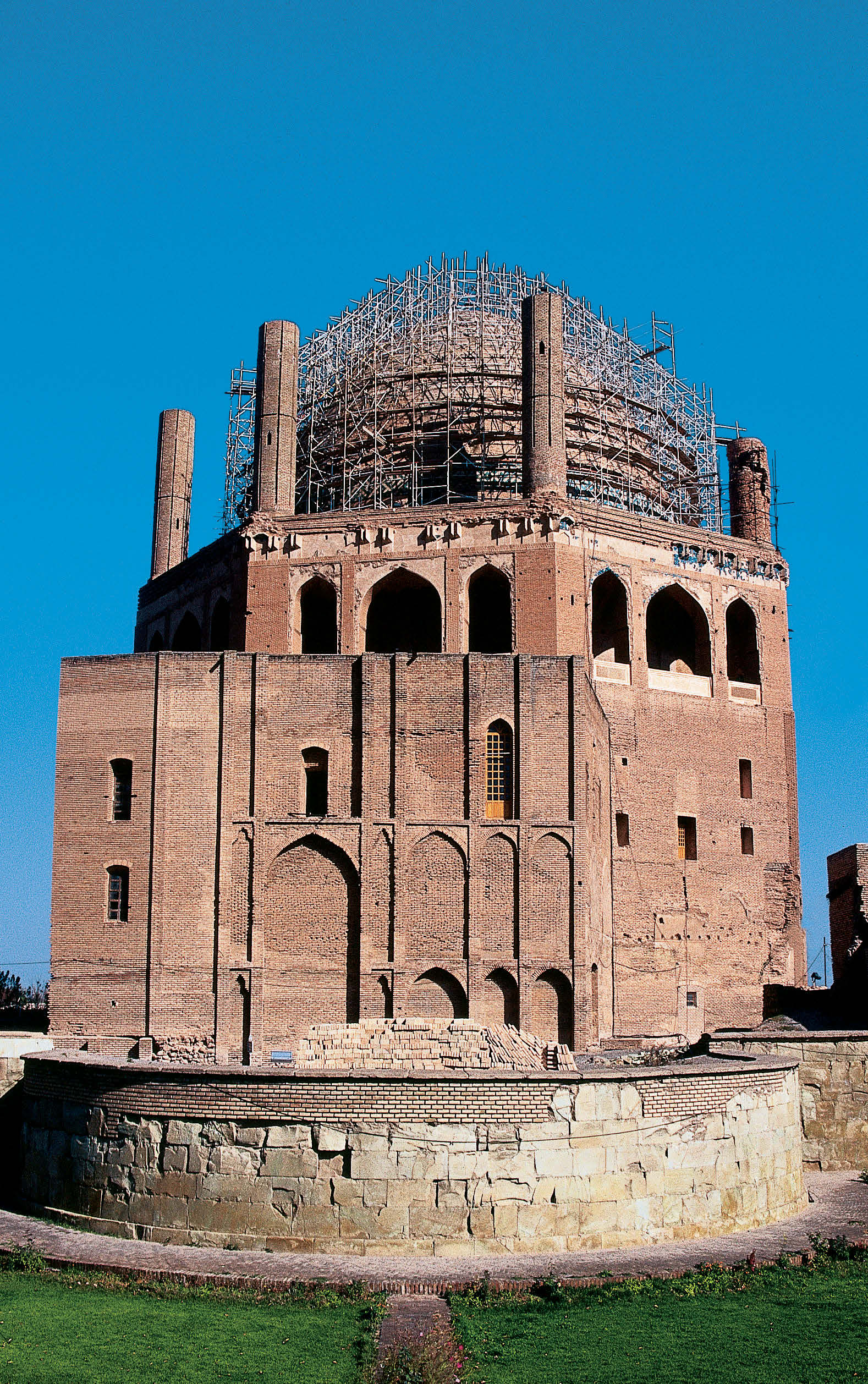
cross. The acceptance in the Latin translation of the filioque is not found in the Arabic original. Thus, the patriarch had not abandoned the found- ation of Nestorian orthodoxy. However, he acknowledged the pre-eminence of the pope before all Christian religious leaders and the fact that he ‘[occupies] the See of Peter, of the representative of Jesus Christ for all children of the apostolic church from the Orient to the Occident’.165 Mar Yahballaha’s letter brought no result.
十字架。拉丁文译本中对和子句 (filioque) 的接受,在阿拉伯文原本中并未出现。因此,这位宗主教并未放弃聂斯托利派正统 (Nestorian orthodoxy) 的基础。然而,他承认教宗高于所有基督教宗教领袖的首要地位,并承认他“[占据]彼得宗座 (See of Peter),即耶稣基督 (Jesus Christ) 之代表的宗座,为从东方到西方的使徒教会所有儿女”。165 马尔·雅巴拉哈 (Mar Yahballaha) 的信函没有带来任何结果。
The Nestorian cemetery in Göktepe, district of Urmiah, Iran. The custom in Nestorian and Chaldean cemeteries of adding to the grave the stone figure of a ram goes back to a Mongol tradition. It is also found in old graves in Mongolia and Kazakhstan.67 Presumably this tradition goes back to the ancient Chinese practice of placing in princely graveyards avenues of stone figures, the so-called ‘paths of the soul’. Similar stone figures are found in the Christian cemetery of Khosrow Abad near Delemon, Azerbaijan, and in the Historical Museum of Maragha, both in Iran.
伊朗 (Iran) 乌尔米耶 (Urmiah) 地区的格克特佩 (Göktepe) 的聂斯托利派 (Nestorian) 墓地。在聂斯托利派 (Nestorian) 和迦勒底派 (Chaldean) 墓地中,为坟墓添加公羊石像的习俗可追溯至蒙古传统。在蒙古 (Mongolia) 和哈萨克斯坦 (Kazakhstan) 的古老墓葬中也有发现。67 据推测,这一传统可追溯至古代中国在王侯墓地中设置石像神道的做法,即所谓的“灵魂之路”。类似的石像见于阿塞拜疆 (Azerbaijan) 德莱蒙 (Delemon) 附近的霍斯罗阿巴德 (Khosrow Abad) 基督教墓地,以及马拉盖 (Maragha) 历史博物馆 (Historical Museum of Maragha),二者均位于伊朗 (Iran)。
When Oljeitu (ruled 1304–1316) acceded to the throne, Mar Yahballaha was delighted, as he had baptized him with the name Nicholas. But he was disappointed, since the prince had converted to Islam and soon began to persecute the Christians. In 1306 the endangered patriarch sought refuge in the fortress of Arbil, but in early 1310 Mongol troops and Kurds forced him to leave the citadel, whereupon it was conquered after a siege of several months and the Christians were either massacred or sold into slavery.166 Yahballaha fled to Maragha, where he died in 1317. In his 36 years in office the patriarch consecrated 75 bishops and metropolitans and defended to the best of his ability the Christians entrusted to him. But he could not prevent the steady Islamicization of Iran and the long-term decline of his Church in its heartland.
当完者都 (Oljeitu)(在位 1304–1316 年)登基时,马尔·雅巴拉哈 (Mar Yahballaha) 十分高兴,因为他曾以尼古拉 (Nicholas) 为教名为他施洗。但他又感到失望,因为这位王公已皈依伊斯兰教,并很快开始迫害基督徒。1306 年,身处险境的宗主教前往埃尔比勒 (Arbil) 要塞避难,但在 1310 年初,蒙古军队和库尔德人迫使他离开城堡,随后该城堡在被围困数月后陷落,基督徒或被屠杀,或被卖为奴。166 雅巴拉哈 (Yahballaha) 逃往马拉盖 (Maragha),并于 1317 年在那里去世。在任 36 年间,这位宗主教祝圣了 75 位主教和都主教,并尽其所能保护托付给他的基督徒。但他无法阻止伊朗 (Iran) 的持续伊斯兰化,也无法阻止其教会在其核心地带的长期衰落。
Choban’s overthrow in 1327 the persecutions began again; Mar Yahballaha’s monastery in Maragha was converted into a mosque. The power struggle that broke out after the death of Abu Sa’id and the absence of a central govern- ment further aggravated the situation of the Christians, who now became victims of local warlords and gangs of thieves. For this reason the patriarchal see moved with the officeholder’s residence, wherever he felt safe. This occurred within the triangle formed by Mosul in the south, Lake Urmiah in the east and Lake Van in the west. As a result of these numerous moves, there are hardly any historical documents from the period between 1350 and 1550; in the case of a few patriarchs not even the precise term in office is known. At the same time, the margin-
1327年楚班 (Choban) 被推翻后,迫害再度开始;马·雅巴拉哈 (Mar Yahballaha) 在马拉盖 (Maragha) 的修道院被改建成清真寺。阿布·赛义德 (Abu Sa’id) 死后爆发的权力斗争以及中央政府的缺位,进一步恶化了基督徒的处境,他们此时成为地方军阀和盗匪团伙的受害者。因此,宗主教座随在任宗主教住所迁移,他感到哪里安全就迁往哪里。这些迁移发生在由南部的摩苏尔 (Mosul)、东部的乌尔米耶湖 (Lake Urmiah) 和西部的凡湖 (Lake Van) 构成的三角地带内。由于这些频繁迁移,1350年至1550年间的历史文献几乎不复存在;就少数几位宗主教而言,甚至连确切的任期也不得而知。与此同时,页边—
The ravages of Tamerlane and the retreat to the mountains of Kurdistan
帖木儿 (Tamerlane) 的蹂躏与向库尔德斯坦 (Kurdistan) 山区的撤退
After Yahballaha the bishops elected the metro- politan of the devastated province of Arbil, who took the name Timothy II (in office 1318–1332). Two years earlier the twelve-year-old Abu Sa’id (ruled 1316–1335) had been chosen as the seventh Il-Khan, but power lay with Emir Choban, who protected the Christians. The relatively calm situation enabled Pope John XXII to found the short-lived diocese of Sultaniyeh in 1318. After
雅巴拉哈 (Yahballaha) 之后,主教们选举了遭破坏的阿尔比勒省 (Arbil) 的都主教,此人取名为提摩太二世 (Timothy II)(在位 1318–1332 年)。两年前,十二岁的阿布·赛义德 (Abu Saʿīd)(在位 1316–1335 年)已被选为第七任伊儿汗 (Il-Khan),但权力掌握在保护基督徒的埃米尔·楚班 (Emir Choban) 手中。相对平静的局势使教宗若望二十二世 (Pope John XXII) 得以于 1318 年设立短命的苏丹尼耶教区 (Sultaniyeh)。在
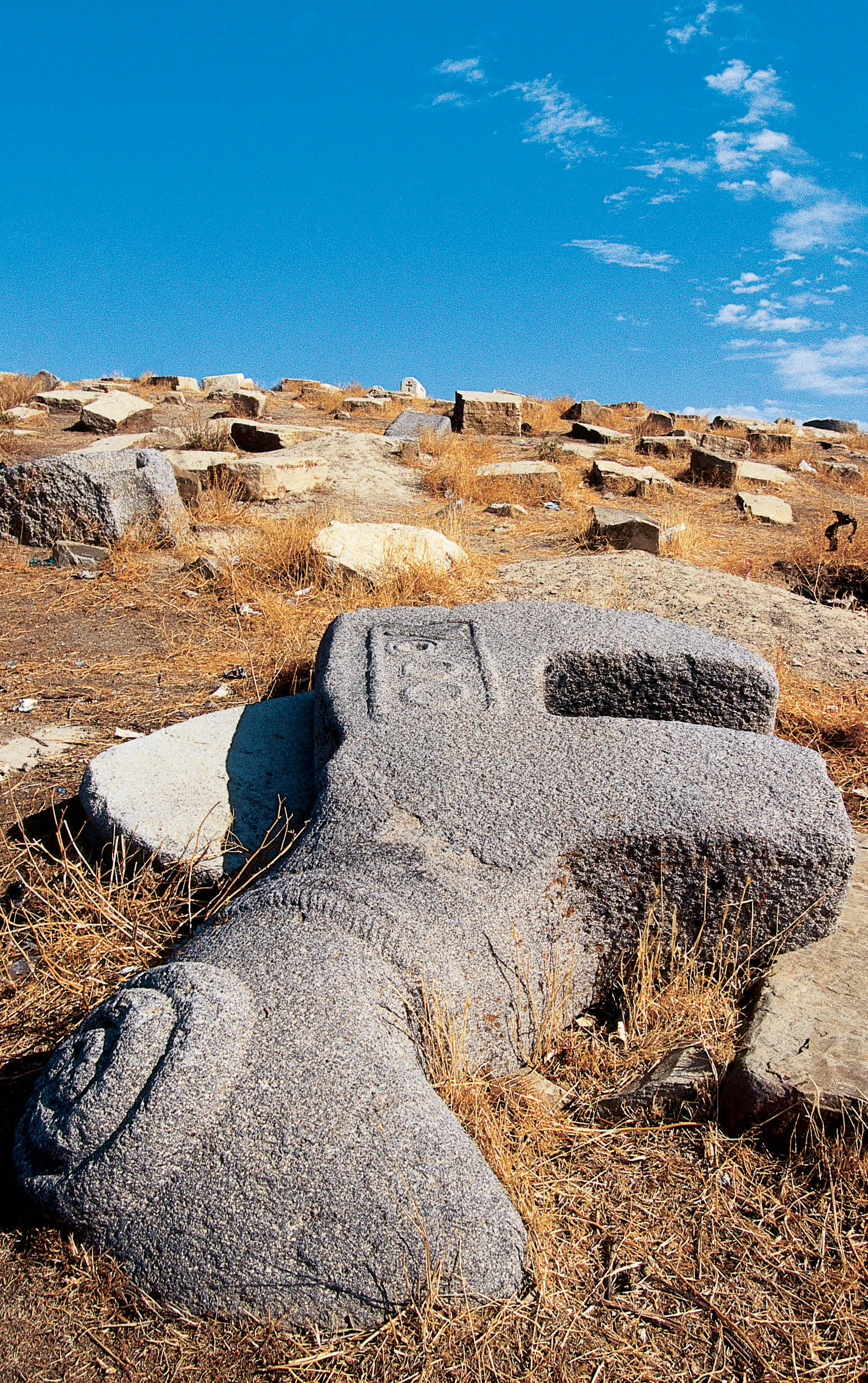
alized Nestorians of Mesopotamia left the fertile planes of the Euphrates and the Tigris to relocate in inhospitable Kurdistan and Iranian Azerbaijan. Many converted to Islam. more rarely, to a younger brother. In exceptional cases a child was appointed and a relative such as the mother or an older sister oversaw Church affairs until the designated leader came of age.168 Soon the offices of metropolitan and bishop also became hereditary. Through the heritability of offices the determination of successors was simplified and also better protected from external manipulations. Since these high clerical offices were connected with particular families and sometimes held by family leaders, the organization of the Church became increasingly intertwined with the clan structures of the faithful. True to the old form of organisation, the patriarch was the ecclesiastical and secular authority in one, although he had to share worldly power with the clan leaders and the Muslim Kurdish emirs of his region.
边缘化的美索不达米亚 (Mesopotamia) 聂斯托利派 (Nestorians) 信徒离开了幼发拉底河 (Euphrates) 和底格里斯河 (Tigris) 的肥沃平原,迁往荒凉的库尔德斯坦 (Kurdistan) 和伊朗阿塞拜疆 (Iranian Azerbaijan)。许多人改宗伊斯兰教 (Islam)。更罕见的是,传给一位弟弟。在特殊情况下,会任命一名孩童,并由诸如母亲或姐姐之类的亲属监管教会事务,直到指定的领袖成年。168 不久,都主教 (metropolitan) 和主教 (bishop) 的职位也变为世袭。通过职位的世袭性,继承人的确定得以简化,也更好地免受外部操控。由于这些高级神职职位与特定家族相关联,有时由家族首领担任,教会的组织日益与信众的氏族结构交织在一起。遵循旧的组织形式,宗主教 (patriarch) 集教会与世俗权威于一身,尽管他不得不与该地区的氏族首领和穆斯林库尔德埃米尔 (Muslim Kurdish emirs) 分享世俗权力。
It was Tamerlane (ruled 1370–1405), who was of Turkic descent, who dealt the deathblow to the ravaged Church of the East. The Muslim Tamerlane had the military genius of Genghis Khan and exceeded him in cruelty, as attested to by the infamous skull pyramids he had erected upon the conquest of cities. However, he lacked the religious tolerance of the Mongol great khans, for he profoundly hated Christians and Jews. Thus Tamerlane combined Turko-Mongol lust for conquest with Islamic fanaticism. Beginning around 1370 he expanded his realm across Central Asia, and in 1380 he invaded the former Il-Khanate. Everywhere churches and synagogues were destroyed and Christians and Jews massacred – a genuine holocaust occurred among the Christians and Jews of Asia. Then Tamerlane’s grandson Ulug Beg (viceroy of Transoxania 1409–47, r. 1447–49) exterminated the last remaining Christians of Samarqand.167 Towards the end of the fourteenth century the Church of the East collapsed and virtually disappeared from the region around Baghdad, after it had been extinguished in China, Mongolia, Central Asia and Iran (except for the region around Urmiah). After some eleven centuries of expansion, Christianity shrank back to the land east of the Euphrates, to its geographical origins. The Church survived only in inaccessible Kurdistan, in Iranian Azerbaijan, in Armenia and in Kerala, which escaped Tamerlane’s orgy of destruction for reasons of climate and geography.
正是具有突厥血统的帖木儿 (Tamerlane)(1370–1405年在位)给了饱受蹂躏的东方教会 (Ch. of E.) 致命一击。穆斯林帖木儿拥有成吉思汗 (Genghis Khan) 的军事天才,其残暴则有过之而无不及,这可由他在征服城市后竖起的臭名昭著的骷髅金字塔为证。然而,他缺乏蒙古大汗们的宗教宽容,因为他深深憎恨基督徒和犹太人。因此,帖木儿将突厥-蒙古人的征服欲与伊斯兰狂热结合在一起。约自1370年起,他将其疆域扩张至整个中亚,并于1380年入侵前伊儿汗国 (Il-Khanate)。各地教堂和犹太会堂被毁,基督徒和犹太人遭屠杀——亚洲的基督徒和犹太人中发生了一场真正的大屠杀。随后,帖木儿的孙子乌鲁伯格 (Ulug Beg)(1409–47年任河中地区 (Transoxania) 总督,1447–49年在位)消灭了撒马尔罕 (Samarqand) 最后残存的基督徒。167 到十四世纪末,东方教会 (Ch. of E.) 崩溃,并在巴格达 (Baghdad) 周边地区几乎消失;此前它已在中国、蒙古、中亚和伊朗(乌尔米耶 (Urmiah) 周边地区除外)被消灭。在约十一个世纪的扩张之后,基督教退缩回幼发拉底河 (Euphrates) 以东之地,回到其地理上的起源地。该教会仅存于难以进入的库尔德斯坦 (Kurdistan)、伊朗阿塞拜疆 (Iranian Azerbaijan)、亚美尼亚 (Armenia) 和喀拉拉 (Kerala);后者因气候和地理原因逃过了帖木儿的毁灭狂潮。
In the end, the Church of the East had to organize itself as a people in order to survive. Thus there emerged from the rubble of the erstwhile international Church, which had embraced numerous peoples and races, a regional Church structured according to tribal principles. The presence of the Church of the East became congruent with a certain region and a single people, the Assyrians. Not until half a millennium later could the Church free itself from the chains of a hereditary clergy.
最终,东方教会 (Ch. of E.) 不得不将自己组织为一个民族以求生存。于是,从昔日那个曾包容众多民族与种族的国际性教会的废墟中,产生了一个按部落原则构建的地区性教会。东方教会 (Ch. of E.) 的存在变得与某一特定地区和单一民族——亚述人 (Assyrians)——相吻合。直到五百年后,教会才得以摆脱世袭神职人员制度的束缚。
In the fifteenth century the established organization of the Church collapsed, so in 1450 Patriarch Shimun IV Basidi (in office 1437–1497) made the patriarchate hereditary. From then on the office was to be reserved for the Abuna family and passed on from uncle to nephew or,
十五世纪,教会既有的组织架构崩溃,因此,1450年,宗主教西满四世·巴西迪 (Shimun IV Basidi)(任期为1437–1497年)将宗主教职位改为世袭。从那时起,该职位便保留给阿布纳家族 (Abuna family),并由叔父传给侄子,或,