鲍默《东方教会:亚述基督教图史》第六章:东叙利亚神学与灵修面面观(中英文对照版)
阿甲按:本连载以克里斯托夫·鲍默(Christoph Baumer)2016年英文新版为底本,采用人工智能辅助中译,以中英文对照形式供研读参考。译文及原文提取仍有待校订,人名、地名、专业术语和个别断句未必准确,欢迎读者与专家指正。
本章导读
本章介绍东叙利亚传统中的神学、修道与神秘主义,并从圣事、教堂空间和礼仪实践等角度,呈现东方教会信仰与灵修生活的基本面貌。
凡例
- 翻译自:Christoph Baumer, The Church of the East: An Illustrated History of Assyrian Christianity, new edition, translated by Miranda G. Henry (London and New York: I.B.Tauris, 2016),第六章,原书第 105–136 页。
- 本连载保留英文原文、图版与原书页码,采用双语对照形式,便于参阅和引用。原作页码与 PDF 文件的物理页序不同,本文标示原书页码。
- 中文初稿由 DeepSeek 辅助生成,部分缺译和遗漏段落使用 GPT-6-luna 补译;本次整理不等同于完成学术校订。原文中的个别断句、图注拼接和脚注提取仍需对照原书核查。
- 人名、地名、书名与叙利亚语专业术语的译法仅供参考,相关条目可参阅《高尔吉亚叙利亚遗产百科辞典》。
- 引用建议:克里斯托夫·鲍默,《东方教会:亚述基督教图史》第六章“东叙利亚神学与灵修面面观”,袁永甲整理(人工智能辅助中译,待校订),教父原文中译计划,2026年10月12日,本文网址,并注明原书页码及访问日期。
第六章:东叙利亚神学与灵修面面观
Aspects of East Syrian
东叙利亚的诸方面
Theology and Spirituality VI
神学与灵修 VI
The dispute with Zoroastrianism and Manichaeism
与琐罗亚斯德教 (Zoroastrianism) 和摩尼教 (Manichaeism) 的争论
Buddhism to China)2 it was so severely repressed by the sanctions of Kartir that it played only a marginal role during the spread of the Church into the eastern province of Khorassan. Never- theless, Buddhism was known to Christian theologians such as Bardaisan, Origen, Clement and Cyril of Alexandria.3 As far as the ‘pagans’ living south of the Caspian Sea were concerned, the Church had an easy time of it in terms of theology but not in terms of practice, as the people of Dailam and Gilan surrendered their nature deities and idols only reluctantly and after the demonstration of miracles.
佛教传入中国)2 后,它因卡尔提尔 (Kartir) 的制裁而受到如此严厉的压制,以致在教会向呼罗珊 (Khorassan) 东部行省传播期间,它只起了边缘作用。尽管如此,佛教仍为巴戴桑 (Bardaisan)、奥利金 (Origen)、克莱门 (Clement) 和亚历山大的西里尔 (Cyril of Alexandria) 等基督教神学家所知。3 就居住在里海 (Caspian Sea) 以南的“异教徒”而言,教会在神学方面颇为顺利,但在实践方面却并非如此,因为代拉姆 (Dailam) 和吉兰 (Gilan) 的人民只是勉强地、并且在奇迹显现之后才放弃他们的自然神祇和偶像。
Within the Sassanian Empire, Christianity had relationships and rivalries with several religions. In Mesopotamia it first built on the basis of the Jewish communities, which logically led to tensions between the two religious communities. In contrast to Marcion, who fundamentally rejected the Jewish Old Testament heritage, the early leading East Syrians, such as Aphrahat (†c.350), tried to argue that Christianity represented the logical continuation, perfection and finally supercession of the Jewish religion. Without striking anti-Semitic tones, Aphrahat, following in the wake of his predecessors, criticized Jewish formalism and legalism – that is, the maintenance of the Mosaic laws of conduct, as well as the disregard of Christ as the messiah promised in the Old Testament. Aphrahat’s Demonstrationes interpret the Old Testament in such a way that Christianity is the apotheosis of Judaism, which has now lost its right to exist. Additionally, the Mosaic religion applies only to the Jews, while the Good News is relevant to all people.1 The Acts of the Martyrs also suggest that, during the time of the persecutions under Shapur II, certain groups of Jews denounced Christians to the authorities.
在萨珊帝国 (Sassanian Empire) 内部,基督教与若干宗教既有联系,也有竞争。在美索不达米亚 (Mesopotamia),它最初建立在犹太社群的基础之上,这从逻辑上导致了两个宗教社群之间的紧张关系。与从根本上拒斥犹太教旧约 (Old Testament) 遗产的马吉安 (Marcion) 不同,早期东方叙利亚人 (East Syrians) 的领袖,如阿弗拉哈特 (Aphrahat)(†约350),试图论证基督教代表了犹太教的逻辑延续、完善,并最终取代了犹太教。阿弗拉哈特并未带有鲜明的反犹色彩,他追随其前辈的脚步,批评犹太教的形式主义和律法主义——即固守摩西的行为律法,以及无视基督是旧约 (Old Testament) 所应许的弥赛亚。阿弗拉哈特的《论证集》(Demonstrationes) 以这样一种方式解释旧约 (Old Testament):基督教是犹太教的顶峰,而犹太教如今已丧失其存在的权利。此外,摩西的宗教仅适用于犹太人,而福音则与所有人相关。1 《殉道者行传》(Acts of the Martyrs) 也表明,在沙普尔二世 (Shapur II) 统治下的迫害时期,某些犹太群体向当局告发了基督徒。
The real theological opponents and, simultan- eously, missionary fields of the Church of the East were the dualistic religions of Zoroastrianism and Manichaeism. The strategies for each, however, had to be different. Beginning in 273 Manichaeism was absolutely suppressed by the Sassanian civil authority, which, despite severe persecutions, did not apply to Christianity. Thus Christian missionaries were permitted to convert Manichaeans. Conversion of Zoroastrians, however, brought the death penalty.
东方教会 (Ch. of E.) 的真正神学对手,同时也是其传教领域,乃是二元论的琐罗亚斯德教 (Zoroastrianism) 与摩尼教 (Manichaeism)。然而,针对二者的策略必须有所不同。自 273 年起,摩尼教遭到萨珊王朝 (Sassanian) 世俗当局的彻底镇压;尽管迫害严酷,这一镇压却未及于基督教。因此,基督教传教士获准使摩尼教徒皈依。然而,使琐罗亚斯德教徒皈依则会招致死刑。
One of the basic themes of religious thought concerns the frightening and omnipresent question of the origin and nature of evil. In the Jewish-Christian tradition, evil appears as the result of the disobedience of the creature towards its creator. A dualistic world-view, on the other hand, proceeds from an unbridgeable opposition
宗教思想的基本主题之一,涉及一个令人恐惧且无处不在的问题,即恶的起源与本质。在犹太-基督教传统中,恶表现为受造物对其造物主的不顺从所导致的结果。另一方面,二元论世界观则始于一种不可逾越的对立
With regard to Buddhism, which had expanded into Iran (it was Parthians who brought
关于佛教,它已扩展到伊朗 (Iran)(是帕提亚人 (Parthians) 带来了
between good and evil; God, understood as good, cannot be the creator of evil. The origin of evil lies not in God but, rather, outside God, whether in dark matter in Manichaeism or in the ‘anti-God’ Ahriman in Zoroastrianism. It is the relative value each attributes to matter that radically separates Manichaeism from Zoroastrianism. According to the teachings of Zarathustra, Ahura Mazda, in his omniscience, knew of the existence of Ahriman and foresaw his destructive attack, so he brought forth creation and human beings. As has already been discussed,4 Ahura Mazda created both the spirit and the body of the human being; unlike in Manichaeism and, in part, Christianity, the conceptual pairing of good and evil in no way corresponds to that of spirit and matter, but rather to that of existence and non-existence. The material world, with the exception of the works of certain demons such as serpents or vermin, is of divine origin. In Manichaeism, however, all material creation and the corporeal human being are the product of the powers of darkness, and only the immaterial light-soul can free itself from the clutches of evil matter. In Manichaeism the body is the tomb of the soul, in Zoroastrianism its vehicle to perfection. On account of these contrasting starting points, different disputes arose between Christianity and Zoroastrianism and between Christianity and Manichaeism. unintelligent beings such as the sun instead of the one God. They also condemned the Zoroastrian moral code, insofar as it allowed polygamy and the marriage of blood relatives, in addition to permitting animal sacrifice. For Christians, however, the drinking of blood and the eating of the flesh of sacrificed animals was expressly forbidden. Conversely, the Zoroastrians disapproved of the Christian marriage regulations, celibacy and monastic asceticism, as these limited the preservation and generation of life. Seen from the Zoroastrian perspective, Christian monks and the Manichaean elect, with their ascetic removal from the world, each hindered the struggle of Ahura Mazda in equal measure; asceticism amounted to an insult to Zoroastrian ideals. The Zoroastrian clergy accused the Christians of failing to worship the Zoroastrian symbol of divinity – fire – and of disregarding the laws of purity regarding the elements by burying their dead.
在善与恶之间;被理解为善的神不可能是恶的创造者。恶的起源不在神,而在神之外,无论是在摩尼教 (Manichaeism) 中的黑暗物质,还是在琐罗亚斯德教 (Zoroastrianism) 中的“反神”阿里曼 (Ahriman)。正是二者各自赋予物质的相对价值,将摩尼教与琐罗亚斯德教从根本上区分开来。根据查拉图斯特拉 (Zarathustra) 的教导,阿胡拉·马兹达 (Ahura Mazda) 以其全知知道阿里曼的存在,并预见到其毁灭性攻击,因此创造了受造世界与人类。正如前文所论,4 阿胡拉·马兹达既创造了人的灵魂,也创造了人的身体;与摩尼教以及部分基督教 (Christianity) 不同,善与恶的概念配对绝不与精神与物质的配对相对应,而是与存在与非存在的配对相对应。物质世界,除蛇或害虫等某些恶魔的作为之外,都具有神圣起源。然而在摩尼教中,一切物质受造物和肉身的人都是黑暗势力的产物,只有非物质的光明灵魂才能从邪恶物质的魔掌中解脱出来。在摩尼教中,身体是灵魂的坟墓;在琐罗亚斯德教中,身体则是灵魂通往完善的载体。由于这些截然不同的出发点,基督教与琐罗亚斯德教之间以及基督教与摩尼教之间产生了不同的争论。诸如太阳之类的无理智存在者,而非独一的神。他们还谴责琐罗亚斯德教的道德准则,因为它允许一夫多妻制和血亲通婚,此外还允许动物献祭。然而对基督徒而言,饮血和吃祭牲的肉是被明确禁止的。相反,琐罗亚斯德教徒不赞成基督教的婚姻规定、独身和修道禁欲主义,因为这些限制了生命的保存和繁衍。从琐罗亚斯德教的视角看,基督教修士和摩尼教“选民” (Manichaean elect) 以其禁欲式的出世,同样程度地阻碍了阿胡拉·马兹达的斗争;禁欲主义无异于对琐罗亚斯德教理想的侮辱。琐罗亚斯德教祭司指责基督徒不敬拜琐罗亚斯德教的神性象征——火,并因埋葬死者而无视关于元素的洁净律法。
While these Zoroastrian accusations concern the ethos of ‘right action’, a polemical work tested the ‘right thought’ of Christianity. The work in question was the Skand-Gumanik Vicar, a ninth-century Zoroastrian apology written in Pahlavi, whose author, Mardan Farrukh, criticized the monotheism of Judaism, Christianity and Islam, as well as Manichaeism. In the first chapter Mardan described the principles of the Zoroastrian religion: ‘Ahura Mazda created the omniscient religion like a great tree, with a trunk, two main limbs, three branches, four twigs and five shoots. The trunk is the measure [truth], the two main limbs are action and renunciation, the three branches are good thought, good speech and good behaviour, the four twigs are the four natural classes of priest, warrior, farmer and craftsman [note the resemblance to the Indian castes], and the five shoots are the five religious superiors.’5
尽管这些琐罗亚斯德教 (Zoroastrian) 的指控关涉“正行”的伦理气质,一部论战性著作却检验了基督教的“正思”。这部著作便是《祛疑明证》(Skand-Gumanik Vicar),一部九世纪以巴列维语 (Pahlavi) 写成的琐罗亚斯德教护教著作;其作者马尔丹·法鲁赫 (Mardan Farrukh) 批评了犹太教、基督教和伊斯兰教的一神论,以及摩尼教 (Manichaeism)。在第一章中,马尔丹描述了琐罗亚斯德教的原则:“阿胡拉·马兹达 (Ahura Mazda) 创造全知的宗教,如同一棵大树,有树干、两大主枝、三根枝条、四根细枝和五根嫩枝。树干是尺度[真理],两大主枝是行动与弃绝,三根枝条是善思、善言和善行,四根细枝是祭司、武士、农夫和工匠这四个自然阶层[注意其与印度种姓制度的相似性],五根嫩枝则是五位宗教长上。”5
A Zoroastrian apology
琐罗亚斯德教的辩护
No genuine dialogue was able to develop between Christianity and Zoroastrianism – it was a con-versation between doves. As we can gather from the Acts of the Martyrs, Christian apologists accused the Zoroastrians of failing to understand the transcendence of Christ and his all-encompassing salvific power, as well as of worshipping mortal entities such as fire and
基督教 (Christianity) 与琐罗亚斯德教 (Zoroastrianism) 之间未能发展出真正的对话——那不过是一场鸽子之间的“反对话”。正如我们可以从《殉道者行传》(Acts of the Martyrs) 中推断出的那样,基督教护教士指责琐罗亚斯德教徒 (Zoroastrians) 未能理解基督 (Christ) 的超越性及其包罗万象的救赎力量,并且崇拜可朽之物,诸如火以及
Mardan then presented the argument that the finite nature of creation presupposes the
马尔丹 (Mardan) 随后提出了这样的论点:受造界的有限性预设了
Aspects of East Syrian Theology and Spirituality | 107 involvement of a principle opposed to the creator God. For him, the concept of salvation necessarily implied a deviation – undesired by the creator god and caused by another power – from the course of a full development, which he must again balance out. Thus Mardan concluded that only a dualistic model could separate evil from the good creator god, while Christian monotheism mixed evil with God, making impossible any delimitation of good from evil. From this premise, Mardan argued polemically against the sacrifice of God’s son with the approval of God the Father: ‘[As the omnipotent and only God] he brought forth all creation, including even his own opponent, out of nothing and led his son’s executioners into error. But, insofar as God himself created each executioner and his adversary, without reason or motive, and must have foreseen their deeds, one cannot disagree that he himself was the executioner of his son.’ Using the same argument, Mardan continued ‘that the Jews killed the messiah by the will of the Father’, or, playing on the image of the Good Shepherd, ‘It is also the will of the Father that the wolves kill the sheep, for he created the wolves as well.’
东叙利亚神学与灵修的诸面向 | 107 一种与造物主上帝相对立的原则的介入。在他看来,救赎概念必然意味着一种偏离——偏离完满发展的进程,这种偏离是造物主上帝所不愿的,并由另一种力量造成,而他必须重新将其平衡。因此,马尔丹 (Mardan) 得出结论:只有二元论模式才能把恶与善的造物主上帝分开,而基督教一神论把恶与上帝混在一起,使得善与恶的任何区分都不可能。从这一前提出发,马尔丹 (Mardan) 论战性地反对上帝之子在圣父认可下被献祭:“[作为全能和唯一的上帝]他从无中造出一切受造物,甚至包括他自己的对手,并使他儿子的行刑者陷入错误。但是,既然上帝自己无理由、无动机地创造了每个行刑者及其对手,并且必定预见了他们的行为,那么人们就无法否认,他自己就是他儿子的行刑者。”运用同一论证,马尔丹 (Mardan) 接着说,“犹太人按照圣父的旨意杀死了弥赛亚”,或者,借用善牧 (Good Shepherd) 的形象说,“狼杀死羊也是圣父的旨意,因为狼也是他创造的。”
The Zoroastrian apology focused primarily on the impossibility of considering the problem of evil within a monotheistic position without encountering contradictions. Another attack concerned the incomprehensibility of a virgin conception and suggested that Mary kept dubious company.7 Then Mardan tried to play out the idea of a trinity ad absurdum. If three was equal to one, then nine was equal to three, etc. And if the Son was not less than the Father, then the Father is not more than the Son, which is impossible if the Son is said to have been begotten by the Father.8 Here Mardan reiterated the argument of Arius, according to which there must be a substantive and hierarchical distinction between begetter and begotten. Finally, Mardan asked rhetorically how it was possible ‘that this great God, who rules and sustains both worlds, handed over his body to be beaten and crucified’.9 The author was also aware of the various understandings of the death of God: ‘The talk of the Christians about their Messiah Jesus, whom they consider God’s Son but also equal to God and therefore God himself, [is] inconsistent. One sect [Jacobites and Melkites] says that this messiah died, the other [Nestorians] that he did not.’ 10 In contrast to Islam, which shares important fundamental assumptions with Christianity and was able to develop a meaningful dialogue with East Syrian Christianity in the eighth and ninth centuries,11 the conceptual premises of Zoroastrianism and Christianity were too different.
琐罗亚斯德教的护教文主要关注的是:在一神论立场内思考恶的问题而不遭遇矛盾,是不可能的。另一项攻击则涉及童贞受孕的不可理解性,并暗示马利亚 (Mary) 与可疑之人为伍。7 随后,马尔丹 (Mardan) 试图以归谬法 (ad absurdum) 推演三位一体的观念。如果三等于一,那么九就等于三,等等。如果子不小于父,那么父就不大于子;而若说子由父所生,这便是不可能的。8 在此,马尔丹 (Mardan) 重申了阿里乌 (Arius) 的论点,即生者与被生者之间必须存在实体性的和等级性的区分。最后,马尔丹 (Mardan) 反问,怎么可能“这位统治并维系两个世界的伟大上帝,竟交出自己的身子受殴打并被钉十字架”。9 作者也意识到关于上帝之死的各种理解:基督徒关于其弥赛亚耶稣 (Messiah Jesus) 的谈论——他们既视其为上帝之子,又视其与上帝同等,因而就是上帝本身——[是]不一致的。一个派别[雅各派 (Jacobites) 和麦尔基派 (Melkites)]说这位弥赛亚死了,另一个派别[聂斯托利派 (Nestorians)]则说他没有死。10 与伊斯兰教不同——伊斯兰教与基督教共享一些重要的基本前提,并能在八世纪和九世纪与东叙利亚基督教 (East Syrian Christianity) 展开有意义的对话11——琐罗亚斯德教与基督教的概念前提差异太大。
To the anticipated response that God granted human beings free will, our author replied, ‘If sin is the result of free will and God gave human beings this free will, then God is also a sinner, insofar as he made sin possible in the first place.’ Jesus’s temptation by the devil also offered Mardan the opportunity to demonstrate that there are, in fact, two antagonistic principles or that the Christian God must of necessity be both good and evil: ‘If there is only one principle, without an adversary, how can Ahriman be powerful enough to tempt the son of God? And, if God created this evildoer, then it is God himself who tempted his son.’ Then he asked rhetorically, ‘And why did he not redeem the adversary like the rest of creation?’6 Marcion certainly would have agreed with Mardan’s argument!
对于预料中的回答,即上帝赋予人类自由意志,我们的作者回应道:“如果罪是自由意志的结果,而上帝又赋予人类这种自由意志,那么上帝也是罪人,因为正是他首先使罪成为可能。”耶稣受魔鬼试探一事,也为马尔丹 (Mardan) 提供了机会,以证明实际上存在两个相互敌对的本原,或者证明基督教的上帝必然既善又恶:“如果只有一个本原,没有敌手,阿里曼 (Ahriman) 怎能有足够的力量去试探上帝之子?而且,如果这个作恶者是上帝创造的,那么就是上帝自己试探了他的儿子。”接着他反问:“为什么他不像救赎其余受造物那样救赎那敌手呢?”6 马吉安 (Marcion) 肯定会赞同马尔丹 (Mardan) 的论证!
Mani – the self-proclaimed Paraclete
摩尼 (Mani)——自称的保惠师 (Paraclete)
The dispute between Christianity and Manichaeism, a world religion which has since vanished, developed along entirely different lines. It took place over a period of more than a millennium, not only in Iran but also in Egypt, North Africa, Rome, Syria, Central Asia and, especially, China. The range of this dialogue ran
基督教 (Christianity) 与摩尼教 (Manichaeism) 之间的争论——后者是一种后来已消失的世界性宗教——沿着完全不同的路线发展。这场争论持续了一千多年,不仅发生在伊朗 (Iran),也发生在埃及 (Egypt)、北非 (North Africa)、罗马 (Rome)、叙利亚 (Syria)、中亚 (Central Asia),尤其是中国 (China)。这场对话的范围延伸
from curt disapproval to the extraordinary coexistence of a Nestorian community with a Manichaean group under the leadership of a single shared bishop in south-eastern China in the early fourteenth century.12 During the period of the second Uigur empire (c.850–1209), as well, Buddhists, Manichaeans and Nestorians lived together in peace. The last bastions of Manichaeism collapsed in the sixteenth/ seventeenth centuries in China.13
从断然反对到14世纪初中国东南部一个景教社群 (Nestorian community) 与一个摩尼教群体 (Manichaean group) 在一位共同主教的领导下非同寻常地共存。12 在第二回鹘帝国 (second Uigur empire) 时期(约850—1209年),佛教徒、摩尼教徒和景教徒也同样和平共处。摩尼教 (Manichaeism) 的最后堡垒于16/17世纪在中国崩溃。13
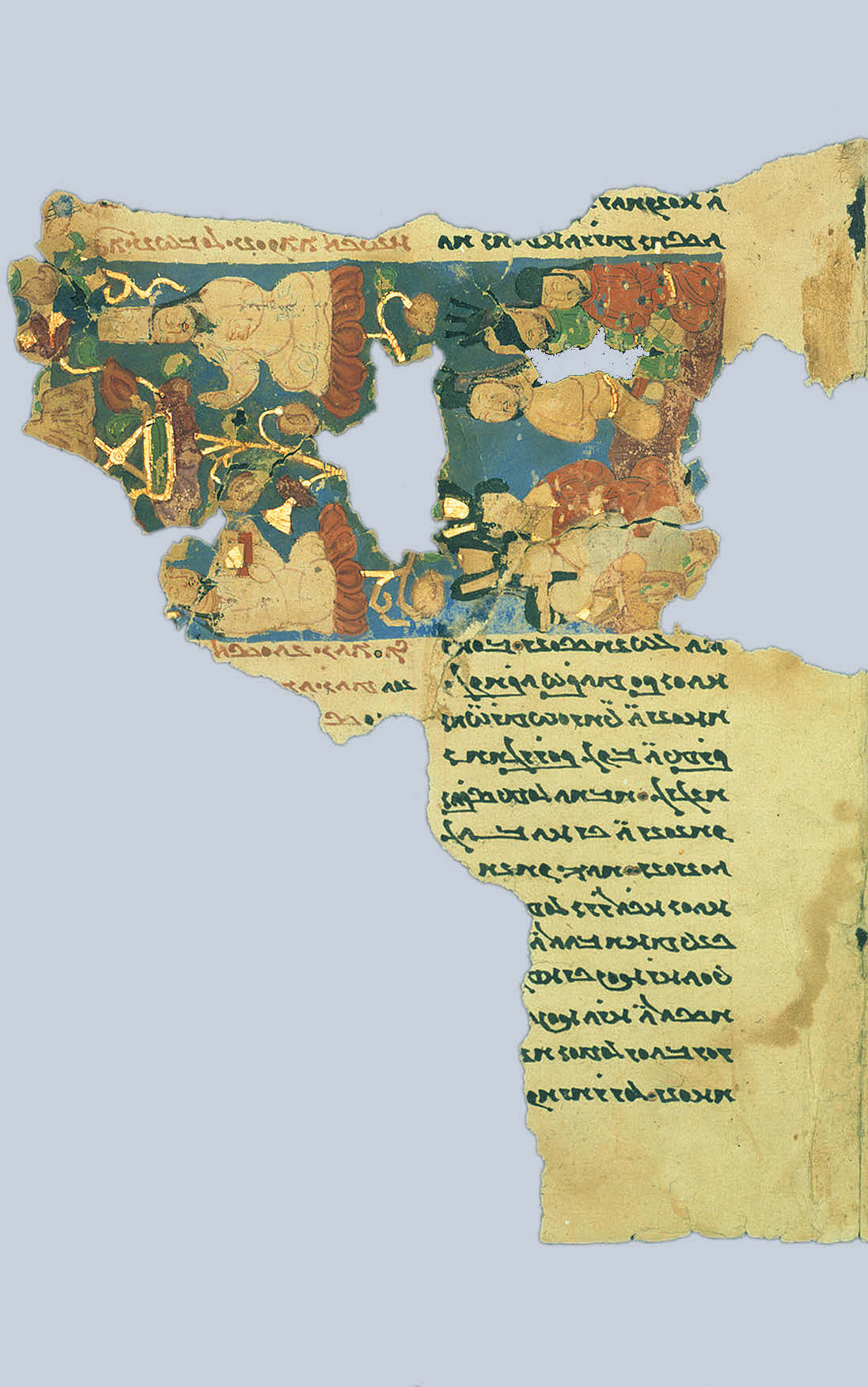
Manichaean manuscript on paper from the early tenth to mid-eleventh century, Kocho, ruin α. Kocho (Gaochang), which lies in the province of Xinjiang in north-western China, was from c.844CE the capital of the empire of the Uigurs, whose élite were from 761 to the late tenth- or early eleventh- century Manichaean. The miniature presents a lesson. Above, two electi sit on a lotus throne, with the one on the right speaking and the one on the left holding a book. Below them sit six hearers, three women on the left and three men on the right. The headdress of the four people behind, two on each side, marks them as members of the royal family.33 (Museum of Indian Art, Prussian cultural property. Fragment MIK III 8259, fol.1r.)
纸本摩尼教写本,十世纪初至十一世纪中叶,高昌 (Kocho),遗址 α。高昌 (Kocho/Gaochang) 位于中国 (China) 西北部的新疆 (Xinjiang) 省,自约公元844年起为回鹘 (Uigurs) 帝国的都城;其精英阶层自761年至十世纪末或十一世纪初为摩尼教徒。这幅细密画传达了一则教义。上方,两位选民 (electi) 坐在莲花座上,右侧的一位在讲话,左侧的一位手持一本书。他们下方坐着六位听者 (hearers),左侧三位女性,右侧三位男性。后面四人的头饰——每侧两人——表明他们是王室成员。33 (印度艺术博物馆 (Museum of Indian Art),普鲁士文化财产 (Prussian cultural property)。残片 MIK III 8259, fol.1r.)
Born in 216 not far from Seleucia-Ctesiphon, Mani descended on his mother’s side from the Parthian royal house of the Arsacids, while his father was a member of the Jewish-Christian Baptist sect of the Elkesaites, who led strictly ascetic lives with numerous purifying and baptismal rituals. According to his hagiography, his calling was revealed to him in his first vision when he was twelve years old. Later, when he was 24, he experienced his second revelation and left the Baptist sect because it was concerned only with corporeal – i.e. material – purity rites and paid no attention to the spiritual purification of the soul. In contrast to the Baptists, who considered the body necessary for and capable of salvation, for Mani the material body represented an impediment to be cast off, an obstacle to the salvation of the light-soul. Thus Mani joined the tradition of Jesus, ‘who promoted the purity of the soul instead of the purity of the body and food’.14 Mani understood himself as the Paraclete proclaimed by John, as the twin of Jesus,15 who would teach the world the way to end suffering. In this regard Mani made use of the Acts of Thomas and the Christian Gnostic Song of the Pearl to support his claim to embody the Paraclete.16
生于216年,在距塞琉西亚-泰西封 (Seleucia-Ctesiphon) 不远的地方,摩尼 (Mani) 母系出自帕提亚的阿尔沙克王室 (Arsacids),其父则是犹太-基督教浸礼派厄勒克塞派 (Elkesaites) 的成员;该派过着严格的禁欲生活,奉行众多洁净与洗礼仪式。根据其圣徒传,他十二岁时,其呼召在第一次异象中向他显明。后来,在他24岁时,他经历了第二次启示,并离开了浸礼派,因为该派只关注肉体——即物质——的洁净仪式,而不关注灵魂的精神净化。与认为身体为得救所必需且能够得救的浸礼派相反,对摩尼而言,物质身体是一种必须抛弃的累赘,是光明灵魂得救的障碍。因此,摩尼归入耶稣 (Jesus) 的传统:“他倡导灵魂的洁净,而非身体和食物的洁净”。14 摩尼将自己理解为约翰 (John) 所宣告的保惠师 (Paraclete),是耶稣的孪生兄弟,15 他将教导世界终结苦难之道。在这方面,摩尼利用《多马行传》(Acts of Thomas) 和基督教诺斯替派的《珍珠之歌》(Song of the Pearl),来支持自己体现保惠师的主张。16
I to spread his teachings. Presumably it was the syncretistic character of the new doctrine, which brought together the various religions of the empire, that attracted a shah who ruled over a multitude of peoples. But the pacifistic, ascetic and world-renouncing Manichaeism naturally could not accord with the ideology of an aggressive power. Around 274/276, at Kartir’s instigation, Vahram I had him arrested, after which he died in prison. At the same time, a systematic persecution began, which forced Mani’s followers to emigrate to either Central Asia or the Roman Empire, where they encountered the edicts of Diocletian in 297 and Constantine in 326.17
……传播他的教义。大概正是这种新教义的混合主义性质——它把帝国中的各种宗教结合在一起——吸引了这位统治众多民族的沙阿 (shah)。但和平主义的、禁欲的、弃绝尘世的摩尼教 (Manichaeism) 自然无法与一个侵略性政权的意识形态相契合。约在274/276年,在卡尔提尔 (Kartir) 的唆使下,瓦赫拉姆一世 (Vahram I) 下令逮捕了他,随后他死于狱中。与此同时,一场有系统的迫害开始了,迫使摩尼 (Mani) 的信徒移居到中亚或罗马帝国,在那里他们遭遇了297年戴克里先 (Diocletian) 的敕令和326年君士坦丁 (Constantine) 的敕令。17
Mani developed a new universal religion, which he taught first in the south-eastern Sassanian Empire and in the empire of the Kushan in northern India, where he also encountered Buddhism. Around the year 242 or 243 Mani returned and received permission from Shapur
摩尼 (Mani) 创立了一种新的普世宗教,他最初在萨珊帝国 (Sassanian Empire) 东南部和北印度的贵霜帝国 (Kushan) 传教,并在那里接触到了佛教。约公元242年或243年,摩尼返回,并从沙普尔 (Shapur) 处获得许可
The story spread by his disciples that he suffered crucifixion is a myth and served to
他的门徒散布的关于他遭受钉十字架的故事是一个神话,并被用来
associate Mani as closely as possible with Jesus.18 Since he considered himself the fulfilment of Jesus’s promise, he and his students sought identification with him in external symbols as well. Thus a few of his earliest disciples were called Addai, Mari and Thomas (the names of the East Syrian apostles)19 he was said to have gathered twelve disciples around him, and his church organization included 72 bishops.20 Nevertheless, even though the resemblance of Manichaean text fragments to Christian documents is often confusing and Manichaeism is rightfully characterized as a chameleon,21 he remained true to his two basic principles of the two antagonistic principles and the three ages. The principles are good and evil; the ages are those of the original separation of the principles, their present intermixing and their future separation. In short, Manichaeism is a kind of Christian Zoroastrianism, which incorporated a Gnostic doctrine of knowledge and in Central Asia and China was enriched with Buddhist and Taoist elements.22
尽可能紧密地将摩尼 (Mani) 与耶稣 (Jesus) 联系起来。18 由于他自认为实现了耶稣 (Jesus) 的应许,他和他的学生也力求通过外在象征表明自己与他(耶稣)的认同。因此,他最早的一些门徒被称为阿代 (Addai)、马里 (Mari) 和多马 (Thomas)(东叙利亚使徒 (East Syrian apostles) 的名字)19;据说他聚集了十二位门徒,其教会组织包括72位主教。20 尽管如此,尽管摩尼教 (Manichaean) 文本残片与基督教文献的相似之处常常令人困惑,且摩尼教 (Manichaeism) 被恰如其分地形容为变色龙,21 他仍然忠于其两个基本原则,即两种对立的原则和三个时代。这些原则是善与恶;这些时代则是最初诸原则的分离、它们当前的混合以及它们未来的分离。简言之,摩尼教 (Manichaeism) 是一种基督教式的琐罗亚斯德教 (Christian Zoroastrianism),它吸纳了一种诺斯替主义 (Gnostic) 的知识教义,并在中亚 (Central Asia) 和中国 (China) 因佛教 (Buddhist) 与道教 (Taoist) 元素而得到丰富。22
Zarathustra, Buddha and Christ, it was legitimate for him to hearken back to their partial revelations and systematically meld them into the ultimate universal religion, relevant to all people. In his view, his doctrine was not plagiarism but rather the crystallization of truths that had been distorted by time, accompanied by the simultaneous rejection of the accumulated errors. In contrast to his predecessors, Mani did not place his trust in unreliable oral tradition, but instead preserved his revelations in writing. He wrote texts for the literate and painted pictures for the illiterate.24 As the crowning apostle of light, Mani claimed absolute truth. Mani’s disciples went still further with regard to syncretism, in that they presented Manichaeism as perfected Christianity when in a Christian environment, as perfected Zoroastrianism when among Zoroastrians, and as perfected Buddhism when among Buddhists.
对他而言,回溯琐罗亚斯德 (Zarathustra)、佛陀 (Buddha) 和基督 (Christ) 各自不完整的启示,并将它们系统地融合为一种适用于所有人的终极普世宗教,是正当的。在他看来,他的教义并非剽窃,而是那些被时间扭曲的真理的结晶,同时也伴随着对累积谬误的摒弃。与他的前辈不同,摩尼 (Mani) 并不信赖不可靠的口头传统,而是以文字保存他的启示。他为识字者撰写文本,为文盲绘制图画。24 作为光明使徒的集大成者,摩尼 (Mani) 宣称自己拥有绝对真理。摩尼 (Mani) 的弟子们在融合主义方面走得更远:在基督教环境中,他们把摩尼教 (Manichaeism) 说成是完善的基督教 (Christianity);在琐罗亚斯德教徒 (Zoroastrians) 中,说成是完善的琐罗亚斯德教 (Zoroastrianism);在佛教徒 (Buddhists) 中,说成是完善的佛教 (Buddhism)。
In contrast to Christianity, Manichaeism proceeded from a fundamental, irreconcilable and unbridgeable dualism between good and evil. Both are unbegotten and eternal. But, while Zoroastrian dualism runs right through the material and spiritual world, Manichaean dualism equates good with the light, the spirit and soul, and evil with darkness and matter. According to a complicated cosmology that is difficult to understand, the two principles were originally separate, but then the powers of evil succeeded in capturing bits of the good light and binding them to matter. From this perspective, the cosmos and humanity are, on account of their materiality, works of evil. The cosmic process of salvation has as its goal the freeing of the light particles imprisoned in matter and the separation of them from the evil matter. Within this cosmic struggle of the powers of light with the powers of darkness, human beings are obliged to take sides. The apostles of light show the path to salvation by teaching humans the gnosis, (that is, the saving knowledge), which awakens the memory
与基督教 (Christianity) 相反,摩尼教 (Manichaeism) 从善与恶之间一种根本的、不可调和且无法弥合的二元论出发。二者皆非受生,且永恒。然而,琐罗亚斯德教的二元论 (Zoroastrian dualism) 贯穿物质世界与精神世界,而摩尼教的二元论 (Manichaean dualism) 则将善等同于光明、精神和灵魂,将恶等同于黑暗和物质。根据一套复杂且难以理解的宇宙论,这两个本原最初彼此分离,但随后恶的力量成功俘获了善的光明的碎片,并将它们束缚于物质。从这一视角看,宇宙和人类因其物质性而是恶的造物。宇宙救赎过程的目标,是解放被囚禁于物质中的光明粒子,并将它们与恶的物质分离。在光明力量与黑暗力量的这场宇宙斗争中,人类必须选择立场。光明使徒通过教导人类灵知 (gnosis,即拯救性知识) 来指明救赎之路,这种灵知唤醒记忆
For Christians, especially Nestorians, this alignment of Mani with Jesus was of course disagreeable. As the example mentioned above of the discussion between Bishop Papa and Vahram III shows, there was a danger that outsiders would confuse the two, as happened in China in the seventh/eighth centuries, since both religions from Iran spoke of Jesus Christ. In order to explain this proximity and simultaneously to discredit Mani, the Chronicle of Seert reported that, in his youth, Mani pretended to convert to Christianity and even had himself ordained as a priest by the bishop of Susiana (Khuzistan). After a time, he declared himself Paraclete, gathered twelve disciples and proclaimed his own ‘sinful’ doctrine. The report concluded with the alleged crucifixion of Mani and ‘so did God condemn him and give him what he deserved’.23
对基督徒,尤其是聂斯脱利派 (Nestorians) 而言,将摩尼 (Mani) 与耶稣 (Jesus) 相提并论当然令人无法接受。正如上文提到的帕帕主教 (Bishop Papa) 与瓦赫拉姆三世 (Vahram III) 之间讨论的例子所示,存在一种危险:局外人会混淆二者,正如七、八世纪在中国 (China) 发生的那样,因为来自伊朗 (Iran) 的这两种宗教都谈到耶稣基督 (Jesus Christ)。为了解释这种相近性,同时贬低摩尼, 《塞尔特编年史》(Chronicle of Seert) 记载说,摩尼年轻时假装皈依基督教,甚至让苏西亚那 (Susiana)(胡齐斯坦,Khuzistan)的主教按立自己为司铎。过了一段时间,他自称保惠师 (Paraclete),聚集了十二位门徒,并宣扬自己“有罪的”教义。该记载以据称摩尼被钉十字架,以及“上帝就这样定他的罪,并给他应得的报应”作结。23
Because Mani declared himself the seal of the prophets, of whom he expressly acknowledged
因为摩尼 (Mani) 宣称自己是众先知的封印,而他明确承认了其中的
of their own trapped particles of light and teaches them how to free the light from matter. Since matter is evil in itself, the way of salvation does not follow the Zoroastrian model of an active life of right thought, right speech and right action, but rather requires the fundamental denial of all that is corporeal and the renunciation of reproduction. milk, possession of private property, physical labour, the use of medicine and washing oneself or changing one’s clothes more than once a year.27 Worship consisted of purely verbal activities, such as collective reading and singing of hymns, since sacraments, bound up as they were with matter, were of the devil.
他们自身被困的光粒子,并教导他们如何从物质中解放光。既然物质本身是恶的,得救之道便不遵循琐罗亚斯德教 (Zoroastrian) 那种以正思、正语、正行为积极生活的模式,而是要求从根本上否定一切属肉体之物,并弃绝生育、牛奶、私有财产、体力劳动、使用药物,以及一年之内不止一次地洗澡或换衣。27 崇拜由纯粹言语性的活动组成,例如集体诵读和唱赞美诗,因为圣事既然与物质紧密相连,便是出于魔鬼。
Since the people striving for perfection were not capable of supporting themselves, and the vast majority of people could not meet these excessive demands, Mani divided the faithful into two categories: the chosen, the electi, and the catechumens, the auditores, the hearers. If the electi were able to follow all the laws, they could save their light-soul; the hearers, on the other hand, had to serve the chosen, feeding and clothing them. They could hope over a period of many rebirths to accumulate enough merit that they would finally be reborn as potential electi.28 However, anyone who was neither an elect nor a hearer was threatened with eternal damnation at the Last Judgement, for not all the light trapped in matter can be freed.29
由于追求完美者无法自给自足,而绝大多数人又无法达到这些过高的要求,摩尼 (Mani) 将信徒分为两类:选民 (electi) 和慕道者 (auditores),即听道者 (hearers)。如果选民 (electi) 能够遵守所有律法,他们便可拯救自己的光明灵魂 (light-soul);而听道者 (hearers) 则必须服侍选民,供养他们并为他们提供衣物。他们可以期望在多次转世 (rebirths) 的过程中积累足够的功德,最终转生为潜在的选民 (electi)。28 然而,任何既非选民也非听道者的人,都将在最后审判 (Last Judgement) 时面临永罚,因为并非所有被困于物质中的光明都能得到释放。29
Text analyses have shown that Mani’s Christian sources included Tatian’s Diatessaron but also influences from the heretics Marcion and Bardaisan. Like Mani, Bardaisan believed that creation arose from a mixing of good with evil and that the soul could redeem itself by keeping God’s laws.25 Still greater was Mani’s proximity to Marcion, who juxtaposed the evil creator God of matter of the Old Testament against the good God and his saving Son of the New Testament. Like the later Mani, Marcion denied the corporeal birth of Jesus and his baptism; he thus represented, as did Bardaisan, a Docetic position, according to which the humanity and sufferings of Christ were only apparent. The one-time Manichaean Augustine reported, ‘They [the Manichaeans] deny that Christ was born of a virgin. They profess that his body was not real but rather feigned, and thus his sufferings were also feigned. They also believe that the resur- rection did not happen.’26 In this regard it was appropriate that the Manichaeans commemorated the death of their prophet but did not attribute any salvific power to him.
文本分析已表明,摩尼 (Mani) 的基督教来源包括塔提安 (Tatian) 的《四福音合参》(Diatessaron),但也包括来自异端分子马吉安 (Marcion) 和巴戴桑 (Bardaisan) 的影响。与摩尼 (Mani) 一样,巴戴桑 (Bardaisan) 相信创造源于善与恶的混合,并且灵魂可以通过遵守上帝的律法而自我救赎。25 摩尼 (Mani) 与马吉安 (Marcion) 更为接近,后者将旧约 (Old Testament) 中物质性的邪恶造物主上帝与善的上帝及其新约 (New Testament) 中拯救性的圣子对立起来。与后来的摩尼 (Mani) 一样,马吉安 (Marcion) 否认耶稣 (Jesus) 的肉身诞生及其受洗;因此,他与巴戴桑 (Bardaisan) 一样,代表了一种幻影论 (Docetic) 立场,根据该立场,基督 (Christ) 的人性和受难只是表象。曾为摩尼教徒 (Manichaean) 的奥古斯丁 (Augustine) 报告说:“他们[摩尼教徒]否认基督 (Christ) 由童贞女所生。他们声称他的身体并非真实,而是假装的,因此他的受难也是假装的。他们还相信复活没有发生。”26 就此而言,摩尼教徒纪念他们的先知之死,却没有将任何救赎力量归给他,这是恰当的。
The Marcionite position of Mani, which presents creation as the work not of God but only of evil, fundamentally differentiated him from Christianity and positioned his doctrine in the corner of radical and élite world-renunciation, as Jewish-Christian Gnosticism also taught. For them, as well, the body represented the dark and narrow prison of the soul and had been created by a careless demiurge. The soul required secret knowledge in order to find its way back to its lost and forgotten homeland. Since ‘true’ Christians of the gnosis, who know the gateway to perfect knowledge, could forgo the mediation of the Church, this élitist position called into question the universal validity of the Good News. While Christianity also offered world-renouncing options, open to only a few (of which East Syrian asceticism represents an extreme form) it likewise provided possibilities for living in the world and embracing existence, which were
摩尼 (Mani) 的马吉安派 (Marcionite) 立场将创造视为并非上帝之作,而仅仅是恶之作,这从根本上将他与基督教区分开来,并将其教义归入激进而精英化的弃绝世界之列,正如犹太-基督教诺斯替主义 (Jewish-Christian Gnosticism) 也如此教导的那样。对他们而言,身体同样代表着灵魂黑暗而狭窄的牢狱,并且是由一位粗心大意的巨匠造物主 (demiurge) 所造。灵魂需要秘密知识,才能找到回归其失落且被遗忘的故乡之路。既然灵知 (gnosis) 的“真正”基督徒——他们知道通往完美知识的大门——可以放弃教会的中介,这种精英主义立场便对福音 (Good News) 的普遍有效性提出了质疑。尽管基督教也提供弃绝世界的选择,这些选择只对少数人开放(其中东叙利亚禁欲主义 (East Syrian asceticism) 代表一种极端形式),它同样提供了在世间生活并拥抱存在的可能性,而这些可能性是
Because the personal work of salvation included the separation of the light particles from matter, the Manichaean ideal promoted a consistent abstinence from activities that bound the soul to matter. This led to a catalogue of forbidden actions, which went well beyond the purity laws of the Baptists Mani had scorned. They forbade killing, the eating of meat, sexual reproduction (leading to self-mutilation), farming, the harvesting of vegetables (only fruits were considered pure), the drinking of wine and
因为个人的救赎工作包括将光粒子与物质分离,摩尼教 (Manichaean) 的理想提倡持续禁绝那些将灵魂束缚于物质的活动。这导致了一长串被禁止的行为,远远超出了摩尼 (Mani) 所蔑视的洗礼派 (Baptists) 的洁净律法。他们禁止杀生、食肉、性生殖(导致自残)、农耕、收割蔬菜(只有水果被视为洁净)、饮用葡萄酒以及
open to all the faithful.30 A further important difference between the two religions concerned the idea of the resurrection of the body, which was significant for the Nestorian missionaries to Central Asia, while for Manichaeans – and, incidentally, Buddhists – the body represented the greatest hindrance to salvation. For the Manichaeans the body will not be enlightened or transfigured into a spiritual body, but instead it must, because it is burdened with negative energies, be left behind or even destroyed.
向所有信徒开放。30 两种宗教之间另一个重要差异涉及肉身复活的观念,这对前往中亚的聂斯托利派传教士意义重大,而对摩尼教徒——顺便说一句,对佛教徒也是如此——身体则代表着得救的最大障碍。对摩尼教徒而言,身体不会得到启悟,也不会转化为属灵的身体,相反,由于它背负着负面能量,必须被抛弃,甚至被毁灭。
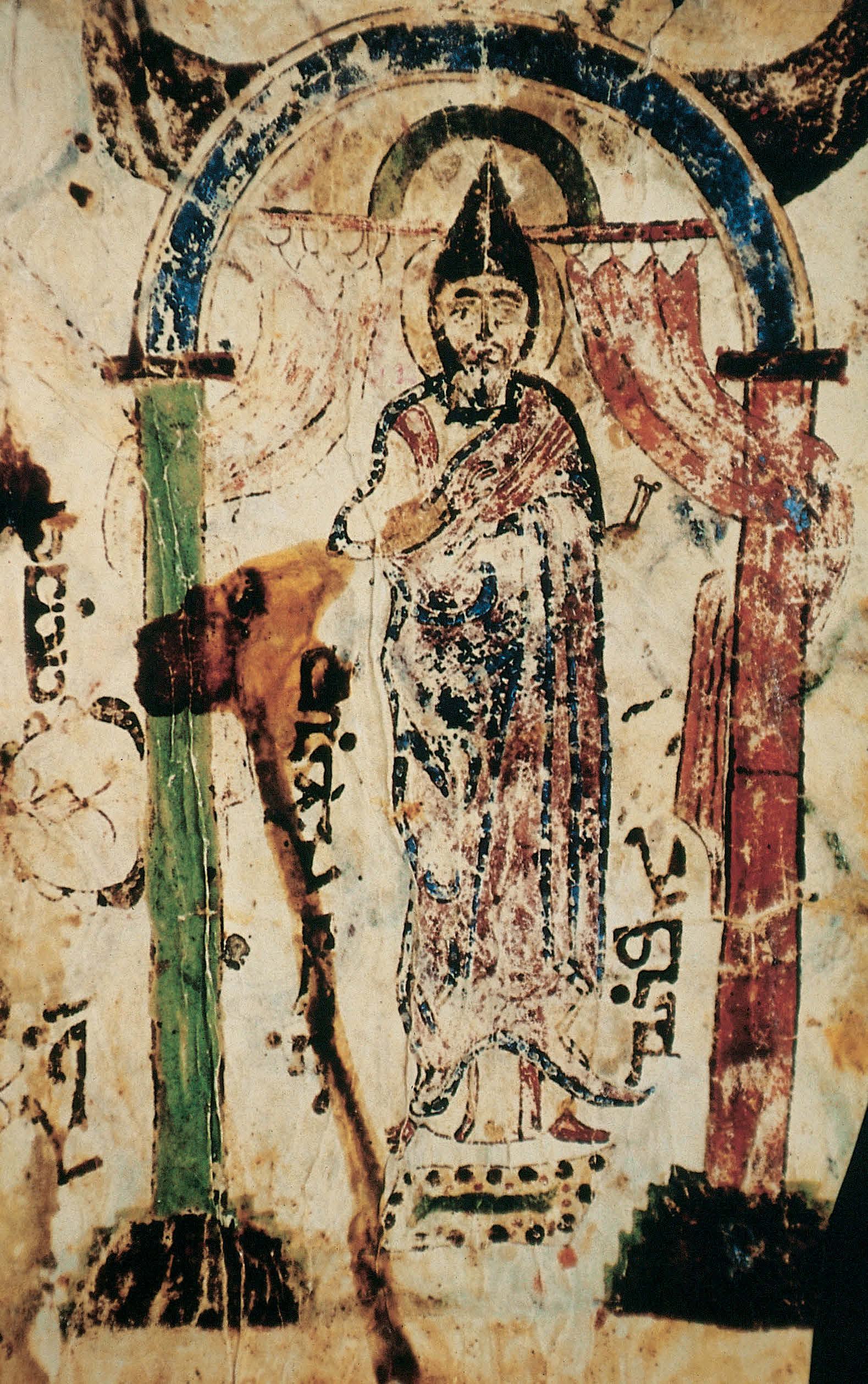
The Church Father Ephrem the Syrian (306–373) is recognized by both East and West Syrians, as well as since 1920 by the Catholic Church, as a Doctor of the Church. The deacon Ephrem led an ascetic life and taught at the ecclesiastical schools of Nisibis (until 363) and Edessa. He attained fame for his hymns, as well as on account of his untiring opposition to the heretical adherents of Mani, Bardaisan and Arius. In this miniature from the twelfth century Ephrem holds a scroll in his left hand. (Library of the Syrian Orthodox Patriarchate, Damascus.)
教父叙利亚的厄弗冷 (Ephrem the Syrian)(306–373)被东方叙利亚人和西方叙利亚人,以及自1920年以来的天主教会,公认为教会圣师。执事厄弗冷过着苦修生活,并在尼西比斯 (Nisibis)(直至363年)和埃德萨 (Edessa) 的教会学校任教。他因其赞美诗而声名卓著,也因他不懈反对摩尼 (Mani)、巴戴桑 (Bardaisan) 和阿里乌 (Arius) 的异端追随者而闻名。在这幅十二世纪的细密画中,厄弗冷左手持一卷轴。(大马士革叙利亚正教会宗主教区图书馆 (Library of the Syrian Orthodox Patriarchate, Damascus)。)
For Christian orthodoxy, represented by, for instance, Bishop Rabbula of Edessa (†435), the Manichaeans were terrible heretics, since they taught the absolute nature of the two principles, denied the salvific work of Christ and rejected the Old Testament, yet nevertheless declared their writings apostolic and canonical.
对于以埃德萨主教拉布拉 (Rabbula of Edessa, †435) 为代表的基督教正统而言,摩尼教徒是可怕的异端,因为他们教导两个本原具有绝对本性,否认基督的救赎工作,并拒绝旧约,然而却又宣称自己的著作具有使徒性和正典地位。
East Syrian monasticism and the
东叙利亚修道主义与
Manichaean electi
摩尼教选民 (Manichaean electi)
Although Manichaeism and East Syrian Christianity proceeded from very different premises and basic beliefs, their goals and practice of the highest religious ideals were confusingly similar. This unintended resemblance was known, for instance, to Ephrem the Syrian: ‘Their [the Manichaeans’] works are similar to our works, as their fasting is similar to our fasting, but their faith is not similar to our faith.’31 When one moves away from the frequently encountered view that Christian monasticism first emerged in Egypt and spread from there to Syria and Mesopotamia, the question arises of how the striking similarities between East Syrian and Manichaean asceticism came about. first monastery on the upper Nile around 320, Tatian initiated the movement of the Encratites in Adiabene in northern Iraq over a century earlier. These early Christian ascetics rejected marriage, as well as the consumption of meat and alcohol. The first orthodox ascetic hermits were found in the region around Nisibis and Edessa; among them was Bishop Jacob of Nisibis (†338). When he took office, around 301 or 308, he had the reputation of a long-time ascetic. Nearly contemporary with Jacob was Julian Saba (†367), who retreated to a cave to the north of Edessa around 317. Thus, around 300, there was in Mesopotamia an independent monastic movement of anchoritism – that is, living as hermits; the Egyptian influence of a cenobitic monasticism, in which life was lived in
尽管摩尼教 (Manichaeism) 与东叙利亚基督教 (East Syrian Christianity) 出自极为不同的前提和基本信仰,但它们最高宗教理想的目标与实践却令人困惑地相似。这种非本意的相似性,例如,叙利亚的以法莲 (Ephrem the Syrian) 就知道:“他们[摩尼教徒]的作为与我们的作为相似,他们的斋戒与我们的斋戒相似,但他们的信仰与我们的信仰不相似。”31 当人们不再接受那种常见观点,即基督教修道主义最初兴起于埃及 (Egypt),并从那里传播到叙利亚 (Syria) 和美索不达米亚 (Mesopotamia) 时,就会产生一个问题:东叙利亚与摩尼教禁欲主义之间这些显著相似之处究竟是如何形成的。上尼罗河地区约320年出现第一座修道院,而塔提安 (Tatian) 早在一个多世纪之前就在伊拉克 (Iraq) 北部的阿迪亚贝尼 (Adiabene) 发起了恩克拉提派 (Encratites) 运动。这些早期基督教禁欲者拒绝婚姻,也拒绝食肉和饮酒。最早的正统禁欲隐修士出现在尼西比斯 (Nisibis) 和埃德萨 (Edessa) 周边地区;其中包括尼西比斯主教雅各 (Jacob of Nisibis)(†338)。他约在301年或308年就任主教时,已享有长期禁欲修行者的声誉。与雅各差不多同时代的是朱利安·萨巴 (Julian Saba)(†367),他约在317年隐退到埃德萨 (Edessa) 以北的一处洞穴。因此,约在300年,美索不达米亚 (Mesopotamia) 已存在一场独立的隐修主义 (anchoritism) 修道运动——即作为隐士生活;而集体修道制 (cenobitic monasticism) 的埃及影响,在这种制度中,生活是在……
In fact, the roots of Christian monasticism appear to lie within the sphere of activity of the Church of the East. While St Anthony (251–356) first retreated to the Egyptian desert around 270 or 285, and St Pachomius (290–346) founded his
事实上,基督教修道主义的根源似乎存在于东方教会 (Ch. of E.) 的活动范围之内。尽管圣安东尼 (St Anthony, 251–356) 约在270年或285年首次隐退到埃及沙漠,而圣帕科米乌斯 (St Pachomius, 290–346) 创立了他的
community, first reached Syria and Mesopotamia towards the end of the fourth century.32
社群于四世纪末首次抵达叙利亚 (Syria) 和美索不达米亚 (Mesopotamia)。32
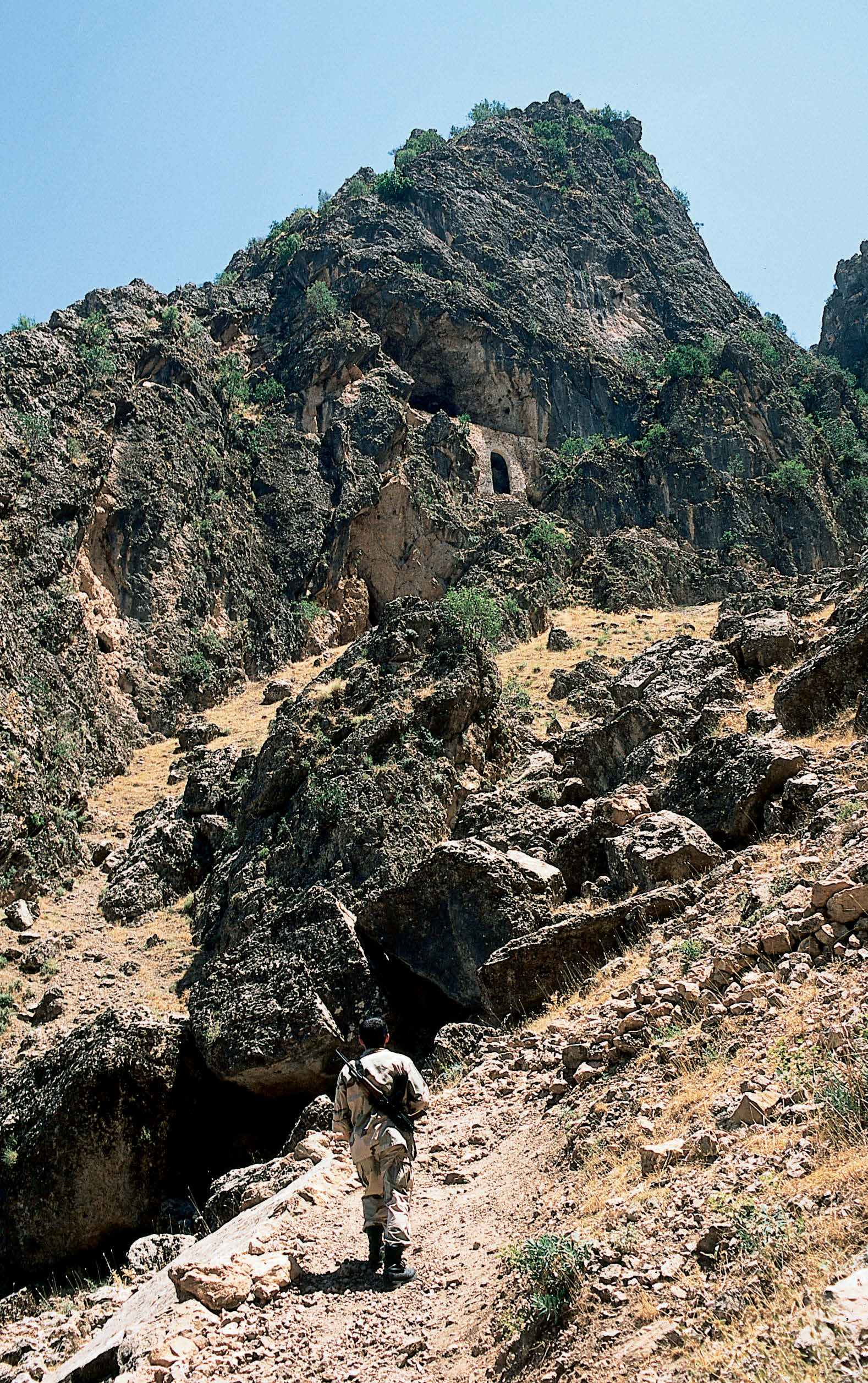
Way up to the former Nestorian mountain monastery of Rabban Booya near Shaqlawa, northern Iraq. The founder Rabban Booya is said to have lived in the fifth/sixth century; today more than 2000 Assyrian Christians, live in Shaqlawa.
通往伊拉克北部沙克拉瓦 (Shaqlawa) 附近昔日的聂斯托利派 (Nestorian) 拉班·布亚 (Rabban Booya) 山地修道院的上行路。据说创始人拉班·布亚 (Rabban Booya) 生活在五/六世纪;如今,2000 多名亚述基督徒 (Assyrian Christians) 居住在沙克拉瓦 (Shaqlawa)。
The Nestorian Thomas of Marga expressed the vision of East Syrian anchoritism: the saints ‘become gods among men’.33 This vision is based on the goal of a monastic life that imitates the angels, who allegedly abstain from sleep, food and corporeal love, in order to praise God unceasingly. The great exegete of the Church of the East, Ephrem the Syrian (†373), maintained that corporeal self-denial transforms physical being into an angelic existence.34 For him, the conscious ‘destruction and annihilation of the body’ represented the most perfect practice of anchor- itism.35 The renowned Nestorian mystic John of Dalyatha († before 786) lauded the readiness for martyrdom with these words: ‘O what can your love achieve, O God! Because they [the martyrs] have nothing more they can give you, they have joyfully handed over their bodies to death.’36
聂斯托利派的马尔加的托马斯 (Thomas of Marga) 表达了东叙利亚隐修主义的理想图景:圣徒“在人间成为神”。33 这一理想图景基于一种效法天使的修道生活目标,即据称天使戒绝睡眠、食物和肉体之爱,以便不停地赞美上帝。东方教会 (Ch. of E.) 的伟大释经家叙利亚的以法莲 (Ephrem the Syrian, †373) 主张,肉体上的克己能将肉身存在转化为天使般的存在。34 在他看来,有意识地“身体的毁灭与灭绝”代表了隐修主义最完美的实践。35 著名的聂斯托利派神秘主义者达利亚塔的约翰 (John of Dalyatha, † before 786) 用以下话语颂扬了甘愿殉道的精神:“啊,你的爱能成就何等大事,啊上帝!因为他们[殉道者]再没有什么能献给你,他们便欢然将身体交于死亡。”36
The monastic life manifested itself in strict celibacy, which sometimes led to self-castration;37 lack of personal property; severe fasting; abstention from alcohol, meat and agricultural products and the consumption of wild plants, fruit and even grass; the simplest possible clothing, made from wool, animal skins or straw, or sometimes complete nakedness; and as little sleep as possible. ‘One hour of sleep suffices for a healthy monk,’ opined the ascetic Arsenius.38 A few slept not lying on the ground but rather standing against a wall or tied to a post, or they tied a rope hanging from the ceiling around their upper body. Like the Manichaeans, the anchorites renounced all care of the body and followed Ephrem’s instruction never to wash themselves.39 This clear ‘care’ for one’s own filth inspired St Jerome (342–420) to remark sarcastically that the East Syrian monks were just as concerned with the dirtiness of their bodies as with the cleanliness of their hearts.40 with iron chains to a rock or the top of a tree, living in a leaky wooden box, or having oneself walled into a tomblike cave for the rest of one’s life. This practice, which included the anchorite’s receiving the necessary food and water through a small hole and the breaking down of the wall only after the hermit had not touched his food for a month, was also widespread among the Buddhist hermits of Tibet. Several of these ascetic practices appear to be of Indian origin and to have reached Mesopotamia through the mediation of Manichaeism. Instead of walling themselves up, a few monks – mostly West Syrian but occasionally East Syrian – opted to stand upon stone pillars as tall as 21 metres and there to wait, exposed to the vagaries of weather and the admiration of pilgrims, until their death.
修道生活表现为严格独身,有时甚至导致自阉;37 没有个人财产;严苛斋戒;戒绝酒、肉和农产品,而以野生植物、果实甚至草为食;穿着尽可能最简单的衣物,由羊毛、兽皮或稻草制成,有时则完全赤身裸体;以及尽可能少的睡眠。“对健康的修士而言,一小时的睡眠足矣,”苦修者阿尔塞尼乌斯 (Arsenius) 如此认为。38 少数人不躺在地上睡觉,而是靠墙站立,或把自己绑在柱子上,或者把从天花板垂下的绳子缠在上半身。与摩尼教徒 (Manichaeans) 一样,隐修士 (anchorites) 弃绝一切对身体的照料,并遵循厄弗冷 (Ephrem) 的教导,从不洗澡。39 这种对自身污秽的明显“照料”,促使圣杰罗姆 (St Jerome, 342–420) 讽刺地评论说,东叙利亚修士 (East Syrian monks) 对自己身体的肮脏,正如对其心灵的洁净一样上心。40 用铁链把自己拴在岩石或树顶,住在漏水的木箱里,或让人把自己砌进一座坟墓般的洞穴中度过余生。这种做法——包括隐修士 (anchorite) 通过一个小洞接收必需的食物和水,并且只有在这位隐士 (hermit) 一个月未碰食物之后才拆掉墙壁——也广泛存在于西藏 (Tibet) 的佛教隐修士 (Buddhist hermits of Tibet) 之中。其中若干苦修实践似乎具有印度 (Indian) 起源,并通过摩尼教 (Manichaeism) 的中介传入美索不达米亚 (Mesopotamia)。少数修士——大多为西叙利亚 (West Syrian) 修士,偶尔也有东叙利亚 (East Syrian) 修士——没有选择把自己封砌起来,而是选择站在高达21米的石柱上,在那里等待,任凭天气变幻莫测,也接受朝圣者的赞叹,直到死去。
Other examples of self-castigation included being constantly in motion, chaining oneself
其他自我惩罚的例子还包括不停走动、以锁链自缚。
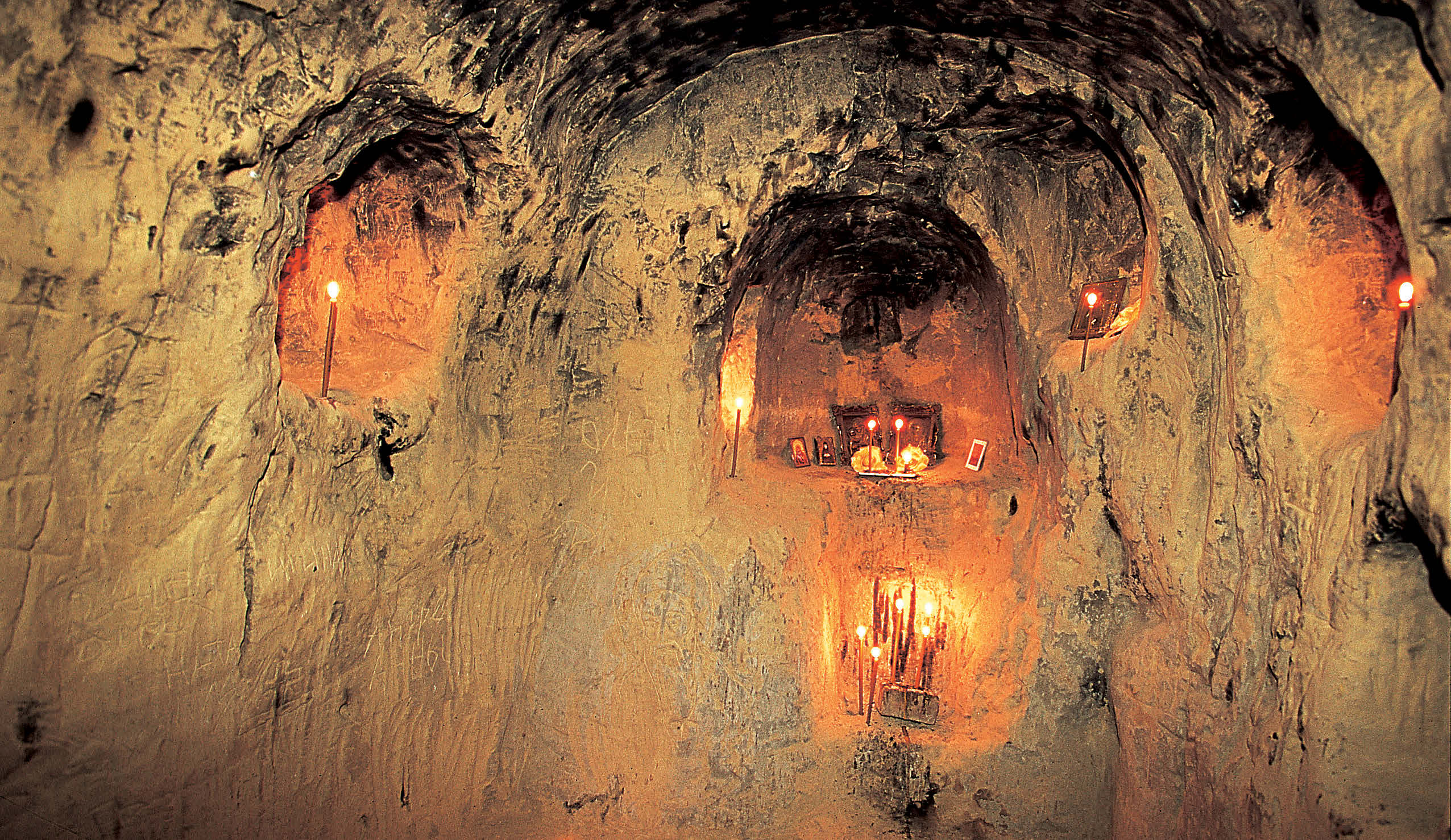
Beginning in the late third century East Syrian anchorites lived in such caves and sometimes had themselves walled in permanently, in which case water and bread were passed to them through a hole. Kitayewo hermit’s cave from the period of the Golden Horde (1227–1502), near Kiev, Ukraine.
从三世纪末开始,东叙利亚的独居修士就居住在这样的洞穴中,有时还会让人把自己永久封砌在里面;在这种情况下,水和面包会通过一个小孔递给他们。基塔耶沃 (Kitayewo) 隐修士洞穴,属于金帐汗国 (Golden Horde) 时期(1227–1502),位于乌克兰 (Ukraine) 基辅 (Kiev) 附近。
Syrian anchorites, encratites and Manichaean electi shared not only an abhorrence of the material world and a genuine hatred of the body – which the Egyptians, incidentally, condemned as an egoistic end in itself and a distraction from the work of spiritual purification41 – but also the condemnation of all expressions of emotional joie de vivre. In the Meditatio mortis, electi and anchorites meditated on their own sinfulness and on death. The corresponding state is also expressed emotionally. And so a Manichaean text states, ‘Keep in mind the trembling, the crying and the sadness’.42 We find exactly the same exhortation in Ephrem, who praised grief, sadness, sorrow and distress as signs of Christian perfection. Since Jesus never laughed but did cry, ‘laughter is the beginning of the destruction of the soul’.43 John of Dalyatha, for his part, wrote, ‘Force yourself always to maintain sorrow, in imitation of Christ.’44 Insofar as the object of sorrow is the passion of Christ, there is a parallel to the sometimes excessive sorrow of the Muslim Shiites over the death of their imam Hussein (†680). That this life-denying attitude was not exceptional is shown by excerpts from a Syrian rule for hermits:
叙利亚的隐修士 (anchorites)、禁戒派 (Encratites) 和摩尼教选民 (electi) 不仅共同憎恶物质世界,并真正仇恨身体——顺带一提,埃及人谴责这种态度是以自我为中心的自身目的,并且会使人偏离属灵净化的工夫41——而且还谴责一切表达情感性生活乐趣 (joie de vivre) 的行为。在《死亡默想》(Meditatio mortis) 中,选民和隐修士默想自身的罪性与死亡。相应的状态也以情感方式表达出来。因此,一份摩尼教文本说:“要记住颤抖、哭泣和悲伤。”42 我们在以法莲 (Ephrem) 那里发现了完全相同的劝诫,他称赞悲伤、忧愁、哀痛和痛苦是基督徒完美的标志。既然耶稣从未笑过,却哭过,“笑是灵魂毁灭的开端”。43 达利亚塔的约翰 (John of Dalyatha) 则写道:“要强迫自己始终保持悲伤,以效法基督。”44 只要悲伤的对象是基督的受难,就与穆斯林什叶派有时对其伊玛目侯赛因 (Hussein, †680) 之死所怀的过度悲伤有相似之处。这种否定生命的态度并非例外,这一点从一部叙利亚隐士规条的摘录中可以看出:
Canon 9: ‘Every satisfaction from eating or sleeping is forbidden for a solitary.’
第9条教规:“独修者不得从饮食或睡眠中获得任何满足。”
Canon 10: ‘A solitary shall always be in mourning, sorrowful, suffering and grieving.’
第十条教规:“独修者应始终哀恸、悲伤、受苦并哀痛。”
Canon 11: ‘A solititary shall never be glad, laugh and be in a gay mood.’45
第11条教规:“独修者绝不可欢喜、发笑或心情欢快。”45
For another monk from the early fourth century, named Uda, who Theodoret believed
至于另一位来自四世纪初、名叫乌达 (Uda) 的修士,狄奥多勒 (Theodoret) 认为他……
had been influenced by Mani, laughter was sufficient cause for excommunication.46 As Patriarch Ishoyahb II experienced, the path from world-denying, life- and soul-castigating asceticism to ignorance was short. When, around 630, he sought to open a theological school in the important monastery of Beit Abhe north-east of the city of Mosul, the monks rebelled: ‘We are destined for weeping and mourning while we dwell in our cells. If you build a school here, we shall depart.’ The patriarch had to give in.47 and are married, in emulation of Adam and Eve, whom God ‘in anger’ gave work, tribulation and marriage, since they succumbed to the temptation of the flesh offered by Satan.50 The perfect, by contrast, follow Christ, the second Adam, and take up his cross in the form of asceticism. Like the other writings, the Book of Degrees appeals to the uncompromising words of Jesus: ‘Whoever loves father and mother more than me is not worthy of me; and whoever loves son or daughter more than me is not worthy of me; and whoever does not take up the cross and follow me is not worthy of me’ (Matt 10:37–38). In the imitation of Christ, the cross, which in the Church of the East was generally venerated as a symbol of the resurrection, took on a different meaning, namely that of the mystical crucifixion of the saint in the epitome of suffering. Ephrem declared that the monk should bind himself to the cross in such a way that his ascetic practices become the nails and his obedience to the monastic rules becomes the crown of thorns.51 Thus did the ascetics become martyrs.
曾受摩尼 (Mani) 影响,笑足以成为绝罚的理由。46 正如宗主教伊绍雅布二世 (Ishoyahb II) 所经历的,从弃绝世界、苦待生命与灵魂的苦修主义到无知,这条路很短。约在 630 年,当他试图在摩苏尔 (Mosul) 城东北重要的贝特阿贝 (Beit Abhe) 修道院开办一所神学院时,修士们反叛道:“我们住在小室中,注定要哭泣哀悼。你若在这里建校,我们就离开。”宗主教不得不让步。47 并且结婚,效法亚当 (Adam) 和夏娃 (Eve),上帝“在愤怒中”赐给他们工作、患难和婚姻,因为他们屈服于撒但 (Satan) 所献上的肉体诱惑。50 相比之下,完全者跟随基督 (Christ),即第二个亚当 (Adam),并以苦修的形式背起他的十字架。与其他著作一样,《等级之书》(Book of Degrees) 诉诸耶稣 (Jesus) 毫不妥协的话语:“凡爱父母过于爱我的,不配属于我;凡爱儿女过于爱我的,不配属于我;凡不背起十字架跟从我的,也不配属于我。”(《马太福音》10:37–38;Matt 10:37–38)在效法基督 (Christ) 时,十字架——在东方教会 (Ch. of E.) 中通常被尊崇为复活的象征——便具有了不同的意义,即圣人在苦难的极致中神秘地被钉十字架。厄弗冷 (Ephrem) 宣称,修士应当将自己束缚于十字架,以致他的苦修实践成为钉子,他对修道规章的顺服成为荆棘冠冕。51 于是,苦修者成了殉道者。
Since the monastic life apparently embodied the best fulfilment of the Christian ideal, the question arose of the status of the laity. In light of the radical nature of Syrian monasticism, it is no surprise that its leading representatives in the fourth century divided the rapidly growing Christian communion into two categories or two Churches: the outer Church of the laity and the lower clergy and the inner, true Church of the monks, nuns and the higher, celibate clergy. The real litmus test was the life of celibacy. Early writings, such as the Gnostic-influenced Acts of Thomas, make it unmistakably clear that there is no Christian life outside virginity.48 This meant that married couples had to dissolve their marital bond if they wanted to receive baptism. In his seventh sermon, the Syrian Aphrahat (†350) addressed the candidates for baptism as follows: ‘Anyone who has betrothed a wife and wills to take her let him retreat. Anyone who has set his heart to the state of marriage let him marry before baptism, otherwise he will fall in the struggle [against temptation] and will be killed; let him retreat [from baptism].’49 Anyone who did not want to live celibately remained a catechumen.
由于修道生活显然体现了基督教理想的最佳实现,平信徒的地位问题便随之产生。鉴于叙利亚修道主义的激进性质,毫不奇怪,其在四世纪的主要代表将迅速壮大的基督徒共同体划分为两个类别或两个教会:由平信徒和低级神职人员组成的外在教会,以及由修士、修女和高级独身神职人员组成的内在的真正教会。真正的试金石是独身生活。早期著作,如受诺斯替主义影响的《多马行传》(Acts of Thomas),明确无误地表明,在童贞之外不存在基督徒生活。48 这意味着,已婚夫妇若想接受洗礼,就必须解除婚姻关系。在其第七篇讲道中,叙利亚的阿弗拉哈特 (Aphrahat, †350) 对候洗者这样说:“凡已聘定妻子并愿意娶她的人,让他退去。凡已立志进入婚姻状态的人,让他在受洗之前结婚,否则他会在[对抗诱惑的]争战中跌倒,并被杀死;让他退出[受洗]。”49 凡不愿过独身生活的人,就仍作慕道者。
After the perfect renounced the world, they become ‘aliens’ in this world and received the paraclete.52 In this regard as well, John of Dalyatha made his views clear: ‘Do you want the pleasure of Christ to remain inflamed in your heart? Then dispel the pleasure of the world. Christ will enter into your heart and reside there, if you have first emptied it of all that is worldly.’53 Between the two worlds, the material and the spiritual of Christ, there was neither compromise nor bridge. Although the Book of Degrees acknowledged the inseparability of the two Churches, it maintained that only external baptism is accessible to the righteous, while the inner baptism was reserved for the perfect. Correspondingly, the external Church represented the protective cloak over all people, but the inner Church is the true Church of the ascetics.
完全者弃绝世界之后,便成为此世中的“异乡人”,并领受了保惠师 (Paraclete)。52 在这方面,达利亚塔的约翰 (John of Dalyatha) 也明确表达了自己的观点:“你希望基督的喜乐在你心中持续燃烧吗?那么,就要驱散世俗的喜乐。你若先清空心中一切世俗之物,基督就会进入你心,并住在那里。”53 在基督的物质世界与属灵世界之间,既无妥协,也无桥梁。尽管《阶梯之书》(Book of Degrees) 承认两个教会不可分离,但它坚持认为,唯有外在洗礼是义人可及的,而内在洗礼则保留给完全者。相应地,外在教会代表着覆盖所有人的保护性外衣,而内在教会则是苦修者的真教会。
Still more informative is the anonymous Ketaba demasqata, the Book of Degrees, which appeared in Adiabene in the second half of the fourth century. It divides Christians into the righteous and the perfect. The righteous hear the teaching, but they remain enslaved to the material world. They labour, possess property
更具信息价值的还有佚名的《等级之书》(Ketaba demasqata, Book of Degrees),它于四世纪下半叶出现在阿迪亚贝尼 (Adiabene)。该书将基督徒分为义人与完全者。义人聆听教导,却仍受物质世界奴役。他们劳作,拥有财产
How closely this separation of the Church resembled the Manichaean dichotomy is made
教会的这种分离与摩尼教的二元对立有多么相似,这一点已得到说明
clear by the ban on labour for the perfect. ‘The Lord does not allow one who is a helper to all humanity to perform work on earth.’ Physical labour done out of mercy for the good of one’s fellow human beings was also forbidden to the perfect. Physical labour, done for the benefit of the perfect, is reserved as the good work of the righteous. ‘Do not be concerned [you perfect], for I appeal to the righteous, who work the land, in order that they might feed and clothe you.’54 The distinction between the righteous and the perfect corresponds to that in Manichaeism between the auditores and the electi. However, the Book of Degrees warns the perfect against arrogance and a one-sided spiritualization: anyone who believes that he, as perfect, stands above the world of the corporeal and thus is able to neglect the physical asceticism will fall quickly back to the level of the righteous.55
……因禁止完人劳作而变得清楚。‘主不允许那位作为全人类帮助者的一位在地上劳作。’出于对同胞的怜悯、为同胞的益处而从事的体力劳动,对完人来说也是被禁止的。为完人的益处而进行的体力劳动,则被保留为义人的善工。‘你们[完人]不要忧虑,因为我向那些耕种土地的义人呼吁,好让他们供养你们、给你们衣穿。’54 义人与完人之间的区分,对应于摩尼教 (Manichaeism) 中听众 (auditores) 与选民 (electi) 之间的区分。然而,《阶梯书》(Book of Degrees) 警告完人不要傲慢,也不要片面地灵性化:任何人若相信自己作为完人超乎肉身世界之上,因而能够忽视肉体苦修,就会迅速跌回义人的层次。55
Another development counter to Manichaeism was the so-called ‘sons and daughters of the covenant’. They were not monks but individuals who took on the obligation of chastity and lived communally. In contrast to monks and nuns, they devoted themselves to the community by teaching the Gospel, supporting deacons and performing acts of charity, such as running hospitals and houses for lepers. These exceptional groups did not shy away from physical labour. Quite the opposite: they served the lay community with their physical labour.
另一项与摩尼教相对抗的发展,是所谓的“约之子与约之女”(sons and daughters of the covenant)。他们并非修士,而是承担守贞义务并共同生活的个人。与修士和修女不同,他们通过教导福音、支持执事以及施行慈善——例如开办医院和麻风病人之家——来服务社群。这些特殊的群体并不回避体力劳动。恰恰相反:他们以体力劳动服侍平信徒社群。
As a by-product, so to speak, of the religious exchange of the time, the monastic story of Barlaam and Josaphaat, attributed to John of Damascus (c.670–c.749), reached the West. This devotional book, circulated in numerous languages, was, however, nothing more than the adaptation of the biography of the historical Buddha Shakyamuni to Christian circumstances. Here, too, an Indian prince wants to prevent his son, Josaphaat, from converting to Christianity. He tries to protect him, but Josaphaat encounters a blind man, a leper, a frail old man and a corpse. Then the uncertain prince meets the hermit Barlaam, whereupon he leaves his family and palace and from then on lives as a hermit. This legend was so popular in Europe that Pope Sixtus V (in office 1585–1590) canonized Barlaam and Josaphaat and declared 27 November their day of commemoration. The truth came to light only in the nineteenth century. The story was first adopted by the Manichaeans of Central Asia, who later passed it on to Islam, which handed it on to Christianity.57
可以说,作为当时宗教交流的副产品,归于大马士革的约翰 (John of Damascus,约670—约749年) 名下的修道故事《巴拉姆与约萨法特》(Barlaam and Josaphaat) 传到了西方。然而,这部以多种语言流传的灵修书,不过是将历史上的佛陀释迦牟尼 (Buddha Shakyamuni) 的传记改编为基督教情境下的故事。在这里,同样有一位印度王子想要阻止他的儿子约萨法特 (Josaphaat) 皈依基督教 (Christianity)。他试图保护儿子,但约萨法特 (Josaphaat) 遇到一个盲人、一个麻风病人、一个衰弱的老人和一具尸体。随后,这位犹豫不决的王子遇到了隐修士巴拉姆 (Barlaam),随即离开家人和王宫,从此过起隐修士的生活。这个传说在欧洲如此流行,以至于教宗西克斯图斯五世 (Pope Sixtus V,在位1585—1590年) 将巴拉姆 (Barlaam) 和约萨法特 (Josaphaat) 封圣,并宣布11月27日为他们的纪念日。直到19世纪,真相才大白。这个故事最初被中亚 (Central Asia) 的摩尼教徒 (Manichaeans) 采用,他们后来将其传给伊斯兰教 (Islam),伊斯兰教又将其传给基督教 (Christianity)。57
These parallels between Manichaeism and Syrian monasticism suggest some form of influence. With regard to certain practices, the origin is to be sought among the Hindu ascetics and Buddhist hermits. Since the movement of the encratites of Mesopotamia preceded Manichaeism, the hypothesis might be advanced that the Manichaean vision revived the archaic powers of Christian communities, which had lost importance as a consequence of the rapid growth of the Church. They felt strengthened in their belief that only the ascetic élite truly embodied the spirit of Christianity.
摩尼教 (Manichaeism) 与叙利亚修道主义 (Syrian monasticism) 之间的这些相似之处,暗示存在某种形式的影响。就某些实践而言,其起源应到印度教苦行者和佛教隐修士中去寻找。由于美索不达米亚 (Mesopotamia) 的恩克拉提派 (Encratites) 运动先于摩尼教,或许可以提出这样一个假设:摩尼教的异象重新唤起了基督教社群 (Christian communities) 的古老力量,而这些社群因教会 (Church) 的迅速扩张而失去了重要性。他们更加坚信,唯有苦修精英才真正体现了基督教 (Christianity) 的精神。
There were, however, other developments as well. The remaining sermons of Aphrahat and the writings of Ephrem suggest the conclusion that for them the sacraments were accessible to all people, which would prevent the establishment of a ‘two- class Church’. Married people were also allowed to receive baptism.56 Because of the sacrament of penance, the Christian community could further develop into a Church of the masses without losing its identity and avoid the narrow boundaries of a community of supposedly sinless saints.
然而,也还有其他发展。阿弗拉哈特 (Aphrahat) 现存的讲道和厄弗冷 (Ephrem) 的著作使人得出这样的结论:在他们看来,圣事是所有人都可领受的,这会阻止“两级教会” (two-class Church) 的建立。已婚者也被允许接受洗礼。56 由于忏悔圣事,基督徒团体能够进一步发展为大众教会,而不丧失其身份,并避免陷入一个由所谓无罪圣徒组成的团体的狭隘界限。
The goodness of human nature and the question of original sin
人性的善与原罪问题
A further, more lasting influence of Manichaean thought appears regarding the question of original sin, not in the East Syrian realm but in
摩尼教思想还有一种进一步的、更为持久的影响,体现在原罪问题上,不过不是在东叙利亚地区,而是在
the Roman-Latin Church; the Church of the East, however, rejected this idea. The starting point is found in the sermons of the Rome-based lay theologian and ascetic Pelagius (c.354–after 418), in which he castigated the slipshod Christian morality. Here he attacked the doctrine of original sin of the influential Bishop Augustine (354–430) of Hippo (in modern Algeria), since the latter’s belief in a natural sinfulness of humanity and the indispensable necessity of the grace of God served the weak-willed human being as an excuse for loose morals. Against the doctrine of a sin inherited from Adam, which led to immorality, and a predestination of who would receive God’s grace, he placed the conviction of human free will. For him, sin represented a deliberate act, which was forbidden by divine law, but the choice to obey or disregard this law remained within the discretionary powers of the individual. For Pelagius, as for Theodore of Mopsuestia, the original sin of Adam did not result in any universal negative marking of all human beings, but rather in the loss of the original paradisiacal condition. The after-effect of the original sin is not an automatic inheritance but a tendency towards imitation, which the grace of God and the institutions of the Church counteract.58 The conviction that the human being can, of free will, do good and reject evil, forms the basis of an optimistic anthropology, which attributes to the human person a fundamentally good nature, which can, nevertheless, be led into error because of its weaknesses.
罗马-拉丁教会 (Roman-Latin Church);然而,东方教会 (Ch. of E.) 拒绝了这一观念。其起点见于以罗马为基地的平信徒神学家和苦修者伯拉纠 (Pelagius)(约354—418年后)的布道中,他在这些布道中严厉抨击了基督徒道德的松懈。在此,他攻击了有影响力的希波 (Hippo)(位于今阿尔及利亚 (Algeria))主教奥古斯丁 (Augustine)(354—430)的原罪教义,因为后者相信人性天生有罪以及上帝恩典不可或缺的必要性,这为意志薄弱的人提供了道德松弛的借口。针对从亚当 (Adam) 遗传而来的罪(此罪导致不道德)的教义,以及关于谁将获得上帝恩典的预定论,他提出了人类自由意志的信念。在他看来,罪是一种蓄意行为,为神法所禁止,但服从或无视这一律法的选择仍属于个人的自主裁量权范围。对伯拉纠 (Pelagius) 而言,正如对摩普苏埃斯蒂亚的狄奥多雷 (Theodore of Mopsuestia) 而言,亚当 (Adam) 的原罪并未导致全人类普遍受到负面标记,而是导致了原初乐园状态的丧失。原罪的后续影响并非自动遗传,而是一种模仿的倾向,上帝的恩典和教会的制度会抵消这种倾向。58 人能够凭自由意志行善并弃恶的信念,构成了一种乐观人类学的基础;这种人类学认为人具有根本上良善的本性,然而由于自身的软弱,这种本性仍可能被引入歧途。
Transmission of original sin takes place by means of sexual reproduction, fed by animalistic covetousness.59 Although Pelagius’s doctrine found wide acceptance among the faithful and was confirmed as orthodox by Pope Zosimus (in office 417–418), Augustine’s intrigues succeeded in winning the support of Emperor Honorius. Zosimus had to acquiesce and confirm the condemnation of Pelagius that had been declared in 418 at the regional council of Carthage.
原罪的传递通过有性生殖而发生,并受兽性贪欲的滋养。59 尽管伯拉纠 (Pelagius) 的教义在信众中广受接受,并被教宗佐西穆 (Zosimus)(在位 417–418 年)确认为正统,但奥古斯丁 (Augustine) 的权谋成功赢得了皇帝霍诺留 (Honorius) 的支持。佐西穆不得不默许,并确认 418 年迦太基 (Carthage) 地区会议所宣布的对伯拉纠 (Pelagius) 的谴责。
Then Bishop Julian of Aeclanum (380–c.450) objected, lost his diocese around 421 and found refuge with Nestorius in 428. Julian attacked the Augustinian link between original sin and human sexuality – which, eo ipso, condemned the corporeal dimension of the human being – and upheld the moral neutrality of the bodily instinct for reproduction. For Julian, the condemnation of the corporeal as fundamentally bad was a relapse into Manichaean dualism. Julian’s accusation was comprehensible not only factually but also biographically, since Augustine had been a Manichaean auditor for at least nine years prior to his entry into the Church in 386. It was the lectures of Cicero in the Hortensius that confirmed the young Augustine in his pessimistic view of the world. ‘The interpreters of the spirit are not at all wrong [if] they assert that we are born to atone for offences we committed in an earlier life.’ And as ‘Etruscan pirates chained the bodies [of their prisoners] to corpses, each turned towards the other, so are our souls connected to our bodies, as these living were chained to the dead’.60 In fact, the statements of Cicero, the Manichaean belief in the funda- mental reprehensibility of the material body, and the Augustinian doctrine of original sin express the same ideas in different terms.
随后,埃克拉努姆 (Aeclanum) 的主教尤利安 (Julian, 380–约450) 提出反对,于421年前后失去其教区,并于428年投靠聂斯托利 (Nestorius) 寻求庇护。尤利安抨击奥古斯丁 (Augustine) 将原罪与人类性欲联系起来的观点——这种联系本身即 (eo ipso) 谴责了人的肉体维度——并主张身体生殖本能的道德中立性。在尤利安看来,将肉体谴责为根本邪恶,是向摩尼教二元论 (Manichaean dualism) 的倒退。尤利安的指控不仅在事实上可以理解,从生平角度看也是如此,因为奥古斯丁 (Augustine) 在386年加入教会之前,至少做过九年摩尼教听道者 (Manichaean auditor)。正是西塞罗 (Cicero) 在《霍尔滕西乌斯》(Hortensius) 中的论述,使年轻的奥古斯丁 (Augustine) 确立了他悲观的世界观。“精神的解释者完全没错,[如果]他们断言我们生来就是为了赎偿前世所犯的罪过。”又如,“伊特鲁里亚 (Etruscan) 海盗把[俘虏的]身体与尸体锁在一起,彼此相对,我们的灵魂也如此与我们的身体相连,正如这些活人被锁在死人身上”。60 事实上,西塞罗 (Cicero) 的论述、摩尼教 (Manichaean) 关于物质身体从根本上应受谴责的信仰,以及奥古斯丁 (Augustine) 的原罪学说,都以不同的措辞表达了同样的观念。
This view contradicts Augustine’s belief, according to which God is the absolute granter of goodness. Consequently, all the good that we do can come only from God, and we can call only our sins our own. For the Doctor of the Church Augustine, the original sin of Adam and the concomitant fault are passed on to the now mortal humanity, who, apart from the community of the chosen, are condemned for eternity.
这一观点与奥古斯丁 (Augustine) 的信念相矛盾,按照后者,上帝是善的绝对赐予者。因此,我们所行的一切善都只能来自上帝,而我们能称为自己的唯有我们的罪。对于教会圣师奥古斯丁 (Augustine) 而言,亚当 (Adam) 的原罪以及随之而来的罪咎被传递给如今必死的人类;除蒙拣选者的群体之外,他们都被判永刑。
Theodore of Mopsuestia and with him the Church of the East represent a different position, which is quite close to that of Pelagius. In his work Against those who claim that human beings sin of nature and not with will,
摩普苏埃斯蒂亚的狄奥多雷 (Theodore of Mopsuestia) 以及与他一道的东方教会 (Ch. of E.) 代表了另一种立场,这一立场与伯拉纠 (Pelagius) 的立场相当接近。在其著作《驳那些声称人犯罪是出于本性而非意志的人》(Against those who claim that human beings sin of nature and not with will) 中,
Theodore presents the opinion that there is no sin bequeathed by Adam to all his descendants. The phenomenon of sin is not a function of the inherently good but mortal human nature, but rather the result of free will. If the human being was born a sinner, he could not be held responsible by God. Sin is not inherited but rather represents the wilful disregard of divine law, which results from human weaknesses in light of their limitations and mortality. The human person has a tendency towards but no compulsion for sin. ‘Death weakened human nature and generated in it a great inclination towards sin.’61 Theodore also emphasized, however, that the weak human being needs the sacraments of the church and the grace of God they grant. ‘Being first judged worthy of grace (by God), [men] are then able to make their own contribution with him, showing their own choices to be proportioned to grace.’ 62 An analogy popular among the Nestorians of Central Asia and China says that sin is an illness, of which Christ cured the faithful with his message and example. mystic] directs all his efforts towards cleaning and polishing the mirror of his soul.’65 It was these aspects of an optimistic anthropology that the Church of the East emphasized during its missionary work in China, in order to engage in a fascinating dialogue with Taoism.66
狄奥多雷 (Theodore) 提出这样一种观点:亚当 (Adam) 并未将任何罪遗传给他所有的后裔。罪的现象并不是本质上良善但必死的人性的一种作用,而是自由意志的结果。如果人天生就是罪人,上帝 (God) 就不能让他为此负责。罪不是遗传的,而是对神圣律法的故意漠视;这种漠视源于人的弱点,而人的弱点又是因其有限性和必死性而产生的。人虽倾向于罪,却并非被迫犯罪。“死亡削弱了人性,并在人性中产生了一种对罪的强烈倾向。”61 然而,狄奥多雷 (Theodore) 也强调,软弱的人需要教会的圣事,以及这些圣事所赐予的上帝的恩典。“人先被(上帝)判定为配得恩典,然后才能与他一同作出自己的贡献,表明自己的选择是与恩典相称的。” 62 在中亚和中国的聂斯托利派 (Nestorians) 中流行的一个类比说,罪是一种疾病,基督 (Christ) 用他的信息和榜样治愈了信徒的这种疾病。神秘主义者] 将其全部努力都用于清洁和擦亮自己灵魂的镜子。’65 正是这些乐观人论的方面,东方教会 (Ch. of E.) 在其中国的传教工作中予以强调,以便与道教 (Taoism) 展开一场引人入胜的对话。66
The renowned Jacobite maphrian Bar Hebraeus also rejected original sin and emphasized the free will of the human person. In his arguments, he objected to both the acceptance of original sin and the Christian and Islamic ideas of predestination. For him, the human being can do both good and evil, since evil is a function not of nature but of law. ‘Otherwise there would be only two categories – that which is necessary and that which is impossible – and there would be no room left over for that which is possible.’67
著名的雅各派 (Jacobite) 马弗利安 (maphrian) 巴尔·赫布拉乌斯 (Bar Hebraeus) 也拒斥原罪,并强调人的自由意志。在论证中,他既反对接受原罪,也反对基督教和伊斯兰教的预定论观念。在他看来,人既能行善,也能作恶,因为恶并不取决于本性,而取决于律法。“否则就只会有两个范畴——必然者与不可能者——而不会给可能者留下任何余地。”67
From the perspective of Nestorian thought, the course of history is not the salvation from sinfulness but, rather, a progressive revelation of God and transfiguration of creation. In this context, Adam is not the cause of original sin and earthly misery but stands instead as the first instance of the then unanswerable question of the difference between good and evil. The Book of the Tower states, ‘God, the king of history, wanted to reveal the glorification of humanity and reply to Adam’s desire for the knowledge of good and evil. He took substance from him [Adam], in order that the messiah would appear in honour and glory in this body. He raised him to heaven and gave him power and royal glory forever. Through the incarnation [of Christ], which led to the apotheosis, he gave [humanity] that goodness and grace he had granted him [Adam] from the beginning.’68
从聂斯托利派 (Nestorian) 思想的角度看,历史进程并不是从罪性中获得拯救,而是上帝渐进的启示与受造界的转化。在此语境中,亚当 (Adam) 不是原罪与尘世苦难的起因,而是当时无法回答的善恶之别问题的第一个实例。《塔书》(The Book of the Tower) 说:“上帝,历史的君王,想要揭示人类的荣耀化,并回应亚当对善恶知识的渴望。他从他[亚当]取了实体,以便弥赛亚 (messiah) 能在这身体中以尊荣和荣耀显现。他将他提升到天上,并赐给他永远的权力与王权荣耀。通过[基督 (Christ) 的]道成肉身,这引向了神化,他将从起初就赐予他[亚当]的那良善与恩典赐予[人类]。”68
One of Theodore’s contemporaries, Patriarch John Chrysostom, was likewise convinced that human free will must actively support grace: ‘The willingness of the individual is insufficient if he is not also granted supernatural assistance, and supernatural help is of no avail when it lacks good will. Thus I ask you, do not sleep and leave everything to God’.63 The East Syrian Isaac of Nineveh also stressed the genuine goodness of human nature, which regained its original perfection through the death and resurrection of Christ.64 The Nestorian mystic Rabban Yussuf (869–979) expressed a similar view: ‘The soul is by nature rational, mental and spiritual, like a polished and flawless mirror. Through the first sin it was externally polluted, but not in its nature. For the [original] sin was not so severe as to corrupt the nature of the soul; it could only effect an external, inessential staining. [The
与狄奥多雷 (Theodore) 同时代的人之一,牧首金口约翰 (John Chrysostom),同样确信人的自由意志必须积极地支持恩典:“个人的意愿若没有得到超自然的援助,是不够的;而超自然的帮助若缺乏善的意志,也无济于事。因此我请求你们,不要沉睡,把一切都交给上帝。”63 东叙利亚的尼尼微的以撒 (Isaac of Nineveh) 也强调人性真正的善,人性通过基督的死与复活重新获得了其原初的完美。64 聂斯托利派神秘主义者拉班·优素福 (Rabban Yussuf, 869–979) 表达了类似观点:“灵魂在本性上是理性的、心智的与属灵的,如同一面擦亮而无瑕的镜子。由于最初的罪,它在外表上被玷污,但并非在其本性上。因为[原初的]罪并没有严重到败坏灵魂的本性;它只能造成一种外在的、非本质的污点。[这
Jesus Christ as the Second Adam, the Tree of Life and the Cross of the Resurrection
作为第二亚当、生命树与复活之十字架的耶稣基督 (Jesus Christ)
[Adam and Eve – that is, human beings], on a Friday they were redeemed from its authority.’ ‘On a Friday the door to paradise was closed, and on a Friday it was opened.’ ‘The Messiah became like Adam in all things.’75 Because the cross of the Messiah – which, according to another tradition, was fashioned from the tree of knowledge76 – was erected over the cruciform grave of Adam, he received baptism from the Saviour.77 In his Hymns of Paradise, Ephrem wrote concisely and conclusively, ‘By means of the tree of the cross, Adam again found the key to paradise.’78 The Church, however, as Moses had announced, became paradise on Earth.79 The transformation of the paired ideas of Adam and the tree of knowledge into Christ, the tree of life and the cross corresponds to that of Eve into the mother of God and the Church. In another hymn Ephrem maintained, ‘A man, a virgin and a tree were at the source of death. But another man, virgin and tree defeated death.’80 And so the pairing of Adam and Eve was superseded by another pairing, of Christ and the Church.
[亚当 (Adam) 和夏娃 (Eve)——也就是人类],在一个星期五,他们从它的权柄下被救赎。’ “在一个星期五,乐园之门被关闭,又在一个星期五,它被打开。” “弥赛亚 (Messiah) 在一切事上都变得像亚当。”75 因为弥赛亚的十字架——根据另一传统,它是由知识树制成的76——被竖立在亚当的十字形坟墓之上,他便从救主 (Saviour) 那里领受了洗礼。77 在他的《乐园赞美诗》(Hymns of Paradise) 中,厄弗冷 (Ephrem) 简洁而断然地写道:“藉着十字架之树,亚当再次找到了乐园的钥匙。”78 然而,正如摩西 (Moses) 所宣告的,教会成了地上的乐园。79 亚当与知识树这对观念向基督 (Christ)、生命树和十字架的转化,对应于夏娃向上帝之母 (mother of God) 和教会的转化。在另一首赞美诗中,厄弗冷坚称:“一个男人、一个童贞女和一棵树处在死亡的源头。但另一个男人、童贞女和树战胜了死亡。”80 于是,亚当与夏娃的配对被另一配对,即基督与教会的配对,所取代。
The necessary premise for the idea, outstanding in East Syrian theology, of a return to the original state of Adam before the original sin is the role of Christ as Second Adam, which Paul brings out. ‘The first man, Adam, became a living being; the last Adam became a life-giving spirit.’69 This theme and the related idea of the cross as the tree of life was worked out in literary form by a student of Ephrem in the ‘Cave of Treasures’, a genealogy from Adam to Christ. It begins with the creation of Adam and his entry into paradise and tells of the ‘tree of the violation of the law [tree of knowledge], in which killing death lay’.70 As its twin, so to speak, stood ‘the tree of life in the middle of paradise, [which] is a model for the cross of salvation, the true tree of life’.71 At the time of the expulsion from paradise, God revealed to Adam that Christ would suffer in his place. After the children of Seth, the ‘perfect’ son of Adam, ‘went down’ from the treasure cave to the dark world of the evil descendants of Cain and there joined with them – one can see the motif, reminiscent of Manichaeism, of the unfortunate mixing of the perfect light with evil matter – God carried out a first Judgement Day in the form of the flood. But Noah placed Adam’s corpse in the middle of the Ark, as a saving precursor of Christ. Then Noah’s son Shem went to Golgotha, the ‘centre of the Earth’, and placed Adam’s body there. ‘Then four parts split from each other, and the Earth opened up into the shape of a cross.’72 Later the author interpreted Abraham’s sacrifice of his son Isaac at Golgotha as a ‘representation of the messiah’s death on the cross’.73 Jacob’s ladder to heaven also ‘represents the cross of the Saviour’.74
在东叙利亚神学中尤为突出的、关于回归原罪之前亚当 (Adam) 原初状态之观念,其必要前提是基督 (Christ) 作为第二亚当 (Second Adam) 的角色,保罗 (Paul) 对此有所阐发。“第一个人亚当成了有生命的人;末后的亚当成了赐生命的灵。”69 这一主题以及与此相关的、把十字架视为生命树的想法,由厄弗冷 (Ephrem) 的一位学生在《宝藏洞》(Cave of Treasures) 中以文学形式加以展开;该书是一部从亚当到基督的谱系。它始于亚当的受造及其进入乐园,并讲述了“违背律法之树[知善恶树],其中潜藏着杀人的死亡”。70 可以说,作为其孪生者,矗立着“乐园中央的生命树,[它]是救恩十字架的模型,是真正的生命树”。71 在被逐出乐园之时,上帝向亚当启示,基督将代替他受苦。在亚当的“完美”儿子塞特 (Seth) 的子孙从宝藏洞“下到”该隐 (Cain) 邪恶后裔的黑暗世界并与他们结合之后——人们可以看到这一与摩尼教 (Manichaeism) 相呼应的母题,即完美之光与邪恶物质的不幸混合——上帝以洪水的形式施行了第一次审判日。但挪亚 (Noah) 将亚当的尸体置于方舟中央,作为基督的拯救性预表。随后挪亚的儿子闪 (Shem) 前往“大地中心”各各他 (Golgotha),把亚当的身体安放在那里。“于是四部分彼此裂开,大地裂开成十字架的形状。”72 后来,作者将亚伯拉罕 (Abraham) 在各各他献子以撒 (Isaac) 解释为“弥赛亚 (Messiah) 在十字架上死亡的再现”。73 雅各 (Jacob) 通往天上的梯子也“代表救主 (Saviour) 的十字架”。74
The cross is an ancient, pre-Christian symbol of humanity, which, as the two-part linking of opposed points, symbolizes the unity of opposites. The Nestorian missionaries explained the sign of the cross in this way to their Chinese catechumens.81 In the Indian and Buddhist cultural sphere, the cross, in the form of the swastika, symbolized the primeval whirlwind or the sun. In Egypt the handled cross, adopted by the Christian Copts, represented life and fertility. The Antonius cross, familiar in Assur, symbolized the axis of the world, and the Maltese cross, surrounded by a circle, represented the sun. The over 6000-year-old crosses on ceramic containers from Elam in south-western Iran are presumably likewise sun symbols. Because in the Mediterranean region crucifixion was an especially shameful form of execution, reserved in Rome for slaves and non-Romans, the early Christian avoided pictorial depictions of the
十字架是人类一种古老的、前基督教的象征;作为对立两点的二重连接,它象征着对立面的统一。景教传教士 (Nestorian missionaries) 以这种方式向他们中国的慕道者解释十字架的记号。81 在印度与佛教文化圈中,十字架以卍字 (swastika) 的形式,象征着原初的旋风或太阳。在埃及 (Egypt),被基督教科普特人 (Copts) 采用的有柄十字架 (handled cross) 代表生命与丰饶。在阿舒尔 (Assur) 为人所熟悉的安东尼十字架 (Antonius cross) 象征世界之轴,而被圆圈环绕的马耳他十字 (Maltese cross) 则代表太阳。来自伊朗 (Iran) 西南部埃兰 (Elam) 的陶制容器上那些逾6000年历史的十字架,大概同样是太阳符号。由于在地中海地区 (Mediterranean region),钉十字架是一种尤其可耻的处决方式,在罗马 (Rome) 专用于奴隶和非罗马人,早期基督徒避免以图像描绘……
In conclusion, the passion of Christ is presented as parallel to the fall of Adam and Eve. ‘On a Friday, death gained power over them
总之,基督 (Christ) 的受难被呈现为与亚当 (Adam) 和夏娃 (Eve) 的堕落相平行。“在一个星期五,死亡辖制了他们
passion. The first symbols for the saviour appeared towards the end of the second century in the catacombs. Typically these grave decorations showed not a symbol of death but rather one of salvation, in the form of an anchor or a fish.82
受难。救主的最初象征于二世纪末出现在地下墓窟中。通常,这些墓葬装饰所展示的并非死亡的象征,而是救恩的象征,其形式为锚或鱼。82
Church of the East the cross enjoys the greatest respect, for it is the only Church that numbers the sign of the cross among its holy sacraments. No sacrament can be given and no form of devotion or worship can be carried out without the sign of the cross, since it is ‘the emblem of our salvation’.88 The cross also has a prominent eschatological significance, since at the end of the time it will, as the cross of light of the parousia, announce the return of Christ.89
在东方教会 (Church of the East) 中,十字架享有最高的尊崇,因为它是唯一将十字架记号列入其神圣圣事的教会。没有十字架记号,就不能施行任何圣事,也不能进行任何形式的敬礼或崇拜,因为它是“我们得救的标记”。88 十字架还具有突出的末世论意义,因为在终末之时,它将作为基督再临的光之十字架,宣告基督的再来。89
The vision of Emperor Constantine, which revealed to him the monogram of Christ with the words ‘In this sign you will conquer’, first made possible the transfiguration of the scandal of a crucified God.83 The widespread depiction of a laurel wreath over Christ’s monogram or other representations of the cross without the crucified figure were clearly symbols of the victory of Christ and the hope of the faithful. From the same spirit emerged those images in which Christ sits upon a throne decorated with precious gems, an attribute of the Roman emperors and Zeus-Jupiter.84 The first depiction of a crucifix is, significantly, a pagan caricature from the early third century, which shows the crucified figure with the head of an ass.85 The first cautious approximations of a portrayal of the crucified Christ are an ivory tablet from c.420 and the wooden door of the Church of St Sabina in Rome from c.431. In both cases Jesus appears to be without pain and has a relaxed expression on his face; on the door, the cross is barely visible. The first depictions of the crucifixion date to the late sixth century 86 – that is, from a time when the Church of the East had long been separated from the Western Churches.
皇帝君士坦丁 (Constantine) 的异象,向他启示了带有“以此记号,你必得胜”之语的基督字母组合符号 (monogram),首次使被钉十字架的上帝这一耻辱的转化成为可能。83 在基督的字母组合符号之上广泛描绘月桂花环,或其他不带被钉十字架形象的十字架表现形式,显然都是基督胜利与信众希望的象征。同样出于这种精神,出现了那些图像:基督坐在饰有宝石的宝座上,而宝石装饰宝座是罗马皇帝和宙斯—朱庇特 (Zeus-Jupiter) 的标志。84 值得注意的是,最早对十字架苦像 (crucifix) 的描绘,是公元三世纪初的一幅异教讽刺画,其中被钉十字架的人物长着驴头。85 最早对描绘被钉十字架的基督所作的谨慎尝试,是约公元420年的一块象牙板,以及约公元431年罗马圣萨比娜教堂 (Church of St Sabina) 的木门。在这两例中,耶稣看起来都没有痛苦,面部表情安详;在木门上,十字架几乎不可见。最早描绘钉十字架场景的作品可追溯至六世纪晚期86——也就是说,其时代背景是东方教会 (Ch. of E.) 早已与西方诸教会 (Western Churches) 分离。
Insofar as the tree of life symbolizes the importance of Christ as the Second Adam, it is not surprising that among the East Syrians the leaved cross and the pearl cross predominate, as examples from Mesopotamia and Iran attest.90 In both cases the crosses appearing at the ends or the three pearls symbolize both the tree of life and the Trinity. In China there finally emerged a peculiar interreligious synthesis, as the two forms of the cross were enriched with symbolic elements from Buddhism, Taoism and Zoroastrianism.91
就生命树象征着基督 (Christ) 作为第二亚当 (Second Adam) 的重要性而言,在东方叙利亚人 (East Syrians) 中,叶形十字架 (leaved cross) 和珍珠十字架 (pearl cross) 占据主导地位,这并不令人意外,正如来自美索不达米亚 (Mesopotamia) 和伊朗 (Iran) 的例子所证明的那样。90 在两种情况下,出现在末端的十字架或三颗珍珠都既象征着生命树,也象征着三位一体 (Trinity)。在中国,最终出现了一种独特的宗教间融合,因为这两种十字架形式被赋予了来自佛教 (Buddhism)、道教 (Taoism) 和琐罗亚斯德教 (Zoroastrianism) 的象征元素。91
The sacraments in the Church of the East
东方教会 (Ch. of E.) 中的圣礼
In the Church of the East, ‘sacrament’ is character- ized as raza, whose etymological roots lie closer to the Greek mysterion than to the Latin sacramentum. Theodore of Mopsuestia wrote, ‘Every sacrament consists in [its] representation of unseen and unspeakable things through signs and emblems.’92 Its premise is the act of faith in divine grace. In the liturgical symbolic action an aspect of the divine mystery of salvation is concretely mediated, in that it re-enacts the salvific work of Christ and simultaneously points towards the coming resurrection. In the sacrament, Christ is the real actor, ‘our eternal High Priest’, whose ‘sacrifice replaces the cultic rituals of the Old Testament’s Aaronic priest- hood’.93 In the sacrament, mediated by a bishop
在东方教会 (Ch. of E.) 中,“圣事”被描述为拉扎 (raza),其词源更接近希腊语 mysterion,而非拉丁语 sacramentum。摩普苏埃斯蒂亚的狄奥多雷 (Theodore of Mopsuestia) 写道:“每一圣事都在于通过符号和象征来表征不可见、不可言说之事。”92 其前提是对神圣恩典的信仰行动。在礼仪性的象征行动中,救恩的神圣奥秘的某一面向被具体地中介出来,因为它重演基督的救赎工作,同时指向将要来临的复活。在圣事中,基督是真正的行动者,是“我们永恒的大祭司”,他的“献祭取代了旧约亚伦祭司职分的礼仪”。93 在由主教所中介的圣事中
The Church of the East venerates only the original, bare cross of the resurrection; the crucifix is rejected as a sign of the heretical belief in the suffering of God. In this spirit, Catholicos Mar Shimun XVII (in office 1820–1861) declared to a British geologist and Chaldean missionary in 1840, ‘Christ suffered once and then entered into glory. He will suffer no more and die no more. Such images are the work of unbelievers, who like depictions of the suffering of Christ, and not of Christians, who rejoice that Christ defeated death through his suffering and death.’87 In the
东方教会 (Ch. of E.) 只敬礼复活的原初、朴素的十字架;十字苦像被拒绝,因为它是上帝受难这一异端信仰的标志。本着这种精神,大公宗主马尔·希蒙十七世 (Catholicos Mar Shimun XVII)(在位 1820–1861 年)于 1840 年向一位英国地质学家兼迦勒底传教士宣称:“基督曾一次受难,随后进入荣耀。他不会再受难,也不会再死。这类图像是不信者的作品,他们喜欢基督受难的描绘,而不是基督徒的;基督徒却因基督藉着受难和死亡战胜了死亡而欢欣。”87
The most important sacraments of the Church of the East are baptism and Eucharist, with priestly ordination representing the precondition for the conferring of sacraments upon the faithful and the sign of the cross sealing them.95 Mar Odisho defined the office of priest as the ‘mediation between God and man in those things which impart forgiveness of sins, convey blessing, and put away wrath [of God]’.96 The candidate must be older than 30 and married and have an exceptional reputation and high moral standards. The value of the priestly office lies in its apostolically founded mediating function between God and the faithful.97 Baptism, occurring in Aphrahat’s day only at Easter and as adult baptism, symbolized the second birth in the communion of the Church. Since baptism freed one from all sins, at first many people of all Churches tended to be baptized only on their deathbeds – that is, at the point when there would be no more opportunities to sin. In the Church of the East it was preferred to grant baptism to young adults, but the uncertain external circumstances often made the public baptism of adults impossible, so it was replaced beginning in the twelfth century with infant baptism.98
东方教会 (Ch. of E.) 最重要的圣事是洗礼和圣体圣事,其中司铎祝圣是向信众施行圣事的前提,而十字圣号则印证他们。95 马尔·奥迪绍 (Mar Odisho) 将司铎职分定义为“在那些赐予罪赦、传递祝福并消除[上帝]忿怒的事上,作上帝与人之间的中介”。96 候选人必须年长于30岁、已婚,并具有出众的声誉和崇高的道德标准。司铎职分的价值在于其建基于使徒、在上帝与信众之间的中介功能。97 在阿弗拉哈特 (Aphrahat) 时代,洗礼仅在复活节举行,且为成人洗礼,它象征着在教会共融中的重生。由于洗礼使人从一切罪中得释放,起初各教会的许多人都倾向于只在临终时受洗——也就是在不再有犯罪机会的时候。在东方教会 (Ch. of E.) 中,人们更愿意为年轻成年人施洗,但不确定的外部环境常常使成人的公开洗礼无法进行,因此从12世纪开始,它被婴儿洗礼所取代。98
Long before sunrise at the start of the Easter Mass, the Syrian Orthodox archbishop Timothy Samuel Atkas displays the cross of the resurrection. On Good Friday the cross was solemnly laid in a coffin, which was placed over the entrance to the church at the end of a procession. All the faithful walked under the laid-out cross and drank a bitter drink in memory of the bitter cup of the crucified one. After the Good Friday worship service the coffin was placed in a niche in the altar and sealed. On Easter Sunday the cross is taken from the coffin, washed with rosewater and wrapped in a red cloth. This is related to the proclamation of the Last Judgement by the Prophet Isaiah (Is 63:1–6). The cross is installed by the altar and ceremoniously carried through the church before the Eucharist. It remains with its red cloth by the altar until Ascension Day. Mar Shmuni Cathedral in Midyat, Tur Abdin. or priest, the believer receives an expression of divine grace through the power of the Holy Spirit.
在复活节弥撒 (Easter Mass) 开始之前,天还未亮,叙利亚正教会 (Syrian Orthodox) 大主教蒂莫西·塞缪尔·阿特卡斯 (Timothy Samuel Atkas) 展示复活十字架。耶稣受难日 (Good Friday) 时,十字架被庄严地安放在棺木中;游行结束时,棺木被放置在教堂入口上方。所有信众都从平放的十字架下走过,并饮用一种苦饮,以纪念被钉十字架者的苦杯。耶稣受难日 (Good Friday) 的礼拜仪式之后,棺木被放入祭坛中的一个壁龛并封上。复活节主日 (Easter Sunday),十字架从棺木中取出,用玫瑰水洗净,并用红布包裹。这与先知以赛亚 (Prophet Isaiah) 宣告最后审判 (Last Judgement) 有关(《以赛亚书》(Is) 63:1–6)。十字架被安放在祭坛旁,并在圣体圣事 (Eucharist) 之前被隆重地抬着穿过教堂。它连同红布留在祭坛旁,直到耶稣升天节 (Ascension Day)。位于图尔阿布丁 (Tur Abdin) 的米迪亚特 (Midyat) 的圣舒穆尼主教座堂 (Mar Shmuni Cathedral)。或司铎,信徒借着圣灵 (Holy Spirit) 的力量领受神圣恩典的一种彰显。
Just as human existence begins with birth and is sustained by eating, the Christian life begins with baptism and is fed by the Eucharist. Since Eucharist is the logical continuation of baptism, in the Church of the East first communion follows immediately after baptism, which is also directly linked with confirmation.99 In the Church of the East today, as the author has observed several times, baptism takes place in three steps. After the reading of various texts, hymns and the Nicene Creed, the bishop or a priest asks for the presence of the Holy Spirit in the anointing oil, after which the infant is anointed for the first time. This purifying anointing is the first step from the human being of Adam to the new human being of Christ. In the second step the
正如人的存在始于出生,并靠进食维持,基督徒的生命也始于洗礼,并靠圣体圣事得到喂养。由于圣体圣事是洗礼的合乎逻辑的延续,在东方教会 (Ch. of E.) 中,初领圣体紧接洗礼之后,而洗礼也与坚振直接相连。99 在今天的东方教会 (Ch. of E.) 中,正如作者多次观察到的那样,洗礼分三个步骤进行。在诵读各种经文、赞美诗和《尼西亚信经》(Nicene Creed) 之后,主教或司铎祈求圣灵 (Holy Spirit) 临在于圣油中,随后婴儿首次接受傅油。这种净化性的傅油是从亚当 (Adam) 的人迈向基督 (Christ) 的新人的第一步。在第二步中,
Like the other Churches, the Church of the East began first to use those sacraments that could be traced back to Christ, without regard for their number. So, for instance, John of Damascus acknowledged two sacraments, Bernard of Clairvaux (†1153) eleven, and Hugh of St Victor (†1142) 30. Bishop Peter Lombard (†1160) was the first to name the seven sacraments that the Council of Trent finally confirmed in 1547. In the early fourteenth century this scholastic debate prompted the Nestorian theologians Mar Odisho of Nisibis (†1318) and Patriarch Timothy II (in office 1318–1332) to define the number of sacraments, with Odisho’s list prevailing.94
与其他教会一样,东方教会 (Ch. of E.) 最初开始使用那些可追溯至基督的圣礼,而不考虑其数目。例如,大马士革的约翰 (John of Damascus) 承认两项圣礼,克莱尔沃的伯尔纳 (Bernard of Clairvaux, †1153) 承认十一项,圣维克多的休 (Hugh of St Victor, †1142) 承认三十项。主教彼得·隆巴德 (Peter Lombard, †1160) 是第一个列出七项圣礼的人,这七项圣礼最终于1547年由特兰托会议 (Council of Trent) 确认。14世纪初,这场经院哲学辩论促使聂斯托利派 (Nestorian) 神学家尼西比斯的马尔·奥迪肖 (Mar Odisho of Nisibis, †1318) 和宗主教提摩太二世 (Patriarch Timothy II, 在位 1318–1332) 界定圣礼的数目,其中奥迪肖的清单占了上风。94
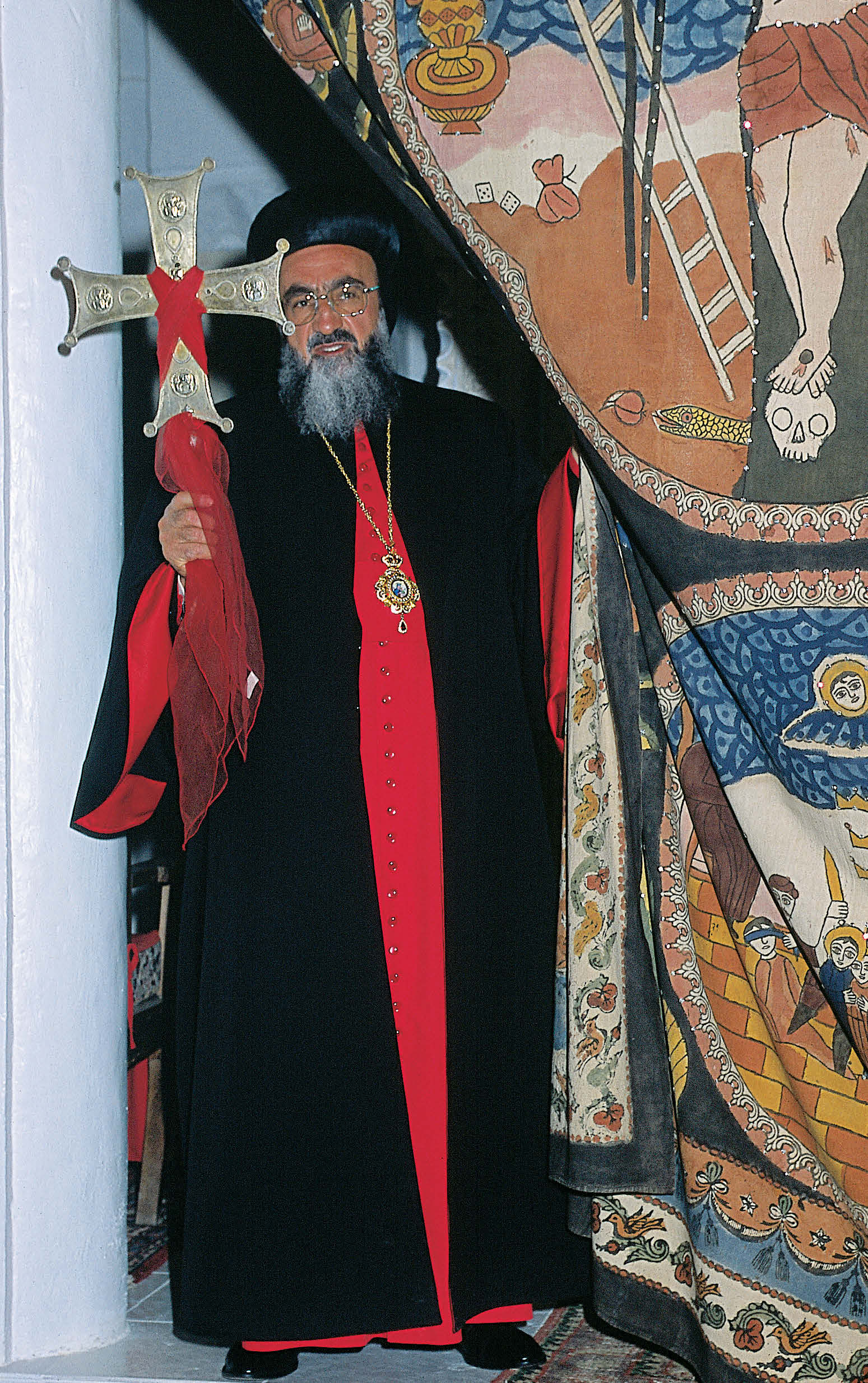
Comparison of the recognized sacraments
公认圣事的比较
Council of Trent Mar Odisho Patriarch Timothy II
特利腾大公会议 (Council of Trent) 马尔·奥迪绍 (Mar Odisho) 宗主教提摩太二世 (Patriarch Timothy II)
Baptism Baptism, followed by anointing (2) Baptism, followed by anointing (3) Confirmation Eucharist Eucharist (4) Eucharist (4) Penance Absolution (5) Extreme Unction cp Oil of Unction (3) cp Burial (6) Orders Priesthood (1) Priesthood (1) Matrimony Matrimony (7b) Matrimony (7) Holy Leaven (malka) (6) Monasticism (5) Sign of Cross (7a) Consecration of Church (2) priest uses the holy oil to make the sign of the cross, symbolizing the Trinity, on the baptismal candidate’s breast, calls the Holy Spirit down on the baptismal waters of the baptistery and immerses the baby completely three times. There follows another anointing with holy chrism at the beginning of the worship service, which is held in the nave of the church;100 this is confirmation, the culmination of baptism. Finally, the newly baptized infant receives first communion. In the Church of the East communion is received in both kinds, bread and wine. In the celebration of the sacraments mentioned and in the exclusive veneration of the cross of the resurrection, we see that the Church of the East has preserved several ancient Christian traditions almost two millennia old. entrance to a church and painting small crosses on the lintel with its blood.102 In contrast to the Western Churches, which use unleavened bread for communion, the Syrian Churches use bread leavened with yeast. The holy sourdough bread, called malka, is consecrated by the bishop on Maundy Thursday, and each church of the diocese receives a piece. A part of this piece must be used to produce the Eucharistic bread, since the malka represents the unbroken connection to the bread Christ blessed at the Last Supper. The forgiveness of sins takes place in the form of public penance, followed by general absolution, not as personal confession. Finally, the sign of the cross, because of its power in symbolizing the resurrection and the Trinity, seals all the other sacraments. Its status is also apparent in the Book of the Tower, which characterizes the Gospel, the sign of the cross, baptism and Eucharist as the four pillars of Christianity.103
洗礼 洗礼后傅油(2) 洗礼后傅油(3) 坚振礼 圣餐礼 圣餐礼(4) 圣餐礼(4) 忏悔 赦罪(5) 终傅 参见傅油礼(3) 参见安葬(6) 圣秩 司祭职(1) 司祭职(1) 婚配 婚配(7b) 婚配(7) 圣酵(malka)(6) 修道生活(5) 十字圣号(7a) 教堂祝圣(2)司祭使用圣油,在受洗者胸前划十字圣号,以此象征三位一体;随后呼求圣灵降临于洗礼池的水中,并将婴儿全身浸入水中三次。之后,在教堂中殿举行的礼拜开始时,还要再以圣膏傅油;100 这就是坚振礼,是洗礼的圆满。最后,新受洗的婴儿领受初次圣餐。在东方教会,圣餐以饼和酒两种形式领受。从上述圣事的施行,以及对复活十字架的专一敬礼中,可以看出东方教会保存了若干近两千年历史的古老基督教传统。进入教堂,并用它的血在门楣上画上小十字。102 西方教会使用无酵饼领圣餐,与此不同,叙利亚教会使用酵母发酵的饼。称为 malka 的圣酵面,由主教在濯足星期四祝圣,教区内每座教堂各领取一份。必须取其中一部分制作圣餐饼,因为 malka 象征着与基督在最后晚餐中祝福的饼之间绵延不绝的联系。罪的赦免以公开忏悔的形式进行,随后给予全体赦罪,而非个人告解。最后,十字圣号凭借其象征复活与三位一体的力量,为其他所有圣事加上印记。《塔之书》也显示出十字圣号的地位;该书将福音、十字圣号、洗礼和圣餐礼称为基督教的四根支柱。103
According to Mar Odisho, Holy Communion, symbolizing the sacrifice of Christ, replaces ‘the old oblations of irrational animals and the blood of their bodies’. For Christ ‘offered His own body [as] a sacrifice to His Father for the life of the world, and hence he is called by John [the Baptist] the Lamb of God who takes away the sins of the world’.101 This replacement and overcoming of the Jewish scapegoat by the Lamb of God is recalled today in the custom, practised in some remote regions on certain occasions such as funerals, of sacrificing a ram before the
根据马尔·奥迪绍 (Mar Odisho) 的说法,圣体圣事象征着基督的牺牲,取代了“无理性动物的旧祭献和它们身体的血”。因为基督“为世界的生命,将自己的身体[作为]祭品献给父,因此他被约翰[施洗者] (John [the Baptist]) 称为除去世人罪孽的上帝的羔羊”。101 上帝的羔羊对犹太教替罪羊的这种取代和克服,今天在一些偏远地区于某些场合(如葬礼)所实行的、在……之前献祭一只公羊的习俗中仍被追忆。
In the Church of the East, neither extreme unction nor marriage is a sacrament. In place of the former, they have the use of hanana, which consists of a mixture of oil, water and dust from the grave of a saint or martyr. Hanana is administered not only to the dying but also to the sick and to barren women. Even though Mar Odisho did not include marriage among the sacraments, he called it a ‘holy estate’. It is
在东方教会 (Ch. of E.) 中,终傅和婚姻都不是圣事。作为前者的替代,他们使用哈纳纳 (hanana),它由油、水和取自某位圣徒或殉道者坟墓的尘土混合而成。哈纳纳不仅给临终者施行,也给病人和不孕妇女施行。尽管马尔·奥迪绍 (Mar Odisho) 未将婚姻列入圣事,他却称之为“神圣的婚姻状态” (holy estate)。它是
The metropolitan of the Church of the East of India, Mar Aprem, baptizes a little girl in the vestry of the Church of Mar Addai in Trichur, Kerala. Boys are baptized 40 days after birth and girls 56 days after. Confirmation and first communion follow immediately after baptism.
印度东方教会 (Church of the East of India) 的都主教马尔·阿普雷姆 (Mar Aprem) 在印度喀拉拉邦 (Kerala) 特里丘尔 (Trichur) 的马尔·阿代教堂 (Church of Mar Addai) 圣器室里为一名小女孩施洗。男孩出生后40天受洗,女孩出生后56天受洗。坚振礼和初领圣体紧随洗礼之后举行。
Distribution of holy communion in the Church of Mar Narsai, Trichur, Kerala. indissoluble except in cases of infidelity, insanity, murder or apostasy.104 Today marriage is blessed by a priest within the context of a Eucharistic celebration. the liturgy is called qurbana, sacrificial offering, because it recalls the sacrifice of Christ and his work of salvation. Insofar as the faithful form the Mystical Body of Christ, they are, during the qurbana, both participants in the sacrificial event and themselves part of the sacrifice; they sacrifice themselves.
在喀拉拉邦 (Kerala) 特里丘尔 (Trichur) 的圣纳尔赛教堂 (Church of Mar Narsai) 分发圣体。不可解除,除非出现不忠、精神失常、谋杀或背教的情况。104 如今,婚姻由司铎在感恩祭庆典的脉络中予以祝福。该礼仪被称为“古尔巴纳”(qurbana),即献祭,因为它纪念基督的牺牲及其救赎工程。只要信众构成基督的奥体,他们在古尔巴纳 (qurbana) 期间就既是献祭事件的参与者,自身也是祭献的一部分;他们奉献自己。
Church architecture and liturgy – symbols in space and time
教会建筑与礼仪——空间与时间中的象征
The Nestorian church is traditionally a rectangular building, with one or three naves, built of stone or fired clay. Its ground plan has striking similarities with Sassanian pillar-halls such as those in the palace of Ganzak.105 The choir is oriented towards the east, where the sun rises and whence Christ will appear on Judgement Day (Matt 24:27). In the Old Testament the prophet Ezekiel stated that the glory of God entered the Temple through the ‘gate facing east’ (43:1–4).
聂斯托利派教会 (Nestorian church) 传统上是一种矩形建筑,设有一个或三个中殿,以石头或烧制黏土建造。其平面图与萨珊王朝的柱厅 (Sassanian pillar-halls) 有着惊人的相似之处,例如甘扎克 (Ganzak) 宫殿中的柱厅。105 唱诗班席朝向东方,那里是太阳升起之处,也是基督在审判日显现的方向(《马太福音》24:27;Matt 24:27)。在《旧约》 (Old Testament) 中,先知以西结 (Ezekiel) 指出,上帝的荣耀通过“朝东的门” (gate facing east) 进入圣殿(43:1–4)。
The ancient symbolism of the division of space in a church and of the course of time in liturgical worship is still alive in the Church of the East. Church architecture reflects the cosmic axis from earth to paradise; along the axis of time, the liturgy brings to life chronologically the whole of salvation history, from creation to incarnation to baptism, crucifixion and resurrection. In Syriac,
教堂空间划分与礼仪崇拜中时间进程的古老象征意义,在东方教会 (Ch. of E.) 中依然鲜活。教堂建筑反映了从尘世到乐园的宇宙轴线;沿着时间之轴,礼仪按时间顺序使整个救恩史生动呈现,从创造到道成肉身,再到洗礼、受难与复活。在叙利亚语中,
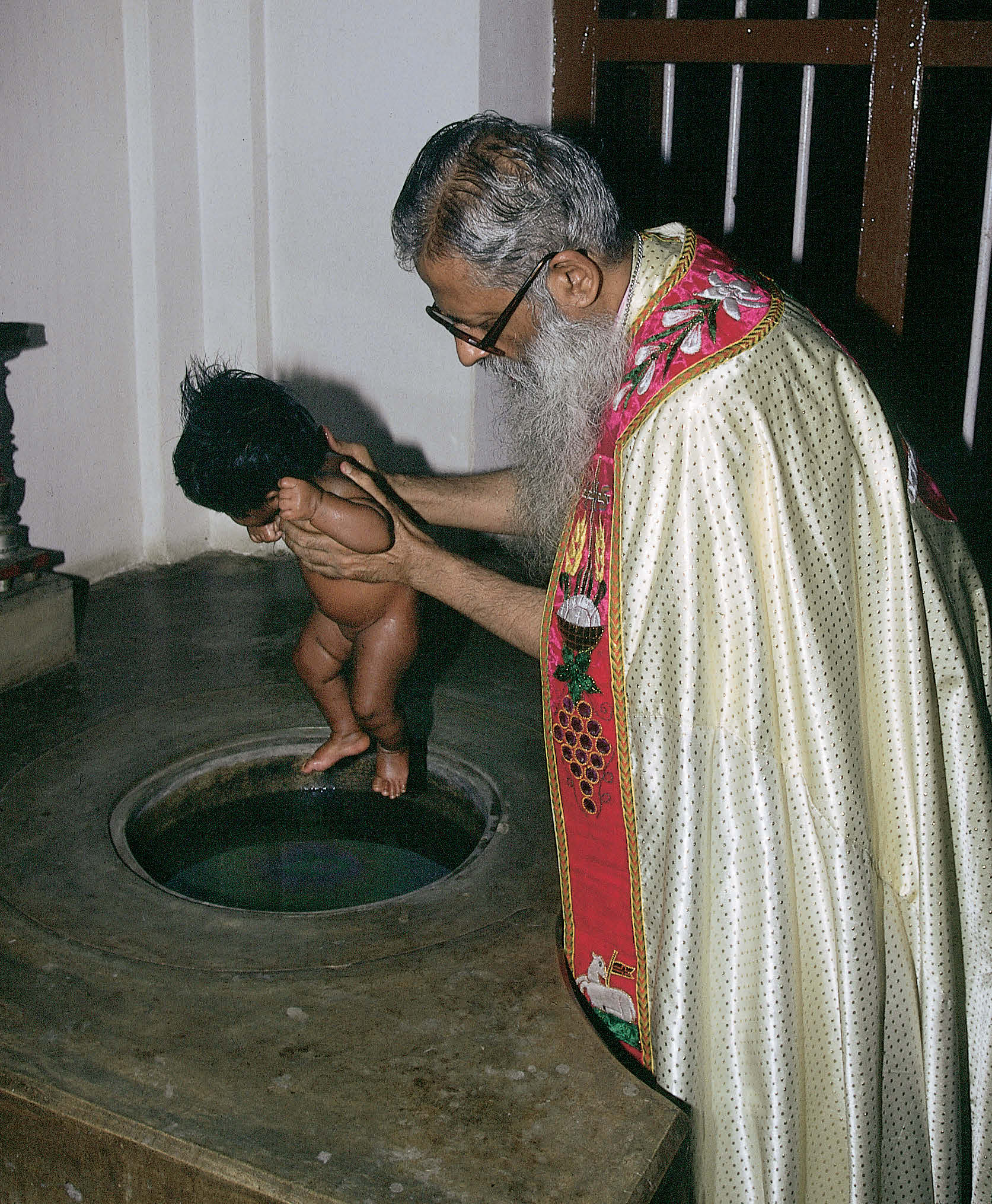
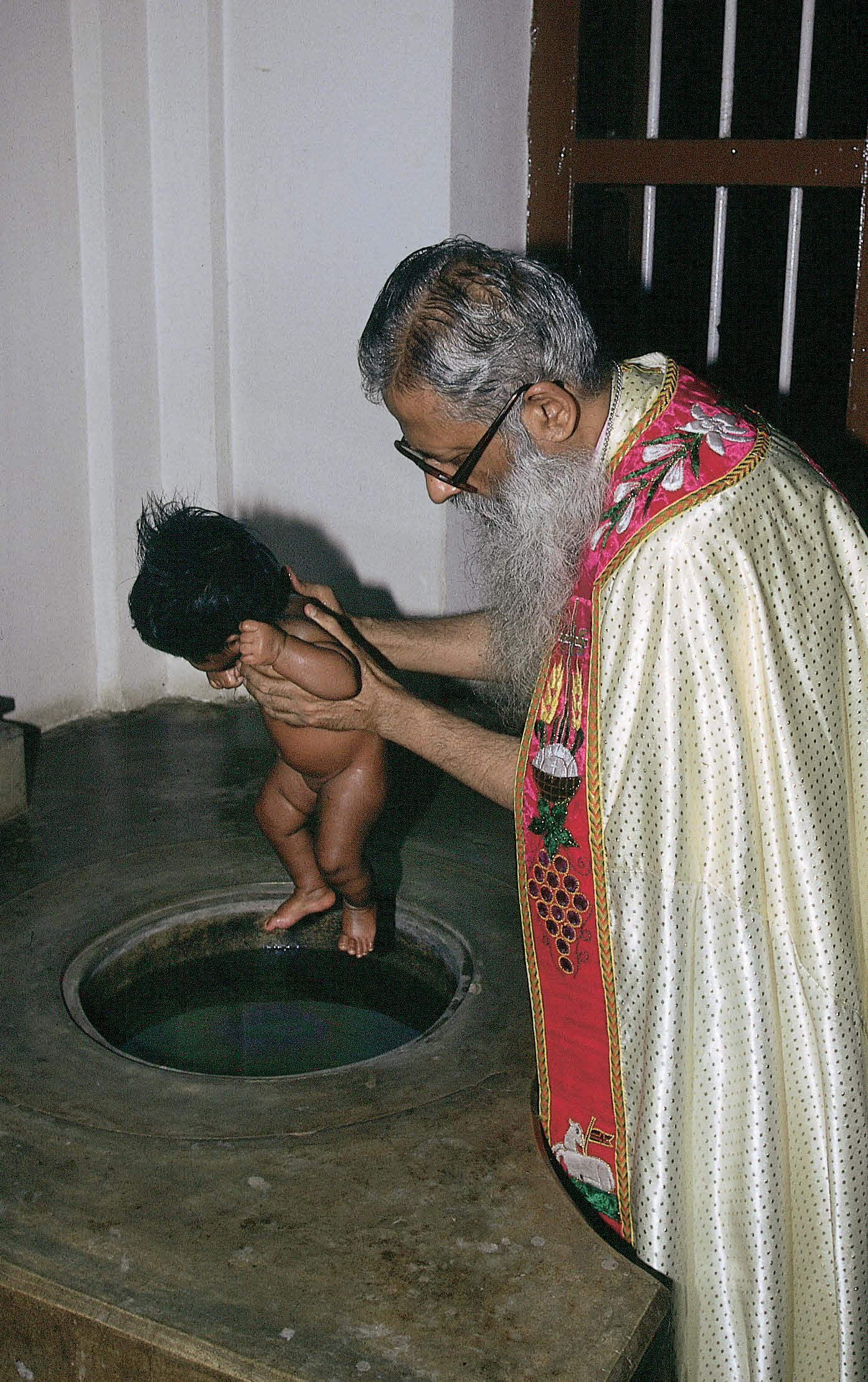
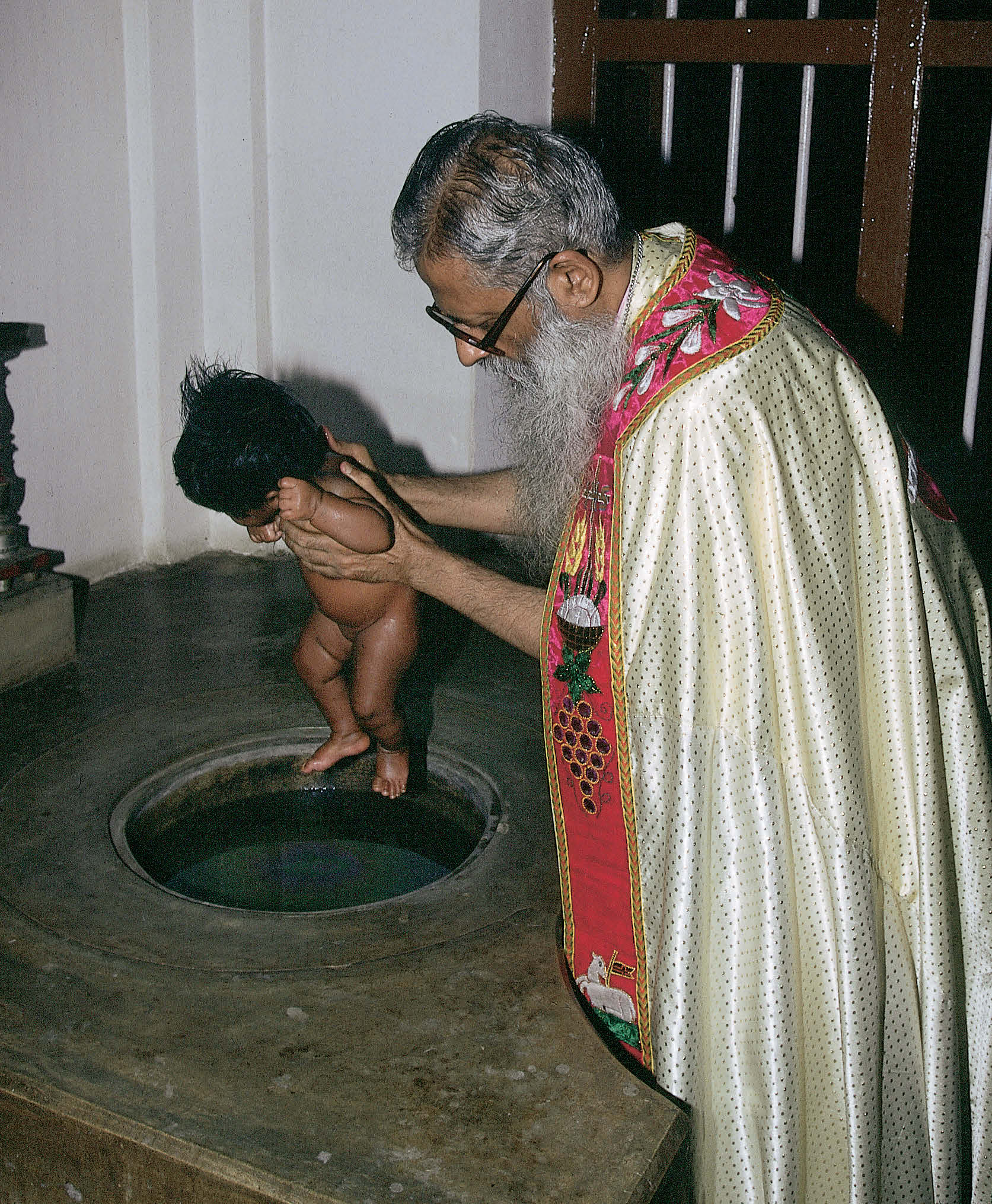
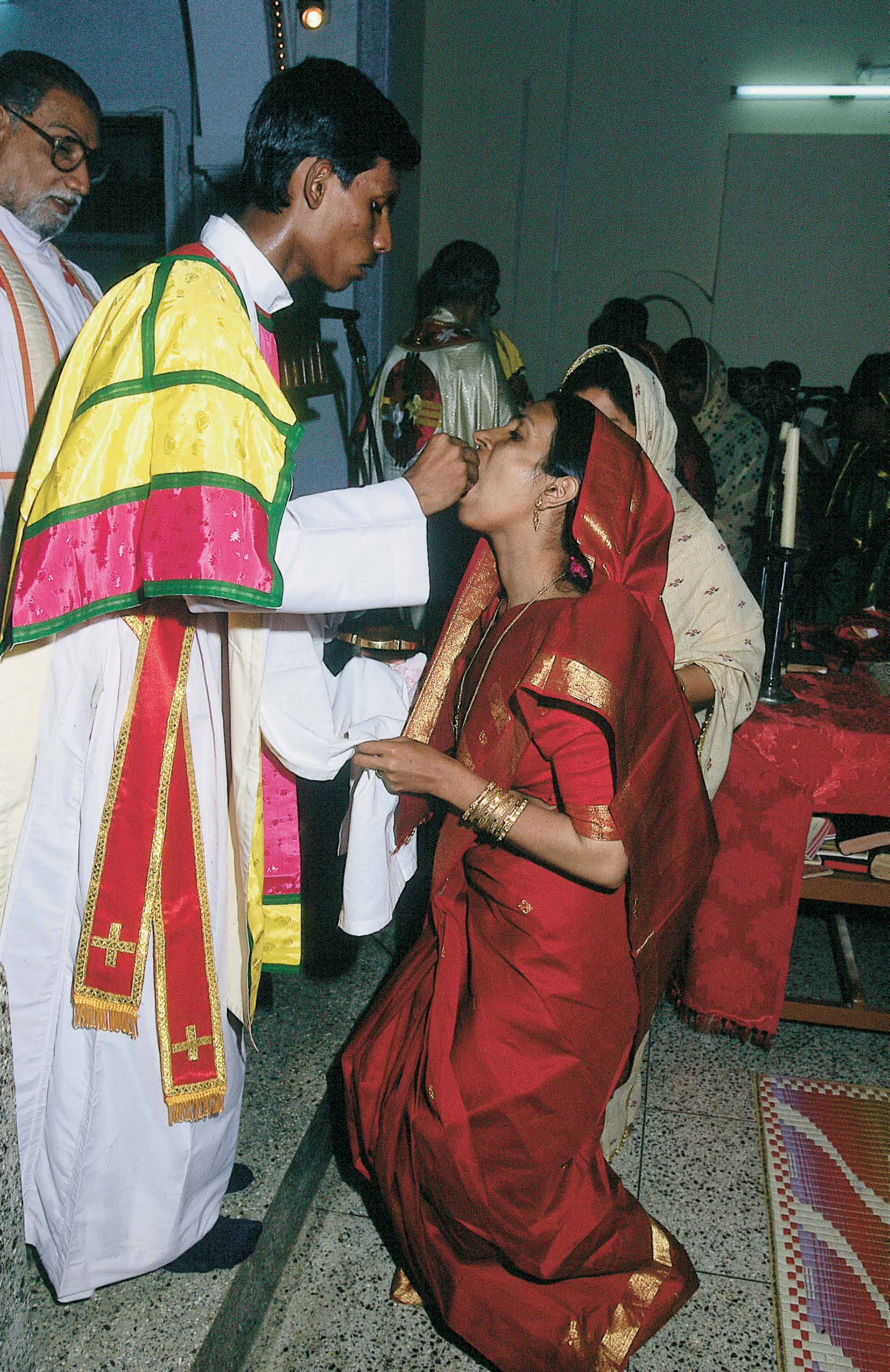
The metropolitan of the Ancient Church of the East from Mosul, Mar Thoma Giwargis, celebrates a wedding in the Church of St George in Hazaneh, northern Iraq.
来自摩苏尔 (Mosul) 的古代东方教会 (Ancient Church of the East) 都主教马尔·托马·吉瓦尔吉斯 (Mar Thoma Giwargis),在伊拉克北部哈扎内 (Hazaneh) 的圣乔治教堂 (Church of St George) 主持一场婚礼。
The entrance doors for the people are found to the side on the southern wall; sometimes there are two doors, one for each sex. The entrance almost always leads over a high threshold, and the lintel is low, so that everyone enters the house of God with a bowed and humble bearing. Additionally, the really small entryways prevented hostile Muslims from forcing their way inside the church on horseback or misusing it as a stable. Some fortified mountain churches can only be reached by means of a ladder, which leads to an entrance about five metres above the ground. Immediately beyond the entrance is an anteroom, in which the faithful leave their shoes and weapons. In some churches, the thrice-daily prayers take place during the week in an open-air forecourt, which has a simple apse to the east and sometimes borders on the cemetery.106
供人们进出的入口门位于南墙的一侧;有时会有两扇门,男女各用一扇。入口几乎总是要跨过一道高门槛,而门楣很低,因此每个人进入上帝的居所时都须低头谦卑。此外,极为狭小的入口也阻止了怀有敌意的穆斯林骑马强行闯入教堂,或将教堂用作马厩。一些设防的山地教堂只能借助梯子抵达,梯子通向离地面约五米高的入口。入口之后紧接着是一间前室,信徒在此脱鞋并放下武器。在一些教堂中,平日里的每日三次祈祷在露天前院举行;该前院东端有一个简朴的半圆形后殿,有时还与墓地相邻。106
The interior is divided into three parts along both axes. To the east and in the centre is found the holy of holies, the choir, which symbolizes heaven and can only be entered by clergy of the rank of deacon or above. Here the altar signifies the tomb of Christ. Over the altar rises a structure similar to a baldachin, symbolizing the Ark of the Covenant of Moses or again heaven. In comparison to the rest of the church, the holy of holies is raised on three levels. The baptistery lies to the south of the choir, and the sacristy, where the malka is kept and the sacred bread prepared, lies to the north. To the west of the choir is the nave, where the faithful gather; it symbolizes the earth. While in earlier times the men stood in the front of the nave, which symbolized the
内部沿两条轴线均分为三部分。在东侧和中央是至圣所,即唱诗班席(choir),它象征天堂,只有执事及以上品级的神职人员才能进入。这里的祭坛象征基督之墓。祭坛上方矗立着一个类似华盖的结构,象征摩西的约柜,或同样象征天堂。与教堂其余部分相比,至圣所高出三个台阶。洗礼堂位于唱诗班席的南侧,而圣器室位于北侧,那里存放着圣酵(malka)并制作圣饼。唱诗班席的西侧是中殿,信众在此聚集;它象征大地。而在早期,男人站在中殿的前部,这象征着……
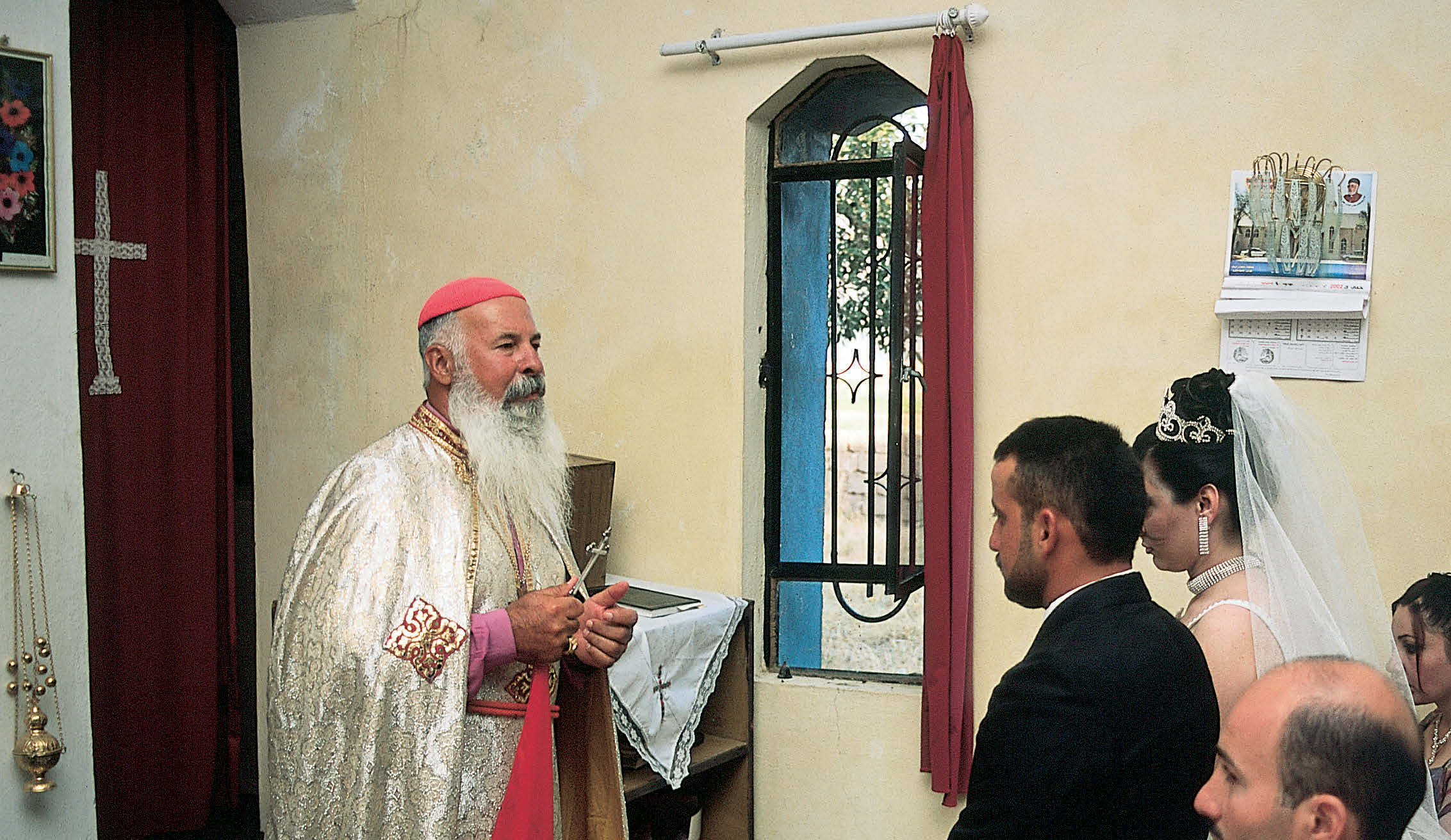
Floorplan of a typical East Syrian church of Mesopotamia.
美索不达米亚 (Mesopotamia) 一座典型东叙利亚教会 (East Syrian church) 的平面图。
East
东方
South North
南 北
(After Fiey: Mossoul chrétienne, 1959. Plate II)
(据菲耶 (Fiey):《基督教摩苏尔》(Mossoul chrétienne),1959年,图版 II)
West
西方
Outer door 2 Forecourt, cemetery 3 Well 4 Beth Slutho 5 Baptistery 6 Outer door to the baptistery 7 Entrance door for men 8 Entrance door for women 9 Inner door to the baptistery 10 Credenzas 11 Font 12 Window 13 Choir 14 Altar 15 Beth Razzeh 16 Sacristy 17 Reserve of anointing oil and malka 18 Curtain, choir screen 19 Side door 20 Qostroma, vestibule 21 Shqaqona, straight way 22 Bema 23 Golgotha, credenza 24 Reading desks 25 Martyrium 26 Walled-in relics 27 Part of men, sometimes
外门 2 前院、墓地 3 水井 4 贝特·斯卢托 (Beth Slutho) 5 洗礼堂 6 洗礼堂外门 7 男入口门 8 女入口门 9 洗礼堂内门 10 圣器桌 11 洗礼池 12 窗户 13 唱诗席 14 祭坛 15 贝特·拉泽 (Beth Razzeh) 16 圣器室 17 圣油和马尔卡 (malka) 储备处 18 帘幕、唱诗班屏风 19 侧门 20 科斯特罗马 (Qostroma),前厅 21 什卡科纳 (Shqaqona),直道 22 贝玛 (Bema) 23 各各他 (Golgotha),圣器桌 24 读经台 25 殉道者纪念堂 (Martyrium) 26 墙内圣髑 27 有时为男区的一部分
Garden of Eden, and the women in the rear, which represented the praised Land of Canaan, today both sexes intermingle in the nave. This is in contrast to the Syrian Orthodox, among whom the women gather to the north and the men to the south. Sometimes an iron grille separates the two groups. Holy relics have been placed in the northern wall of the church, and occasionally there is also a martyrium, in which lie the bones of martyrs or bishops. remained.107 During the week the curtain stays closed because the sin of Adam and Eve broke the immediate connection between heaven and earth; it is also closed during the liturgy, when the crucifixion of Christ is being commemorated. Otherwise the curtain is open during the liturgy, as a sign of the presence of Christ, as he had proclaimed, ‘Where two or three are gathered in my name, I will be there among them’ (Matt 18:20). The opening of the curtain is a symbol of the opening of heaven and the arrival of Christ, for the church’s liturgy is an earthly representation of the eternal divine liturgy in heaven. Thus, during the worship service the ontological unity of heaven and earth is re- established. at the right 28 Part of women, sometimes at the left
伊甸园 (Garden of Eden),以及后排的妇女,这代表了受赞美的迦南地 (Land of Canaan),如今两性在教堂中殿混杂而坐。这与叙利亚正教会 (Syrian Orthodox) 形成对比,在他们中间,妇女聚集在北侧,男人聚集在南侧。有时一道铁栅栏将两组人隔开。教堂北墙安放了圣髑,有时还有一个殉道者纪念堂 (martyrium),其中安放着殉道者或主教的遗骨。遗留下来。107 在一周之中,帘幕保持关闭,因为亚当 (Adam) 和夏娃 (Eve) 的罪破坏了天地之间直接的联结;在礼仪中纪念基督 (Christ) 受难时,帘幕也关闭。除此之外,礼仪期间帘幕是打开的,作为基督 (Christ) 临在的标志,正如他曾宣告:“哪里有两三个人奉我的名聚集,我就在他们中间”(《马太福音》(Matt) 18:20)。帘幕的打开象征着天的开启和基督 (Christ) 的降临,因为教会的礼仪是天上永恒神圣礼仪在地上的表征。因此,在崇拜仪式中,天与地在本体论上的统一得以重新建立。在右侧 28 部分妇女,有时在左侧
A stone or wooden choir screen, with one to three arches, divides the nave from the choir; it corresponds to the iconostasis of Orthodox churches. A curtain stretched just behind the arches of the choir screen conceals the view of the choir; today the choir screen is rarely seen, but the curtain, as in Syrian Orthodox churches, has
一道石制或木制的唱诗班屏风,带有一至三个拱门,将中殿与唱诗班席隔开;它相当于东正教会 (Orthodox churches) 的圣像壁 (iconostasis)。一道帘幕就张挂在唱诗班屏风拱门的正后方,遮住了望向唱诗班席的视线;如今,唱诗班屏风已很少见,但正如叙利亚正教会 (Syrian Orthodox churches) 中那样,这道帘幕却已经……
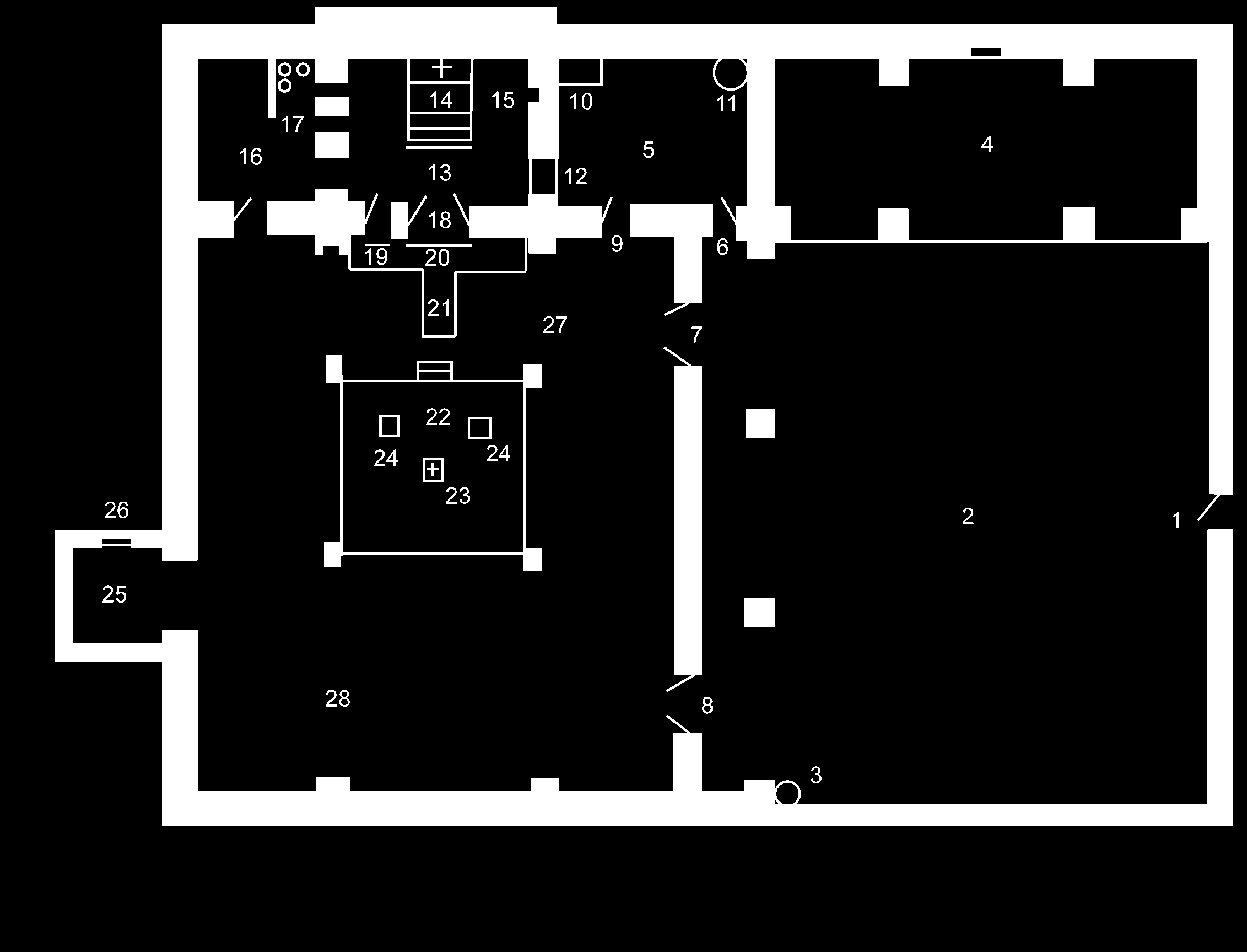
qostroma, which means vestibule. From the perspective of the nave, the qostroma is found on this side of the curtain, but, like the choir, it is raised up in three steps. It represents paradise, the bridge between heaven and earth, which is entered by the readers of Scripture, who symbolize the lower-ranking angels, functioning as heavenly messengers between humanity and God. In earlier times in the centre of the nave there was a rectangular or horseshoe-shaped platform, the bema, which symbolized Jerusalem as the centre of Jesus’s life.108 As in the synagogue, readings and the beginning of the worship service – that is, the liturgy of the word – were carried out on the bema. The liturgy of the mysteries, however, took place in the holy of holies. The procession of the celebrating clergy to the bema symbolized the preaching and prophesying of Christ, and their return to the choir, his sacrifice and resurrection. The lay choir who in the case of most sung prayers responded to the angelic choir of the priests and deacons, also took their place on the bema. The bema corresponds to the early medieval ambo, the pulpit jutting out into the nave, which was linked to the choir with a small, slightly raised passageway. In the early Church of the East this passage was called shqaqona, the straight way. The shqaqona, which no longer exists, was small, for it symbolized the narrow path leading between the abyss of fleshly sin and the pride of the spirit to the heavenly realm. In the centre of the bema stands a credenza, called Golgotha, which represents the tomb of Adam, and beside this is the bishop’s throne. The old Nestorian churches had no bell towers, since there were at that time no bells. The faithful were called to worship by someone hitting with a stick one or more wooden planks, called simandron, which were hung from ropes.109
qostroma,意为前厅。从中殿看,qostroma位于帷幕这一侧,但与唱经席一样,它也由三级台阶抬高。它象征乐园,是连接天地的桥梁;诵读圣经的读经员由此进入,他们象征较低阶层的天使,充当天上的使者,在人类与上帝之间传递信息。早期,中殿中央设有长方形或马蹄形台座,称为bema,象征耶路撒冷(Jerusalem)——耶稣(Jesus)一生的中心。108 与犹太会堂相似,读经和礼拜仪式的开端——即圣道礼——都在bema上举行;奥迹礼则在至圣所举行。司祭们列队前往bema,象征基督的宣讲与预言;他们返回唱经席,则象征基督的牺牲与复活。在大多数圣咏祈祷中回应司祭和执事天使般歌咏的平信徒唱诗班,也在bema上就座。bema相当于中世纪早期的ambo,即伸入中殿的讲坛;讲坛通过一条略微抬高的短通道与唱经席相连。在东方教会早期,这条通道称为shqaqona,即“直路”。如今已不复存在的shqaqona很窄,因为它象征一条窄路:穿过肉身罪恶的深渊与灵性骄傲之间,通往天界。在bema中央有一张称为Golgotha的圣具桌,象征亚当之墓;其旁是主教座。古老的聂斯托利派教堂没有钟楼,因为当时还没有钟。信徒聚集礼拜,是靠有人用棍子敲击一块或多块悬挂在绳索上的木板;这种木板称为simandron。109
This Gospel lectern, made of stone, stood on the bema and was used during the Liturgy of the Word. The Syriac inscription reads: ‘Keep a good memory of the priest Abraham and John and his mother, who donated this.’ From the Church of Bennawi near Aleppo, today in the National Museum in Damascus, Syria.34 in a church. The Nestorian rite and the rite of its sister Church, the Chaldean Church, which is united with Rome, are the oldest Oriental rites still in use today. They date in their essence from the fifth century and thus are closest to the Jewish-Christian origins. The worship service consists of three main parts. First the celebrant prepares in the sacristy with a piece of malka, the sacred bread. Then, in earlier days, the mass of the catechumens began, during which the priest and deacons remained on the bema. This liturgy on the bema thus took place in the nave. While the faithful sing psalms and hymns, the altar in the choir is censed – the incense symbolizes both our prayers rising to God and the invisible presence of the Holy Spirit. There follow readings from Holy Scripture, the sermon, litanies and the preparation of the bread. The covering of the wine-filled chalice with a white linen cloth
这座石制福音书架原置于圣所台(bema)上,供圣道礼仪期间使用。叙利亚文铭文写道:“请铭记司铎亚伯拉罕(Abraham)、约翰(John)及其母亲;他们捐赠了此物。”该书架来自阿勒颇(Aleppo)附近的贝纳维(Bennawi)教堂,现藏于叙利亚(Syria)大马士革(Damascus)国家博物馆。34 在教堂内。聂斯托利派礼仪及其姊妹教会加色丁礼天主教会(Chaldean Church,已与罗马(Rome)共融)的礼仪,是现今仍在使用的最古老的东方礼仪。其基本形态可追溯至5世纪,因此最接近犹太基督教的起源。礼拜仪式由3个主要部分组成。首先,主礼者在圣器室内准备1块称为“马尔卡”(malka)的圣饼。随后,在早期,慕道者弥撒开始;其间司铎和执事留在圣所台上。因此,这一在圣所台上举行的礼仪实际是在中殿进行的。信众唱诵圣咏和赞美诗时,唱经席中的祭坛接受熏香——香烟既象征我们的祈祷上升至上帝那里,也象征圣灵(Holy Spirit)不可见的临在。接下来是圣经诵读、讲道、连祷文以及饼的预备。盛满酒的圣爵以白色亚麻布覆盖
The Nestorians also called their worship raze, the mysteries, since it celebrated the revelation with all its mysteries. It can only be celebrated
聂斯托利派 (Nestorians) 也将其崇拜称为“拉泽” (raze),即“奥秘”,因为它以全部的奥秘庆祝启示。它只能被庆祝。
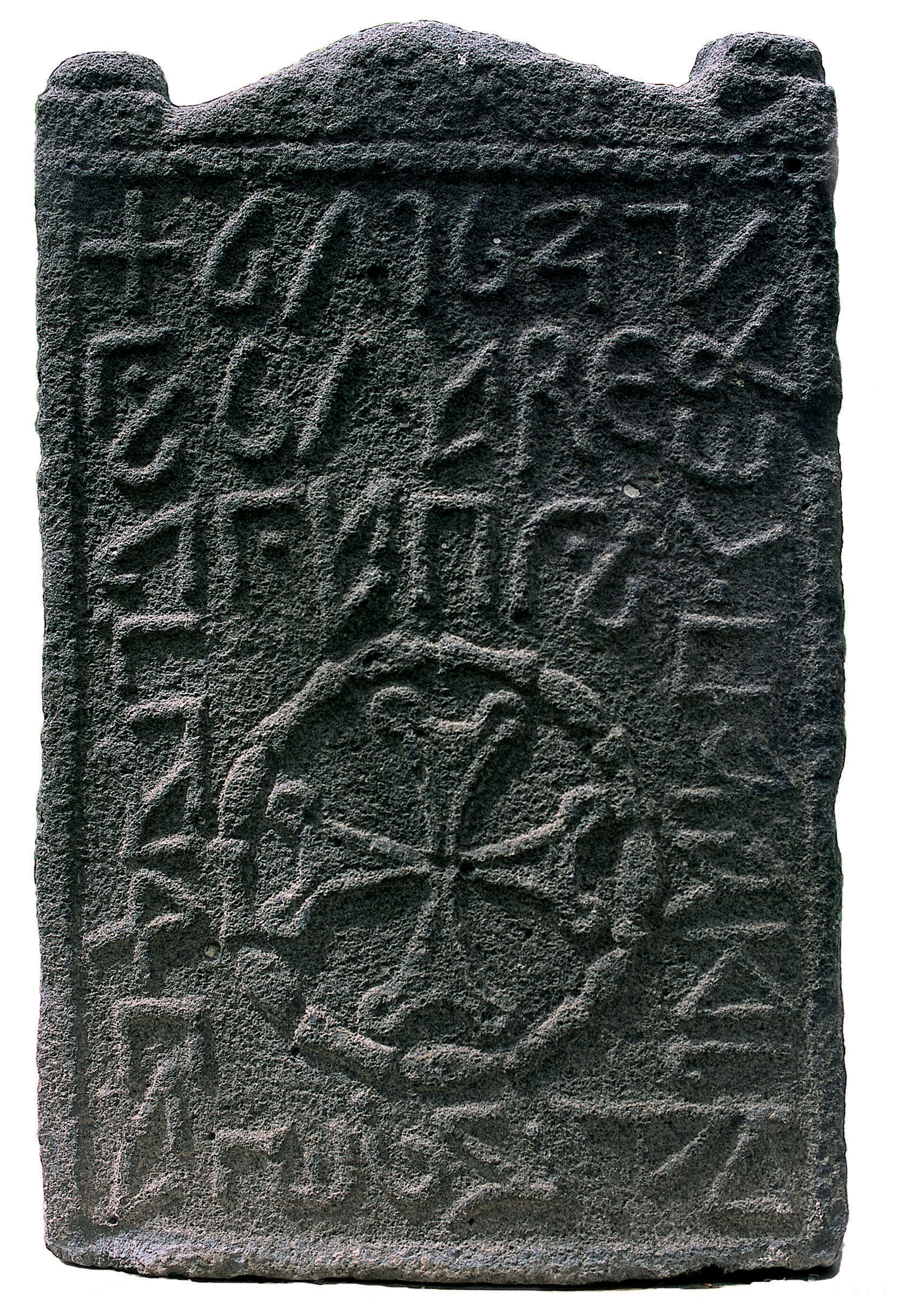
symbolizes the placing of Christ in the tomb, and its removal the rolling away of the stone that had sealed the tomb’s entrance. At this point, in earlier times, those who were not yet baptized were asked to leave the church; today the entire liturgy is celebrated in the qostroma and choir, and the bema no longer exists. Since the words for the departure of the catechumens are still sung today, this break remains. and then all the faithful. The anamnesis recalls the crucifixion and resurrection of Christ and is followed by the most important part of the Eucharistic prayer. This is the epiclesis, in which God the Father is called upon to send the Holy Spirit to consecrate the Eucharistic gifts of bread and wine. A hymn to the honour of God concludes the anaphora. The communion of bread and wine concludes the worship service. It is in keeping with the law of hospitality, so important in the Orient, that after worship the bishop invites to dinner select guests and friends – and, on the occasion of special feasts, the entire congregation. As the author has observed several times, for such meals to have hundreds of participants is not unusual. In this way, the aspects of the sacred and the social shared meal reunite, after having been separated in the second century.
象征着将基督 (Christ) 安放入坟墓,而其移开则象征着滚开那块封住墓穴入口的石头。在此时,早期尚未受洗者会被请出教堂;今天,整个礼仪都在科斯特罗玛 (qostroma) 和唱诗班席 (choir) 中举行,而贝玛 (bema) 已不复存在。由于请慕道者 (catechumens) 离席的经文今日仍被唱诵,这一中断依然保留。随后是全体信众。纪念部分 (anamnesis) 追念基督的受难与复活,其后是感恩经 (Eucharistic prayer) 中最重要的部分。这就是呼求圣灵 (epiclesis),其中祈求圣父 (God the Father) 派遣圣灵 (Holy Spirit),祝圣饼和酒这些感恩祭的礼物。一首献给上帝 (God) 荣耀的赞美诗为感恩祭祷文 (anaphora) 作结。饼和酒的共融结束了礼拜仪式。这符合东方 (Orient) 极为重要的待客之道:礼拜之后,主教邀请特邀的宾客和朋友赴宴——而在特别节庆时,则邀请全体会众。正如作者多次观察到的那样,这类宴席有数百人参加并不罕见。就这样,神圣共餐与社会共餐这两个层面,在二世纪被分离之后,又重新合而为一。
The liturgy of the holy of holies follows, beginning with the creed. Earlier, the lay choir remained on the bema, the subdeacons processed only to the qostroma and the deacons to the altar, and only the priest or bishop celebrated alone at the altar. This hierarchical advance towards the altar granted the start of the most important part of the liturgy an especially solemn character. The priest is turned towards the altar, not towards the faithful. As primer inter pares he leads the prayers of the congregation, and in this way takes on a role similar to that of the imam in Islam. Because today there is no longer a bema, the altar represents not only the tomb of Christ but also Golgotha. The creed is followed by a litany, and then the anaphora, the Eucharistic prayer, begins. The Church of the East uses three different but related anaphoras. The first is that of the apostles Addai and Mari, which is used from Easter to Advent. It is followed by the anaphora attributed to Theodore of Mopsuestia, which is used until Palm Sunday. The third Eucharistic prayer, which is said to go back to Nestorius, is used only on special feasts, such as Epiphany.110 It should be noted here that on 6 January the Church of the East celebrates, as originally, the baptism of Jesus, the Epiphany; the celebration of the appearance of Jesus to the heathen, embodied by the Three Kings, began to supersede the commemoration of the baptism in the Western Churches in the fifth century.111
随后是至圣所礼仪,以诵读信经开始。从前,平信徒唱诗班留在讲坛(bema)上,副执事只列队行至祭坛屏(qostroma),执事则行至祭坛;只有司铎或主教独自在祭坛主持礼仪。这种朝向祭坛逐级推进的仪式安排,使礼仪中最重要部分的开端格外庄严。司铎面向祭坛,而非信众。他作为平等者中的首位(primus inter pares)带领会众祈祷,因此承担着类似伊斯兰教伊玛目的角色。如今讲坛已不复存在,祭坛便既象征基督的坟墓,也象征各各他。信经之后是连祷,随后开始感恩经(anaphora),即圣餐祷文。东方教会使用三种彼此相关但各不相同的感恩经。第一种是使徒阿代和马里(Addai and Mari)的感恩经,从复活节用至将临期;之后使用归于摩普苏埃斯蒂亚的狄奥多雷(Theodore of Mopsuestia)的感恩经,一直用到棕枝主日。第三种圣餐祷文据说源自聂斯托利(Nestorius),只在主显节等特殊节日使用。110这里应当指出,东方教会在1月6日按原初传统庆祝耶稣受洗,即主显节;五世纪时,西方教会开始以纪念耶稣向外邦人显现(以三王为代表)的庆典,逐渐取代对耶稣受洗的纪念。111
The Church of the East also has a highly symbolic form of the liturgy for the dead. The mass is not celebrated on the day of the burial, which normally occurs on the same day or the day after the death and for which just a prayer is sung in the church. The funeral mass takes place on the third day. As Christ rose on the third day, the deceased, on the third day after his or her death, participates through the Eucharistic celebration in the resurrection of Christ. The extent to which they are marked by a rich and vital symbolism, is always notable in the East Syrian liturgies.
东方教会 (Church of the East) 也拥有一种极具象征意义的亡者礼仪。安葬日通常不举行弥撒;安葬通常发生在去世当天或次日,此时在教堂中只咏唱一篇祈祷文。葬礼弥撒在第三日举行。正如基督在第三日复活,亡者在去世后的第三日也通过感恩祭参与基督的复活。在东叙利亚礼仪中,这些礼仪以丰富而充满生机的象征为标志的程度始终引人注目。
Monasticism and asceticism
修道主义与苦修主义
The motivation towards ascetic monasticism lay in the ideal of the imitation of Christ and in the necessity, proclaimed by Paul, of conquering the flesh (Rom 8:1–18). Additionally, the rapid growth of the early Christian community diluted the depth of its religiosity, which increased the need for a special way of being Christian. Before
禁欲修道主义的动力在于效法基督 (Christ) 的理想,以及保罗 (Paul) 所宣告的战胜肉体(《罗马书》(Rom) 8:1–18)的必要性。此外,早期基督教群体的迅速增长稀释了其宗教性的深度,这又增加了对一种特殊基督徒生活方式的需要。在……之前
The anaphoras begin with various prayers, which lead to the kiss of peace, which is passed from the priest to the deacons, subdeacons,
各篇感恩祭经 (anaphoras) 以不同的祈祷开始,这些祈祷引向平安之吻,平安之吻由司铎传给执事、副执事,
Syrian monasticism began to flourish around the turn from the third to the fourth century, the Essenes and the Encratites had already developed an ascetic, world-renouncing and God-embracing lifestyle. The transition from lay to monastic status was akin to crossing a sharply defined, endlessly deep border, over which there was no return without suffering eternal damnation. Anyone who desired earthly pleasures and left the monastic life was threatened with the fate of Lot’s wife: he would be turned into a pillar of salt.112 counsel of Ephrem, these anchorites not only ‘prefer the company of animals to the sight of humans’113 but also lived like wild animals under the open sky or in mountain caves. Ephrem described their lifestyle: ‘Caverns are their palaces, rocks their sleeping rooms, heights their balconies, ledges their habitations; the herb of the mountains is as their dinner table.’114 These extreme ascetics and penitents called themselves, like the martyrs, ‘athletes of the faith’ and ‘fighters and warriors of Christ’, whom they praised as their ‘Holy General’.115
叙利亚修道主义大约在3至4世纪之交开始兴盛;而艾赛尼派 (Essenes) 与恩克拉提派 (Encratites) 早已发展出一种禁欲、弃绝尘世并拥抱上帝的生活方式。从在俗身份向修道身份的转变,犹如跨越一道界限分明、深不可测的边界;越过之后,若不遭受永罚便无法回头。任何贪恋尘世享乐而离开修道生活的人,都受到警告:他将面临罗得的妻子 (Lot’s wife) 的命运,即变成一根盐柱。112 在厄弗冷 (Ephrem) 的劝告下,这些隐修士 (anchorites) 不仅“宁愿与动物为伴,也不愿看见人”113,而且像野兽一样生活在露天或山洞中。厄弗冷 (Ephrem) 如此描述他们的生活方式:“洞穴是他们的宫殿,岩石是他们的卧房,高处是他们的阳台,岩架是他们的居所;山间的草蔬便是他们的餐桌。”114 这些极端的苦修者和忏悔者像殉道者一样,自称“信仰的竞技者”和“基督 (Christ) 的斗士与战士”,并称颂他为他们的“神圣统帅 (Holy General)”。115
Summer church called Beth Slutho in the Syrian Orthodox Mor Hadbeshabo Church of Ainwardo, Tur Abdin. The summer churches were furnished with stone lecterns, where psalms were sung and masses for the dead were read.35
位于图尔阿卜丁 (Tur Abdin) 艾因瓦尔多 (Ainwardo) 的叙利亚正教会圣哈德贝沙博教堂 (Mor Hadbeshabo Church) 内的夏季教堂,称为贝特斯卢托 (Beth Slutho)。这些夏季教堂均配有石制读经台,人们在此唱诵诗篇,并为亡者诵读弥撒。35
Early Syrian monasticism had an anchoritic character. It was a conscious rejection of the contemporary civilization and its attributes, such as social contact, education, housing, clothing and the use of fire. To paraphrase a
早期叙利亚修道主义具有隐修士式的特征。它是对当时文明及其诸种属性的自觉拒斥,诸如社会交往、教育、住房、衣着以及对火的使用。套用一句
Beginning around 340, presumably under the influence of Byzantine and Egyptian monks, there emerged in Mesopotamia a concerted effort to return the hermits to the Christian community and integrate them into cenobitic monastic
约从340年开始,据推测是在拜占庭 (Byzantine) 和埃及 (Egyptian) 修士的影响下,美索不达米亚 (Mesopotamia) 出现了一场协同努力,旨在使隐修士回归基督教社群,并将他们融入集体修道生活。
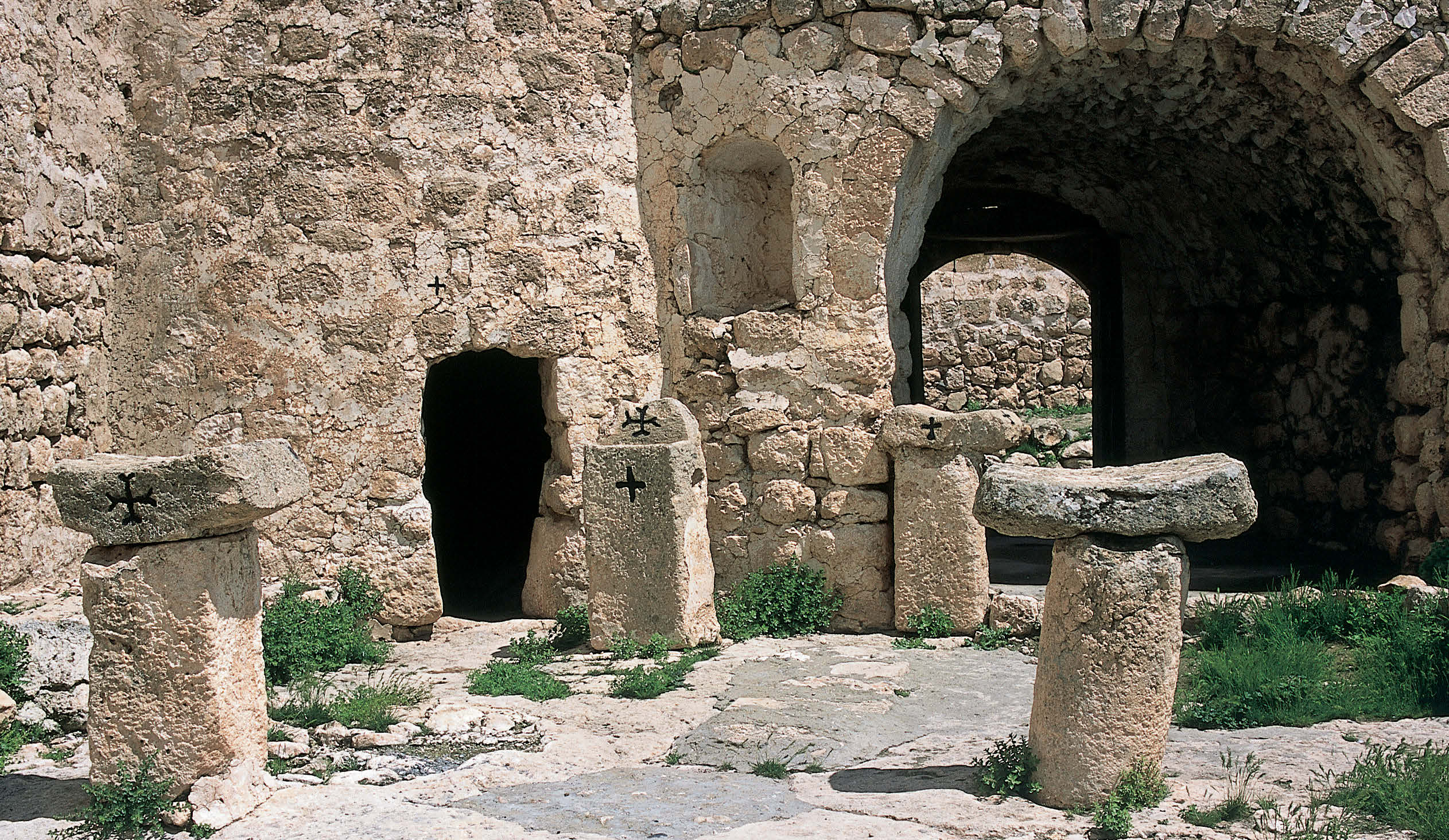
The famous Nestorian cave monastery of Khinnis in northern Iraq, which was described by Thomas of Marga in 840. Today one may still see 15 cells, which the monks intentionally created out of the stone wall that had been decorated with old Assyrian reliefs and cuneiform texts from the time of King Sennacharib (ruled 705–681BCE). They wanted in this way to reconsecrate the ‘heathen’ sacred site.36 The king stands on a winged lion as the second figure from the left. communities. In the ideal case, hermits were prepared to place their seemingly inexhaustible inner strength in the service of missionary work, to which the rapid expansion of the Church of the East to the east and south attests. While anchoritism was a purely personal matter, cenobitic monasticism is a social institution. This slow reversal is also apparent in the growing criticism of wandering monks and the so-called Messalians. The latter qualified the salvific power of sacraments, meditation and penance, and believed that only continual prayer could defeat the inner demon and thus lead to salvation. The clergy branded them as lazy parasites, who lived only from begging.116 Monasteries, which were located principally in northern Mesopotamia, were founded on sites associated with the execution of martyrs or the caves of famous hermits, or mountain slopes and earlier pagan shrines were chosen.
伊拉克北部欣尼斯 (Khinnis) 著名的聂斯脱利派洞穴修道院,曾由马尔加的托马斯 (Thomas of Marga) 于840年描述。今天人们仍可看到15间小室,这些是修士们有意在石壁上开凿而成的,而石壁原本装饰有辛那赫里布王 (Sennacharib)(公元前705—前681年在位)时期的古老亚述浮雕和楔形文字文本。他们想以此重新祝圣这处“异教”圣地。36 国王站在一头有翼狮子上,是左起第二个人物。社群。在理想情况下,隐修士愿意将他们看似取之不竭的内在力量投入传教工作,东方教会 (Ch. of E.) 向东部和南部的迅速扩展即证明了这一点。独居隐修纯粹是个人事务,而集体修道制度则是一种社会制度。这种缓慢的转变也体现在对游方修士和所谓麦萨利安派 (Messalians) 日益增多的批评中。后者限制了圣事、默想和补赎的救赎效力,并相信只有持续不断的祈祷才能战胜内在的魔鬼,从而获得救恩。神职人员将他们斥为懒惰的寄生虫,只靠乞讨为生。116 修道院主要位于美索不达米亚 (Mesopotamia) 北部,它们要么建立在与殉道者受刑有关的地点或著名隐士的洞穴之上,要么选择山坡和更早的异教圣所。
The leading lights of Greek-Byzantine and Egyptian cenobitic monasticism condemned Syrian eremitism for both its aims and its practices. While John Chrysostom emphasized that it was not the body that should be fought but rather its harmful desires, Basil the Great (330–379) rejected every expression of extreme self-castigation. Seen from a distance, Syrian anchoritism appears to be, in fact, a mutilation of God’s creation – indeed, a blasphemy of the divine work. In light of the alternative between anchoritism and the cenobitic way of life, Basil argued that only the latter could accord with the sacred law of brotherly love; the hermit
希腊-拜占庭与埃及集体修道主义的领军人物,从目标和实践两方面谴责了叙利亚独居修道主义。约翰·克里索斯托 (John Chrysostom) 强调,应当与之斗争的并非身体,而是身体有害的欲望;大巴西尔 (Basil the Great, 330–379) 则拒斥一切极端自我苦修的表现。从远处看,叙利亚隐士修道实际上似乎是对上帝造物的毁损——甚至是对神圣工作的亵渎。鉴于隐士修道与集体修道生活方式之间的取舍,大巴西尔主张,唯有后者才符合兄弟之爱的神圣律法;隐修士
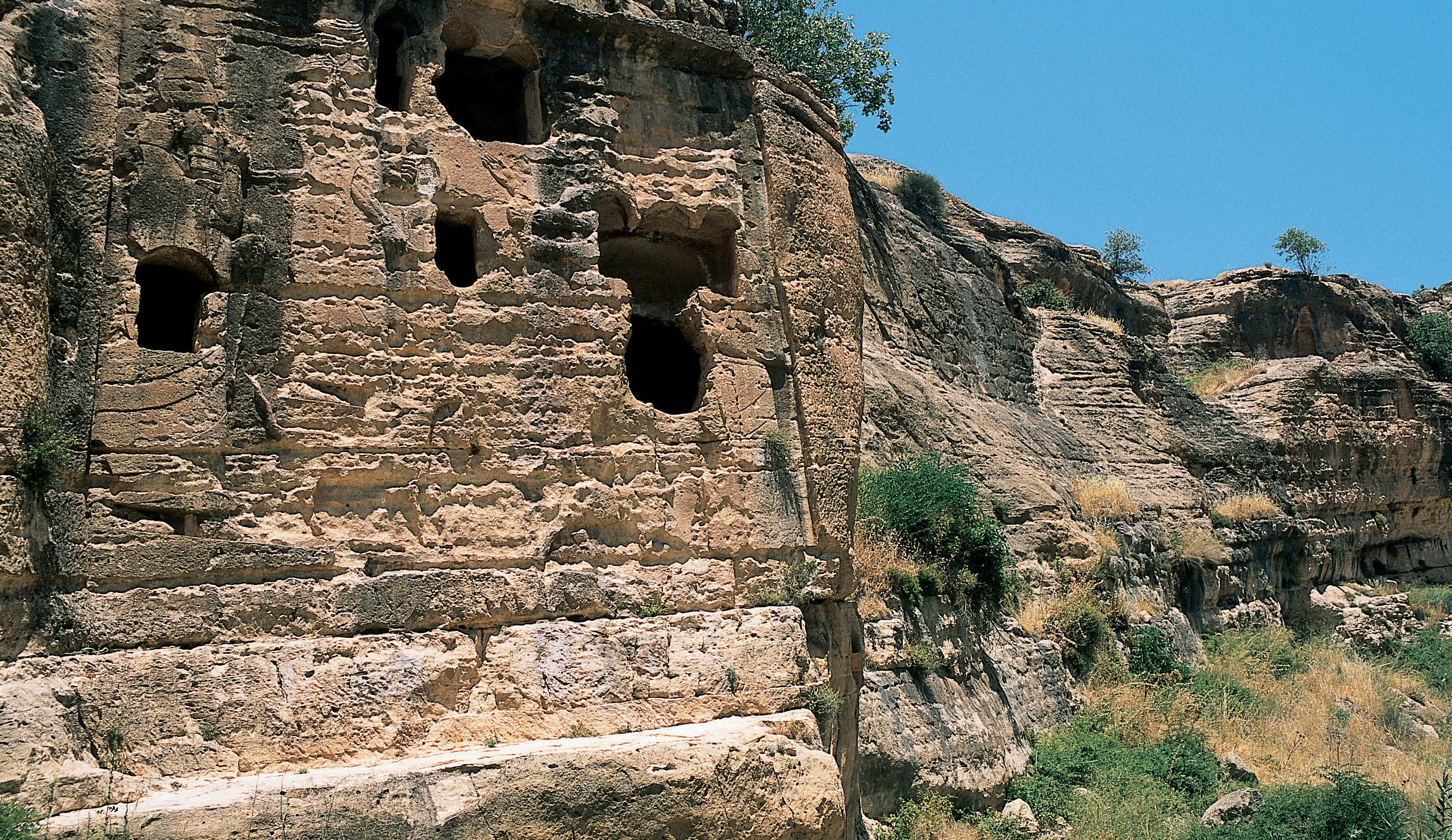
loved only himself and disregarded his fellows. St Jerome (342–420) added that the eremitic life led not only to pride and vanity but also to error, since no one is able to be simultaneously student and his own teacher117 – an insight also emphasized by the Tibetan Buddhist school of Kagyüpa. No one besides Buddha Shakyamuni could be his own spiritual teacher and leader.
只爱自己,漠视同伴。圣杰罗姆 (St Jerome, 342–420) 补充说,隐修生活不仅导致骄傲和虚荣,也导致谬误,因为没有人能够同时既是学生又是自己的教师117——这一洞见也为藏传佛教噶举派 (Kagyüpa) 所强调。除释迦牟尼佛 (Buddha Shakyamuni) 外,无人能成为自己的灵性导师和引路人。
Although a flourishing monastic life rapidly developed within the Church of the East, the turmoil that shook the Church towards the end of the fifth century led to a relaxation of monastic discipline. The study of Scripture was neglected, and monks left monasteries without permission to pursue private interests in the cities, or even took women into their cells. The founder of the Great Monastery on Mount Izla, Abraham of Kashkar (491–586/588), brought an end to these undignified activities with his reforms. The most important of the rules put into place in 571 were the following:
尽管东方教会 (Ch. of E.) 内迅速兴起了蓬勃的修道生活,但五世纪末震撼东方教会 (Ch. of E.) 的动荡导致修道纪律松弛。圣经研究遭到忽视,修士们未经许可离开修道院,到城市中追求私利,甚至将妇女带入自己的居室。伊兹拉山 (Mount Izla) 大修道院 (Great Monastery) 的创始人喀什卡尔的亚伯拉罕 (Abraham of Kashkar, 491–586/588) 通过改革终结了这些有失体面的行为。571年制定的规则中最重要的如下:
For its part, Egyptian monasticism emphasized that the external practices of self- castigation and the infliction of pain mattered less than inner attitude. Asceticism must also be guided by the principle of moderation, since ‘everything of excessive measure is of demons’.118 The father of Egyptian cenobitism, Pachomius (290–346), wrote that only the balanced middle way could distinguish between the ‘divine and the demonic asceticism’.119 The goal of achieving a state equal to that of the angels through extreme, even self-destructive, asceticism is nothing other than a sign of a misguided over-estimation of one’s one abilities. In the cenobitic life, by contrast, there was no room for individ-ualistic excesses; common prayer and work took priority. In this regard, a noteworthy tradition tells of a monk called John Colobos, who sought to lead an angelic life and thus rejected all participation in the common life of the monastery. When, after a long fast, he returned hungry from the desert to the monastery, he found the doors closed. To his desperate cry that he was Brother John, he received the reply that Brother John had become an angel and no longer lived among men. Later he was granted entrance, and it was explained to him that he was not an angel but an ordinary man, who, like all other human monks, had to take part in the communal life.120 Although at first a chasm yawned between the moderate position of Greek-Byzantine monasticism and the extreme Syrian ideal, with regard to both aims and practices, the former had a beneficial and mitigating effect on the latter.
就埃及修道主义而言,它强调自我惩罚和施加痛苦的外在做法不如内在态度重要。苦修还必须以节制原则为指导,因为“凡过度者皆出于魔鬼”。118 埃及共同修道制 (cenobitism) 之父帕科米乌斯 (Pachomius,290–346) 写道,唯有平衡的中道才能区分“神圣的苦修”与“魔鬼的苦修”。119 通过极端、甚至自我毁灭式的苦修来达到与天使同等状态的目标,无非是错误高估自身能力的标志。相比之下,在共同修道生活中,没有个人主义式过度行为的容身之地;共同祈祷与劳动优先。在这方面,有一则值得注意的传统讲述了一位名叫约翰·科洛博斯 (John Colobos) 的修士,他追求过天使般的生活,因而拒绝参与修道院的一切共同生活。在一次长期斋戒之后,他饥肠辘辘地从沙漠返回修道院,却发现大门紧闭。他绝望地呼喊说自己是约翰弟兄,得到的回答却是:约翰弟兄已经变成天使,不再生活在人间。后来他获准进入,并被告知他不是天使,而是一个普通人,必须像所有其他凡人修士一样参与共同生活。120 尽管起初,希腊-拜占庭修道制的温和立场与叙利亚的极端理想之间横亘着一道鸿沟,但就目标与实践而言,前者对后者产生了有益而缓和的影响。
Canon 1: ‘Monks live peacefully in their cells and devote themselves to prayer and study or meditation and handicraft. As the fish dies if it is taken from the water, so does the monk who stays outside his cell.’
第一条教规:“修士们安居于自己的小室中,专心于祈祷与研读,或默想与手工劳作。正如鱼被从水中取出便会死去,修士若待在自己的小室之外,也会如此。”
Canon 4: ‘Monks practise silence and gentleness.’
第四条教规:‘修士践行静默与温良。’
Canon 6: ‘No brother may move from monastery to monastery or from place to place or enter the city [Nisibis] except in an emergency and with the permission of the community.’
第6条教规:“任何弟兄不得从一座修道院迁往另一座修道院,或从此地到彼地,或进入城市[尼西比斯 (Nisibis)],除非遇到紧急情况并获团体许可。”
Canon 10: ‘New brothers shall be tested for a given period.’121
第10条教规:“新弟兄应接受一段时间的考验。”121
In 588 Abraham’s successor, Abbot Dadisho, added the following rules:
公元588年,亚伯拉罕 (Abraham) 的继任者、院长达迪绍 (Dadisho) 增补了以下规则:
Canon 1: ‘[He who] does not accept the Orthodox fathers Mar Diodore [of Tarsus], Mar Theodore [of Mopsuestia] and Mar Nestorius shall be unknown to our community.’
第一条教规:“凡不接受正统教父玛尔·塔尔苏斯的狄奥多鲁斯 (Mar Diodore [of Tarsus])、玛尔·摩普绥提亚的狄奥多若 (Mar Theodore [of Mopsuestia]) 和玛尔·聂斯托利 (Mar Nestorius) 的人,将不为我们的团体所知。”
Canon 6: ‘To travel into the cities or along some pathway is not allowed without the permission of the abbot. He who nonetheless dares to go shall wear sackcloth and stand on ashes for three Sundays. If a monk broke this rule three times, the community discussed his expulsion.’ (The once popular wandering life was thus strictly forbidden.)
第六条教规:“未经院长许可,不得前往城市或沿某条路径出行。凡仍胆敢前往者,须身穿粗麻衣,并在灰烬中站立三个主日。若一名修士三次违反此规,团体便商议将其逐出。”(曾经盛行的游方生活由此被严格禁止。)
build themselves cells. If they behave otherwise, they shall leave in peace.’123
为自己建造小室。若他们不这样做,他们应平安离开。’123
View looking out from a one-time Nestorian hermit’s cell near Challick, northern Iraq.
从伊拉克北部查利克 (Challick) 附近一座曾经的聂斯托利派 (Nestorian) 隐修士小室向外望去的景象。
This canon is significant, as it makes clear that, among the Nestorians, the cenobitic communal life served merely as preparation and selection process for suitable candidates for the higher eremitic life. Nonetheless, the hermits no longer lived in remote mountains but, rather, in cells or caves near the monastery complex. They remained subject to the authority of their abbot and were required to participate in certain feasts in the monastery church. In the monastery itself lived only the candidates, ailing and incapacitated monks, and those with admini-strative duties. Rabban Yussuf Busnaya instituted another hurdle in the selection process by requiring that novices, before they were admitted to the cenobitic life, had meekly to perform hard physical labour for 50 days. Then he ordered that, when a monk entered the eremitic life, the cell of the new hermit should be closed with a stone in memory of the stone before the tomb of Christ, for the cell was the tomb of the monk with regard to the world.124 On the other hand, Rabban Yussuf offered one who had completed the three-year novitiate three options, according to his preferences: he could decide on the spiritual eremitic life, be intellectually active as a copyist of manuscripts, translator and preacher, or carry out manual labour in the fields and vineyard and look after the pilgrims in the monastery guest quarters.125 These three forms of monastic life correspond to the Neo-Platonic view, then current, that the human person consists of corporeal, emotional-intellectual and spiritual dimensions.
这条教规意义重大,因为它清楚表明,在聂斯脱利派 (Nestorians) 中,群居修道生活仅仅是为更高层次的隐修生活预备和拣选合适候选者的过程。尽管如此,隐修士不再住在偏远山区,而是住在修道院建筑群附近的小室或洞穴中。他们仍受其院长权威的管辖,并被要求参加修道院教堂的某些节庆。修道院本身只居住着候选者、患病和丧失劳动能力的修士,以及担任行政职务者。 拉班·优素福·布斯纳亚 (Rabban Yussuf Busnaya) 在拣选过程中又设置了一道障碍,要求初学者在获准进入群居修道生活之前,先谦卑地从事50天艰苦的体力劳动。随后他规定,当一名修士进入隐修生活时,应当用一块石头封住新隐修士的小室,以纪念基督 (Christ) 墓前的那块石头,因为就世界而言,这间小室就是修士的坟墓。124 另一方面,拉班·优素福为已完成三年初学期的修士提供三种选择,由其按自身偏好决定:他可以决定过属灵的隐修生活;也可以从事智力活动,担任手稿抄写员、翻译者和讲道者;或者从事田地和葡萄园中的体力劳动,并照料修道院客舍中的朝圣者。125 这三种修道生活形式对应于当时流行的新柏拉图主义 (Neo-Platonic) 观点,即人由肉体、情感—智性以及灵性三个维度构成。
Canon 7: ‘Every brother who comes to the community to stay shall not be accepted unless he can read the Scriptures.’
第7条教规:“凡来到团体中长住的弟兄,除非能阅读圣经,否则不得接纳。”
Canon 17: ‘Children shall not be accepted into the community.’
第17条教规:“儿童不得被接纳进入团体。”
These requirements raised the educational level of the monks and laid the groundwork for the eventual work of translating classical philoso- phical and scientific texts. Rabban Yussuf Busnaya also emphasized the necessity to begin monastic life with the study of Scripture and the Church Fathers. ‘Study is both the way to and the teacher of the next step, solitude in the cell. Without scholarship, there is no complete monastic life.’ But study was only the first step. ‘In study the individual purifies his bodily senses until they are perfect. In meditative solitude the spiritual person purifies his inner senses, his intellect.’122
这些要求提高了修士的教育水平,并为最终翻译古典哲学与科学文本的工作奠定了基础。拉班·优素福·布斯纳亚 (Rabban Yussuf Busnaya) 也强调,修道生活必须以研读圣经和教父著作为开端。“研读既是通往下一步——在修室中独处——的道路,也是其导师。没有学问,就没有完整的修道生活。”但研读只是第一步。“在研读中,个人净化自己的肉体感官,直至其臻于完善。在默想式的独处中,属灵的人净化自己的内在感官,即他的理智。”122
Nevertheless, the great Nestorian monasteries were not immune from excesses in the form of vanity, wealth, spiritual sloth, exertion of political influence, or even willingness to use violence – developments seen in monasteries of other confessions and religions as well. So
然而,聂斯托利派 (Nestorian) 的大修道院也未能免于种种过激行为,其形式包括虚荣、财富、灵性懈怠、施加政治影响,甚至不惜使用暴力——这些现象在其他教派和宗教的修道院中也可见到。因此
Canon 13: ‘That the brothers shall be tested in the monastery for three years following their arrival. If they behave well, they shall be permitted to
第13条教规:‘弟兄们抵达后,须在修道院中接受为期三年的考验。若他们表现良好,将被允许
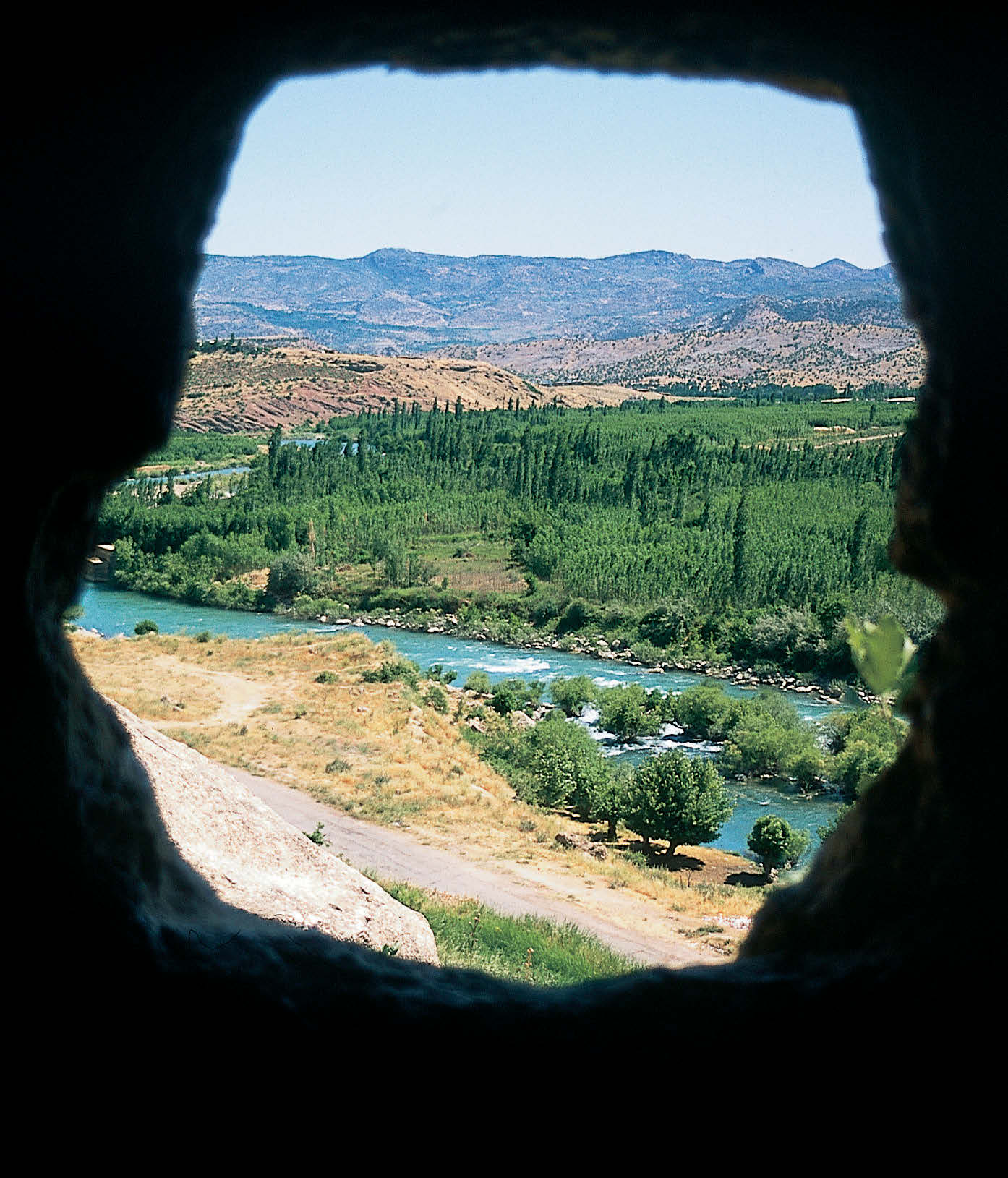
Four-metre-high remains of the stylite’s column in the Syrian Orthodox Monastery of Mor Loozor (Lazarus) in Habsus, Tur Abdin, which was, according to the inscription, erected in 792/793 for the stylite Daniel. Early documents confirm that Nestorian monks also practised this extreme form of asceticism.37
位于图尔阿布丁 (Tur Abdin) 哈布苏斯 (Habsus) 的叙利亚正教会 (Syrian Orthodox) 莫尔·洛佐尔(拉撒路)修道院 (Monastery of Mor Loozor [Lazarus]) 中,柱顶苦修者 (stylite) 石柱高四米的残迹;据铭文记载,该石柱于 792/793 年为柱顶苦修者丹尼尔 (Daniel) 而建。早期文献证实,聂斯托利派修士 (Nestorian monks) 也践行这种极端形式的苦修。37
Isaac of Antioch warned cenobitic monks of great institutions that they were not to reduce themselves to farmers. He also warned against the fatal involvement in politics and against those abbots who intentionally selected big and strong monks, in order to turn them into gangs of thugs.126 The distressing events at the Council of Ephesus and the Robber Synod of 449, as well as many other incidents, in which questions of dogma were ‘resolved’ with fists, demonstrate that brutal and primitive instincts can lurk even under the habit of a monk. The monastic gangs recall the feared Dob Dob of Tibetan monasteries, who, as trained fighting monks, attacked other monasteries and even set them on fire. In both cases, the aggression and brutality that presum- ably feeds and maintains all extreme asceticism is no longer directed inward towards one’s own body and its needs but, rather, outward against others who think differently. was said not only to have healed the sick and raised the dead but also, ‘at the command of the angel of God’, to have destroyed the villages of sinful Christians with earthquakes and confla- grations.127 This tradition is also very similar to earlier reports from Tibetan monasticism.128 Another unwholesome development concerned the motivations for founding monasteries. Not only monks called to the spiritual life founded monasteries but also prosperous laypeople, acting for the benefit of their salvation or out of vanity. Since such monasteries were often endowed with large landholdings, they had at their disposal considerable financial means and accordingly accepted many novices. As in ancient Tibet, in certain regions of northern Mesopotamia as many as a quarter of Christian men may have been monks.129 When a similar development threatened the civil authority in Byzantium, Emperor Nikiphoros Phocas outlawed all new foundations in 964.130
安提阿的伊萨克 (Isaac of Antioch) 曾警告大型修道机构的集体修道修士 (cenobitic monks),他们不应把自己降格为农夫。他也警告不要致命地卷入政治,并警告那些修院院长 (abbots),他们有意挑选高大强壮的修士,以便将其变成打手团伙。126 以弗所会议 (Council of Ephesus) 和449年的强盗会议 (Robber Synod of 449) 上令人痛心的事件,以及许多其他事件——在这些事件中,教义问题是用拳头“解决”的——表明,残暴而原始的本能甚至可能潜藏在修士的会衣之下。这些修道院团伙让人想起西藏寺院中令人畏惧的多布多布 (Dob Dob),他们作为受过格斗训练的武僧,攻击其他寺院,甚至纵火焚烧。在这两种情况下,那种据信滋养并维持一切极端禁欲主义的攻击性与残暴,不再向内指向自己的身体及其需求,而是向外针对那些持不同想法的人。据说,他不仅治愈病人、使死者复活,而且“奉上帝天使之命”,以地震和烈火摧毁了有罪基督徒的村庄。127 这一传统也与西藏修道制度更早的记载十分相似。128 另一个不健康的发展涉及创建修道院的动机。不仅蒙召过灵性生活的修士创建修道院,富裕的平信徒也出于自身得救的利益或虚荣而创建修道院。由于这类修道院往往获赠大片地产,拥有可支配的雄厚财力,因此接纳了许多初学修士 (novices)。如同古代西藏一样,在美索不达米亚北部 (northern Mesopotamia) 某些地区,多达四分之一的基督徒男性可能是修士。129 当类似发展威胁到拜占庭 (Byzantium) 的世俗权威时,皇帝尼基弗鲁斯·福卡斯 (Nikiphoros Phocas) 于964年禁止一切新建修道院。130
If the reports of Bishop Thomas of Marga are given credence, there were also monks who had magical powers. For instance, a certain Mar Maran’anmeh (second half of the eighth century)
如果玛尔加的托马斯主教 (Bishop Thomas of Marga) 的记载可信,那么也有一些拥有法术能力的修士。例如,某位玛尔·玛兰安梅 (Mar Maran’anmeh)(8世纪下半叶)
In the region of the Church of the East, however, no imperial permission was needed to limit the number of monks. The continually
然而,在东方教会 (Ch. of E.) 的区域内,限制修士人数无需获得皇帝的许可。持续不断的
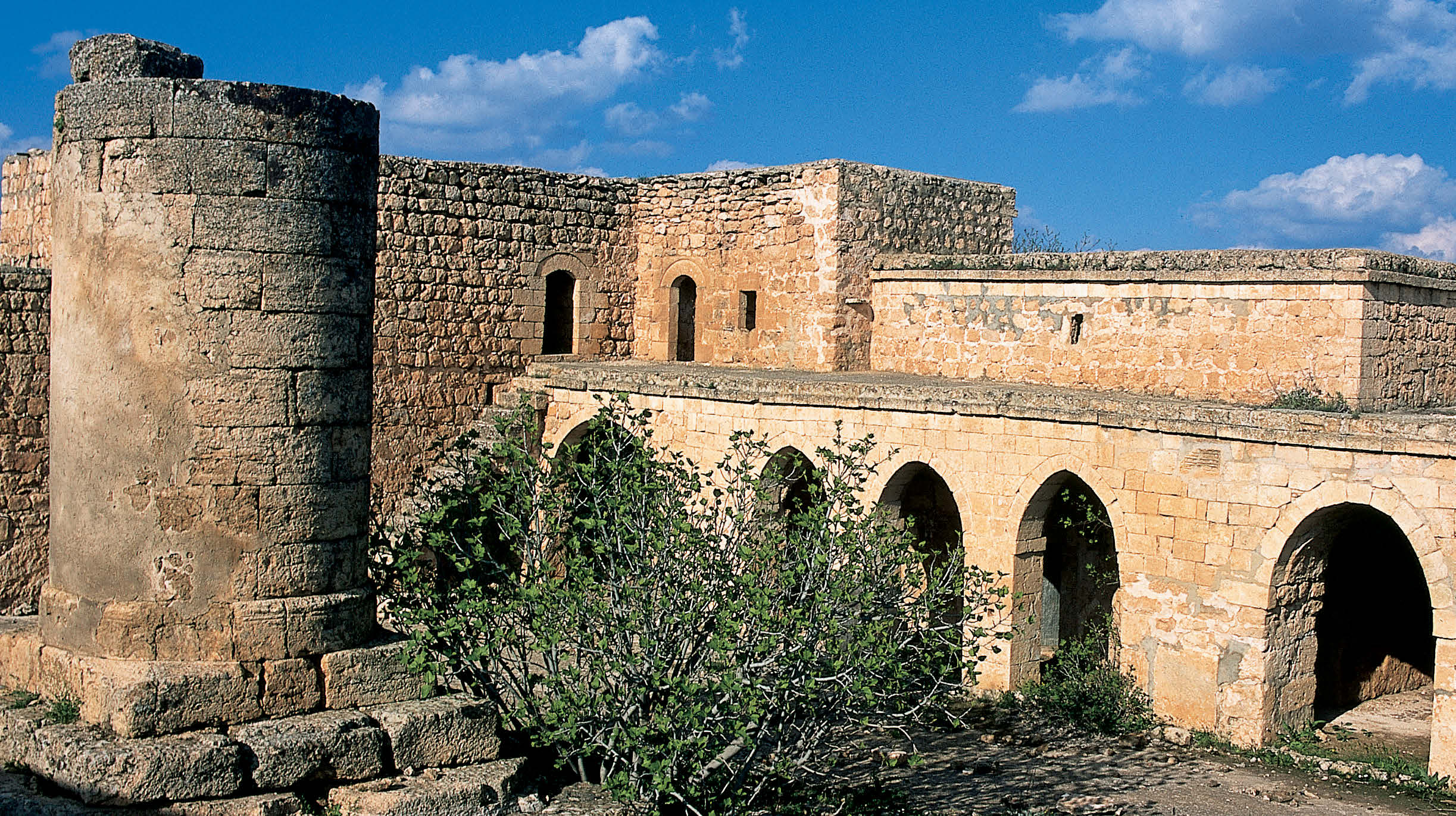
advancing Islamization of the land, the seizure of power by the fanatical Turkish Seljuks in the eleventh century and the systematic destruction by the Kurds reduced the number of monasteries in Mesopotamia, with the exception of Tur Abdin, from several hundred to five by 1960 – three Chaldean, one Jacobite and one Syrian Catholic. There are also still a few monastic buildings, which are preserved but no longer have any monks.131 The last Nestorian monk, Rabban Werda, died before the First World War.132
该地区不断推进的伊斯兰化、十一世纪狂热的突厥塞尔柱人 (Turkish Seljuks) 夺取政权,以及库尔德人 (Kurds) 的系统性破坏,使美索不达米亚 (Mesopotamia) 的修道院数量——图尔阿布丁 (Tur Abdin) 除外——从数百座减少到1960年的五座:三座迦勒底派 (Chaldean)、一座雅各派 (Jacobite) 和一座叙利亚天主教 (Syrian Catholic)。此外,至今仍有一些修道院建筑保存下来,但已不再有修士。131 最后一位聂斯托利派 (Nestorian) 修士拉班·韦尔达 (Rabban Werda) 于第一次世界大战前去世。132
East Syrian mysticism, exemplified by John of Dalyatha
东叙利亚神秘主义,以达利亚塔的约翰 (John of Dalyatha) 为例
In comparison with the fathers of Syrian mysticism, Aphrahat and Ephrem, mature Nestorian mysticism departed from the ideals of strict asceticism. One branch opted for the path of love mysticism, and its most prominent representative is Isaac of Nineveh; the other followed a spiritual-intellectual path. In this way, knowledge led to an ecstatic vision of the glory of God, in which every distinction between the knower and the known – that is, every duality – was abolished and the soul, in its transfiguration, experienced God – an approach comparable to the Indian way of Advaita.
与叙利亚神秘主义的教父阿弗拉哈特 (Aphrahat) 和以法莲 (Ephrem) 相比,成熟的聂斯托利派 (Nestorian) 神秘主义已背离严格禁欲主义的理想。其中一支选择了爱的神秘主义道路,其最杰出的代表是尼尼微的以撒 (Isaac of Nineveh);另一支则遵循一条灵性—智性路径。循此,知识引向对上帝荣耀的神魂超拔异象,在其中,认识者与被认识者之间的一切区分——也就是一切二元性——都被取消,而灵魂在其转化中经验到上帝——这一进路可与印度不二论 (Advaita) 之道相类比。
Like Jerome, John was convinced that an experienced teacher must accompany the mystic on his perilous path, along which lurked demons of madness, arrogance and pride.134 In describing the mystical process, most Nestorian authors adopted Origen’s scheme of the three levels of the human being’s relationship to God. The first, physical, level occurs in the form of corporeal asceticism; the second, psychological, as purification of the soul, which then leads to spiritual development, culminating in the vision of Christ as formless light. For John, however, physical purification is not a one-time step but rather, a continual process that ends only with death. In his experience, the purification of the soul is the first step; the enlightenment and blessing of the soul, in which the mystic experiences the revelation of the divine mysteries, the second; and the vision of God, which overcomes all dualism, the third and crowning step.
像耶柔米 (Jerome) 一样,约翰 (John) 深信,一位有经验的导师必须陪伴神秘修行者走上他那危险的道路,沿途潜伏着疯狂、傲慢和骄傲的魔鬼。134 在描述神秘修行过程时,大多数聂斯脱利派 (Nestorian) 作者采用了奥利金 (Origen) 关于人与上帝关系三个层次的图式。第一个是肉体层次,以肉身苦修的形式出现;第二个是心理层次,即灵魂的净化,这进而引向灵性发展,最终达到以基督 (Christ) 为无形之光的异象。然而,对约翰 (John) 而言,肉体净化不是一次性的步骤,而是一个持续的过程,只有到死亡才结束。在他的经验中,灵魂的净化是第一步;灵魂的启悟与祝福,即神秘修行者经验到神圣奥秘的启示,是第二步;而克服一切二元论的对上帝的异象,则是第三步,也是顶峰的一步。
The Syrian Orthodox monk Yacub returned from exile to his Monastery of Mor Dimet in Zaz, Tur Abdin, in early 2001, after the last Christians had to leave the village in 1993. His headdress bears 13 crosses; they symbolize Jesus Christ and the twelve apostles. Unlike the Syrian Orthodox Church, the Church of the East has had no monks since the start of the twentieth century.
叙利亚正教会修士雅库布 (Yacub) 于2001年初结束流亡,回到位于图尔阿布丁 (Tur Abdin) 扎兹 (Zaz) 的莫尔迪梅特修道院 (Monastery of Mor Dimet)。此前,最后一批基督徒已于1993年被迫离开该村。他的头饰上饰有13个十字架;它们象征耶稣基督和十二使徒。与叙利亚正教会 (SOC) 不同,东方教会 (Ch. of E.) 自20世纪初以来便没有修士。
The best-known exponent of this branch is John of Dalyatha, who was born around 690 in Adiabene and died before 786. The writings of John were risky and not uncontroversial; they were condemned on three points at the synod of Patriarch Timothy I in 786/787. First, John was condemned as a modalist, who, with regard to the Trinity, did not acknowledge three hypostases but rather just one, which expressed itself in three different ways. Second, he valued the mystical vision more than prayer; and, third, he made the blasphemous claim of having had a vision of God. No creature could recognize his creator. Timothy’s successor, Isho Bar Nun (in office 823–828), rehabilitated the mystic.133
这一分支最著名的代表人物是达利亚塔的约翰 (John of Dalyatha),他约于690年出生在阿迪亚贝尼 (Adiabene),卒于786年之前。约翰的著作颇具风险,且并非没有争议;在786/787年牧首提摩太一世 (Patriarch Timothy I) 的主教会议上,这些著作因三点而受到谴责。首先,约翰被谴责为形态论者 (modalist),因为就三位一体 (Trinity) 而言,他不承认三个位格 (hypostases),而只承认一个位格,这个位格以三种不同方式表现自身。其次,他重视神秘异象甚于祈祷;第三,他亵渎地声称自己曾获得对上帝的异象。任何受造物都无法认识其造物主。提摩太的继任者伊绍·巴尔·努恩 (Isho Bar Nun)(在位823–828年)为这位神秘主义者恢复了名誉。133
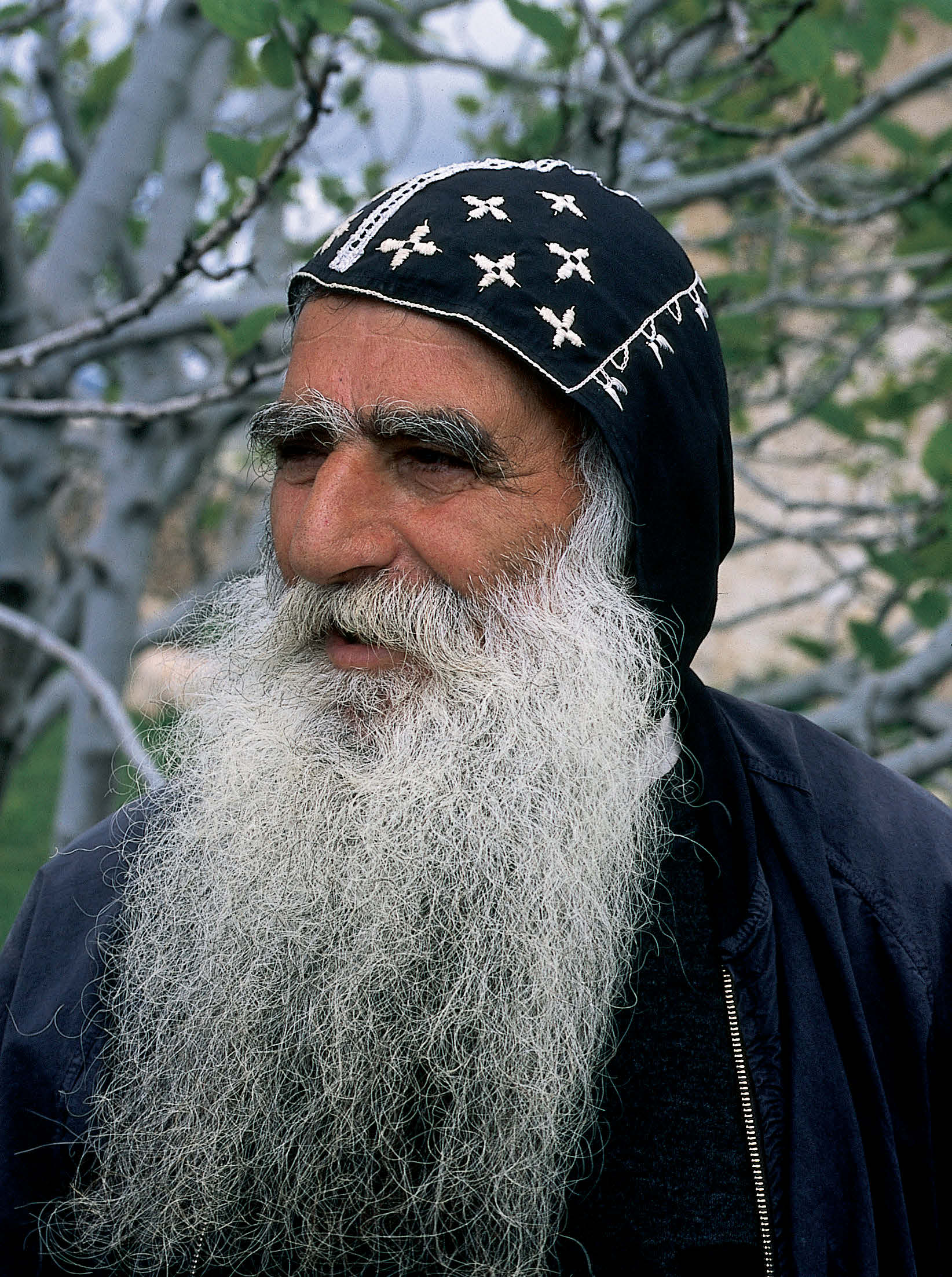
since he believed that the purified body could participate in the mystical refreshment of the soul. ‘The individual gains union with himself and with the one who unites him. For the powers and sense of the body shall be united with the abilities of the soul and this with the spirit. But the spirit sees in the soul the glory of God.’137 On Dalyatha’s mystical path there sound no discordant notes of the mutilation of the creature but rather the harmony of his holistic purification. John warned, however, that humility and modesty should always accompany the process of purification. ‘But to those who deem themselves holy, the Holy One [Christ] says, “You no longer need me, remain there in your holiness.’’’138 To encourage humility, John recommended prostration on the ground during prayer – an established practice in Tibetan Buddhism as well. Now the mystic stood on the threshold of the inner vision, the vision of God in the mirror of the soul. ‘O Christ, grant that we, through You, might enter the temple of our soul and see You there. O hidden [within us] treasure of life. My brothers, he who has enclosed the view of his spirit within himself will see in the interior of his heart the stars of light shining in ineffable splendour. It will be the vision of the glory of the Eternal One.’139
因为他相信,被洁净的身体能够参与灵魂的神秘更新。“个体与自身、并与那使他合一者达成合一。因为身体的诸力量与感官将与灵魂的诸能力结合,而灵魂又与灵结合。但灵在灵魂中看见上帝的荣耀。”137 在达利亚塔 (Dalyatha) 的神秘之路上,听不到受造物被肢解的不和谐音符,反而听到其整体性净化的和谐。然而,约翰 (John) 警告说,谦卑与谦逊应始终伴随净化过程。“但对那些自认为圣洁的人,圣者 (Holy One) [基督 (Christ)] 说:‘你们不再需要我,就留在你们的圣洁中吧。’”138 为鼓励谦卑,约翰 (John) 建议祈祷时俯伏于地——这也是藏传佛教 (Tibetan Buddhism) 中既有的做法。此时,这位神秘主义者站在内在异象的门槛上,即在灵魂之镜中看见上帝的异象。“哦,基督 (Christ),求你使我们藉着你得以进入我们灵魂的圣殿,并在那里看见你。哦,隐藏 [在我们内] 的生命宝藏。我的弟兄们,凡将自身灵性之视野封闭于自身之内的人,将在其心灵深处看见光之星以不可言喻的辉煌闪耀。这将是永恒者 (the Eternal One) 荣耀的异象。”139
Bodily and spiritual penance forms ‘the gateway to the realm of light that lives within each of us’. However, it not only establishes the original purity of human nature but also grants the necessary zest for God; it is ‘the mother of the heavenly eagles who soar to the heavens on wings of flame’.135 For this reason, John considered the way of the mystic incompatible with the life of a layperson; the true Christian life required the death of earthly passions. From this perspective, those who had not passed through the gate into the monastic life remained ‘still among the dead’. Love of God and love of the world were mutually exclusive: ‘Christ will enter into your soul and live there if you first empty yourself of all that is worldly.’136 Corporeal asceticism and fasting should be strict but also moderate, for it is not enough to weaken or even destroy the body; rather, one must tame and purify the passions.
身体与灵性的悔罪构成了“通往我们每个人内心所居的光明之域的门户”。然而,它不仅确立了人性原初的纯洁,也赐予了对上帝所必需的热忱;它是“以火焰为翼、翱翔至诸天的天上之鹰的母亲”。135 因此,约翰 (John) 认为神秘主义者的道路与平信徒的生活不相容;真正的基督徒生活要求治死尘世的情欲。从这个角度看,那些尚未穿过这道门进入修道生活的人,仍然“还在死者之中”。对上帝的爱与对世界的爱彼此排斥:“你若先倒空自己心中一切世俗之物,基督 (Christ) 就会进入你的灵魂,并住在那里。”136 身体的苦修与斋戒应当严格,但也应适度,因为仅仅削弱甚至毁坏身体是不够的;相反,人必须驯服并净化情欲。
Despite its strongly fortified walls, the Syrian Orthodox Mor Dimet Monastery in Zaz, Tur Abdin, where the Christian population of the village had sought refuge, also fell to attacking bands of Kurds in 1915.
尽管城墙防御坚固,位于图尔阿布丁 (Tur Abdin) 的扎兹 (Zaz) 的叙利亚正教会 (Syrian Orthodox) 莫尔迪梅特修道院 (Mor Dimet Monastery)——该村基督徒居民曾在此避难——也于1915年陷落于发动袭击的库尔德人团伙之手。
In the second step of the blessing of the soul the mystic experiences, through the grace of God, three degrees of illumination. First, mental illumination in the form of conceptual insights that still have intellectual components. In the next step, there follow contemplations of the divine presence in one’s own soul and in all creatures, during which the duality between the knower and the known is not yet resolved. In this moment, deep dismay grips the mystic. Finally, he experiences the divine as pure, formless light, beyond any intellectual perception.
在灵魂蒙福的第二个阶段,神秘主义者借着上帝的恩典经历三个层次的光照。首先,是心智的光照,以仍带有理智成分的概念性洞见的形式出现。在下一步,随之而来的是对自身灵魂中以及一切受造物中神圣临在的默观,在此期间,认知者与被认知者之间的二元性尚未消解。在这一刻,深深的沮丧攫住了这位神秘主义者。最后,他将神圣者体验为纯粹、无形式的光,超越一切理智感知。
There follow next such states of grace, in which the soul sees itself in its original goodness and simultaneously experiences the presence
接下来是诸如此类的恩典状态,在其中,灵魂看见自己处于其原初的善之中,并同时经验到那临在
On this point John distinguished himself radically from the ideas of earlier asceticism,
在这一点上,约翰 (John) 与早期禁欲主义的观念截然不同,
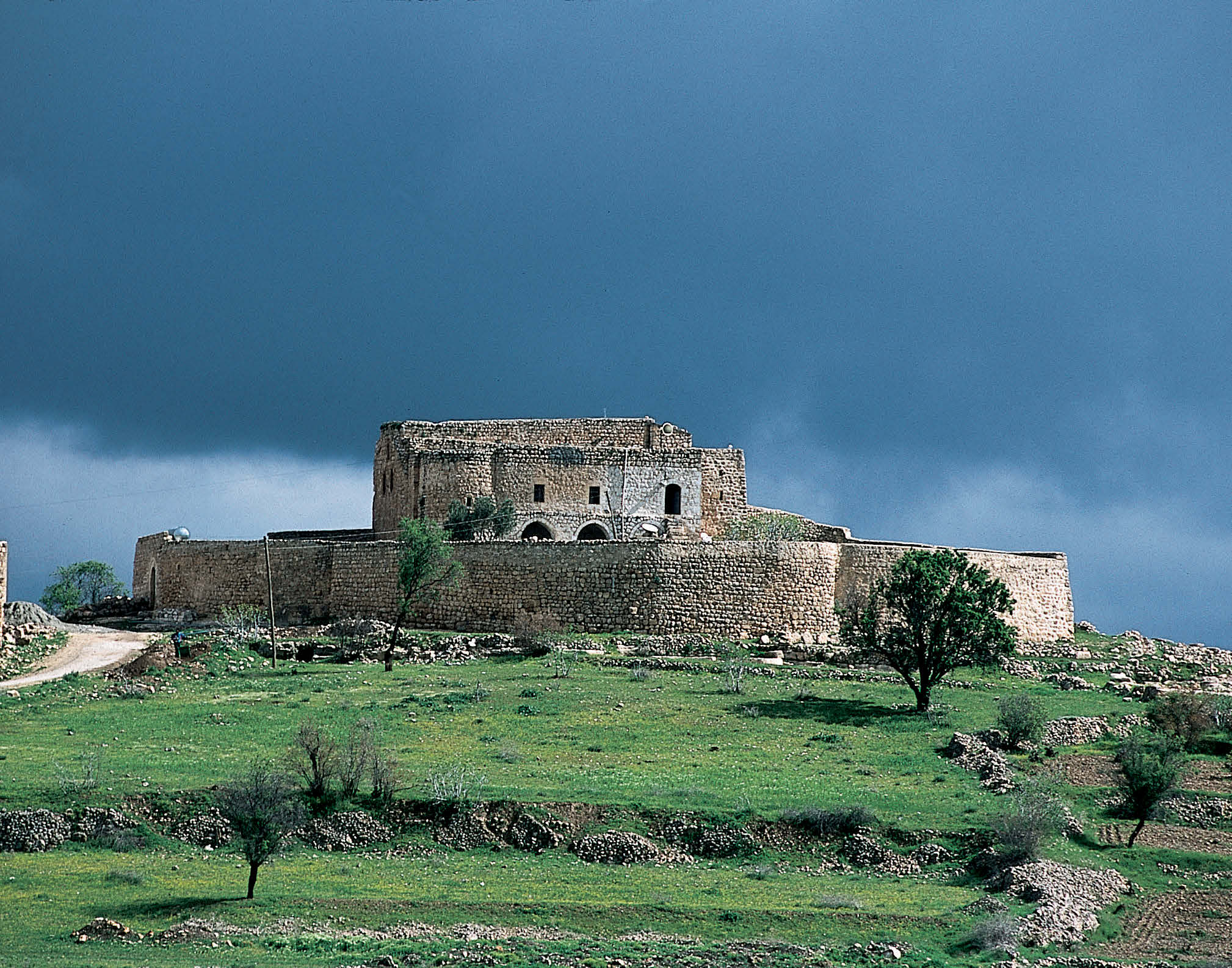
spirit, without existing and without perception. No vision, no hearing, only con-sternation [stupor] and deep silence, without any stirring [of the spirit] and without any consciousness. For in the one who knows, knowledge has forgotten itself, [it is] outside knowing.’142 It was these descriptions of the vision of God that prompted Patriarch Timothy to condemn John of Dalyatha, since no creature can look upon its creator. The accusation of the patriarch was not entirely accurate, insofar as John clearly distinguished between the nature of God and his glory. ‘It is the glory of his nature, not his nature itself, that He reveals to those who love him.’143
灵,不存在,也无感知。没有视觉,没有听觉,只有惊愕 [木然] 和深深的寂静,没有任何 [灵里的] 搅动,也没有任何意识。因为在那认识者里面,知识已遗忘了自身,[它] 在认识之外。’142 正是这些关于看见上帝的描述,促使牧首提摩太 (Patriarch Timothy) 谴责达利亚塔的约翰 (John of Dalyatha),因为任何受造物都不能瞻仰自己的创造者。这位牧首的指控并不完全准确,因为约翰清楚地区分了上帝的本性与他的荣耀。‘他向爱他的人所启示的,是他本性的荣耀,而不是他的本性本身。’143
Way up to the earlier Nestorian cave monastery of St Qayyoma near Duri, from the ninth century. It was rebuilt in 2000 after being destroyed by Saddam Hussein’s Anfal campaign in 1988.
往上走到更早的聂斯托利派 (Nestorian) 洞穴修道院,即位于杜里 (Duri) 附近的圣卡约马 (St Qayyoma) 修道院,其历史可追溯至九世纪。该修道院在1988年被萨达姆·侯赛因 (Saddam Hussein) 的安法尔行动 (Anfal campaign) 摧毁后,于2000年重建。
Rabban Yussuf Busnaya described the unio mystica with similar words: ‘In the previous state of grace we encountered Christ in our soul and we considered him our Lord and our God. In the final degree we find that the spirit itself becomes Christ; it is no longer servant and Christ is no longer Lord, but rather it [the spirit] becomes Lord and Christ ceases to be Lord. It [the spirit] is no longer human and God no longer God, but rather it becomes God and God is no longer God.’144
拉班·优素福·布斯纳亚 (Rabban Yussuf Busnaya) 用类似的话描述了神秘合一 (unio mystica):“在先前的恩典状态中,我们在自己的灵魂里遇见了基督,并把他视为我们的主和我们的神。在最终的阶段,我们发现灵本身成为基督;它不再是仆人,基督也不再是主,而是它[灵]成为主,基督不再是主。它[灵]不再是人,神也不再是神,而是它成为神,神不再是神。”144
One can speculate that Nestorian mysticism influenced the later Islamic mysticism of al-Hallaj (858–922). He also questioned the absolute transcendence of God, in that he proclaimed his belief in a union of the human being with God beyond all duality. Like John, al-Hallaj described how, during such an experience, the mystic lost the consciousness of his own identity. Al-Hallaj was crucified in Baghdad in 922 after an eleven- year imprisonment. of God. It is the return of the human being to his original goodness. ‘When the spirit begins to pray, he sees the radiance of his essence; the beauty of the nature of the soul appears to him. The soul sees itself as it is; it sees the divine light appear and how it is transfigured into its [the light’s] likeness. And this likeness is removed from view, and it sees itself as the likeness of God, as it is united with the formless light.’140 When the individual is entirely with himself, he is entirely with God, and vice versa. The mystic experiences the unio mystica not only in his soul but also in all of creation: ‘As I [John] thought to have found You [Christ] within myself, I saw that You live in all things.’141 At this point, all duality between the subject and the object of knowledge is abolished. ‘He [Christ] holds me as if without
人们可以推测,聂斯托利派 (Nestorian) 神秘主义影响了后来哈拉智 (al-Hallaj, 858–922) 的伊斯兰神秘主义。他也质疑上帝的绝对超越性,因为他宣称自己相信人能够与上帝合一,超越一切二元性。像约翰 (John) 一样,哈拉智描述了在这样一种体验中,神秘主义者如何丧失对自身身份的觉知。哈拉智在历经十一年监禁后,于922年在巴格达 (Baghdad) 被钉十字架。属于上帝。这是人回归其原初的善。‘当灵开始祈祷时,他看见自己本质的光辉;灵魂本性的美向他显现。灵魂如其所是地看见自己;它看见神光显现,以及自己如何被转化为它[光]的形像。而这形像从视野中消失,它便看见自己成为上帝的形像,因为它与无形之光合一。’140 当个体完全与自身同在时,他就完全与上帝同在,反之亦然。神秘主义者不仅在灵魂中,而且在一切受造物中体验到神秘合一 (unio mystica):‘当我[约翰]以为已在自己里面找到你[基督]时,我看见你活在万物之中。’141 在这一点上,认识的主体与客体之间的一切二元性都被废除了。‘他[基督]持守我,仿佛没有
Likewise, with regard to the interim state of the soul from the moment of death to the resurrection, John’s view differed from the official position. Proceeding from the indivisibility of body and soul and the universal resurrection, the Church of the East likens the state of the soul separated from the body to sleep. Righteous souls enter paradise, and evil souls remain outside, but in both places there is neither blessing nor
同样,关于灵魂从死亡到复活之间的中间状态,约翰 (John) 的观点与官方立场不同。基于身体与灵魂的不可分割性以及普遍复活,东方教会 (Ch. of E.) 将灵魂与身体分离后的状态比作睡眠。义人的灵魂进入乐园,恶人的灵魂则留在外面,但在这两个地方,既没有祝福,也没有
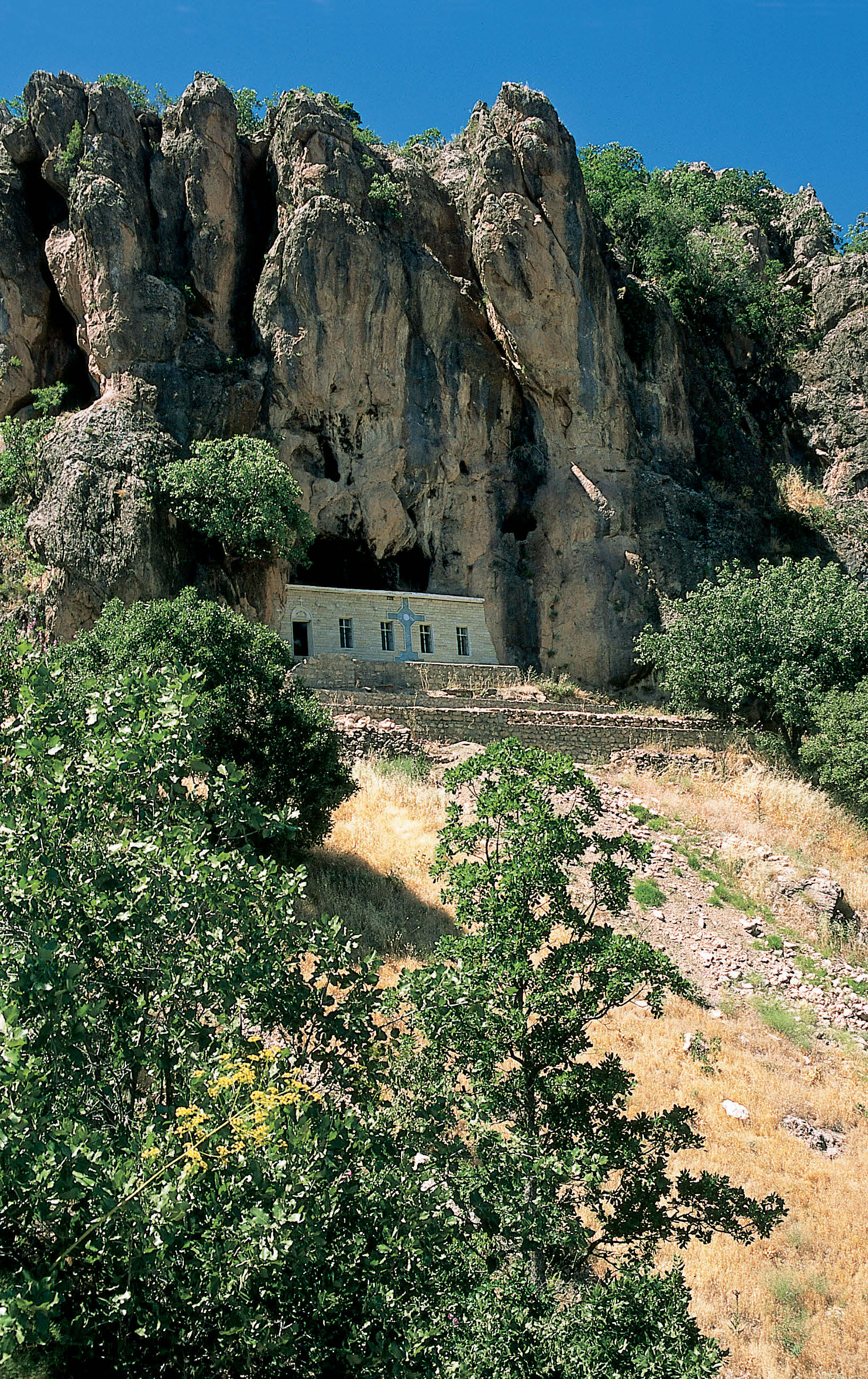
punishment. John of Dalytha, by contrast, accepted a partial sleep of the soul: the souls of the unrighteous experience punishment even before Judgement Day, while those of the righteous enjoy states of grace similar to those of mystics, which nevertheless represent but a foretaste of the state of eternal bliss. panton (Greek for ‘the restoration of all’), according to which, in the context of the all- embracing reconciliation of the Creator with his creation, all creation would be restored to its original, perfect state. The most important representative of apokatastasis was Origen (†253); he was vehemently opposed by the father of the doctrine of original sin, Augustine. ‘Thanks’ to Augustine, Christianity was marked by the frightening model of original sin- predestination-salvation for the elect and hell for the rest. But Isaac’s vision was entirely different. ‘God did not abandon the devil and sinners in the moment of their fall. Demons will not remain demons, nor sinners sinners. For God intends to lead them all to the same state of perfection in which the angels already exist.’145
惩罚。相比之下,达利萨的约翰 (John of Dalytha) 接受灵魂的部分睡眠说:不义者的灵魂甚至在审判日之前就经历惩罚,而义人的灵魂则享有与神秘主义者相似的神恩状态,然而这些状态不过是永恒福乐状态的预尝。panton(希腊语,意为“万物的恢复”),根据这一说法,在造物主与其受造物包罗万象的和好这一语境中,一切受造物都将恢复至其原初的完美状态。万物复原 (apokatastasis) 最重要的代表人物是奥利金 (Origen)(†253);他遭到原罪教义之父奥古斯丁 (Augustine) 的激烈反对。“多亏”奥古斯丁 (Augustine),基督教被打上了令人恐惧的模式:原罪—预定—选民得救,其余人下地狱。但以撒 (Isaac) 的异象则完全不同。“上帝并没有在魔鬼和罪人堕落的那一刻抛弃他们。魔鬼不会始终是魔鬼,罪人也不会始终是罪人。因为上帝意欲将他们全都引向天使已经存在其中的同一完美状态。”145
Concerning life after death, the Nestorian mystic Isaac of Nineveh (second half of the seventh century) represented a different view. He believed that eternal punishment and damnation of even the worst sinners was irreconcilable with the all-encompassing and unlimited love of God. He considered the concept of original sin blasphemous. Building on Diodore of Tarsus and Theodore of Mopsuestia, Isaac concluded that a loving God did not create rational human beings only later to abandon them to eternal suffering, although he knew before their creation that they would sin and created them anyway. God seeks our well-being and not a pretext for punishing us. For Isaac, hell meant the consciousness that the sinner, out of egoism, was not receptive to God’s love. The time in hell, while terrible and agonizing, was nonetheless finite.
关于死后的生命,聂斯托利派 (Nestorian) 神秘主义者尼尼微的以撒 (Isaac of Nineveh)(七世纪下半叶)持有一种不同的观点。他认为,即便对最坏的罪人而言,永恒的惩罚与永罚也与上帝那包容一切、无限的爱无法调和。他认为原罪概念是亵渎的。在塔尔苏斯的狄奥多若 (Diodore of Tarsus) 和摩普苏埃斯蒂亚的狄奥多雷 (Theodore of Mopsuestia) 的基础上,以撒得出结论:一位慈爱的上帝不会先创造理性的人类,之后又任凭他们遭受永恒的痛苦,尽管他在创造他们之前就知道他们会犯罪,却仍然创造了他们。上帝寻求的是我们的福祉,而不是惩罚我们的借口。对以撒而言,地狱意味着这样一种意识:罪人出于利己主义,无法领受上帝的爱。在地狱中的时间虽然可怕而痛苦,但终究是有限的。
Perhaps a reconsideration of the early East Syrian promoters of an optimistic Christian anthropology, unburdened by original sin, as well as an accessible Christology that inspires the imitatio Christi, could help address the current crisis in institutional Christianity. The Church of the East suggests how a Western Church might have appeared without Augustinian pessimism. Isaac’s vision was of a religion of love, while that of Augustine was of one of fear.
或许,重新审视早期东叙利亚那些倡导乐观基督教人论、不为原罪所累,并倡导一种激发效法基督 (imitatio Christi) 的易于理解的基督论的推动者,会有助于应对当前制度性基督教的危机。东方教会 (Ch. of E.) 提示了若没有奥古斯丁式悲观主义,西方教会 (Western Church) 可能会呈现怎样的面貌。以撒 (Isaac) 的愿景是一种爱的宗教,而奥古斯丁 (Augustine) 的愿景则是一种恐惧的宗教。
Isaac accepted the doctrine of apokatastasis
以撒 (Isaac) 接受了万物复兴 (apokatastasis) 的教义。