鲍默《东方教会:亚述基督教图史》第十二章:亚述东方教会的复兴(中英文对照版)
阿甲按:本连载以克里斯托夫·鲍默(Christoph Baumer)2016年英文新版为底本,采用人工智能辅助中译,以中英文对照形式供研读参考。译文及原文提取仍有待校订,人名、地名、专业术语和个别断句未必准确,欢迎读者与专家指正。
本章导读
本章关注现代亚述东方教会的重建、侨民生活和内部变化,并介绍其与天主教会等传统的神学对话,以及当代亚述基督徒在不同地区面临的处境。
凡例
- 翻译自:Christoph Baumer, The Church of the East: An Illustrated History of Assyrian Christianity, new edition, translated by Miranda G. Henry (London and New York: I.B.Tauris, 2016),第十二章,原书第 269–284 页。
- 本连载保留英文原文、图版与原书页码,采用双语对照形式,便于参阅和引用。原作页码与 PDF 文件的物理页序不同,本文标示原书页码。
- 中文初稿由 DeepSeek 辅助生成,部分缺译和遗漏段落使用 GPT-6-luna 补译;本次整理不等同于完成学术校订。原文中的个别断句、图注拼接和脚注提取仍需对照原书核查。
- 人名、地名、书名与叙利亚语专业术语的译法仅供参考,相关条目可参阅《高尔吉亚叙利亚遗产百科辞典》。
- 引用建议:克里斯托夫·鲍默,《东方教会:亚述基督教图史》第十二章“亚述东方教会的复兴”,袁永甲整理(人工智能辅助中译,待校订),教父原文中译计划,2026年10月12日,本文网址,并注明原书页码及访问日期。
第十二章:亚述东方教会的复兴
The Renaissance of the
……的文艺复兴
Assyrian Church of the East XII
东方亚述教会 (Assyrian Church of the East) XII
Rebuilding in exile
流亡中的重建
His efforts for the Church are all the more admirable given that he never chose this difficult path but had it imposed on him when he was still a child.
他为教会所作的努力之所以格外令人钦佩,是因为他从未选择这条艰难的道路,而是在尚年幼时就被迫走上了这条路。
When the 25-year-old patriarch Mar Shimun XXI was deported to Cyprus in 1933 as stateless, he faced a Herculean task. His community was dispersed throughout the world, the few surviving bishops and priests had little access to higher education, and he himself was separated from the faithful in Iraq, Iran and Syria. The Church faced dissolution or the threat of another schism if the East Syrians remaining in Iraq elected another leader. In order to save the Church, Mar Shimun had to hold together the scattered diaspora, ease the acute shortage of priests and establish a new Church hierarchy, no longer tied to tribal structures. At the same time, he had to perform the difficult balancing act of finding a long-term compromise with the Iraqi govern-ment, without forfeiting the favour of the groups living abroad and fighting for a sovereign Assyrian nation. Equally complex were the attempts to reach a rapprochement with the Chaldean sister Church. Although Mar Shimun did not succeed in freeing the Church entirely from the demands of politics and tribal pressures, which contributed to bring about the tragic schism of 1968, his achievements remain undisputed, for during his 55-year patriarchate – one of the longest in history – he rebuilt the Church and promoted the translation and dissemination of classical theological writings.
当25岁的宗主教马尔·希蒙二十一世 (Mar Shimun XXI) 于1933年作为无国籍者被驱逐到塞浦路斯 (Cyprus) 时,他面临一项艰巨无比的任务。他的社群散居世界各地,少数幸存的主教和司铎几乎没有接受高等教育的机会,而他本人也与伊拉克 (Iraq)、伊朗 (Iran) 和叙利亚 (Syria) 的信众相隔绝。如果留在伊拉克的东叙利亚人 (East Syrians) 另选一位领袖,教会便会面临解体或再度分裂的威胁。为了拯救教会,马尔·希蒙 (Mar Shimun) 不得不维系散居各地的离散群体,缓解司铎严重短缺的局面,并建立不再受部落结构束缚的新的教会教阶体制。与此同时,他还必须完成一项艰难的平衡之举:既要与伊拉克政府 (Iraqi government) 达成长期妥协,又不能失去那些旅居国外、为主权亚述民族 (Assyrian nation) 而奋斗的群体的支持。同样复杂的是,为与迦勒底姊妹教会 (Chaldean sister Church) 达成和解而进行的尝试。尽管马尔·希蒙 (Mar Shimun) 未能使教会完全摆脱政治要求和部落压力的束缚——这些因素促成了1968年那场悲剧性的分裂——但他的成就仍然无可争议,因为在其长达55年的宗主教任期 (patriarchate) 内——这是历史上最长的任期之一——他重建了教会,并推动了古典神学著作的翻译与传播。
After a long odyssey, Mar Shimun settled in Chicago in 1940, where he received American citizenship in 1949. He chose Chicago, where a large diaspora community lived and where the Indian metropolitan Timothy had already established a parish in 1924, as the patriarchal see. At first, during appearances before the League of Nations, the world security conference in 1945 and the United Nations in 1947, the patriarch argued again in vain to secure an Assyrian territorial homeland. Presumably the failure of the short-lived autonomous Kurdish Republic of Mahabad, which existed by the grace of Stalin, led to rethinking, as the Assyrians formerly living in the Soviet Union, who had supplied loyal troops in the Second World War and actively helped in the creation of the Republic of Mahabad, were in 1947/1948 the victims of brutal Iranian repression, after the United States and Great Britain gave Stalin an ultimatum, demanding withdrawal of his troops from Iranian Azerbaijan. The intervention of the patriarch at the United Nations had no effect – just like the subsequent appeals for aid by Tibet in 1950 and 1959. Unlike the Dalai Lama, who to this day hopes for a victory for justice, Mar Shimun recognized that all appeals to the Western great powers and to
经过漫长的漂泊,马尔·希蒙 (Mar Shimun) 于1940年在芝加哥 (Chicago) 定居,并于1949年获得美国公民身份。他选择芝加哥 (Chicago) 作为宗主教座所在地,因为那里居住着庞大的离散社群,而且印度都主教提摩太 (Timothy) 已于1924年在那里建立了一个堂区。 起初,在出席国际联盟 (League of Nations)、1945年世界安全会议以及1947年联合国 (United Nations) 期间,这位宗主教再次徒劳地争辩,以争取一块亚述人领土家园。据推测,短命的自治库尔德马哈巴德共和国 (Republic of Mahabad) 的失败——它靠斯大林 (Stalin) 的恩典而存在——促使人们重新思考,因为先前居住在苏联 (Soviet Union) 的亚述人,曾在第二次世界大战 (Second World War) 中提供忠诚的部队,并积极帮助建立马哈巴德共和国 (Republic of Mahabad),却在1947/1948年成为伊朗残酷镇压的受害者,此前美国 (United States) 和英国 (Great Britain) 向斯大林 (Stalin) 发出最后通牒,要求其从伊朗阿塞拜疆 (Iranian Azerbaijan) 撤军。 宗主教在联合国 (United Nations) 的干预没有产生任何效果——正如随后西藏 (Tibet) 在1950年和1959年的援助呼吁一样。与至今仍希望正义获胜的达赖喇嘛 (Dalai Lama) 不同,马尔·希蒙 (Mar Shimun) 认识到,所有向西方列强 (Western great powers) 以及向……的呼吁
the international institutions they created, as well as the insistence on fulfilment of past promises, would be for naught. Thus he executed a radical about-face: he guaranteed his loyalty to the Shah of Iran and in 1948 ordered all Assyrians, especially those living in Iraq, to maintain loyalty to the governments of their respective homes.1 This meant nothing less than the abandonment of the demand for an independent state.
他们创建的国际机构,以及坚持要求履行过去承诺的立场,都将化为泡影。于是,他做出了彻底的转变:他向伊朗国王 (Shah of Iran) 保证效忠,并于1948年命令所有亚述人 (Assyrians),尤其是居住在伊拉克 (Iraq) 的亚述人,效忠于各自所在国的政府。1 这无异于放弃建立独立国家的要求。
Mar Shimun’s concessions at first had no effect, but the Baath Party, which came to power in 1968, returned to him his Iraqi citizenship after he called upon the Assyrians of Iraq, in another pastoral letter in early 1970, to recognize the Iraqi authorities. Following this the government invited him to return to Baghdad, where he met President Al-Bakr and party leader Saddam Hussein.
马尔·希蒙 (Mar Shimun) 的让步起初没有产生效果,但1968年上台的复兴党 (Baath Party) 在他于1970年初另一封牧函中呼吁伊拉克的亚述人 (Assyrians) 承认伊拉克当局之后,恢复了他的伊拉克公民身份。此后,政府邀请他返回巴格达 (Baghdad),在那里他会见了阿尔-巴克尔总统 (President Al-Bakr) 和党领袖萨达姆·侯赛因 (Saddam Hussein)。
Al-Bakr – as the Abbasid caliphs once had done – acknowledged Mar Shimun, according to the presidential decree No 286 of 21 May 1970, as ‘patriarch of the (Nestorian) Church of the East and supreme head of the Assyrian people in the Republic of Iraq’.2 This recognition constituted an invaluable breakthrough, for a year earlier Al- Bakr had acknowledged the anti-patriarch Mar Thoma Darmo as the legitimate head of the Church and branded Mar Shimun as ‘leader of a dangerous political movement that is cooperating with foreigners’. Now Mar Shimun was welcomed as an official dialogue partner with the govern- ment, and most of the property that had been confiscated by the government for the rival Church was restored to his Church.3 However, Mar Shimun did not accept the offer to remain in Iraq and transfer the patriarchal residence to Baghdad, because he feared becoming involved in the government’s struggle against the Kurds. In any case, many Assyrians never forgave Mar Shimun for passing up this historic opportunity. Today, in 2005, this history is repeating itself, as now Patriarch Mar Dinkha must decide if he will return to Iraq or remain in Chicago. Discussions held at the end of October 2005 between the
贝克尔 (Al-Bakr)——正如阿拔斯哈里发 (Abbasid caliphs) 曾经所做的那样——根据1970年5月21日第286号总统令,承认马尔·希蒙 (Mar Shimun) 为“(聂斯托利派)东方教会 (Nestorian Church of the East) 的宗主教,以及伊拉克共和国 (Republic of Iraq) 境内亚述人 (Assyrian people) 的最高领袖”。2 这一承认构成了一次极其宝贵的突破,因为一年前,贝克尔 (Al-Bakr) 还承认反宗主教马尔·托马·达尔莫 (Mar Thoma Darmo) 为教会的合法领袖,并将马尔·希蒙 (Mar Shimun) 称为“一个与外国人合作的危险政治运动的领袖”。如今,马尔·希蒙 (Mar Shimun) 被接纳为与政府进行正式对话的伙伴,而政府此前为那家对立教会没收的大部分财产,也归还给了他的教会。3 然而,马尔·希蒙 (Mar Shimun) 没有接受留在伊拉克 (Iraq) 并将宗主教驻地迁往巴格达 (Baghdad) 的提议,因为他担心卷入政府对抗库尔德人 (Kurds) 的斗争。无论如何,许多亚述人 (Assyrians) 从未原谅马尔·希蒙 (Mar Shimun) 错失这一历史性机遇。今天,在2005年,这段历史正在重演:如今,宗主教马尔·丁哈 (Mar Dinkha) 必须决定是返回伊拉克 (Iraq),还是留在芝加哥 (Chicago)。2005年10月底,在……之间举行的讨论
Patriarch and Masoud Barzani, president of the Kurdistan Regional Government, indicate that a new patriarchal residence will be constructed at Ankawa, near Abil, northern Iraq. Hence the patriarch plans to return to Iraq in the near future.4
宗主教与库尔德斯坦地区政府 (Kurdistan Regional Government) 主席马苏德·巴尔扎尼 (Masoud Barzani) 表示,将在伊拉克 (Iraq) 北部阿比勒 (Abil) 附近的安卡瓦 (Ankawa) 建造一座新的宗主教府邸。因此,宗主教计划在不久的将来返回伊拉克。4
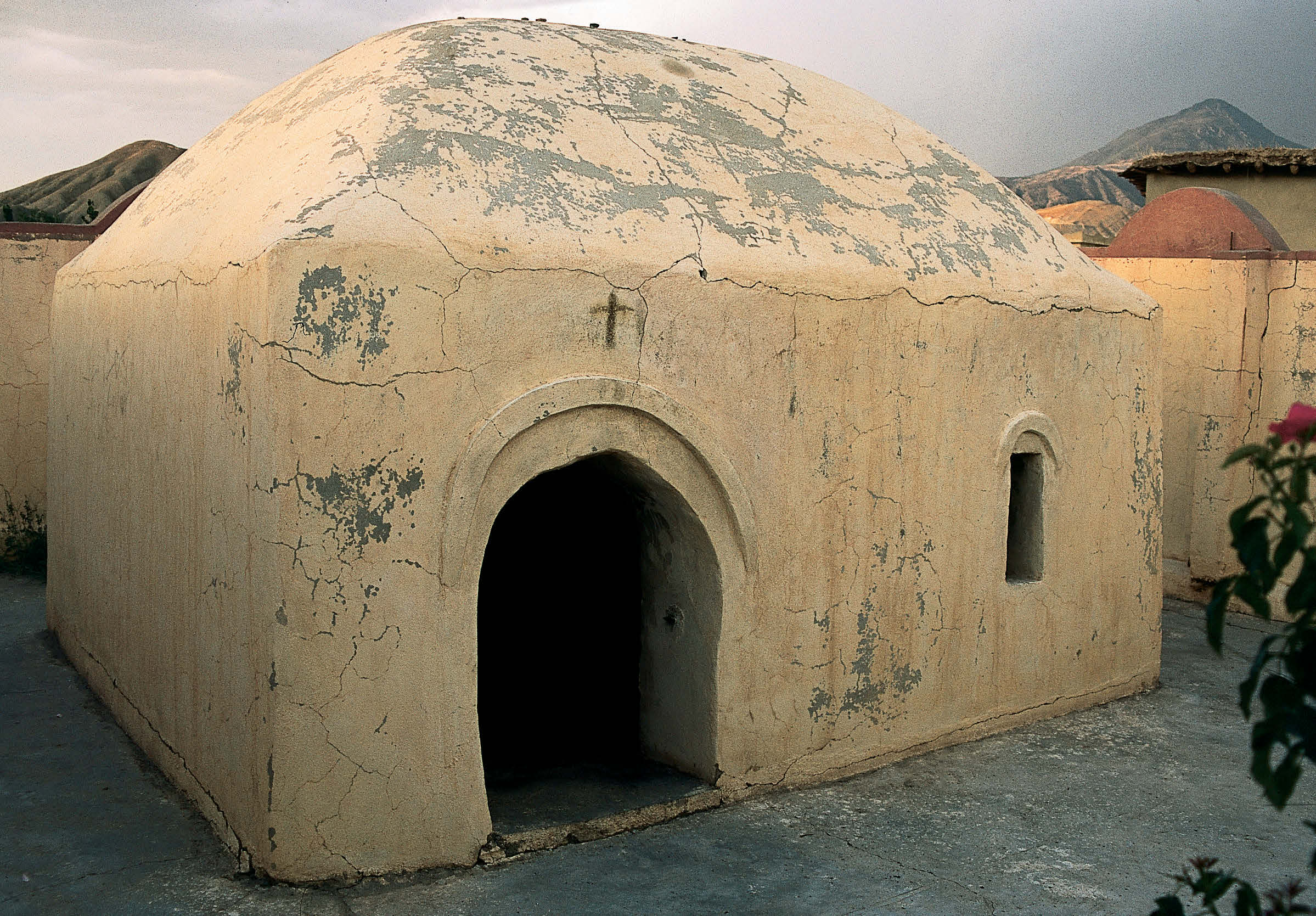
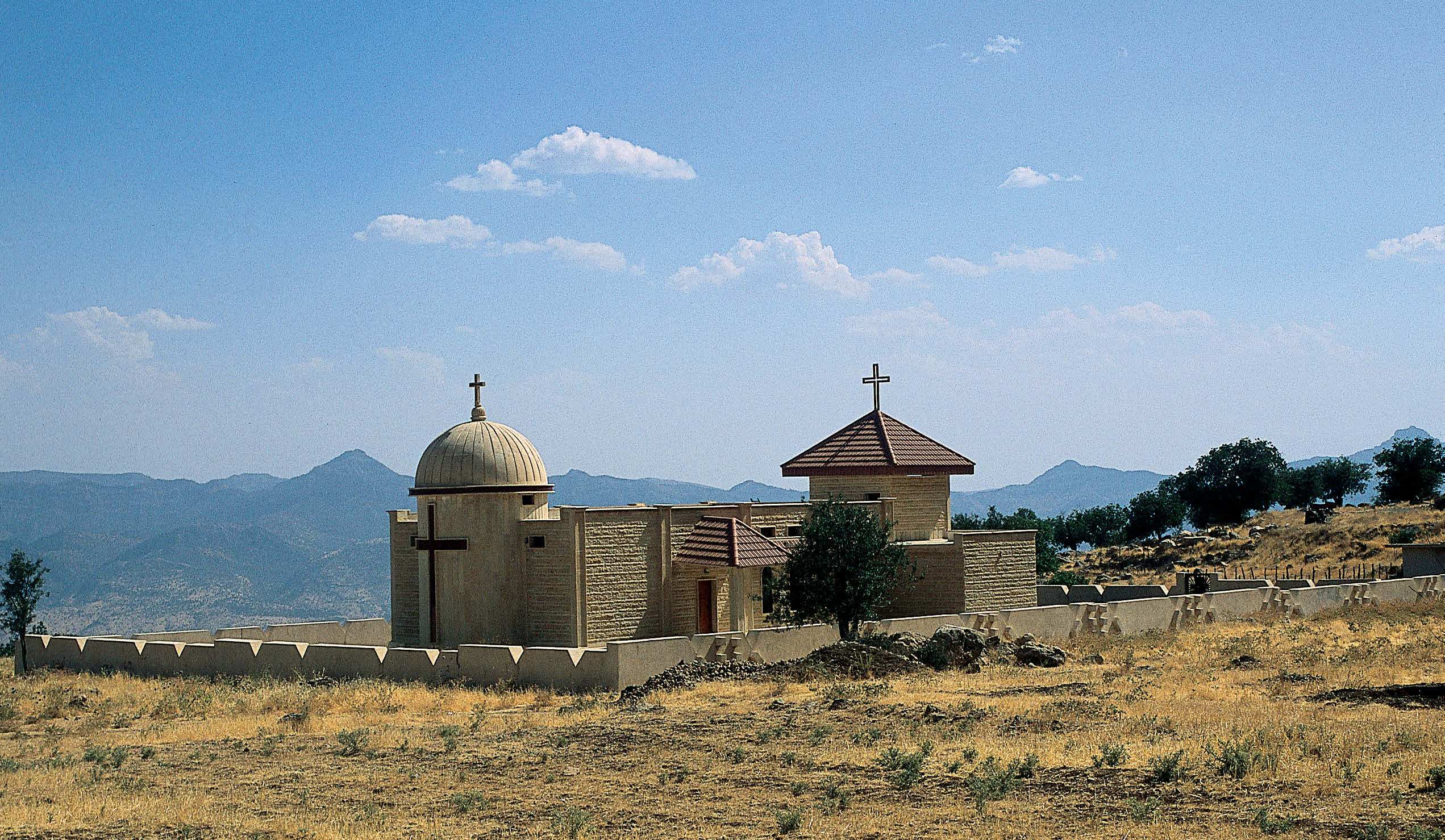
The Nestorian Chapel of St Stephen, built after 1950 on the ruins of a considerably older church, in Diana, northern Iraq.
位于伊拉克 (Iraq) 北部迪亚纳 (Diana) 的聂斯托利派圣司提反小教堂 (Nestorian Chapel of St Stephen),建于1950年之后,坐落在一座年代久远得多的教堂废墟之上。
Earlier, in 1964, two important events occurred. Pope John XXIII invited non-Catholic churches to send observers to the Second Vatican Council, whereupon Mar Shimun sent two delegates. It was an historic moment, as, for the first time since the Council of Ephesus of 431, East Syrian Christians again took part in a Western council. Unfortunately, in the same year there began a patriarchal schism brought about by old tribal conflicts. The occasion of this schism was provided by the change from the Julian to the Gregorian calendar, instituted by Mar Shimun in March, which was to enable the East Syrians to celebrate the great liturgical feasts at the same time as Catholics and Protestants. The tribal group of the Tyari, which was hostile to Mar Shimun’s family, took advantage of this reform
早先,1964年发生了两件重要事件。教宗若望二十三世 (Pope John XXIII) 邀请非天主教教会 (non-Catholic churches) 派遣观察员参加梵蒂冈第二届大公会议 (Second Vatican Council),于是马尔·希蒙 (Mar Shimun) 派遣了两名代表。这是一个历史性时刻,因为自431年以弗所公会议 (Council of Ephesus of 431) 以来,东叙利亚基督徒 (East Syrian Christians) 首次再次参加西方公会议 (Western council)。不幸的是,同年,由古老的部落冲突引发的宗主教分裂 (patriarchal schism) 开始了。这场分裂的导火索是马尔·希蒙 (Mar Shimun) 于三月推行的从儒略历 (Julian calendar) 到格里高利历 (Gregorian calendar) 的改历,其目的是使东叙利亚人能够与天主教徒和新教徒 (Catholics and Protestants) 同时庆祝重大礼仪节庆。敌视马尔·希蒙 (Mar Shimun) 家族的蒂亚里 (Tyari) 部落群体利用了这次改革。
The Renaissance of the Assyrian Church of the East | 271 and accused him of ‘selling out’ the Church to Rome. At first the tribal leaders persuaded a priest of Baghdad from the Tyari tribe by the name of Ishaq Nwiya to rebel, whereupon they won the support of the Indian metropolitan Mar Thoma Darmo, who was a firm opponent of hereditary succession to the patriarchate. In autumn 1968 the dissident metropolitan of India travelled to Baghdad, where he appointed as bishops two priests and an archdeacon, and they, for their part, immediately deposed Mar Shimun and consecrated Mar Thoma Darmo as the new patriarch. [^5] The new Church chose the name Ancient Church of the East, and upon the death of their first patriarch, in 1969, they named Mar Addai II as his successor. It was these ancient and unfortunate conflicts which caused the attempts at reunion made by Patriarch Mar Dinkha IV to fail, when he proposed in 1980 the acknowledge- ment of ordinations carried out by bishops of either Church and offered Mar Addai the role of vice-patriarch in the reunited Church. [^6]
tags. Need maybe “The Renaissance of the Assyrian Church of the East | 271” is running head. Could translate as “东方亚述教会 (Assyrian Church of the East) 的复兴 | 271”. But “Renaissance” maybe “复兴”. Good. Potential issue: “selling out” single quotes. Use Chinese quotes “出卖”. Fine. Potential issue: “At first the tribal leaders persuaded a priest of Baghdad from the Tyari tribe by the name of Ishaq Nwiya to rebel” The grammar: tribal leaders persuaded a priest … to rebel. “At first” = 起初. “tribal leaders” = 部落领袖. “a priest of Baghdad from the Tyari tribe by the name of Ishaq Nwiya” = 一位来自提亚里部落、名叫伊沙克·恩维亚的巴格达司铎. Better: “起初,部落领袖们说服了一位来自提亚里部落 (Tyari)、名叫伊沙克·恩维亚 (Ishaq Nwiya) 的巴格达司铎反叛”. Good. “whereupon they won the support of the Indian metropolitan Mar Thoma Darmo” = 随后他们赢得了印度都主教马尔·托马·达尔莫 (Mar Thoma Darmo) 的支持. “who was a firm opponent of hereditary succession to the patriarchate.” = 后者坚决反对宗主教职位的世袭继承. Good. “In autumn 1968 the dissident metropolitan of India travelled to Baghdad, where he appointed as bishops two priests and an archdeacon, and they, for their part, immediately deposed Mar Shimun and consecrated Mar Thoma Darmo as the new patriarch. [^5]” = “1968年秋,这位持不同政见的印度都主教前往巴格达 (Baghdad),在那里任命两名司铎和一名总执事为主教;而他们则立即废黜了马尔·希蒙 (Mar Shimun),并将马尔·托马·达尔莫 (Mar Thoma Darmo) 祝圣为新任宗主教。5” Good. “The new Church chose the name Ancient Church of the East, and upon the death of their first patriarch, in 1969, they named Mar Addai II as his successor.” = “这个新教会取名为东方古教会 (Ancient Church of the East);1969年,其首任宗主教去世后,他们推举马尔·阿代二世 (Mar Addai II) 为其继任者。” Good. “It was these ancient and unfortunate conflicts which caused the attempts at reunion made by Patriarch Mar Dinkha IV to fail, when he proposed in 1980 the acknowledgement of ordinations carried out by bishops of either Church and offered Mar Addai the role of vice-patriarch in the reunited Church. [^6]” = “正是这些古老而不幸的冲突,使宗主教马尔·丁哈四世 (Mar Dinkha IV) 为重新合一所作的努力归于失败;他曾在1980年提议承认两教会中任一教会的主教所施行的祝圣,并提出让马尔·阿代 (Mar Addai) 在重新合一的教会中担任副宗主教。6” Good. Need maybe “acknowledgement of ordinations carried out by bishops of either Church” = 承认由两教会中任一教会的主教所施行的祝圣. “either Church” = 两个教会中任一教会. Good. Need maybe “vice-patriarch” = 副宗主教. Good. Need maybe “Ancient Church of the East” official Chinese? “东方古教会” or “古东方教会”? Let’s verify. The Ancient Church of the East is sometimes “东方古教会” in Chinese? I think “古东方教会” maybe more common? Let’s search memory: “Ancient Church of the East” = “东方古教会” (literally Ancient Church of the East). Chinese Wikipedia? “东方古教会” maybe. “古东方教会” also. The Assyrian Church of the East = “东方亚述教会”. The Ancient Church of the East = “东方古教会”. We’ll use “东方古教会 (Ancient Church of the East)”. Good. Need maybe “Mar” title: In Chinese, “马尔” (Mar) is common. We can include original for each name. For “Mar Thoma Darmo”, Chinese “马尔·托马·达尔莫 (Mar Thoma Darmo)”. Good. Need maybe “Mar Shimun” = “马尔·希蒙 (Mar Shimun)”. Good. Need maybe “Mar Dinkha IV” = “马尔·丁哈四世 (Mar Dinkha IV)”. Good. Need maybe “Mar Addai II” = “马尔·阿代二世 (Mar Addai II)”. Good. Need maybe “Mar Addai” = “马尔·阿代 (Mar Addai)”. Good. Need maybe “Ishaq Nwiya” transliteration: “伊沙克·恩维亚” or “伊沙克·努维亚”? Let’s think. Nwiya: Arabic? “Nwiya” maybe “Nwiya” from Syriac? The name “Ishaq Nwiya” maybe “Ishaq Nwiya” (Isaac Nwiya). Chinese transliteration: “伊沙克·恩维亚” (Nwiya -> Enweiya? Actually “Nwiya” pronounced “nwee-ya”, Chinese “恩维亚” maybe. “Nwiya” could be “努维亚” if n + wiya. But “Nwiya” has no vowel between n and w? In Arabic, “Nwiya” maybe “Nuwaiya”? Chinese “努维亚” maybe. Let’s use “伊沙克·恩维亚 (Ishaq Nwiya)”? Hmm. The “Nwiya” maybe “Nwiya” = “Nwiya” (نوية?) Could be “Nwiya” pronounced “Nwiya”. Chinese transliteration “恩维亚” is plausible. But “Nwiya” starts with N, so “恩” for n? Usually “纳” for Na, “尼” for Ni, “努” for Nu. “Nwiya” maybe “努维亚”. Let’s decide. The name “Ishaq Nwiya” maybe “Ishaq Nwiya” (Ishaq Nwiya) from Tyari. I can transliterate as “伊沙克·恩维亚” or “伊沙克·努维亚”. Which is better? “Nwiya” if pronounced “Nwiya” (nwee-ya), Chinese “恩维亚” maybe because “n” + “wiya” -> “恩维亚” (en-we-ya) not exact. “努维亚” (nu-we-ya) maybe. I think “Nwiya” likely “Nwiya” with “N” as initial, “wiya” as “wiya”; Chinese “努维亚” is common for Nwiya? Let’s search memory: Assyrian Church schism: “Ishaq Nwiya” maybe “Ishaq Nwiya” (Isaac Nwiya). Chinese sources? Not known. We’ll use “伊沙克·恩维亚 (Ishaq Nwiya)”? Hmm. Maybe “Nwiya” is “Nwiya” from Syriac “Nwiya” meaning? The name “Nwiya” could be “Nwiya” (Nwiya). In Chinese, “恩维亚” is more like “Enwiya”, not Nwiya. “努维亚” is closer to “Nwiya” if pronounced “nu-wi-ya”. I’ll use “伊沙克·努维亚 (Ishaq Nwiya)”. But “Nwiya” has no u after n? In transliteration, “Nwiya” could be “恩维亚” because “N” is syllabic? Hmm. Let’s use “伊沙克·恩维亚” maybe. Actually “Nwiya” in Arabic? “Nwiya” could be “Nwiya” (نوية) pronounced “Nawiya”? If “Nwiya” = “Nwiya”, Chinese “努维亚” maybe. I’ll choose “伊沙克·努维亚 (Ishaq Nwiya)”? Let’s see: “Nwiya” letters: N w i y a. If transliterated: N = 恩? w = 维? i = 伊? y = 亚? “恩维伊亚”? No. Better “努维亚” (Nu-wi-ya). I’ll use “伊沙克·努维亚 (Ishaq Nwiya)”. But maybe “Nwiya” is “Nwiya” with “N” pronounced “N” and “wiya” = “维亚”, so “恩维亚” (Nwiya -> Enwiya? no). Hmm. Maybe use “伊沙克·恩维亚 (Ishaq Nwiya)” because “Nwiya” starts with N, Chinese often uses “恩” for initial n before consonant? Example “Nkrumah” = 恩克鲁玛. Yes! For names like Nkrumah, N is syllabic, Chinese uses 恩. “Nwiya” could be “恩维亚” (N-wiya). That seems plausible. So “伊沙克·恩维亚 (Ishaq Nwiya)”. Good. Need maybe “Tyari” = 提亚里 (Tyari). Good. Need maybe “Mar Thoma Darmo” = 马尔·托马·达尔莫. “Thoma” = 托马. “Darmo” = 达尔莫. Good. Need maybe “Mar Shimun” = 马尔·希蒙. Good. Need maybe “Mar Dinkha IV” = 马尔·丁哈四世. “Dinkha” = 丁哈. Good. Need maybe “Mar Addai II” = 马尔·阿代二世. Good. Need maybe “Ancient Church of the East” = 东方古教会. Good. Need maybe “Assyrian Church of the East” = 东方亚述教会. Good. Need maybe “Renaissance” = 复兴. Good. Need maybe “The Renaissance of the Assyrian Church of the East | 271” could be “东方亚述教会的复兴 | 271”. But proper noun rule: church designations → Chinese translation + (abbreviation). For “Assyrian Church of the East” no abbreviation given. We can include original. “东方亚述教会 (Assyrian Church of the East) 的复兴 | 271”. Good. Need maybe “Rome” = 罗马 (Rome). “Baghdad” = 巴格达 (Baghdad). “India” = 印度 (India). “Tyari” = 提亚里 (Tyari). Good. Need maybe “Indian metropolitan” = 印度都主教. “metropolitan” maybe “都主教 (metropolitan)”? The rule says proper nouns? Metropolitan is title, not proper. But could include original? Not necessary. But maybe for clarity: “印度都主教 (metropolitan) 马尔·托马·达尔莫”. But “metropolitan” is an ecclesiastical title. The instructions: church designations → Chinese translation + (abbreviation). Academic abbreviations → keep original in parentheses after Chinese equivalent. “metropolitan” not abbreviation. We can just translate. But maybe “都主教” is fine. “patriarch” = 宗主教. “archdeacon” = 总执事. “vice-patriarch” = 副宗主教. Good. Need maybe “ordinations” = 祝圣. In Catholic context, ordination = 圣秩圣事/祝圣. For bishops, “ordinations carried out by bishops” = 主教所施行的祝圣. Good. Need maybe “acknowledgement” = 承认. Good. Need maybe “reunion” = 重新合一. Good. Need maybe “attempts at reunion made by Patriarch Mar Dinkha IV” = 宗主教马尔·丁哈四世 (Mar Dinkha IV) 为重新合一所作的努力. Good. Need maybe “caused … to fail” = 导致…失败. We can phrase “正是这些古老而不幸的冲突,导致宗主教马尔·丁哈四世 (Mar Dinkha IV) 为重新合一所作的努力失败;他曾在1980年提议……” Good. Need maybe “when he proposed in 1980” = 他曾在1980年提议. Good. Need maybe “offered Mar Addai the role of vice-patriarch in the reunited Church” = 并提出让马尔·阿代 (Mar Addai) 在重新合一的教会中担任副宗主教. Good. Need maybe “The new Church chose the name Ancient Church of the East” = 这个新教会取名为东方古教会 (Ancient Church of the East). Good. Need maybe “upon the death of their first patriarch, in 1969” = 1969年,其首任宗主教去世后. Good. Need maybe “they named Mar Addai II as his successor” = 他们推举马尔·阿代二世 (Mar Addai II) 为其继任者. Good. Need maybe “dissident metropolitan of India” = 这位持不同政见的印度都主教. Good. Need maybe “travelled to Baghdad” = 前往巴格达 (Baghdad). Good. Need maybe “where he appointed as bishops two priests and an archdeacon” = 在那里任命两名司铎和一名总执事为主教. Good. Need maybe “and they, for their part, immediately deposed Mar Shimun and consecrated Mar Thoma Darmo as the new patriarch” = 而他们则立即废黜了马尔·希蒙 (Mar Shimun),并将马尔·托马·达尔莫 (Mar Thoma Darmo) 祝圣为新任宗主教. Good. Need maybe “At first the tribal leaders persuaded a priest of Baghdad from the Tyari tribe by the name of Ishaq Nwiya to rebel” = 起初,部落领袖们说服了一位来自提亚里部落 (Tyari)、名叫伊沙克·恩维亚 (Ishaq Nwiya) 的巴格达司铎反叛. Good. Need maybe “whereupon they won the support of the Indian metropolitan Mar Thoma Darmo” = 随后他们赢得了印度都主教马尔·托马·达尔莫 (Mar Thoma Darmo) 的支持. Good. Need maybe “who was a firm opponent of hereditary succession to the patriarchate” = 后者坚决反对宗主教职位的世袭继承. Good. Need maybe “and accused him of ‘selling out’ the Church to Rome.” = 并指责他将教会“出卖”给了罗马 (Rome). Good. Need maybe “The Renaissance of the Assyrian Church of the East | 271” = “东方亚述教会 (Assyrian Church of the East) 的复兴 | 271”. Good. Need maybe “The Renaissance” could be “文艺复兴”? No, in context “Renaissance” = 复兴. Good. Need maybe “Assyrian Church of the East” = “东方亚述教会” or “亚述东方教会”? Let’s verify. The Assyrian Church of the East is officially “Assyrian Church of the East” = “东方亚述教会” in Chinese? I think yes. The “Church of the East” = “东方教会”. “Assyrian Church of the East” = “东方亚述教会”. Good. Need maybe “Ancient Church of the East” = “东方古教会” or “古东方教会”. Let’s verify. The Ancient Church of the East split from Assyrian Church of the East. Chinese Wikipedia: “东方古教会” maybe. I’ll use “东方古教会 (Ancient Church of the East)”. Good. Need maybe “Mar” title: In Chinese, “马尔” (Mar) is a title. We include original in parentheses for each name. Good. Need maybe “Ishaq Nwiya” = “伊沙克·恩维亚 (Ishaq Nwiya)”. Good. Need maybe “Tyari” = “提亚里 (Tyari)”. Good. Need maybe “Baghdad” = “巴格达 (Baghdad)”. Good. Need maybe “Rome” = “罗马 (Rome)”. Good. Need maybe “India” = “印度 (India)”. Good. Need maybe “Mar Thoma Darmo” = “马尔·托马·达尔莫 (Mar Thoma Darmo)”. Good. Need maybe “Mar Shimun” = “马尔·希蒙 (Mar Shimun)”. Good. Need maybe “Mar Addai II” = “马尔·阿代二世 (Mar Addai II)”. Good. Need maybe “Mar Dinkha IV” = “马尔·丁哈四世 (Mar Dinkha IV)”. Good. Need maybe “Mar Addai” = “马尔·阿代 (Mar Addai)”. Good. Need maybe “Ancient Church of the East” = “东方古教会 (Ancient Church of the East)”. Good. Need maybe “Assyrian Church of the East” = “东方亚述教会 (Assyrian Church of the East)”. Good. Need maybe “Church” generic in “selling out the Church to Rome” = 教会. Good. Need maybe “the Church” capitalized? “the Church” = 教会. Good. Need maybe “patriarchate” = 宗主教职位. Good. Need maybe “hereditary succession” = 世袭继承. Good. Need maybe “metropolitan” = 都主教. Good. Need maybe “archdeacon” = 总执事. Good. Need maybe “consecrated” = 祝圣. Good. Need maybe “deposed” = 废黜. Good. Need maybe “ordinations” = 祝圣. Good. Need maybe “vice-patriarch” = 副宗主教. Good. Need maybe “reunited Church” = 重新合一的教会. Good. Need maybe “acknowledgement” = 承认. Good. Need maybe “either Church” = 两教会中任一教会. Good. Need maybe “carried out by bishops” = 由主教所施行的. Good. Need maybe “proposed in 1980” = 在1980年提议. Good. Need maybe “offered Mar Addai the role” = 提出让马尔·阿代担任. Good. Need maybe “upon the death of their first patriarch, in 1969” = 1969年,其首任宗主教去世后. Good. Need maybe “they named Mar Addai II as his successor” = 他们推举马尔·阿代二世为其继任者. Good. Need maybe “The new Church chose the name Ancient Church of the East” = 这个新教会取名为东方古教会. Good. Need maybe “It was these ancient and unfortunate conflicts which caused the attempts at reunion made by Patriarch Mar Dinkha IV to fail” = 正是这些古老而不幸的冲突,导致宗主教马尔·丁哈四世为重新合一所作的努力失败. Good. Need maybe “when he proposed in 1980 the acknowledgement of ordinations carried out by bishops of either Church and offered Mar Addai the role of vice-patriarch in the reunited Church.” = 他曾在1980年提议承认两教会中任一教会的主教所施行的祝圣,并提出让马尔·阿代在重新合一的教会中担任副宗主教。 Good. Need maybe “5” and “6” footnote markers. We can keep as “5” and “6” after punctuation. Source has “patriarch. [^5]” and “Church. [^6]”. We can write “宗主教。5” and “副宗主教。6”. Good. Need maybe “The Renaissance of the Assyrian Church of the East | 271” maybe page header. We can translate as “东方亚述教会 (Assyrian Church of the East) 的复兴 | 271”. Good. Need final output only translated_text. No explanation. Wrap in <translated_text> tags. Ensure no extra. Good. Let’s compose final Chinese: <translated_text> 东方亚述教会 (Assyrian Church of the East) 的复兴 | 271 并指责他将教会“出卖”给了罗马 (Rome)。起初,部落领袖们说服了一位来自提亚里部落 (Tyari)、名叫伊沙克·恩维亚 (Ishaq Nwiya) 的巴格达 (Baghdad) 司铎反叛,随后他们赢得了印度都主教马尔·托马·达尔莫 (Mar Thoma Darmo) 的支持,后者坚决反对宗主教职位的世袭继承。1968年秋,这位持不同政见的印度都主教前往巴格达 (Baghdad),在那里任命两名司铎和一名总执事为主教;而他们则立即废黜了马尔·希蒙 (Mar Shimun),并将马尔·托马·达尔莫 (Mar Thoma Darmo) 祝圣为新任宗主教。5 这个新教会取名为东方古教会 (Ancient Church of the East);1969年,其首任宗主教去世后,他们推举马尔·阿代二世 (Mar Addai II) 为其继任者。正是这些古老而不幸的冲突,导致宗主教马尔·丁哈四世 (Mar Dinkha IV) 为重新合一所作的努力失败;他曾在1980年提议承认两教会中任一教会的主教所施行的祝圣,并提出让马尔·阿代 (Mar Addai) 在重新合一的教会中担任副宗主教。6
In early 1973 the Church of the East encountered further turbulence, as Mar Shimun announced his resignation after 53 years of service. Acceding to the plea of his bishops, he remained in office for another six months. But, when the bishops did nothing to arrange for succession, he announced in August his marriage to the Assyrian Emama Yukhanan. The subsequent episcopal synod resolved not only the abolition of patriarchal hereditary succession but also the revocation of the title of priest from the departing patriarch, his return to the lay state and the removal of his name from the official list of patriarchs. These measures were surely unjustified, since Mar Shimun had served the Church with devotion for more than half a century. Mar Shimun reacted angrily to this provocation; he reminded the bishops of the canon of the synod of 424, according to which the patriarch is accountable only to the tribunal of Christ, and withdrew his resignation. In order to avoid another schism, the bishops yielded and withdrew their resolutions. It was agreed that all the disputed questions would be settled at a synod to be held in Seattle, at the end of 1975. This synod did not take place, because on
1973年初,东方教会 (Ch. of E.) 遭遇了进一步的动荡,因为马尔·希蒙 (Mar Shimun) 在服务53年后宣布辞职。他应主教们的请求,继续任职六个月。然而,当主教们没有为继任安排采取任何行动时,他在8月宣布与亚述人埃玛玛·尤哈南 (Assyrian Emama Yukhanan) 结婚。随后召开的主教会议不仅决定废除宗主教职位的世袭继承,还决定撤销这位即将离任的宗主教的司铎名衔,令其回归平信徒身份,并将其名字从官方宗主教名录中删除。这些措施无疑是不公正的,因为马尔·希蒙 (Mar Shimun) 已虔诚地服务教会超过半个世纪。马尔·希蒙 (Mar Shimun) 对这一挑衅愤怒地作出回应;他提醒主教们424年主教会议的教规,根据该教规,宗主教只对基督的审判庭负责,并撤回了辞呈。为了避免再次分裂,主教们让步并撤回了他们的决议。各方同意,所有争议问题将在1975年底于西雅图 (Seattle) 举行的一次主教会议上解决。这次会议没有举行,因为在
6 November 1975 the young Assyrian David Malik Ismael, from the Tyari tribe, assassinated the patriarch. Even if personal motives were officially blamed for the murder, there are many indications that the patriarch was killed for political reasons, namely because of his recon- ciliation with Iraq. The murderer was sentenced in 1976 to life in prison, but was freed in 1988.7 The tragic death of Mar Shimun paved the way for a return to the system of synodal patriarchal elections.
1975年11月6日,来自提亚里部落 (Tyari tribe) 的年轻亚述人达维德·马利克·伊斯梅尔 (David Malik Ismael) 刺杀了宗主教。尽管官方将这起谋杀归咎于个人动机,但许多迹象表明,宗主教是因政治原因被杀害的,也就是因为他与伊拉克和解。凶手于1976年被判处终身监禁,但于1988年获释。7 马尔·希蒙 (Mar Shimun) 的悲剧性死亡为回归由主教会议选举宗主教的制度铺平了道路。
On 17 October 1976 the bishops’ conference elected the metropolitan of Teheran and Iran as their new leader, who took the name Mar Dinkha IV Khanaya. The patriarch, who had been born in 1935 in the Iraqi village of
1976年10月17日,主教会议选举德黑兰 (Teheran) 与伊朗 (Iran) 都主教为其新领袖,此人取名为马尔·丁卡四世·哈纳亚 (Mar Dinkha IV Khanaya)。这位牧首于1935年出生于伊拉克 (Iraqi) 的……村
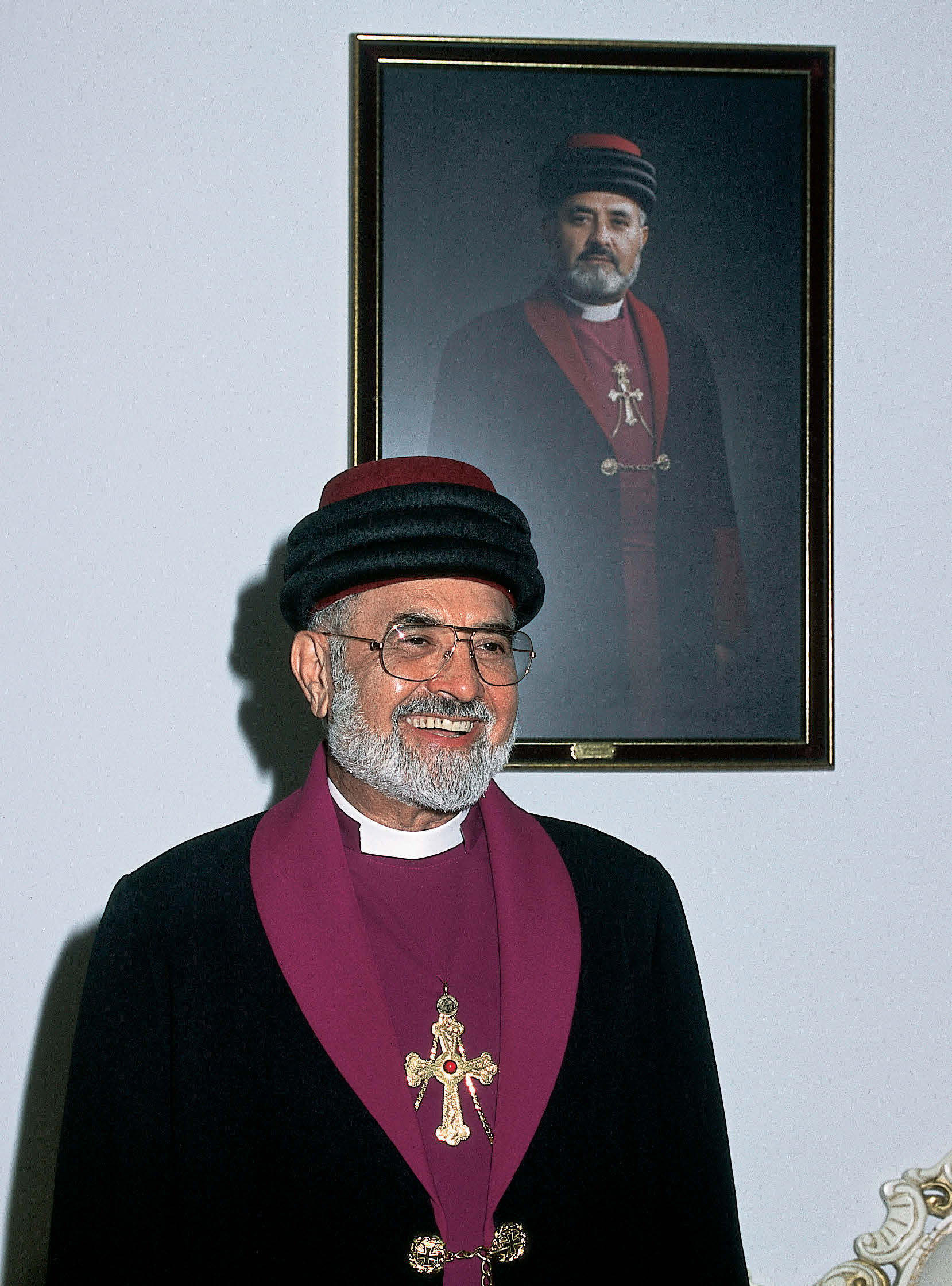
Patriarch Mar Dinkha IV Khanaya was in office from 1976 until March 2015.
宗主教玛尔·丁卡四世·哈纳亚 (Mar Dinkha IV Khanaya) 于1976年至2015年3月期间在位。
Derbenduk, near Arbil, came from a family that had already supplied 18 bishops. He studied with Metropolitan Mar Yosip Khananisho, who ordained him priest in 1957 and sent him to Teheran. In 1962 Mar Shimun elevated him to bishop, and in 1968 to metropolitan of Teheran and Iran. In this capacity he distinguished himself with various initiatives, such as ecumenical worship services and the founding of a seminary to address the chronic shortage of priests. Until the Iran–Iraq War (1980–1988) Mar Dinkha resided in Teheran, but he then moved his residence to Chicago. together peacefully with the governments of the Middle East, thus rejecting Assyrian claims to the creation of their own territory.10 Third, he wants to raise the level of theological education among his clergy. Thanks to successful ecumenical dialogue, Assyrians can study at the Chaldean Catholic College in Baghdad, and unmarried deacons and priests can study at the Catholic universities in Rome. It is Mar Dinkha’s goal to appoint only theologians with doctorates as bishops, so that the ancient aura of scholarship will again surround the Church of the East. Fourth, he is working to overcome the unfort- unate schism of 1968, an effort in which he has partially succeeded with the return of the important metropolitan see of India.
他来自埃尔比勒 (Arbil) 附近的代尔本杜克 (Derbenduk),家族中已经出过18位主教。他曾师从都主教马尔·约瑟·哈纳尼绍 (Metropolitan Mar Yosip Khananisho),后者于1957年祝圣他为司铎,并派他前往德黑兰 (Teheran)。1962年,马尔·希蒙 (Mar Shimun) 擢升他为主教,1968年又擢升他为德黑兰及伊朗都主教 (metropolitan of Teheran and Iran)。在这一职位上,他通过多项举措而表现卓越,例如举办普世教会合一礼拜仪式,以及创办一所神学院,以应对司铎长期短缺的问题。直到两伊战争 (Iran–Iraq War, 1980–1988) 之前,马尔·丁卡 (Mar Dinkha) 一直居住在德黑兰 (Teheran),但此后他将住所迁至芝加哥 (Chicago)。与中东 (Middle East) 各国政府和平共处,从而拒绝亚述人 (Assyrians) 关于建立自己领土的主张。10 第三,他希望提高其神职人员的神学教育水平。得益于成功的普世教会合一对话,亚述人可以在巴格达 (Baghdad) 的迦勒底天主教学院 (Chaldean Catholic College) 学习,未婚执事和司铎可以在罗马 (Rome) 的天主教大学学习。马尔·丁卡 (Mar Dinkha) 的目标是只任命拥有博士学位的神学家为主教,以使古老的学术光辉重新笼罩东方教会 (Church of the East)。第四,他正致力于克服1968年的不幸分裂,这一努力已因印度都主教区 (metropolitan see of India) 的回归而部分成功。
The new patriarch pursues the following four goals. First, he consistently advances the course begun by Mar Shimun XXI to lead the Church out of its isolation, but without denying its rich heritage. Thus, for instance, immediately upon his inauguration, while he confirmed his predecessor’s decision to abandon the term ‘Nestorian’, he steadfastly refused, to give in to pressure from other institutions, namely the Coptic Church, and condemn Nestorius himself. Mar Dinkha uses the membership in the World Council of Churches, which had existed since 1948, to engage in various bi- and multilateral dialogues, with notable success. The later Common Christological Declaration, issued in 1994 with the Roman Catholic Church, the Joint Synodal Decree for Promoting Unity, in 1996 with the Chaldean Catholic Church, the Pastoral Guidelines for Admission to the Eucharist between the Assyrian Church of the East and the Chaldean Church, in 2001, and the Common Statement on Sacramental Life, in 2002 with the Roman Catholic Church, represent the most important milestones.8 Another highpoint in the ecumenical dialogue was the joint consecration of the new patriarchal cathedral of Chicago together with the Chaldean patriarch Raphael Bidawid on 16 August 1997.9
新宗主教追求以下四个目标。首先,他持续推进由马尔·希蒙二十一世 (Mar Shimun XXI) 开启的进程,即带领教会走出孤立,但不否认其丰富遗产。因此,例如,在就职后立即,他一方面确认前任放弃“聂斯托利派” (Nestorian) 一词的决定,另一方面坚决拒绝屈服于其他机构——即科普特教会 (Coptic Church)——的压力,拒绝谴责聂斯托利 (Nestorius) 本人。马尔·丁哈 (Mar Dinkha) 利用自1948年以来即已存在的世界基督教协进会 (World Council of Churches, WCC) 会籍,参与各种双边和多边对话,并取得显著成功。后来,1994年与罗马天主教会 (Roman Catholic Church) 共同发布的《共同基督论宣言》(Common Christological Declaration)、1996年与迦勒底天主教会 (Chaldean Catholic Church) 共同发布的《促进合一联合主教会议法令》(Joint Synodal Decree for Promoting Unity)、2001年的《东方亚述教会与迦勒底教会之间领受圣体圣事的牧灵指南》(Pastoral Guidelines for Admission to the Eucharist between the Assyrian Church of the East and the Chaldean Church),以及2002年与罗马天主教会共同发布的《关于圣事生活的共同声明》(Common Statement on Sacramental Life),代表了最重要的里程碑。8 大公对话中的另一个高峰是1997年8月16日与迦勒底宗主教拉斐尔·比达维德 (Raphael Bidawid) 共同祝圣芝加哥 (Chicago) 的新宗主教座堂。9
Assyrian Christians in the twenty- first century: a brief overview
二十一世纪的亚述基督徒:简要概述
By the year 2005 the Assyrian Church of the East numbered about 400,000 members and the Ancient Assyrian Church some 50,000–70,000. The leading clergy of the mother Church consisted of Patriarch Mar Dinkha IV, three metropolitans, eight bishops and Chorepiscopus Benjamin, who is acting head of the diocese of Iran. In Iraq at this time a few dioceses were not occupied, for political reasons. The Ancient Church, for its part, is led by Patriarch Mar Addai II, under whom serve four metropolitans and one bishop.11 To these are added a few small Protestant groups, which include a total of about 10,000 members. In comparison, the Chaldean Catholic sister Church has some 650,000 members and its leading clergy eleven archbishops and bishops.
到2005年,东方亚述教会 (Assyrian Church of the East) 约有40万名信徒,古亚述教会 (Ancient Assyrian Church) 约有5万至7万名信徒。母教会的主要神职人员包括宗主教马尔·丁哈四世 (Patriarch Mar Dinkha IV)、三位都主教、八位主教以及乡村主教本杰明 (Chorepiscopus Benjamin),后者是伊朗教区 (diocese of Iran) 的代理负责人。当时在伊拉克 (Iraq),由于政治原因,有几个教区处于空缺状态。古教会 (Ancient Church) 方面,则由宗主教马尔·阿代二世 (Patriarch Mar Addai II) 领导,其下有四位都主教和一位主教。11 此外,还有一些小型新教团体,其成员总数约为1万人。相比之下,迦勒底天主教姐妹教会 (Chaldean Catholic sister Church) 约有65万名信徒,其主要神职人员包括十一位大主教和主教。
From a global perspective, the Church of the East remains endangered in its identity and its existence, despite the reforming efforts of Mar Shimun and Mar Dinkha. The reasons for this are of a political, organizational and spiritual
从全球视角看,尽管马尔·希蒙 (Mar Shimun) 和马尔·丁卡 (Mar Dinkha) 做出了改革努力,东方教会 (Ch. of E.) 在身份与存续上仍处于危险之中。其原因涉及政治、组织与灵性层面。
Second, in his patriarchal inaugural address Mar Dinkha reaffirmed the intention to work
其次,在其宗主教就职演说中,马尔·丁哈 (Mar Dinkha) 重申了开展工作的意愿
The Renaissance of the Assyrian Church of the East | 273
东方亚述教会 (Assyrian Church of the East) 的复兴 | 273
The new Church of St George in Bidial, Iraq, was erected in 2000, thanks to the financial support of the Kurdish leader Nechirvan Barzani, the Kurdish Organization for Reconstruction and German donors. nature. The greatest cause for concern is the inexorable emigration of young people to the West – today more Assyrians live in the United States, Canada, Western Europe and Australia than in the Church’s homeland of Mesopotamia and Iran. The political uncertainties there will not check this trend – quite the opposite. Only the return of the patriarch to Iraq will provide a powerful symbol to remain in their own land. Through this gradual uprooting, the Church is threatened with the loss of its cultural unique- ness. Even if the diaspora communities retain a high level of inner cohesion, adaptation to the Western environment leads inevitably among the second or third generation to the ‘Westernization’ of the exile communities. Consciousness of a singular history loses intensity, and the unifying bond of the East Syriac language loses effective- ness, as not all young Assyrians know it. The unfortunate schism of 1968 further weakened the East Syrian community; other divisions occurred in Sydney, Australia, in 1987 and in Modesto, California, in 1992.12
伊拉克 (Iraq) 比迪亚尔 (Bidial) 的新圣乔治教堂 (Church of St George) 建于2000年,这得益于库尔德领导人内奇尔万·巴尔扎尼 (Nechirvan Barzani)、库尔德重建组织 (Kurdish Organization for Reconstruction) 以及德国捐助者的资助。性质。最令人担忧的是年轻人不可阻挡地向西方移民——如今,生活在美国 (United States)、加拿大 (Canada)、西欧 (Western Europe) 和澳大利亚 (Australia) 的亚述人 (Assyrians) 比生活在教会故乡美索不达米亚 (Mesopotamia) 和伊朗 (Iran) 的亚述人还要多。那里的政治不确定性不会遏制这一趋势——恰恰相反。只有宗主教返回伊拉克,才能为人们留在自己的土地上提供一个强有力的象征。在这种逐渐连根拔起的过程中,教会面临失去其文化独特性的威胁。即使散居社群保持着高度的内部凝聚力,对西方环境的适应也不可避免地导致第二或第三代流亡社群“西方化”。对独特历史的意识逐渐淡化,东叙利亚语作为统一纽带的作用也逐渐失效,因为并非所有年轻亚述人都懂这种语言。1968年不幸的分裂进一步削弱了东叙利亚社群;其他分裂分别于1987年发生在澳大利亚悉尼,1992年发生在加利福尼亚州莫德斯托。12
Still more serious for the future of the Church is a certain flagging of spiritual intensity, of which the extinction of monasticism at the beginning of the twentieth century is one of the most tragic signs. The last Nestorian hermit was the ascetic Rabban Yonan, who enjoyed the highest esteem as a calligrapher, clairvoyant and healer; he died in 1886. As the last monk, Rabban Werda died before the First World War.13 The Church of the East once possessed hundreds of monasteries, but now it has not a single one.
对教会的未来而言,更为严重的是某种灵性热忱的衰退,而二十世纪初修道制度的消亡正是其最悲惨的迹象之一。最后一位聂斯托利派 (Nestorian) 隐修士是苦修者拉班·约南 (Rabban Yonan),他作为书法家、有预见能力者和医治者享有极高声望;他于1886年去世。作为最后一位修士,拉班·韦尔达 (Rabban Werda) 在第一次世界大战前去世。13 东方教会 (Ch. of E.) 曾拥有数百座修道院,但如今连一座也没有了。
However, a handful of nuns are again active in Kerala and Baghdad, which could signal the kernel of a monastic renaissance. A renewal of monasticism could kindle a new inner fire, which would place religious matters firmly in the foreground. Today many members of the diaspora expect the Church to engage increasingly in political debates. Patriarch Mar Dinkha is well aware of the corresponding traps: ‘We want neither to become a museum of religious archae- ology nor to serve politics, but rather we want to remain open to the revelation of the Holy Spirit.’14 That this goal is not unrealistic is shown by the small East Syrian congregation of Kerala, which leads a vibrant, flourishing life in a stable environment.
然而,少数修女再次活跃于喀拉拉邦 (Kerala) 和巴格达 (Baghdad),这可能预示着修道复兴的萌芽。修道主义的复兴可能点燃新的内心之火,从而使宗教事务牢固地居于前台。如今,许多散居在外的信徒期望教会越来越多地参与政治辩论。马尔·丁哈宗主教 (Mar Dinkha) 深知相应的陷阱:“我们既不想成为宗教考古学的博物馆,也不想服务于政治,而是希望始终对圣灵的启示保持开放。”14 这一目标并非不切实际,喀拉拉邦的小型东叙利亚教会团体就证明了这一点,它在稳定的环境中过着充满活力、繁荣兴旺的生活。
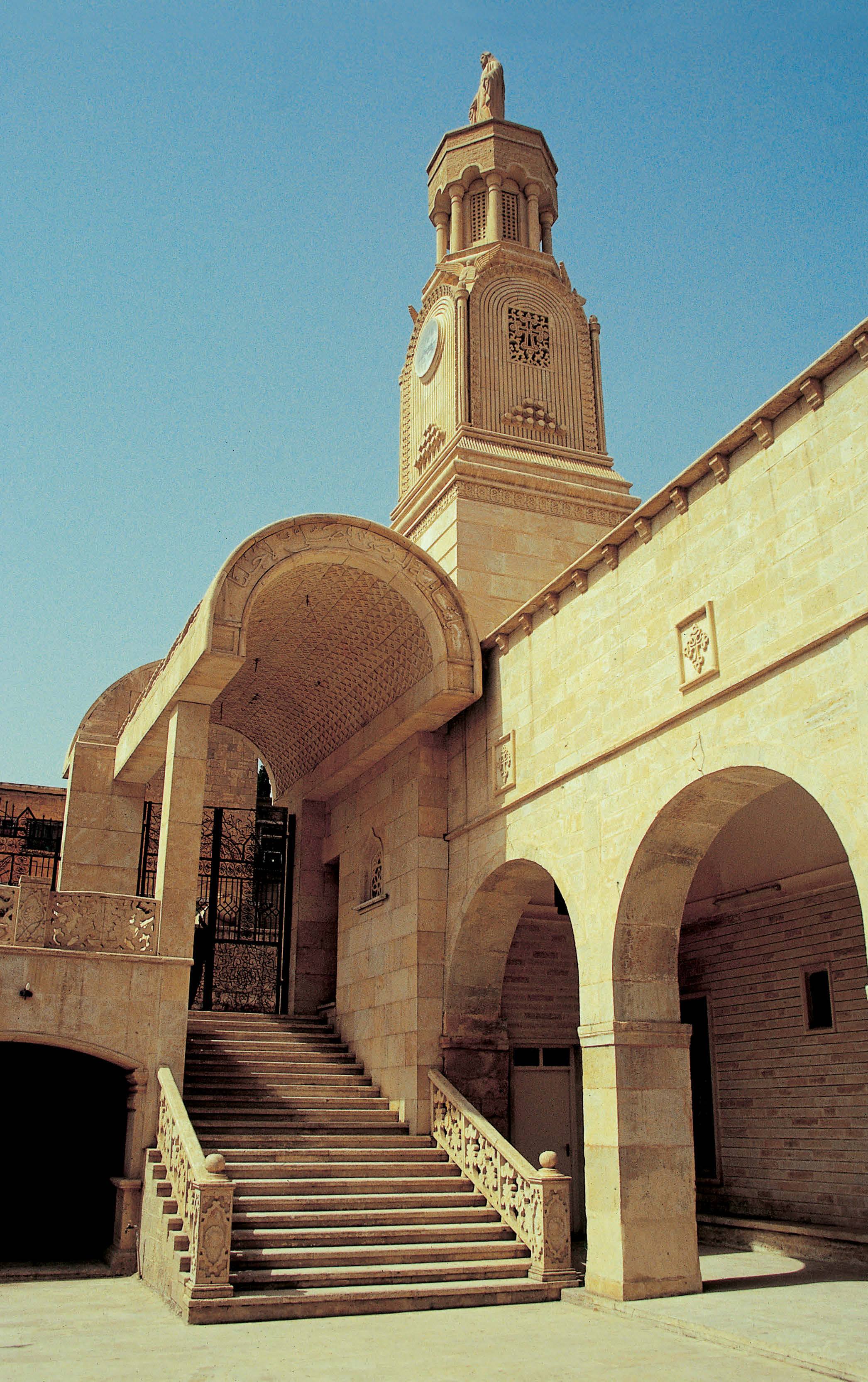
The facade of the Chaldean al- Tahra Church in Mosul, northern Iraq, was rebuilt in 1996/1997. The church, dedicated to the Immaculate Conception, was founded in the seventh century and rebuilt in the thirteenth century. On 7 December 2004 the church and the neighbouring palace of the archbishop were attacked by terrorists and badly damaged by several bombs. The church was plundered and destroyed by jihadists of the Islamic State in early 2015.
伊拉克 (Iraq) 北部摩苏尔 (Mosul) 的迦勒底礼的塔赫拉教堂 (Chaldean al-Tahra Church) 的正面于1996/1997年重建。该教堂奉献给无原罪始胎 (Immaculate Conception),始建于七世纪,并于十三世纪重建。2004年12月7日,该教堂和毗邻的大主教宫遭到恐怖分子袭击,并被数枚炸弹严重损毁。2015年初,该教堂被伊斯兰国 (Islamic State) 的圣战分子洗劫并摧毁。
Let us take just a brief look at the individual regions. About 90,000 Orthodox Assyrians, as well as 25,000 members of the Ancient Church, live in Iraq. In the secular Republic of Iraq (1958–2003), Article 19 of the constitution of 1958 guaranteed equality before the law to all citizens, regardless of language, ethnicity and religion. However, Article 4 of the constitution of 1970 elevated Islam to the state religion.15 In the 250-member parliament in the 1980s, four seats were reserved for Christians of all denominations, who made up 3.4 per cent of the overall population. As in other Muslim states, the nominal equality of the Christians ran up against the strict limitations of Islamic social life and its codes of behaviour. In general, the Assyrians and Chaldeans remained loyal to Saddam Hussein, but not out of affection for the dictator but rather out of fear of renewed Kurdish violence and of a Shi’ite Islamic republic. For the Christians, Hussein’s regime was the lesser evil. It was clear to the Christians that their relative security was due not to a particular Muslim tolerance but rather to the efficiency of the Iraqi security apparatus, which tolerated no socio-religious tensions.16 they fell between the fronts of the Kurds, who were seeking a broad autonomy, and the central government. As a result of the Iraqi purges in Kurdistan, over 200 Assyrian villages, churches and monasteries were destroyed, especially during the ruthless so-called Anfal campaign of 1988, after which countless Assyrians fled to the large cities of Mosul and Baghdad. After the United States created a Kurdish protective no-fly zone in the region north of the thirty- sixth parallel, beyond the area ruled by Saddam Hussein, in 1992, the Assyrians were again victims of numerous Kurdish attacks. The crimes, documented in part in reports by Amnesty International in 1995, 1997 and 1998, ranged from arbitrary seizure of property, extortion, the abduction of women, torture and murder
我们简要看看各个地区。伊拉克居住着约 90,000 名正教亚述人,以及 25,000 名古代教会成员。在世俗的伊拉克共和国时期(1958–2003 年),1958 年宪法第 19 条保障所有公民在法律面前平等,不因语言、族裔和宗教而有所区别。然而,1970 年宪法第 4 条将伊斯兰教确立为国教。15 在 1980年代,250 个席位的议会中有四席保留给各宗派的基督徒;他们约占总人口的 3.4%。与其他穆斯林国家一样,基督徒名义上的平等仍受到伊斯兰社会生活及其行为规范的严格限制。总体而言,亚述人和迦勒底人仍忠于萨达姆·侯赛因(Saddam Hussein),但这并非出于对独裁者的拥护,而是因为害怕库尔德人暴力再起,也害怕出现什叶派伊斯兰共和国。对基督徒来说,侯赛因政权是较小的恶。基督徒清楚,他们之所以相对安全,并非因为穆斯林格外宽容,而是因为伊拉克安全机构高效运作,不容许社会宗教紧张局势存在。16 他们陷入了库尔德人与中央政府的夹缝之中;库尔德人正在争取广泛自治。伊拉克政府在库尔德斯坦进行清剿,摧毁了 200 多个亚述村庄、教堂和修道院;其中尤以 1988 年残酷的所谓安法尔行动期间为甚。此后,数不清的亚述人逃往摩苏尔和巴格达等大城市。1992 年,美国在萨达姆·侯赛因控制区之外、北纬 36 度线以北地区设立库尔德保护禁飞区后,亚述人再次遭遇多起库尔德袭击。国际特赦组织 1995、1997 和 1998 年的报告部分记录了这些罪行,内容从任意侵占财产、勒索、绑架妇女、酷刑和谋杀……
Nevertheless, the Assyrians and Chaldeans also suffered under the republic. Beginning in 1963
然而,亚述人 (Assyrians) 和迦勒底人 (Chaldeans) 也在该共和国统治下遭受了苦难。从1963年开始
The Renaissance of the Assyrian Church of the East | 275 to the assassination of the Assyrian governor of Arbil on 18 February 2001. But also in Saddam Hussein’s Iraq, atrocities were carried out with ever greater frequency against the Christians, who were becoming increasingly associated with the Americans. One of the three Assyrian nuns suffered martyrdom in her residence in Baghdad when she was brutally murdered and beheaded on 15 August 2002.17 Since the first Gulf War of 1990/1991 about 20 per cent of the Christians of Iraq – that is, almost 200,000 people – have left their homeland.18 distribution of aid, the arrangement of employ- ment and the promise of visas for migration – not only weaken the local Churches but also make the American military campaign appear in the eyes of many Muslims as a religiously motivated crusade. The series of bombings carried out against Christian churches as of 1 August 2004, which resulted in dozens of dead and hundreds of wounded, accelerated the flight of Christians into exile, with about 50,000 Christians leaving Iraq after August 2004.20 The Chaldean arch- bishop Louis Sako of Kirkuk described the situation thus: ‘Earlier [under Saddam Hussein] we were not free, but we were secure. Today we are free, but not safe.’ 21 Despite gross irregularities in the 30 January 2005 elections to the 275-seat Iraqi National Assembly, which deprived about 150,000 Christians from the region of Mosul of their vote, six representatives from the Assyrian- Chaldean community were elected. In the government it is represented by Mrs Basima Yousif Potrus from the Assyrian Democratic Movement; she serves as Minister of Science and Technology. The results of the referendum on the new Iraqi constitution on 15 October 2005 are for the Christians ambiguous. While it guarantees important civil rights and freedom of religion, it also stresses that no civil law may contradict Islam. In the long run it may undermine Iraq’s territorial integrity. Finally, the Christians suffer from the fact that they make up only 3 per cent of the population and command no significant armed militia, as do the Kurds or Shi’ites.
亚述东方教会 (Assyrian Church of the East) 的复兴 | 275 直至2001年2月18日埃尔比勒 (Arbil) 的亚述裔省长被暗杀。但在萨达姆·侯赛因 (Saddam Hussein) 的伊拉克 (Iraq),针对基督徒的暴行也愈发频繁,而基督徒越来越被与美国人联系在一起。三名亚述修女中的一位在巴格达 (Baghdad) 的住所中殉道,她于2002年8月15日被残忍杀害并斩首。17 自1990/1991年第一次海湾战争 (Gulf War) 以来,伊拉克约20%的基督徒——即近20万人——已经离开了他们的家园。18 援助的分配、就业的安排以及移民签证的承诺——不仅削弱了当地教会,也使美国的军事行动在许多穆斯林眼中显得像一场出于宗教动机的十字军东征。自2004年8月1日起针对基督教教堂的一系列爆炸袭击,造成数十人死亡、数百人受伤,加速了基督徒流亡海外的进程,约5万名基督徒在2004年8月之后离开伊拉克。20 基尔库克 (Kirkuk) 的迦勒底大主教路易斯·萨科 (Louis Sako) 如此描述局势:“早先[在萨达姆·侯赛因统治下],我们并不自由,但我们是安全的。今天我们自由了,却不安全。”21 尽管2005年1月30日为选举275个席位的伊拉克国民议会 (Iraqi National Assembly) 而举行的选举存在严重违规行为,使摩苏尔 (Mosul) 地区约15万名基督徒被剥夺投票权,仍有六名来自亚述-迦勒底社群 (Assyrian-Chaldean community) 的代表当选。在政府中,该社群由来自亚述民主运动 (Assyrian Democratic Movement) 的巴西玛·优素福·波特鲁斯女士 (Mrs Basima Yousif Potrus) 代表;她担任科学和技术部长。2005年10月15日关于新伊拉克宪法的全民公投结果对基督徒而言是模棱两可的。虽然它保障了重要的公民权利和宗教自由,但也强调任何民法都不得与伊斯兰教 (Islam) 相抵触。从长远来看,它可能损害伊拉克的领土完整。最后,基督徒还因以下事实而受苦:他们仅占人口的3%,并且不像库尔德人 (Kurds) 或什叶派 (Shi’ites) 那样拥有任何重要的武装民兵。
The fall of Saddam Hussein in the spring of 2003 awoke among the Assyrians both hope and fear. They hope to be able finally to live a ‘normal’ life in a secular and somewhat democratic state, without religiously motivated discrimination. The appointment on 13 July 2003 of the secretary general of the Assyrian Democratic Movement, Yonathan Kanna, as representative of all Iraqi Christians in the provisional governing council gave further impetus to these aspirations. But there are worrying signs that the spirit of uncompromising Islamic militancy has been released from Pandora’s box. In the Shi’ite south merchants who sell alcohol or music cassettes have been murdered, and Christian women forced to wear veils, as Muslim women do; in the Kurdish north abductions of young women are increasing. Christian women who do not wear veils are threatened with having their faces doused with caustic chemicals.19 Official protests on the part of high-ranking Islamic notables help little, since speakers operating in the underground announce that it is no sin to kill Christians or to extort money from the relatives of kidnapped hostages. Additionally, the hatred of the defeated Sunnis towards the American and British occupying forces is extending to the Iraqi Christians. The aggressive missionary efforts on the part of at least nine American evangelical Churches, which seek to convert Iraqi Christians as well as Muslims – not least through the free
2003年春,萨达姆·侯赛因 (Saddam Hussein) 的倒台在亚述人 (Assyrians) 中既唤起了希望,也引发了恐惧。他们希望最终能够在一个世俗且多少有些民主的国家中过上“正常”的生活,不再遭受出于宗教动机的歧视。2003年7月13日,亚述民主运动 (Assyrian Democratic Movement) 总书记约纳坦·坎纳 (Yonathan Kanna) 被任命为临时管理委员会 (provisional governing council) 中全体伊拉克基督徒 (Iraqi Christians) 的代表,这进一步推动了这些愿望。但有令人担忧的迹象表明,不妥协的伊斯兰激进主义精神已从潘多拉魔盒 (Pandora’s box) 中释放出来。在什叶派 (Shi’ite) 南部,出售酒精饮料或音乐磁带的商人遭到杀害,基督徒妇女被迫像穆斯林妇女一样戴面纱;在库尔德 (Kurdish) 北部,年轻妇女遭绑架的事件正在增加。不戴面纱的基督徒妇女受到威胁,她们的脸将被泼上腐蚀性化学品。19 伊斯兰高级显贵的官方抗议收效甚微,因为在地下活动的宣讲者宣称,杀害基督徒或向被绑架人质的亲属勒索钱财并非罪过。此外,被击败的逊尼派 (Sunnis) 对美英占领军的仇恨正在蔓延到伊拉克基督徒身上。至少九个美国福音派教会 (American evangelical Churches) 咄咄逼人的传教活动,试图使伊拉克基督徒以及穆斯林皈依——尤其是通过免费
In Iran, after the repressions of 1947/1948, the Christians experienced a relatively peaceful period under the rule of Mohammed Reza Shah (ruled 1941–1979), but this came to an abrupt end with the seizure of power by Imam Khomeini (1900–1989) in 1979. The new constitution declared Islam the state religion but granted parliamentary representation to recognized minorities: the Armenians have two seats, the Assyrians and Chaldeans together have one, the
在伊朗 (Iran),1947/1948年的镇压之后,基督徒在穆罕默德·礼萨·沙阿 (Mohammed Reza Shah) 的统治下(1941–1979年在位)经历了一段相对和平的时期,但这一切随着伊玛目霍梅尼 (Imam Khomeini)(1900–1989)于1979年夺取政权而戛然而止。新宪法宣布伊斯兰教为国教,但给予得到承认的少数群体议会代表权:亚美尼亚人 (Armenians) 有两个席位,亚述人 (Assyrians) 和迦勒底人 (Chaldeans) 共有一个席位,而
Zoroastrians and Jews have one each. Although the Christians of Iran, unlike their Iraqi brothers, were not called up for military service in the Iran–Iraq War, the Shi’ite Islamicization of all aspects of society was so radical that a genuine exodus took place – more than half the 250,000 Christians left Iran after 1979.
琐罗亚斯德教徒和犹太人各有一席。尽管伊朗 (Iran) 的基督徒与他们在伊拉克 (Iraq) 的弟兄不同,在两伊战争 (Iran–Iraq War) 中并未被征召服兵役,但什叶派 (Shi’ite) 对社会所有方面的伊斯兰化如此激进,以至于发生了一场真正的大规模外逃——1979年后,25万基督徒中有一半以上离开了伊朗。
Mr Yonathan Bet Kolia represents the interests of the Assyrians and Chaldeans of Iran in the Iranian National Parliament; in February 2004 he was re-elected to a second term in office with 75 per cent of the votes cast. The outstanding result is attributable to his successful efforts to abolish the blood money laws that had discriminated against Christians.
约纳坦·贝特·科利亚先生 (Yonathan Bet Kolia) 在伊朗国民议会 (Iranian National Parliament) 中代表伊朗的亚述人 (Assyrians) 和迦勒底人 (Chaldeans) 的利益;2004年2月,他以75%的得票率再次当选,获得第二个任期。这一出色结果归功于他成功推动废除了曾歧视基督徒 (Christians) 的血金法 (blood money laws)。
The thorough Islamicization of Iran led as early as August 1979 to the expulsion of all non- Iranian Catholic priests, monks and nuns, so the Latin clergy was reduced within a month from 150 priests to six.22 In the area of education, the control of the Islamic theocracy was especially overwhelming. Beginning in 1983 Christian religious education was forbidden in the remaining Christian schools and restricted to the churches; at the same time, a standardized catechism, which glorified Islam, was imposed on all Christian groups. The import of Christian books is also banned.23
伊朗 (Iran) 的彻底伊斯兰化早在1979年8月就导致所有非伊朗籍的天主教 (Catholic) 神父、修士和修女被驱逐,因此拉丁神职人员在一个月内从150名神父减少到6名。22 在教育领域,伊斯兰神权政体的控制尤其具有压倒性。从1983年开始,剩余的基督教学校被禁止进行基督教宗教教育,此类教育被限制在教会内;与此同时,一部颂扬伊斯兰教 (Islam) 的标准教理问答被强加给所有基督教团体。基督教书籍的进口也被禁止。23
But these conversions, which are extremely rare, seldom lead to official charges; the individuals in question are ‘simply’ murdered or suffer traffic accidents. Efforts promoting conversion are also strictly forbidden, so Christian communities are highly suspicious of potential converts, out of fear of agents provocateurs. On the other hand, a Christian who converts to Islam can claim the entire inheritance of deceased relatives if the other heirs remain Christian. Political offices and civil service positions are unattainable for Christians. However, the discriminatory law according to which the blood money to be paid for a killed Christian amounted to only one- thirteenth of that for a Muslim man, and for a Christian woman just one-twenty-sixth, was repealed by the National Parliament on
但这些极其罕见的皈依,很少导致正式指控;当事人“干脆”被谋杀或遭遇交通事故。推动皈依的活动也受到严格禁止,因此基督徒社群对潜在皈依者高度怀疑,因为担心其中有卧底煽动者。另一方面,一名改宗伊斯兰教的基督徒,如果其他继承人仍为基督徒,便可继承已故亲属的全部遗产。基督徒无法担任政治职务和公职。然而,那项歧视性法律——根据该法,为被杀害的基督徒所支付的血金仅为穆斯林男子血金的十三分之一,而基督徒女性仅为二十六分之一——已被国民议会于……废除。
29 December 2003.24
2003年12月29日.24
Today almost twenty-five thousand Assyrians, two thousand Assyrian Protestants, one thousand five hundred Assyrian members of the Pentecostal mission and fewer than ten thousand Chaldeans lead a secluded, marginalized life, mostly in Teheran and the region around Urmiah. To the Assyrians and Chaldeans are added about 80,000 Armenians, although a cultural divide separates the two groups from one another. Today the Christians constitute only 0.2 per cent of the general population; in light of the ongoing emigration of young Christians, it is feared that Iran will soon be devoid of any Christian presence. The election of the conservative hardliner Mahmoud Ahmadinejad as the new president of Iran on 24 June 2005 could further add pressure on the Christians.
如今,近两万五千名亚述人 (Assyrians)、两千名亚述新教徒、一千五百名五旬节派传教团 (Pentecostal mission) 的亚述成员,以及不到一万名迦勒底人 (Chaldeans),过着与世隔绝、被边缘化的生活,主要居住在德黑兰 (Teheran) 以及乌尔米耶 (Urmiah) 周边地区。在亚述人和迦勒底人之外,还有约8万亚美尼亚人 (Armenians),尽管一道文化鸿沟将这两个群体彼此分隔开来。如今,基督徒仅占全国总人口的0.2%;鉴于年轻基督徒持续移居国外,人们担心伊朗 (Iran) 很快就会不再有任何基督徒存在。2005年6月24日,保守派强硬人物马哈茂德·艾哈迈迪-内贾德 (Mahmoud Ahmadinejad) 当选伊朗新总统,这可能进一步加大对基督徒的压力。
In the once purely Christian land of Turkey, Christians constitute some 0.1 per cent of the population, concentrated in the major cities of Istanbul and Izmir. Fewer than 3000 Syrian- Orthodox live in Tur Abdin, and fewer than 1000 Nestorians in Hakkari. In the case of Turkey, it is especially scandalous that in this formally secular state persecutions of Christians still occurred between 1970 and 2000. The Christian farmers of Tur Abdin were brutally repressed by both the
在土耳其 (Turkey) 这片曾一度完全为基督徒的土地上,基督徒约占人口的0.1%,主要集中在伊斯坦布尔 (Istanbul) 和伊兹密尔 (Izmir) 这两座大城市。不到3000名叙利亚正教徒 (Syrian-Orthodox) 生活在图尔阿布丁 (Tur Abdin),不到1000名聂斯托利派信徒 (Nestorians) 生活在哈卡里 (Hakkari)。就土耳其 (Turkey) 而言,尤其令人愤慨的是,在这个名义上世俗的国家,1970年至2000年间仍发生对基督徒的迫害。图尔阿布丁 (Tur Abdin) 的基督徒农民遭到双方的残酷镇压。
Although the constitution proclaims the equality of all Iranian citizens, Christians and Christianity are subject to numerous discrimi- natory measures. For instance, according to sharia, Islamic law, conversion from Islam to Christianity should result in the death penalty.
尽管宪法宣称所有伊朗 (Iran) 公民一律平等,但基督徒 (Christians) 和基督教 (Christianity) 仍受到诸多歧视性措施的对待。例如,根据沙里亚 (sharia),即伊斯兰法,从伊斯兰教改信基督教应被处以死刑。
The Renaissance of the Assyrian Church of the East | 277
东方亚述教会 (Assyrian Church of the East) 的复兴 | 277
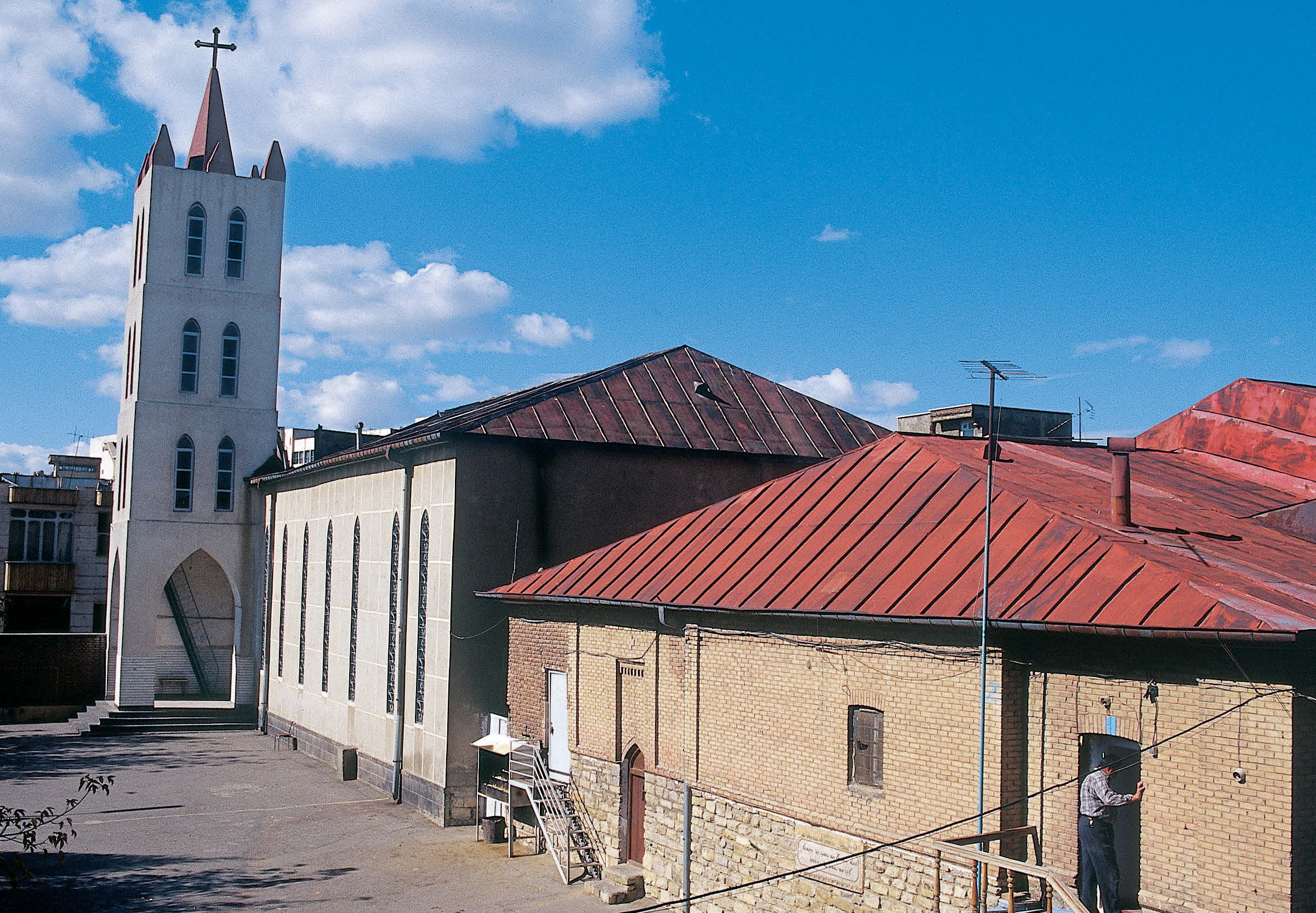
In the foreground the old Church of the Virgin Mary, and behind it the new church, built in 1965, in the city of Urmiah, Iran. The Church of the Virgin Mary is one of the oldest in the region and is said to date back to the fourth century. The church, remodelled in the Russian Orthodox style in 1898, was destroyed by the Kurds in 1918, after which it was rebuilt on a more modest scale. The entrance leads first into a deep crypt and only then into the nave of the church.
前景中是古老的圣母玛利亚教堂 (Church of the Virgin Mary),其后方是1965年建于伊朗 (Iran) 乌尔米亚 (Urmiah) 城的新教堂。圣母玛利亚教堂是该地区最古老的教堂之一,据说其历史可追溯至四世纪。该教堂于1898年按俄罗斯东正教 (Russian Orthodox) 风格改建,1918年被库尔德人 (Kurds) 毁坏,此后以较为简朴的规模重建。入口首先通向一个深深的地下墓室,然后才进入教堂的中殿。
Assembly took the same step in December 2003 the long-planned visit to Turkey by the Swiss foreign minister was called off at short notice. In Tur Abdin the situation eased somewhat after the arrest of the Kurdish leader Öcalan in 1999 and the subsequent renunciation of violence by the PKK. In addition, the upcoming negotiations regarding entry into the European Union have motivated the Turkish government to uphold the constitutional rights of Turkish Christians in Tur Abdin. However, this policy of reconciliation suffered a setback on 17 July 2004, when the Christian mayor of the village of Dayro Daslibo – which means in the Syriac Turoyo dialect ‘Monastery of the Cross’ – was murdered because he refused to sign over to her kidnappers the land belonging to a Christian woman who had been abducted and forced to convert to Islam.26 This murder continued the strategy, used in the 1980s and 1990s, of murdering Christians who would
2003年12月,议会 (Assembly) 采取了同样的步骤;瑞士外交部长计划已久的土耳其 (Turkey) 之行在短时间内被取消。在1999年库尔德领导人厄贾兰 (Öcalan) 被捕以及库尔德工人党 (PKK) 随后放弃暴力之后,图尔阿布丁 (Tur Abdin) 的局势有所缓和。此外,即将就加入欧盟 (EU) 进行的谈判促使土耳其政府维护图尔阿布丁 (Tur Abdin) 土耳其基督徒的宪法权利。然而,这一和解政策在2004年7月17日遭遇挫折:代罗·达斯利博村 (Dayro Daslibo) 的基督徒村长——该村名在叙利亚语 (Syriac) 的图罗约方言 (Turoyo) 中意为“十字架修道院” (Monastery of the Cross)——被谋杀,因为他拒绝将一名被绑架并被迫皈依伊斯兰教的基督徒妇女的土地转让给绑架她的人。26 这起谋杀延续了20世纪80年代和90年代使用过的策略,即谋杀那些会……的基督徒
Turkish army and the Kurdish workers’ party, the PKK, so that the Christian population there emigrated and shrank from about 50,000 to fewer than 3000. That a narrow-minded nationalism, which negates all non-Turks, still predominates is shown by the decree issued on 6 October 1997 by the governor of Mardin, according to which the teaching of the Old Syriac language in monasteries is strictly forbidden.25
土耳其军队与库尔德工人党 (PKK) 之间的冲突,导致那里的基督徒人口外迁,并从约5万人减少到不足3000人。狭隘的民族主义否定一切非土耳其人,它仍占主导地位,这一点从马尔丁 (Mardin) 省长于1997年10月6日颁布的法令中可以看出:该法令严格禁止在修道院中教授古叙利亚语 (Old Syriac)。25
To this day the Turkish state steadfastly denies the massacres carried out against the Armenians, Syrian Orthodox and Assyrians; it speaks of ‘normal’ warfare. That this matter is highly sensitive for the Turkish government is shown by the brusque reactions to advances from foreign countries: when the French National Assembly publicly acknowledged the Armenian genocide in 2001 the Turkish government cancelled contracts with French industry on the scale of US$600 million, and when the Swiss National
时至今日,土耳其国家仍坚决否认对亚美尼亚人 (Armenians)、叙利亚正教徒 (Syrian Orthodox) 和亚述人 (Assyrians) 实施的屠杀;它称之为“正常”的战争。此事对土耳其政府极为敏感,从其对来自外国的动议的粗暴反应中可见一斑:2001年法国国民议会 (French National Assembly) 公开承认亚美尼亚种族灭绝 (Armenian genocide) 时,土耳其政府取消了与法国工业界价值6亿美元的合同;而当瑞士国民…
not cede their land to Muslims. fortunate of the Nestorian communities, as its members, like those in the Western diaspora, are subject to no – at least no serious – discriminatory measures; at the same time, they live in their ancestral homeland. They are cared for not only pastorally but also socially by 73 priests and deacons, two deaconesses and a few nuns, under the leadership of the very active metropolitan
不把他们的土地让给穆斯林。这对聂斯托利派社群 (Nestorian communities) 而言是幸运的,因为其成员——如同西方流散群体中的成员一样——不受任何——至少不受严重——歧视性措施的约束;与此同时,他们生活在自己的祖居地。在极为活跃的都主教 (metropolitan) 的领导下,73名司铎和执事、两名女执事以及若干修女不仅在牧灵上、也在社会层面照料他们。
Dr Dr Mar Aprem, and the Church operates a seminary, three schools, two kindergartens, an orphanage and a home for the elderly. The East Syrian Church of South India feels justifiably proud to be the descendant of one of the most ancient Christian communities.
马尔·阿普雷姆博士 (Dr Dr Mar Aprem),该教会还开办了一所神学院、三所学校、两所幼儿园、一所孤儿院和一所养老院。南印度东叙利亚教会 (East Syrian Church of South India) 有理由为自身是最古老的基督教社群之一的后裔而感到自豪。
The approximately 25,000 Assyrians living in Syria enjoy a freedom and security uncommon for Christians in the Middle East. Since Syrian independence in 1946, Christians have been able to participate in public life within the framework of the leadership of President Hafez Assad (in office 1971–2000) and his son and successor Bashar Assad (in office from 2000). The relatively liberal climate is revealed not least by the fact that four patriarchates have their seats in Damascus.27 In Syria, where the government is strongly supported by the military, there is no state religion; only the president must be Muslim. Syria is a multi-religious state with 18 more or less large and active religious groups, of which the eleven Christian Churches together number almost a million faithful, constituting about 5 per cent of the general population.28 Since Syria rejects confessionalism, no religious minority has claim to fixed parliamentary representation, which leads to clear under-representation. Additionally, Christians living in outlying rural areas often suffer discrimination, which has led to an inexorable flight to Damascus and into foreign exile. Unlike the Assyrians of Syria living in the region of Khabur and in Damascus, the 5000 Assyrians living in Lebanon are less well integrated into society, as for many of these refugees, who are often illegal immigrants, Lebanon is only a way station on the journey to Western Europe or the United States.
居住在叙利亚 (Syria) 的约25,000名亚述人 (Assyrians) 享有在中东 (Middle East) 基督徒中并不常见的自由与安全。自1946年叙利亚独立以来,基督徒得以在哈菲兹·阿萨德总统 (Hafez Assad)(1971–2000年在任)及其子、继任者巴沙尔·阿萨德 (Bashar Assad)(2000年起在任)领导的框架内参与公共生活。相对宽松的氛围尤其体现在以下事实中:四个宗主教区均设于大马士革 (Damascus)。27 在叙利亚,政府得到军方的强力支持,但该国没有国教;只有总统必须是穆斯林。叙利亚是一个多宗教国家,拥有18个规模不等且活跃的宗教团体,其中十一个基督教会合计拥有近百万信众,约占总人口的5%。28 由于叙利亚拒绝教派主义,没有任何宗教少数群体有权要求固定的议会代表席位,这导致其代表性明显不足。此外,生活在边远农村地区的基督徒常常遭受歧视,这导致他们不可阻挡地逃往大马士革并流亡国外。与居住在哈布尔 (Khabur) 地区和大马士革的叙利亚亚述人不同,居住在黎巴嫩 (Lebanon) 的5000名亚述人融入社会的程度较低,因为对其中许多往往属于非法移民的难民而言,黎巴嫩只是前往西欧 (Western Europe) 或美国 (United States) 途中的一个中转站。
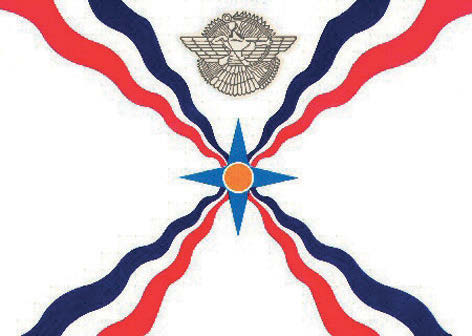
The official Assyrian flag. The golden circle in the centre of the blue star symbolizes the ancient sun god Shamash, and the three broadening lines flowing out from the centre represent the three most important rivers of Assyria: blue, the Euphrates; white, the Great Zab; and red, the Tigris. Above the cross there sits enthroned Ashur, the highest god in ancient Assyria.
亚述 (Assyrian) 的官方旗帜。蓝色星形中央的金色圆圈象征古代太阳神沙马什 (Shamash),而从中心向外流出的三条逐渐变宽的线代表亚述 (Assyria) 最重要的三条河流:蓝色代表幼发拉底河 (Euphrates);白色代表大扎布河 (Great Zab);红色代表底格里斯河 (Tigris)。在十字架上方,端坐着古代亚述 (Assyria) 的最高神阿舒尔 (Ashur)。
The identity of the Church of the East
东方教会 (Ch. of E.) 的身份
The Church of the East stands before two fundamental questions: what can it do to preserve the identity of its membership?
东方教会 (Ch. of E.) 面临两个根本问题:它能做些什么来保持其成员的身份认同?
While the Assyrians remaining in the Middle
当留在中东的亚述人
East are bound to and dependent on one another because of their shared experiences, often of suffering, in their difficult environment, which nourishes their identity, members of the second and third generations of expatriates were mostly born in exile. They adopt the local culture and often no longer know Syriac. How can the Church address these heterogeneous groups? Thus is revealed the second basic question: how should the Church define its purpose, its reason for existence?
东方人彼此联结、相互依赖,因为他们有着共同的经历——往往是在艰难环境中的苦难经历——这种经历滋养了他们的身份认同。第二、第三代侨民大多出生在流亡之中。他们接受当地文化,往往不再懂叙利亚语。教会如何应对这些异质群体?由此便显露出第二个基本问题:教会应如何界定自身的目的,即其存在的理由?
With regard to the widely scattered Assyrian diaspora, the largest communities are found in the United States, with over 100,000; Canada, with 20,000; Australia and New Zealand, with 25,000; Europe, with 30,000; and Russia, Armenia and Georgia, with 50,000 members. Within Europe, Sweden, France and Germany have small clusters of Assyrians.29
就广泛散居的亚述人 (Assyrian) 侨民而言,最大的社群位于美国 (United States),超过10万人;加拿大 (Canada),2万人;澳大利亚 (Australia) 和新西兰 (New Zealand),2.5万人;欧洲 (Europe),3万人;以及俄罗斯 (Russia)、亚美尼亚 (Armenia) 和格鲁吉亚 (Georgia),共有5万名成员。在欧洲 (Europe) 内部,瑞典 (Sweden)、法国 (France) 和德国 (Germany) 有少量亚述人聚居群体。29
The patriarch answers the question thus: ‘Two paths are open to the Church. Either it defines itself according to the ethnic component, the Assyrian identity and its history. Then it will become the instrument of worldly objectives. Or it perceives its task as religious. Then its purpose consists in spreading the Good News, whether in Syriac, English or any other language. Although the Old Syriac language is an important factor in
宗主教如此回答这个问题:“教会面前有两条道路。要么它根据族群成分、亚述人身份及其历史来界定自身。那么它将成为世俗目标的工具。要么它将其任务视为宗教性的。那么它的目的就在于传播福音,无论是以叙利亚语、英语还是任何其他语言。尽管古叙利亚语在……中是一个重要因素
The East Syrian Church of Kerala, numbering 30,000 members and concentrated around the region of Trichur, is undoubtedly the most
喀拉拉 (Kerala) 的东叙利亚教会 (East Syrian Church) 拥有30,000名成员,集中在特里苏尔 (Trichur) 地区周围,无疑是最
The Renaissance of the Assyrian Church of the East | 279
东方亚述教会 (ACOE) 的复兴 | 279
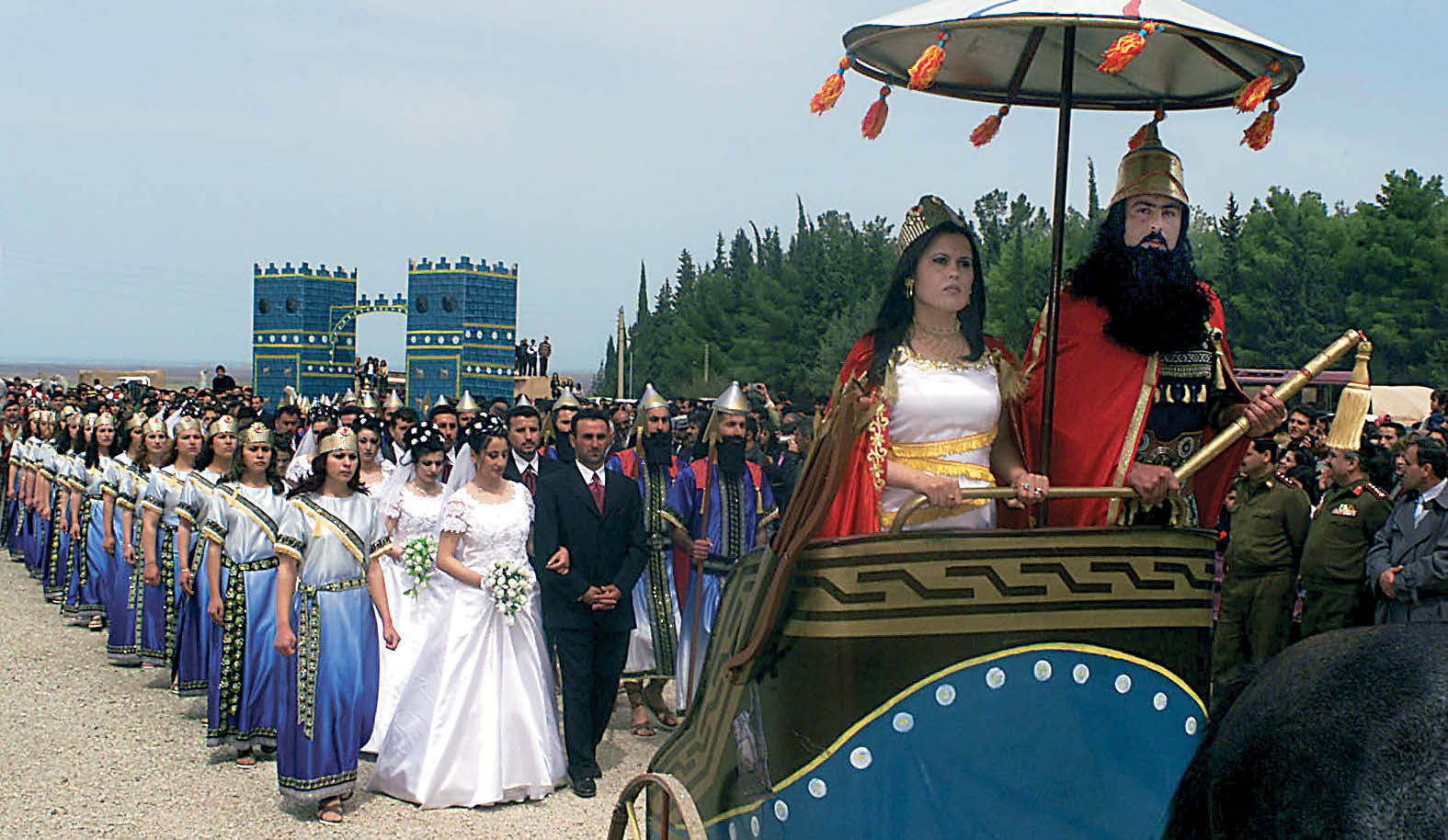
Modern Assyrians celebrating the Assyrian New Year 6752 in the region of Khabur, north-eastern Syria, at the same time as a mass wedding of 16 couples. The Assyrian appearance of the scenery and the escorts dressed as Assyrian royal couples, priestesses and warriors express the desire to connect with the ancient Assyrian national conscious-ness. The beginning of the Assyrian year 6752 fell on 1 April 2002. our solidarity, it is only an instrument, not the religion itself. We want to avoid the fate that our Church once suffered in China. Then it refused to integrate itself into Chinese culture, insisting on the use of the Syriac language. For this reason we translate our sacred texts into local languages, so that the faithful can read the liturgical texts and follow the traditional customs.’30 in vitro fertilization, both of which we reject, or organ transplants, which we approve, for Christ also sacrificed his body for human beings. We may not leave our faithful alone with these difficult questions; we must be engaged and, with the help of the Holy Spirit, define our positions. We must be open to new questions and to the continual revelation of the Holy Spirit.’31
现代亚述人 (Modern Assyrians) 在叙利亚 (Syria) 东北部的哈布尔 (Khabur) 地区庆祝亚述新年 (Assyrian New Year) 6752 年,同时举行 16 对新人的集体婚礼。场景的亚述风貌,以及装扮成亚述王室夫妇、女祭司和武士的随行人员,表达了与古代亚述民族意识相联系的愿望。亚述纪年 (Assyrian year) 6752 年的开端为 2002 年 4 月 1 日。 我们的团结,它只是一种工具,而非宗教本身。我们希望避免我们的教会曾在中国 (China) 遭遇的命运。当时它拒绝融入中国文化,坚持使用叙利亚语 (Syriac)。因此,我们把神圣文本翻译成当地语言,以便信众能够阅读礼仪文本并遵循传统习俗。’30 体外受精,这两者我们都拒绝;或器官移植,我们则赞成,因为基督 (Christ) 也为人牺牲了自己的身体。我们不能让信众独自面对这些难题;我们必须参与其中,并在圣灵 (Holy Spirit) 的帮助下确定我们的立场。我们必须对新问题以及圣灵的持续启示保持开放。’31
While this response rejects the concept of a politically active national Church, Mar Dinkha is aware that it must also speak to people in their everyday lives: ‘The faithful are less interested in theological discourse than in advice, guidance and help. This is the task of the priest; he should lead the faithful to a Christian life and to spirituality. We are also confronted with new questions, such as, for instance, abortion and
尽管这一回应否定了政治上活跃的民族教会这一概念,但马尔·丁哈 (Mar Dinkha) 意识到,它也必须触及人们日常生活中的问题:“信众对神学论述的兴趣,不如对建议、引导和帮助的兴趣大。这是司铎的任务;他应当引导信众走向基督徒的生活与灵修。我们也面临着新的问题,例如堕胎以及
By viewing the work of the Church primarily not in the ethnic-political realm but rather along religious, pastoral and cultural vectors, Mar Dinkha consciously breaks with centuries of tradition, according to which the patriarch also takes on a leading political role. The arena of the Church is not political but existential. Limiting the Church of the East to an Assyrian national Church would not only exclude
通过主要不是从民族-政治领域,而是从宗教、牧养和文化的向度来看待教会的工作,马尔·丁卡 (Mar Dinkha) 有意识地打破了数世纪的传统;按照这一传统,宗主教也承担着领导性的政治角色。教会的场域不是政治的,而是存在性的。将东方教会 (Church of the East) 局限于一个亚述民族教会 (Assyrian national Church),不仅会排除
the Indian community but also deny its own glorious past, when East Syrian missionaries travelled to Central Asia, China and Mongolia. Such a narrower focus would also make more difficult the ecumenical dialogue promoted by the patriarch. Finally, one can speculate that one day Islam could lose its status as state religion in the nations of the Middle East. At such a moment it would be conceivable that those people who were oppressed in the name of Islam might prefer another religion. In this case, a universal Church of the East, with roots in the Orient, would have a greater chance of success than an Assyrian national Church. important sections of the text read: ‘[the under- signed] consider this meeting as a basic step on the way towards the full communion to be restored between their Churches. […] As heirs and guardians of the faith received from the Apostles as formulated by our common Fathers in the Nicene Creed, we confess one Lord Jesus Christ, the only Son of God, begotten of the Father from all eternity who, in the fullness of time, came down from heaven and became man for our salvation. The Word of God, the second Person of the Holy Trinity, became incarnate by the power of the Holy Spirit in assuming from the holy Virgin Mary a body animated by a rational soul, with which he was indissolubly united from the moment of his conception. Therefore our Lord Jesus Christ is true God and true man, perfect in his divinity and perfect in his humanity, consubstantial with the Father and consubstantial with us in all things but sin. His divinity and his humanity are united in one person, without confusion or change, without division or separation. […] [The] Assyrian Church of the East is praying the Virgin Mary as “the Mother of Christ our God and Saviour”. In the light of this same faith the Catholic tradition addresses the Virgin Mary as “the Mother of God” and also as “the Mother of Christ”. We both recognize the legitimacy and rightness of these expressions of the same faith and we both respect the preference of each Church in her liturgical life and piety. […] The Lord’s Spirit permits us to understand better today that the divisions brought about in this way were due in large part to misunderstandings. […] The par-ticular Catholic Churches and the particular Assyrian Churches can recognize each other as sister Churches. To be full and entire, communion presupposes the unanimity concerning the content of the faith, the sacraments and the constitution of the Church.’34 A declaration similar in spirit had been signed in 1984 between the Syrian Orthodox patriarch Ignatius Zakka I
Potential issue: The source text has “important sections of the text read:” lowercase “important” after period? Actually “important sections” likely starts new sentence but lowercase due OCR. We translate “文本的重要段落写道:”. Good. Need maybe “the under-signed” = [下列签署人]. Source has “[the under-signed]” with hyphen. We can render “[下列签署人]”. Good. Need maybe “full communion to be restored between their Churches” = 其教会之间待恢复的完全共融. Good. Need maybe “the faith received from the Apostles as formulated by our common Fathers in the Nicene Creed” = 从使徒所领受、并由我们共同教父在《尼西亚信经》中阐明的信仰. Good. Need maybe “consubstantial” = 同性同体. In Chinese, “consubstantial with the Father” = 与父同性同体. “consubstantial with us” = 与我们同性同体. Good. Need maybe “without confusion or change, without division or separation” = 不混淆、不改变,不分裂、不分离. Good. Need maybe “The Lord’s Spirit” = 主的灵. “Spirit” could be 圣灵. Use 主的圣灵. Good. Need maybe “The par-ticular” line break: “par-ticular” -> particular. Translate 个别. Good. Need maybe “constitution of the Church” = 教会宪制. In Catholic context “constitution” = 宪制/体制. “教会宪章” maybe? “constitution of the Church” = 教会宪制. Good. Need maybe “A declaration similar in spirit had been signed in 1984 between the Syrian Orthodox patriarch Ignatius Zakka I” = 1984年,叙利亚正教会宗主教伊格纳提乌斯·扎卡一世 (Ignatius Zakka I) 之间也曾签署过一份精神上类似的声明。 Hmm. Maybe “1984年,叙利亚正教会宗主教伊格纳提乌斯·扎卡一世 (Ignatius Zakka I) 与……之间也曾签署过一份精神上类似的声明。” I can include ellipsis to indicate cut off? But source doesn’t have. The instruction says preserve placeholders, not add. Better not add. I’ll write “1984年,叙利亚正教会宗主教伊格纳提乌斯·扎卡一世 (Ignatius Zakka I) 也曾签署过一份精神上类似的声明。” This is natural and doesn’t add. But loses “between”. However source incomplete, so okay. Need maybe “the Indian community” at start: “印度社群,而且还否认自己辉煌的过去” The “but also” suggests previous “not only”. We can translate “印度社群,而且还否认自己辉煌的过去——那时东方叙利亚传教士曾前往中亚、中国和蒙古。” Good. Need maybe “East Syrian missionaries” = 东方叙利亚传教士. Could include original? “东方叙利亚传教士 (East Syrian missionaries)”? Not necessary? But rule proper nouns? It’s a group. Maybe not. Need maybe “Central Asia, China and Mongolia” = 中亚 (Central Asia)、中国 (China) 和蒙古 (Mongolia). Good. Need maybe “Middle East” = 中东 (Middle East). Good. Need maybe “Islam” = 伊斯兰教 (Islam). Good. Need maybe “Church of the East” = 东方教会 (Ch. of E.)? In “universal Church of the East” = 普世性的东方教会 (Ch. of E.)? But “Church of the East” is a church designation. We can write “普世性的东方教会 (Ch. of E.)”. But “Ch. of E.” abbreviation maybe not in source. The rule says include abbreviation. I’ll include for first occurrence? There are two: “universal Church of the East” and “Assyrian Church of the East”. For “Assyrian Church of the East” maybe “东方亚述教会 (Assyrian Church of the East)” or (ACOE). The example says “东方教会 (Ch. of E.)”. For “Assyrian Church of the East”, Chinese translation + (abbreviation) maybe “东方亚述教会 (ACOE)”. But ACOE is not in source. Is ACOE standard? Yes, Assyrian Church of the East = ACOE. But maybe Chinese academic uses “东方亚述教会 (Assyrian Church of the East)” not abbreviation. The rule says church designations → Chinese translation + (abbreviation). I’ll use “东方亚述教会 (ACOE)”? But if reader doesn’t know ACOE, maybe okay. However the source text itself says “Assyrian Church of the East” not abbreviation. The instruction says “e.g. ‘东方教会 (Ch. of E.)’”. It might expect adding abbreviation. But for “Assyrian Church of the East”, abbreviation is ACOE. I’ll use “东方亚述教会 (ACOE)”? Hmm. But “ACOE” might be less known. Could use “东方亚述教会 (Assyrian Church of the East)” to be safe. The rule says abbreviation, but original in parentheses is also acceptable? It says “church designations → Chinese translation + (abbreviation), e.g. ‘东方教会 (Ch. of E.)’”. So for “Church of the East” use (Ch. of E.). For “Assyrian Church of the East” maybe (ACOE). I’ll do that. But “Assyrian national Church” = 亚述民族教会 (Assyrian national Church)? Not a designation? Could include original. “particular Assyrian Churches” = 个别亚述教会 (Assyrian Churches). “Catholic Churches” = 天主教会 (Catholic Churches). “sister Churches” = 姊妹教会 (sister Churches). Maybe too cluttered. But rule says proper nouns. I’ll include for key ones. Need maybe “Catholic tradition” = 天主教传统 (Catholic tradition). Not proper? Could include original. “Catholic Churches” = 天主教会 (Catholic Churches). Good. Need maybe “Nicene Creed” = 《尼西亚信经》(Nicene Creed). Good. Need maybe “Apostles” = 使徒 (Apostles). Not proper? Could include. “common Fathers” = 共同教父 (common Fathers). Not proper. “Lord Jesus Christ” = 主耶稣基督 (Lord Jesus Christ). Personal name. “Jesus Christ” = 耶稣基督 (Jesus Christ). Good. Need maybe “Holy Trinity” = 圣三一 (Holy Trinity). “Holy Spirit” = 圣灵 (Holy Spirit). “Virgin Mary” = 童贞马利亚 (Virgin Mary). “Mary” = 马利亚 (Mary). Good. Need maybe “God” = 上帝. In Chinese Catholic, 天主. But source uses “God” in quote. We can use 上帝. “Mother of God” = 天主之母? If we use 上帝, then “上帝之母”. But Catholic tradition specifically “天主之母”. The source says “Catholic tradition addresses the Virgin Mary as ‘the Mother of God’”. In Chinese Catholic, it’s 天主之母. So use 天主之母. For “our God and Saviour” in Assyrian quote, use 上帝. That’s fine. Need maybe “the Mother of Christ our God and Saviour” = “我们上帝和救主基督之母”. Good. Need maybe “the Mother of Christ” = “基督之母”. Good. Need maybe “legitimacy and rightness” = 合法性与正当性. Good. Need maybe “liturgical life and piety” = 礼仪生活和虔敬. Good. Need maybe “The Lord’s Spirit permits us to understand better today” = 主的圣灵使我们今天能够更好地理解. Good. Need maybe “divisions brought about in this way” = 由此造成的分裂. Good. Need maybe “due in large part to misunderstandings” = 在很大程度上源于误解. Good. Need maybe “The par-ticular Catholic Churches and the particular Assyrian Churches can recognize each other as sister Churches.” = 个别天主教会与个别亚述教会可以彼此承认为姊妹教会。 Good. Need maybe “To be full and entire, communion presupposes the unanimity concerning the content of the faith, the sacraments and the constitution of the Church.” = 共融若要完全且完整,就以在信仰内容、圣事和教会宪制上的一致为前提。 Good. Need maybe “A declaration similar in spirit had been signed in 1984 between the Syrian Orthodox patriarch Ignatius Zakka I” = 1984年,叙利亚正教会宗主教伊格纳提乌斯·扎卡一世 (Ignatius Zakka I) 也曾签署过一份精神上类似的声明。 Good. Need maybe “Syrian Orthodox patriarch” = 叙利亚正教会宗主教 (Syrian Orthodox patriarch). Good. Now assemble. Need ensure no extra explanation. Use <translated_text> …
Ecumenical dialogue
普世对话
One of the chief goals of Mar Dinkha IV is finally to lead the Church of the East out of its historical isolation. Over the course of this process he has had a few spectacular successes, which represent milestones in the history of the Church. In his efforts at ecumenical dialogue, the patriarch has a famous forerunner in Mar Odisho (†1318), the last outstanding theologian of the Church. He was convinced that the differences and disputes among the three great Christian communities of his time were founded only on words and terms, not in the religious ideas they expressed.32 The Dominican Riccoldo da Monte di Croce, who lived in Baghdad from 1290 to 1300, was of the same opinion: ‘One must not debate the distinctions among the rites, but rather one should seek common ground in faith. There is no Nestorian, Greek or Latin faith, but a single Christian faith.’33
马尔·丁哈四世 (Mar Dinkha IV) 的主要目标之一,最终是带领东方教会 (Church of the East) 走出其历史性的孤立。在这一过程中,他取得了若干引人瞩目的成功,这些成功构成了该教会历史上的里程碑。在其普世对话的努力中,这位宗主教有一位著名的先驱——马尔·奥迪绍 (Mar Odisho, †1318),即该教会最后一位杰出神学家。他确信,他那个时代三大基督教群体之间的差异与争论,仅仅建立在词语和术语之上,而不在于它们所表达的宗教观念。32 多明我会士里科尔多·达·蒙特迪克罗切 (Riccoldo da Monte di Croce) 于1290年至1300年居住在巴格达 (Baghdad),也持同样看法:“人们不应争论诸礼仪之间的差异,而应寻求信仰上的共同基础。不存在聂斯托利派、希腊或拉丁的信仰,只有单一的基督教信仰。”33
An initial breakthrough occurred on
最初的突破发生在
11 November 1994, when Pope John Paul II and Patriarch Mar Dinkha IV concluded with the signing in Rome of the Common Christological Declaration the first step in the theological dialogue that had begun in 1984. The most
1994年11月11日,教宗若望保禄二世 (Pope John Paul II) 与宗主教马尔·丁哈四世 (Patriarch Mar Dinkha IV) 在罗马 (Rome) 签署《共同基督论宣言》(Common Christological Declaration),完成了1984年即已开始的神学对话的第一步。最
The Renaissance of the Assyrian Church of the East | 281 audience and then in his discourse to the patriarch: ‘This will settle and definitely put an end to more than fifteen centuries of misunder- standings that afflict our faith in Christ, true God and true Man, born to the Virgin Mary by the Holy Spirit. […] We all recognize that it is of supreme importance to understand, venerate, preserve and foster the rich heritage of each of our Churches, and that a diversity of customs and observances is in no way an obstacle to unity.’37 Mar Dinkha responded: ‘Today the time has come to bring down the walls which have separated us and kept us apart for fifteen centuries.’38
东方亚述教会的复兴 | 281 在接见中,然后在他对宗主教的讲话中:“这将解决并最终终结困扰我们对基督——真天主、真人,由圣灵藉童贞女玛利亚所生——之信仰的十五个多世纪的误解。[…] 我们都认识到,理解、敬礼、保存和培育我们各教会丰富的遗产至关重要,而习俗和礼仪的多样性绝不构成合一的障碍。”37 马尔·丁哈 (Mar Dinkha) 回应道:“今天,拆除那些将我们分隔、使我们分离了十五个世纪的墙的时候到了。”38
This common Catholic–Assyrian declaration prepared the way for a deeper dialogue with the Chaldean sister Church, which led in November 1996 to the Joint Synodal Decree for Promoting Unity. In this Mar Dinkha IV and Mar Raphael I Bidawid affirmed the following goal: ‘In the service of our Lord and the People of God, we, the bishops of the two branches of the ancient Church of the East, declare the noble quest for restoring Christian unity remains, for us and for our Churches, a profound Christian obligation.’ Among the action plans were the establishment of a joint commission for unity, creation of a common catechism, the founding of shared seminaries, promotion of the Aramaic liturgical language, and ecclesiastical and cultural cooper- ation in dioceses and parish congregations. This goal and the strategies to reach it were confirmed on 15 August 1997 at a joint synod, led by both patriarchs, in which 17 Chaldean and ten Assyrian bishops participated. In the synodal concluding document, the most significant hurdles on the path to unity were precisely formulated. The Assyrian Church demanded the ‘preservation of her ecclesial identity as expressed in her liturgical, theological, spiritual and disciplinary patrimony […] and the recognition of her freedom and self- governance’, while the Chaldean Church requested ‘the full preservation of her full communion with the Roman See’.39 It is the papal claim to
这一天主教—亚述教会共同声明为与迦勒底姊妹教会进行更深入的对话铺平了道路,并最终于1996年11月促成了《促进合一联合主教会议法令》(Joint Synodal Decree for Promoting Unity)。在该法令中,马尔·丁哈四世 (Mar Dinkha IV) 与马尔·拉斐尔一世·比达维德 (Mar Raphael I Bidawid) 确认了以下目标:“为了服事我们的主和天主子民,我们,古代东方教会 (Ch. of E.) 两个分支的主教们,宣告:恢复基督徒合一的崇高追求,对我们和我们的教会而言,仍是一项深刻的基督徒义务。”行动计划包括:成立促进合一的联合委员会、编写共同教理问答、创办共享神学院、推广阿拉米语礼仪语言,以及在教区和堂区会众中进行教会与文化合作。这一目标及实现它的策略,于1997年8月15日由两位宗主教主持的联合主教会议上得到确认,17位迦勒底主教和10位亚述主教参加了会议。在会议结论文件中,通往合一道路上最重大的障碍得到了精确表述。亚述教会要求“保留其在其礼仪、神学、灵性和纪律遗产中所表达的教会身份[…]以及承认其自由与自治”,而迦勒底教会则要求“完全保留其与罗马教廷 (Roman See) 的完全共融”。39 这正是教宗对
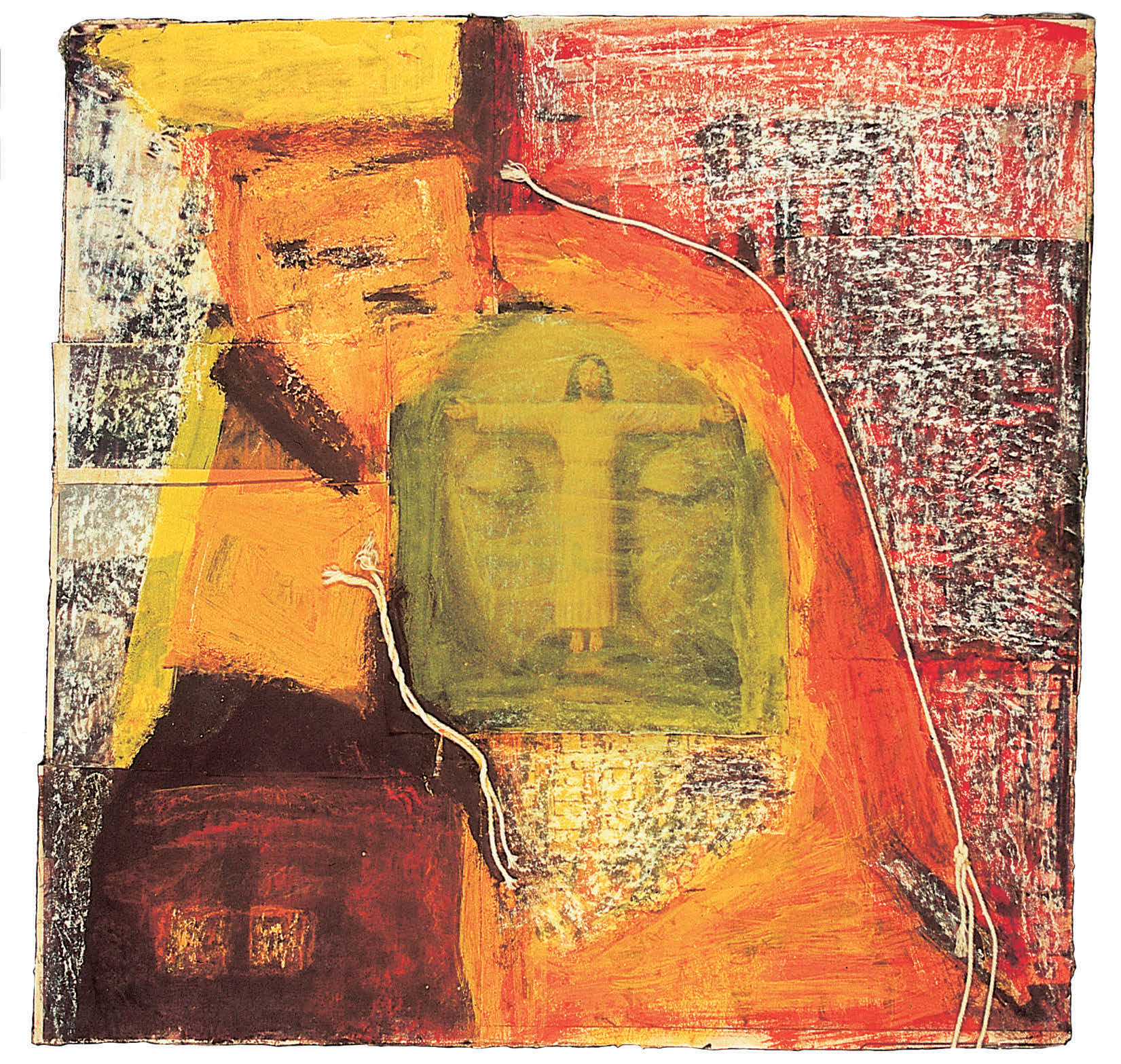
Paper collage painted over with pigments by the Christian artist Farashta Nadir Khani from Teheran, Iran, 2001. The work shows the sudarium of Christ and the standing Saviour. Thus does the artist not only unite the aspects of Christ’s passion and resurrection but also builds a bridge to the legendary origins of the Church of the East in Edessa. According to a tradition from the sixth century, Jesus pressed an image of his face onto a linen cloth and gave it to Abgar’s ambassador Hanan, so that he might present it to the king. Private collection. and Pope John Paul II.35
纸拼贴画,由来自伊朗 (Iran) 德黑兰 (Teheran) 的基督教艺术家法拉什塔·纳迪尔·哈尼 (Farashta Nadir Khani) 于2001年以颜料覆盖绘制。该作品展示了基督 (Christ) 的圣容布 (sudarium) 与站立的救主 (Saviour)。因此,这位艺术家不仅将基督 (Christ) 的受难与复活的方面结合起来,还架起了一座通往埃德萨 (Edessa) 的东方教会 (Ch. of E.) 传说起源的桥梁。根据六世纪的一个传统,耶稣 (Jesus) 将自己的面容印在一块亚麻布上,并将其交给阿布加尔 (Abgar) 的使者哈南 (Hanan),以便他将其呈献给国王。私人收藏。以及教皇约翰·保罗二世 (Pope John Paul II)。35
The common declaration of 1994 is based on the formula of reconciliation from 433.36 Against this background, it is clear that the formula of reconciliation of 433, which was signed by all parties directly involved in the conflict, would have enabled the avoidance of the division of the Christian community into three separate and mutually hostile Churches, had not purely political factors stood in the foreground. The Christological formula of 433 failed not for theological reasons but because a few of the protagonists did not want reconciliation but, rather, the humiliation of their opponents.
1994年的共同声明以433.36年的和解信条为基础。在此背景下,显而易见的是,倘若不是纯粹的政治因素占据了首要地位,那么由冲突所有直接相关方签署的433年和解信条,本可使基督教群体免于分裂为三个彼此分离且相互敌对的教会。433年的基督论信条之所以失败,并非出于神学原因,而是因为少数主要人物并不想要和解,而是想要羞辱其对手。
In their addresses, both Church leaders stressed the significance of the newly signed declaration. Pope John Paul emphasized first in the general
在各自的讲话中,两位教会领袖都强调了新签署宣言的重要性。教宗若望保禄 (Pope John Paul) 首先在公开
authority that makes the reconciliation of the two claims immensely difficult. In the political and social arena, however, the idea of an Assyrian- Chaldean people forms a strong, shared platform.
权威使得这两种主张的调和变得极为困难。然而,在政治和社会领域,亚述-迦勒底人 (Assyrian-Chaldean people) 这一观念构成了一个强大而共同的平台。
The sacraments form the second great theme within the Assyrian–Catholic dialogue. An initial result was achieved in October 2001 with the Pastoral Guidelines for Admission to the Eucharist between the Assyrian Church of the East and the Chaldean Church. This permits Assyrians to participate in the Eucharist in Chaldean liturgies in emergency situations, and vice versa.40 This intercommunion primarily enables those Iraqi and Assyrian Christians whose congregations have no priests of their own to participate in communion. Along these same lines there followed in November 2002 the Common Statement on Sacramental Life between the Catholic Church and the Church of the East, which ensures the full theological recognition by each Church of the sacraments of the other; however, ratification by the two synods is still pending.41 With the new Chaldean patriarch Mar Emmanuel III, who sympathizes with the Assyrians, cooperation is expected to deepen further. Like Mar Dinkha, he wants to maintain the East Syrian rite and rejects both any Latinization of the liturgy and the replacement of Syriac with Arabic as the liturgical language, as advocated by the Dominicans.42 the Church Council of the Middle East by the Coptic Church. Back in 1984 the Coptic Church rejected the Assyrian request for membership, and ten years later renewed negotiations were begun. Although in the summer of 1997 the East Syrian bishops’ synod unilaterally and uncon- ditionally repealed the anathemata against the Miaphysite patriarchs Cyril of Alexandria and Severus of Antioch, which dated back to the fifth and sixth centuries,43 the Coptic pope Shenouda III (in office 1971–2012) rejected the renewed Assyrian application for membership in October 1998.44 Shenouda’s precondition that the Church of the East should first condemn its own Church Fathers, Nestorius, Theodore and Diodore, who are celebrated in the East Syrian calendar on 4 February on the ‘Commemoration of the Three Greek Fathers’, is entirely unacceptable to Mar Dinkha.45 The Church of the East rejected as unsatisfactory the observer status offered as an alternative to membership. That a quarrel some 1570 years old still today stands in the way of ecclesiastical reconciliation is beyond understanding.46 Fortunately, the chilly attitude of the Copts has not prevented the other Miaphysite
圣事构成亚述(Assyrian)—天主教对话的第二个重要主题。2001年10月,《亚述东方教会与迦勒底教会(Chaldean Church)关于准许领受圣体圣事的牧灵指引》取得了初步成果。该文件允许亚述信徒在紧急情况下参加迦勒底礼仪中的圣体礼,反之亦然。40 这种彼此共融主要使那些没有本堂司铎的伊拉克(Iraq)和亚述基督徒能够领圣餐。随后,2002年11月,天主教会与东方教会发表《圣事生活共同声明》,确保双方在神学上充分承认对方的圣事;不过,两教会的主教会议尚未批准该声明。41 新任迦勒底宗主教马尔·伊曼纽尔三世(Mar Emmanuel III)同情亚述人,预计双方合作将进一步深化。与马尔·丁哈(Mar Dinkha)一样,他希望维持东叙利亚礼,反对礼仪拉丁化,也反对将礼仪语言叙利亚语改为阿拉伯语;多明我会士倡导的正是后一做法。42 中东教会理事会中的科普特教会。早在1984年,科普特教会就拒绝了亚述教会的入会申请;十年后,双方重启谈判。尽管东叙利亚主教会议于1997年夏单方面且无条件地撤销了五、六世纪以来针对合性论派宗主教——亚历山大的西里尔(Cyril of Alexandria)和安提阿的塞维鲁(Severus of Antioch)——所颁布的绝罚令,43 科普特教宗谢努达三世(Shenouda III,在位1971—2012)仍于1998年10月拒绝亚述教会再次提出的入会申请。44 谢努达提出的先决条件是东方教会必须先谴责自己的教父聂斯托利(Nestorius)、摩普苏埃斯蒂亚的狄奥多雷(Theodore of Mopsuestia)和狄奥多(Diodore);东叙利亚礼仪年历在2月4日“纪念三位希腊教父”时尊崇这三人。对马尔·丁哈而言,这一条件完全不可接受。45 东方教会认为,对方提出观察员身份作为入会的替代方案并不令人满意。一场约1570年前的争端至今仍妨碍教会和解,实在令人难以理解。46 幸运的是,科普特人的冷淡态度并未阻止其他合性论派
Dance performance at an Assyrian New Year’s festival for the year 6752 (1 April 2002) and mass wedding in Khabur, north-eastern Syria.
在亚述 (Assyrian) 新年节(6752年,2002年4月1日)上的舞蹈表演,以及在叙利亚 (Syria) 东北部哈布尔 (Khabur) 举行的集体婚礼。
The third theme, not yet taken up, concerns Church organization. One hopes that the Roman Catholic claims of papal primacy and infallibility will not cause the efforts towards unity between the two East Syrian sister Churches to founder.
尚未论及的第三个主题涉及教会组织。人们希望,罗马天主教关于教宗首席权与教宗无误论的主张不会使两个东叙利亚姊妹教会之间的合一努力归于失败。
While, in the Catholic–Assyrian dialogue, results as spectacular as they were unexpected have been achieved, discussions with the Coptic Orthodox Church have proved significantly more difficult; they reached a dead end in 1998. Although the Church of the East has been a member of the World Council of Churches since 1948, it has been barred membership in
尽管在天主教—亚述对话 (Catholic–Assyrian dialogue) 中,取得了既引人注目又出乎意料的成果,但与科普特正教会 (Coptic Orthodox Church) 的讨论却证明要困难得多;这些讨论于1998年陷入僵局。虽然东方教会 (Ch. of E.) 自1948年以来一直是世界基督教协进会 (World Council of Churches) 的成员,但它却被禁止成为……的成员
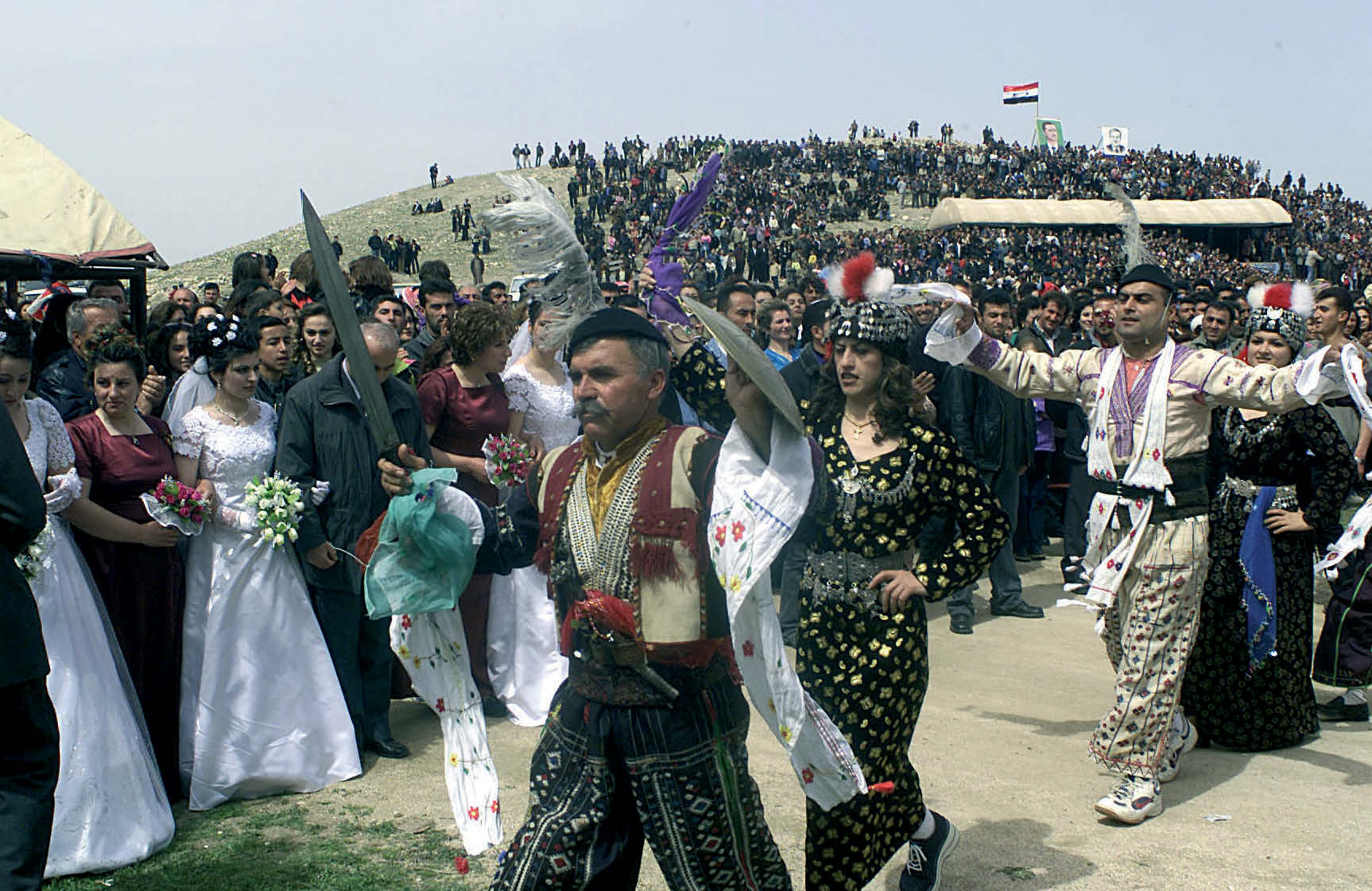
The Renaissance of the Assyrian Church of the East | 283 with the numerically stronger Chaldean Catholic Church is indispensable, as is a massive and rapid increase in clergy. The second task consists in caring for the diaspora, a rapidly growing pro- portion of the Church, in such a way that people can preserve their unique identity.
东方亚述教会(Assyrian Church of the East)的复兴 | 283 与人数上更强大的迦勒底天主教会(Chaldean Catholic Church)的联合不可或缺,神职人员的大规模迅速增加同样不可或缺。第二项任务在于牧养散居群体——这是教会中迅速增长的一部分——其方式要能使人们保全其独特身份。
The path adopted by Patriarch Mar Dinkha IV of a renewal of the dimensions of religiosity, spirituality, pastoral care, humanitarianism and cultural work is the only correct one. The Church has enough exceptional features to work out its unique profile. Among these are: first, its primordial, almost archaic liturgy; second, the use of a liturgical language closely related to the language of Jesus; third, a rich mysticism; fourth, the lack of the always problematic priestly celibacy; and, fifth, the absence of the stifling idea of original sin, which leads to, sixth, an emphasis on free will. The patriarch outlines it thus: ‘An important characteristic of our faith is the emphasis on free will. As the man Jesus Christ died on the cross out of free will, so do human beings have free choice between the wide streets of hell and the narrow path to paradise. We reject the concepts of original sin and pre- destination. All people are called, but everyone must make his or her own choices in life, the journey from birth to death; the Church can only lead and help the people.’47
马尔·丁哈四世宗主教 (Patriarch Mar Dinkha IV) 所采取的更新宗教性、灵性、牧养、人道主义和文化工作诸维度的道路,是唯一正确的道路。教会拥有足够多的非凡特征,足以塑造出其独特的面貌。这些特征包括:第一,其原初的、近乎古风的礼仪 (liturgy);第二,使用与耶稣 (Jesus) 的语言密切相关的礼仪语言;第三,丰富的神秘主义 (mysticism);第四,没有向来问题重重的神职人员独身制 (priestly celibacy);第五,没有令人窒息的原罪 (original sin) 观念,这引向第六点,即对自由意志 (free will) 的强调。宗主教对此概述如下:“我们信仰的一个重要特征是对自由意志的强调。正如作为人的耶稣基督 (Jesus Christ) 出于自由意志死在十字架上,人类同样也拥有在地狱的宽阔街道与通往乐园的窄路之间作出自由选择的能力。我们拒绝原罪和预定论 (pre-destination) 的观念。所有人都蒙召,但每个人都必须在人生中,即从出生到死亡的旅程中,作出自己的选择;教会只能引导和帮助人们。”47
Churches from establishing good and cooperative relations with the Church of the East.
各教会与东方教会 (Ch. of E.) 建立良好而合作的关系。
The former Mar Shalita Cathedral of Kotchannes, abandoned since 1915, in the Turkish Hakkari Mountains, is symbolic for the Church of the East. The faithful were driven out, but the church walls still stand like a lonely Christian watchtower. It is to be hoped that, upon the eventual admission of Turkey into the European Union, the domestic political situation will improve to the point that the former patriarchal basilica may be rebuilt and the Assyrians living in Syrian, European and American exile may return to the homeland of their forefathers. The return of the descendants of the one-time mountain Nestorians of Hakkari and the reconstruction of the Mar Shalita Cathedral would be clear signs of the guarantee of genuine religious freedom in Turkey.
科查内斯 (Kotchannes) 的昔日马尔沙利塔主教座堂 (Mar Shalita Cathedral),自1915年起被废弃,位于土耳其 (Turkey) 哈卡里山脉 (Hakkari Mountains) 之中,是东方教会 (Ch. of E.) 的象征。信众被驱逐,但教堂的墙壁依然矗立,宛如一座孤独的基督教瞭望塔。人们希望,一旦土耳其最终加入欧盟 (European Union),其国内政治局势将改善到这样的程度:昔日的宗主教巴西利卡得以重建,流亡于叙利亚、欧洲和美国的亚述人 (Assyrians) 得以返回其祖先的家园。昔日哈卡里 (Hakkari) 山地聂斯托利派信徒 (mountain Nestorians) 后裔的回归,以及马尔沙利塔主教座堂 (Mar Shalita Cathedral) 的重建,将是土耳其真正宗教自由得到保障的明确标志。
The relevance of the Church of the East and its theology
东方教会 (Ch. of E.) 及其神学的现实意义
The Church of the East is the martyr Church of history. No other Church has made so many sacrifices through the steadfastness of its confessing members, who countered oppression and persecution with the strength of their faith. It is also a confessors’ Church, insofar as its missionaries poured out to the borders of the world then known in Mesopotamia – to India, Central Asia, Tibet and China, and to the Mongols. The Church can rightly be proud of its past; one hopes that it can create from this consciousness the inner strength to withstand further trials.
东方教会 (Ch. of E.) 是历史上的殉道教会。没有其他教会曾因其认信成员的坚定不移而作出如此多的牺牲,他们以信仰的力量对抗压迫与迫害。它也是一个宣信者教会,因为其传教士曾涌向当时美索不达米亚所知的世界的边缘——前往印度 (India)、中亚 (Central Asia)、西藏 (Tibet) 和中国 (China),以及蒙古人 (Mongols) 那里。该教会完全可以为其过去感到自豪;人们希望它能从这种意识中汲取内在力量,以承受未来的考验。
The Church of the East is an Asian Church, which has preserved its Oriental roots. As such it has the potential to attract those people in Asia for whom the Catholic and Protestant Churches have less appeal. It is acceptable to fantasize that the grip Islam holds on the legislation of many states will one day be released. This would return to the people the option to choose which religion best accords with their ideas. In this moment, a politically independent and self-conscious Church of the East, with a strong presence in its Mesopotamian homeland, would be ideally positioned to offer seekers a new answer.
东方教会 (Ch. of E.) 是一个亚洲教会,它保留了自身的东方根源。因此,它有可能吸引亚洲那些对天主教 (Catholic) 和新教 (Protestant) 教会兴趣较少的人群。不妨设想,伊斯兰教 (Islam) 对许多国家立法的掌控有朝一日将会松动。这将把选择哪种宗教最符合自身理念的权利交还给民众。届时,一个政治上独立且具有自我意识的东方教会 (Ch. of E.),若在其美索不达米亚 (Mesopotamia) 故土拥有强大存在,将处于理想位置,为寻求者提供一种新的答案。
At this time it faces two immense tasks. First, it must build up in its homeland of Mesopotamia – that is, Iraq – sufficient presence that the Iraqi Assyrians remain in their land and do not choose exile. For this, the closest possible cooperation
此时,它面临着两项艰巨任务。第一,它必须在其故土美索不达米亚 (Mesopotamia)——也就是伊拉克 (Iraq)——建立起足够的存在,使伊拉克亚述人 (Iraqi Assyrians) 留在自己的土地上,而不选择流亡。为此,需要尽可能密切的合作
Silver cross on a Syrian manuscript, Khabur, north-eastern Syria.
叙利亚手稿上的银十字架,哈布尔 (Khabur),叙利亚东北部 (north-eastern Syria)。