鲍默《东方教会:亚述基督教图史》第十一章:考验与分裂的时期(中英文对照版)
阿甲按:本连载以克里斯托夫·鲍默(Christoph Baumer)2016年英文新版为底本,采用人工智能辅助中译,以中英文对照形式供研读参考。译文及原文提取仍有待校订,人名、地名、专业术语和个别断句未必准确,欢迎读者与专家指正。
本章导读
本章叙述东方教会在近代所遭遇的政治压力、教会分裂与传教竞争,尤其关注库尔德地区、乌尔米耶及第一次世界大战前后的迫害、流离与群体命运。
凡例
- 翻译自:Christoph Baumer, The Church of the East: An Illustrated History of Assyrian Christianity, new edition, translated by Miranda G. Henry (London and New York: I.B.Tauris, 2016),第十一章,原书第 247–268 页。
- 本连载保留英文原文、图版与原书页码,采用双语对照形式,便于参阅和引用。原作页码与 PDF 文件的物理页序不同,本文标示原书页码。
- 中文初稿由 DeepSeek 辅助生成,部分缺译和遗漏段落使用 GPT-6-luna 补译;本次整理不等同于完成学术校订。原文中的个别断句、图注拼接和脚注提取仍需对照原书核查。
- 人名、地名、书名与叙利亚语专业术语的译法仅供参考,相关条目可参阅《高尔吉亚叙利亚遗产百科辞典》。
- 引用建议:克里斯托夫·鲍默,《东方教会:亚述基督教图史》第十一章“考验与分裂的时期”,袁永甲整理(人工智能辅助中译,待校订),教父原文中译计划,2026年10月12日,本文网址,并注明原书页码及访问日期。
第十一章:考验与分裂的时期
The Period of Trials and Divisions XI
试炼与分裂时期 XI
The hereditary succession of high Church offices, introduced around 1450, ensured for the short term the survival of a rudimentary Church hierarchy, but it led to an intellectual and spiritual impoverishment and contained the seeds of a number of divisions and opportunistic alliances with Rome. The hereditary handing on of offices neither guaranteed that the most capable and motivated were appointed as bishops nor provided ambitious clerics with prospects for advancing their careers. The structuring of the Nestorian community along lines of family and tribe ensured further grounds for conflict, since the claim of a particular family to a high Church office, and the power and relative prosperity it offered, eo ipso excluded other families from it, leading to dissatisfaction and envy. Church politics became ever less oriented towards religious principles and more towards the interests of families and clans. This unfortunate situation persisted for half a millennium and ended only in 1976 when an Episcopal synod elected Patriarch Mar Dinkha IV according to the East Syrian canons.
约1450年引入的高级教会职位世袭继承制,短期内确保了初步教会等级制度的存续,却导致了智识与灵性上的贫乏,并埋下了若干分裂以及与罗马 (Rome) 机会主义结盟的种子。职位的世袭传承既不能保证最有能力、最有积极性的人被任命为主教,也没有为有抱负的神职人员提供晋升前景。聂斯托利派 (Nestorian) 社群按家族和部落进行组织,进一步为冲突提供了更多理由,因为某一特定家族对某一高级教会职位的主张,以及该职位所带来的权力和相对富裕,本身就将其他家族排除在外,从而导致不满和嫉妒。教会政治越来越不以宗教原则为导向,而越来越以家族和宗族利益为导向。这一不幸局面持续了五百年,直到1976年,一次主教会议 (Episcopal synod) 按照东叙利亚教规 (East Syrian canons) 选举了宗主教马尔·丁哈四世 (Patriarch Mar Dinkha IV),才告结束。
The first Chaldean Church
第一个迦勒底教会 (Chaldean Church)
– a union with Rome
– 与罗马 (Rome) 的联合
Because the Church of the East never achieved the status of a state Church and constituted a minority even in its homeland Mesopotamia, it was dependent on the goodwill of rulers of other faiths. With the establishment of diplomatic contact between the Mongols and Western Europe, the prospect was opened of gaining the Catholic Church and the Catholic kingdoms as allies. The first efforts, made by the patriarchs Sabrisho V in 1247 and Yahballaha III in 1302/1304, were unsuccessful, but on 7 July 1445 the East Syrian metropolitan see of Cyprus, under the leadership of Mar Timothy of Tarsus, split from the mother Church and entered into union with Rome at the Council of Florence. Pope Eugene IV gave these Nestorians of Cyprus who converted to the Catholic Church the name Chaldeans, a term still in use today. This first of many unions had already foundered by 1450, because of the opposition of the faithful to Latinization measures. [^1]
由于东方教会 (Ch. of E.) 从未获得国教地位,甚至在其故乡美索不达米亚 (Mesopotamia) 也仅构成少数群体,因此它依赖于其他信仰统治者的善意。随着蒙古人 (Mongols) 与西欧 (Western Europe) 之间建立外交接触,获得天主教会 (Catholic Church) 和天主教诸王国 (Catholic kingdoms) 作为盟友的前景得以开启。最初的努力由宗主教萨布里绍五世 (Sabrisho V) 于1247年、雅巴拉哈三世 (Yahballaha III) 于1302/1304年做出,但均未成功;然而在1445年7月7日,塞浦路斯 (Cyprus) 的东叙利亚都主教区 (East Syrian metropolitan see) 在塔尔苏斯的马尔提摩太 (Mar Timothy of Tarsus) 领导下,从母会分裂出去,并在佛罗伦萨会议 (Council of Florence) 上与罗马联合。教宗尤金四世 (Pope Eugene IV) 将这些皈依天主教会的塞浦路斯聂斯托利派 (Nestorians) 命名为迦勒底人 (Chaldeans),这一名称至今仍在使用。这众多联合中的第一次到1450年时已经失败,因为信众反对拉丁化措施。1
In the sixteenth century a political realignment took place in the Middle East, which further
在十六世纪,中东发生了一次政治重组,这进一步
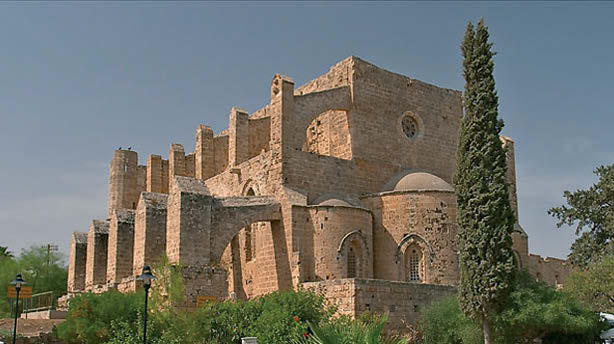
The Church of St George in Famagusta, Cyprus, which once belonged to the Church of the East, was founded in 1359. In the interior room traces of the original mural painting have been preserved.
位于塞浦路斯 (Cyprus) 法马古斯塔 (Famagusta) 的圣乔治教堂 (Church of St George),曾属于东方教会 (Ch. of E.),始建于1359年。其内室中保存有原始壁画的痕迹。
complicated the situation of the Church. After the devastations of Tamerlane, Iran and Mesopotamia collapsed into small principalities, until the two powers reconstituted themselves and clashed as they expanded. In the West the Ottomans reconstructed their empire, which had been destroyed by Tamerlane, and this rebuilding culminated in the conquest of Constantinople in 1453. In the East there emerged in 1501 the Iranian dynasty of the Safavids (until 1732), who elevated Shi’ite Islam to the state religion, while the Ottoman Empire was majority Sunni. The expansion of the two powers led first in 1508 to the conquest of Mesopotamia by the Safavids, but it fell in 1534 to the Ottomans, who ruled it, except for a brief interruption from 1623 to 1638, until the end of World War I. The new borders divided the territory of the Nestorian Church into two regions: the western dioceses, with Mosul, Kurdistan and Hakkari to Lake Van, fell in the Ottoman Empire, and the eastern diocese in Iran. These political borders hindered the contact of the patriarchs with the faithful of the other empire, if they did not prevent this outright, which led again to divisions. the majority of the faithful and the bishops remained loyal to Mar Shimun VIII; only in Amida (Diyarbaqir) and Mardin did John VIII find recognition, whereupon he appointed two metropolitans and three bishops. The Ottoman administration, however, recognized Shimun VIII as the only legitimate head of his millet, so they had John Sulaqa arrested and murdered in prison in 1555. But Sulaqa’s supporters were not intimidated and named Mar Abdisho IV (in office 1555–1570) as their new patriarch. Thus was the first schism sealed.
. We can include line breaks? The final should be: 使教会的处境复杂化。在帖木儿 (Tamerlane) 的破坏之后,伊朗 (Iran) 与美索不达米亚 (Mesopotamia) 分裂为众多小公国,直到两大势力重新整合,并在扩张过程中发生冲突。在西方,奥斯曼人 (Ottomans) 重建了曾被帖木儿 (Tamerlane) 摧毁的帝国,这一重建在1453年征服君士坦丁堡 (Constantinople) 时达到顶峰。在东方,1501年出现了伊朗的萨法维王朝 (Safavids)(至1732年),该王朝将什叶派伊斯兰教 (Shi’ite Islam) 提升为国教,而奥斯曼帝国 (Ottoman Empire) 则以逊尼派 (Sunni) 为多数。两大势力的扩张首先导致萨法维王朝 (Safavids) 于1508年征服美索不达米亚 (Mesopotamia),但该地区于1534年落入奥斯曼人 (Ottomans) 之手;除1623年至1638年的一段短暂中断外,奥斯曼人一直统治该地区,直到第一次世界大战 (World War I) 结束。新的边界将聂斯托利教会 (Nestorian Church) 的领土分为两个区域:西部各教区,包括摩苏尔 (Mosul)、库尔德斯坦 (Kurdistan) 以及直至凡湖 (Lake Van) 的哈卡里 (Hakkari),落入奥斯曼帝国 (Ottoman Empire);东部教区则位于伊朗 (Iran)。这些政治边界阻碍了宗主教们 (patriarchs) 与另一帝国境内信众的联系,甚至完全阻断了这种联系,从而再次导致分裂。大多数信众和主教 (bishops) 仍效忠于马尔·希蒙八世 (Mar Shimun VIII);只有在阿米达 (Amida)(迪亚巴克尔 (Diyarbaqir))和马尔丁 (Mardin),约翰八世 (John VIII) 才获得承认,于是他任命了两名都主教 (metropolitans) 和三名主教 (bishops)。然而,奥斯曼当局承认希蒙八世 (Shimun VIII) 为其米勒特 (millet) 的唯一合法首领,因此他们于1555年将约翰·苏拉卡 (John Sulaqa) 逮捕并在狱中杀害。但苏拉卡 (Sulaqa) 的支持者并未被吓倒,他们推举马尔·阿卜迪绍四世 (Mar Abdisho IV)(在位1555–1570年)为新宗主教。第一次分裂由此正式形成。
Patriarchs and anti-patriarchs
宗主教与对立宗主教
After the establishment of the Chaldean Church there followed until 1830 a convoluted succession of efforts at union and further splits, which had little to do with questions of faith but very much to do with power politics. Abdisho must have soon recognized that a Latinization of the liturgy was unfeasible, which is why the pope reluctantly agreed to the continued use of the Syrian rite. Shimun IX Dinkha (in office 1580–1600) returned to the system of hereditary succession and received papal recognition as the last patriarch of the so-called Sulaqa line. In order to avoid persecution by the Turkish authorities, he transferred the patriarchal see from Seert to Salmas, north of Urmiah. His successors Shimun X (in office 1600–1638) Shimun XI (in office 1638–1656) and Shimun XII (in office 1656– 1662) strived in vain for papal recognition, as the sincerity of their creed was questioned. Patriarch Shimun XIII (in office 1662–1700) transferred his see from Iranian Khosrow Abad back to the Ottoman Empire, to Kotchannes in the mountains of Hakkari, and dissolved the union with Rome in 1672. This first Chaldean union with Rome formally lasted 119 years, though in fact it was recognized for only about forty-seven years. The patriarch of the ‘mountain Nestorians’, with his
迦勒底教会 (Chaldean Church) 建立之后,直到1830年,出现了一连串错综复杂的联合努力与进一步的分裂,这些与信仰问题关系甚微,却与权力政治密切相关。阿布迪绍 (Abdisho) 想必很快就认识到,礼仪的拉丁化不可行,因此教宗才勉强同意继续使用叙利亚礼 (Syrian rite)。西满九世·丁哈 (Shimun IX Dinkha)(在位 1580–1600)恢复了世袭继承制度,并作为所谓的苏拉卡世系 (Sulaqa line) 的最后一位宗主教获得教宗承认。为了避免土耳其当局的迫害,他将宗主教座从塞尔特 (Seert) 迁至乌尔米亚 (Urmiah) 以北的萨勒马斯 (Salmas)。他的继任者西满十世 (Shimun X)(在位 1600–1638)、西满十一世 (Shimun XI)(在位 1638–1656)和西满十二世 (Shimun XII)(在位 1656–1662)徒劳地争取教宗承认,因为其信条的真诚性受到质疑。宗主教西满十三世 (Shimun XIII)(在位 1662–1700)将其宗主教座从伊朗的霍斯罗阿巴德 (Khosrow Abad) 迁回奥斯曼帝国 (Ottoman Empire),迁至哈卡里 (Hakkari) 山区的科查内斯 (Kotchannes),并于1672年解除与罗马 (Rome) 的联合。迦勒底教会与罗马的这第一次联合在形式上持续了119年,但实际上仅获得约四十七年的承认。“山地聂斯托利派” (mountain Nestorians) 的宗主教,带着他的
Upon the death of Patriarch Mar Shimun VII (in office 1538–1551) the system of hereditary succession proved to be disastrous. Since the bishops of Arbil, Urmiah and Salmas rejected as non-canonical the appointment of the late patriarch’s nephew as the new patriarch Mar Shimun VIII (in office 1551–1558), in 1552 they elected the abbot of the monastery of Rabban Hormizd, John Sulaqa, as a rival patriarch, who took the name John VIII.2 In order to prevent a foreseeable isolation, on 15 February 1553 John VIII Sulaqa accepted a Catholic creed before Pope Julius III, which acknowledged the primacy of the pope; he also suggested that Patriarch Mar Shimun VIII had died. Julius III then appointed him patriarch of the Chaldean Church on 28 April and conferred upon him the pallium, which marked Catholic and Uniate archbishops.3 But
在宗主教马尔·西满七世 (Mar Shimun VII)(在位 1538–1551 年)去世后,世袭继承制度被证明是灾难性的。由于阿尔比勒 (Arbil)、乌尔米亚 (Urmiah) 和萨尔马斯 (Salmas) 的主教们以不合教规为由拒绝承认已故宗主教之侄被任命为新宗主教马尔·西满八世 (Mar Shimun VIII)(在位 1551–1558 年),1552年,他们选举拉班·霍尔米兹德 (Rabban Hormizd) 修道院的院长约翰·苏拉卡 (John Sulaqa) 为对立宗主教,后者取名约翰八世 (John VIII)。2 为了防止可预见的孤立,1553年2月15日,约翰八世·苏拉卡 (John VIII Sulaqa) 在教皇尤利乌斯三世 (Julius III) 面前接受了一份天主教信经,其中承认教皇的首席权;他还暗示宗主教马尔·西满八世 (Mar Shimun VIII) 已经去世。尤利乌斯三世随后于4月28日任命他为迦勒底教会 (Chaldean Church) 的宗主教,并授予他披带 (pallium),这是天主教和东仪天主教 (Uniate) 大主教的标志。3 但
The city of Hesno d-Kifo (Hasankeyf), on the Tigris River, was from c.1257 to 1552 the seat of a Nestorian diocese. Then the East Syrian clergy chose the party of the anti-patriarch John Sulaqa.69 synod of 1616 accompanied by two Jesuits. Although the bishops agreed with all the texts that led to union, they raised energetic protests against the reckless actions of the Jesuits in south-western India. This indicates that, despite its isolation, the Church was well informed about events in India. The irate Jesuits rejected the professions, whereupon Pope Paul V had a new creed delivered to the patriarch, who was willing to convert, for his signature. When the messenger returned to Rabban Hormizd in 1617, the patriarch had just died. The newly elected catholicos, Mar Elias VIII (in office 1617–1660), signed the papal creed, but he added that the names of Theodore of Mopsuestia and Nestorius could not be removed from the liturgical texts and his Church would continue to call Mary mother of Christ, not mother of God. Despite further contacts, the union did not come to pass under Mar Elias VIII.
底格里斯河 (Tigris River) 畔的赫斯诺·德基福 (Hesno d-Kifo) 城(哈桑凯伊夫 (Hasankeyf)),约1257年至1552年间是一个聂斯托利派 (Nestorian) 教区的主教座所在地。随后,东叙利亚 (East Syrian) 神职人员选择了对立宗主教约翰·苏拉卡 (John Sulaqa) 一派。69 1616年的主教会议有两名耶稣会士随行。尽管主教们同意所有导向合一的文本,他们仍对耶稣会士在印度西南部的鲁莽行径提出强烈抗议。这表明,尽管该教会处于孤立状态,却对印度发生的事件了如指掌。愤怒的耶稣会士拒绝了这些信仰声明,于是教宗保罗五世 (Pope Paul V) 将一份新的信条送交愿意皈依的宗主教签署。1617年,当信使回到拉班·霍尔米兹德修道院 (Rabban Hormizd) 时,宗主教刚刚去世。新当选的大公宗主马尔·伊利亚八世 (Mar Elias VIII)(任期1617–1660年)签署了教宗的信条,但他补充说,摩普苏埃斯蒂亚的狄奥多雷 (Theodore of Mopsuestia) 和聂斯托利 (Nestorius) 的名字不能从礼仪文本中删除,他的教会将继续称马利亚 (Mary) 为基督之母,而非上帝之母。尽管有进一步的接触,但在马尔·伊利亚八世 (Mar Elias VIII) 任内,合一并未实现。
The distancing of Rome beginning in 1662, and the termination of the union of 1672 by the Sulaqa line left the Chaldeans without a leader, which resulted in the establishment of a third patriarchate. Encouraged by the local Capuchin missionaries,5 in 1667/1668 Metropolitan Joseph of Amida left the Church of the East and professed Catholicism. After a trip to Rome Joseph received the papal pallium in 1681, thus establishing the second Chaldean patriarchate of Amida, which lasted until 1828. After Joseph I designated his successor Joseph II (in office 1696–1712) he stepped down, and died in 1707. In the late seventeenth century there were thus the two Nestorian patriarchates of Rabban Hormizd and Kotchannes, as well as the Chaldean patriarchate of Amida. At the time of Patriarch Joseph III (in office 1714–1757), Augustin Scandar collected East Syrian manuscripts in the region around Mosul and sent them to Rome to the Orientalist Joseph Simon Assemani (1687–1768), who included them in his monumental Bibliotheca Orientalis of 1728.6 Joseph IV Lazarus Hindi (in see in Kotchannes, where it remained until 1915, returned to the East Syrian tradition; today’s Assyrian Church of the East is its distant legal successor.4
始于1662年的与罗马的疏远,以及苏拉卡世系 (Sulaqa line) 对1672年联合的终止,使迦勒底人 (Chaldeans) 失去了领袖,结果导致第三个宗主教区的建立。在当地嘉布遣会传教士 (Capuchin missionaries) 的鼓励下,5 1667/1668年,阿米达的都主教约瑟 (Metropolitan Joseph of Amida) 离开了东方教会 (Church of the East),并宣称信奉天主教 (Catholicism)。在前往罗马之后,约瑟于1681年接受了教宗披带 (papal pallium),从而建立了阿米达的第二个迦勒底宗主教区 (second Chaldean patriarchate of Amida),该宗主教区一直持续到1828年。约瑟一世 (Joseph I) 指定其继任者约瑟二世 (Joseph II)(在任 1696–1712)后,便退位,并于1707年去世。因此,在17世纪晚期,存在拉班·霍尔米兹德 (Rabban Hormizd) 和科特昌内斯 (Kotchannes) 的两个聂斯托利派宗主教区 (Nestorian patriarchates),以及阿米达的迦勒底宗主教区。在宗主教约瑟三世 (Patriarch Joseph III)(在任 1714–1757)时期,奥古斯丁·斯坎达尔 (Augustin Scandar) 在摩苏尔 (Mosul) 周边地区收集了东叙利亚抄本 (East Syrian manuscripts),并将它们送往罗马,交给东方学家约瑟·西蒙·阿塞马尼 (Joseph Simon Assemani)(1687–1768),后者将它们收入其1728年的巨著《东方文献》(Bibliotheca Orientalis) 中。6 约瑟四世·拉撒路·欣迪 (Joseph IV Lazarus Hindi)(在科特昌内斯 (Kotchannes) 设宗座,该地一直保留至1915年)回归了东叙利亚传统;今天的东方亚述教会 (Assyrian Church of the East) 是其遥远的法定继承者。4
From 1504 to 1804 the patriarchs from the Abuna family resided with few interruptions in the monastery of Rabban Hormizd or in neigh- bouring Alqosh, about forty kilometres north of Mosul. While Mar Shimun VIII’s successor Elias VI bar Giwargis (in office 1558–1591) held fast to Nestorianism, the next patriarch, Elias VII (in office 1591–1617), flirted with rapprochement with Rome. This was the time, however, when Rome began to distance itself from the Chaldean patriarchs. The patriarch sent his archimandrite Rabban Adam to Rome, and, after thorough examination, he returned to the East Syrian
从1504年到1804年,阿布纳家族 (Abuna family) 的宗主教们几乎没有中断地居住在拉班·霍尔米兹德修道院 (monastery of Rabban Hormizd) 或邻近的阿尔科什 (Alqosh),该地距摩苏尔 (Mosul) 以北约四十公里。玛尔·西满八世 (Mar Shimun VIII) 的继任者伊利亚六世·巴尔·吉瓦尔吉斯 (Elias VI bar Giwargis)(在位1558–1591年)坚守聂斯托利主义 (Nestorianism),而下一任宗主教伊利亚七世 (Elias VII)(在位1591–1617年)则曾试探性地与罗马 (Rome) 和解。然而,也正是在此时,罗马开始疏远迦勒底宗主教们 (Chaldean patriarchs)。这位宗主教派他的修士大司祭 (archimandrite) 拉班·亚当 (Rabban Adam) 前往罗马;经过彻底审查后,他回到了东叙利亚 (East Syrian)
office 1759–1781) was recognized by Rome as patriarch, but his nephew and successor Joseph V Augustin Hindi (†1828) was acknowledged only as admin-istrator, since the likewise Catholic archbishop of Mosul from the line of Rabban Hormizd and Alqosh, John Hormez (†1838), disputed his right to the title. With the death of the administrator Augustin Hindi, who usurped the patriarchal title Joseph V, the Chaldean patriarchate of Amida ceased to exist in 1828.
任职 1759–1781)被罗马 (Rome) 承认为宗主教,但他的侄子和继任者约瑟五世·奥古斯丁·欣迪 (Joseph V Augustin Hindi)(†1828)仅被承认为署理,因为同样信奉天主教的摩苏尔 (Mosul) 大主教、出自拉班·霍尔米兹德 (Rabban Hormizd) 与阿尔科什 (Alqosh) 一系的约翰·霍尔梅兹 (John Hormez)(†1838)对其拥有该头衔的权利提出争议。随着僭取约瑟五世 (Joseph V) 宗主教头衔的署理奥古斯丁·欣迪 (Augustin Hindi) 去世,阿米达 (Amida) 的迦勒底宗主教区 (Chaldean patriarchate) 于 1828 年不复存在。
Despite the failures of the efforts at union made by the Nestorian patriarchate of Rabban Hormizd, Mar Elias IX (in office 1660–1700) made further unsuccessful attempts between 1666 and 1670, as well as from 1692 to 1694. This means that between 1666 and 1672 all three of the ‘Churches’ that grew out of the ancient Church of the East were either formally united with Rome or were involved in efforts towards union. Although Mar Elias X (in office 1700–1722) had little contact with Rome, Mar Elias XI (in office 1722–1778), who in 1743 had to endure the destruction of his monastery of Rabban Hormizd by the Iranian despot Nadir Shah, again took up discussions of union in 1751 and 1772. Since the ‘mountain Nestorian’ patriarch of Kotchannes, Shimun XV Michael Muktes (in office 1740–1780), also dealt with Rome around 1771 /1772, once again all three patriarchs had either a formal or a prospective relationship with Rome. These negotiations were not motivated by theological questions but primarily by the interests of the families affected. The same was true in the case of the efforts towards union made by the next and last patriarch of the Rabban Hormizd line, Mar Elias XII Ishoyahb (in office 1778–1804). Because his cousin John Hermez also sought patriarchal title, Mar Elias professed Catholicism in 1778, in order to gain papal recognition. At that time the signing of a Roman Catholic creed had nothing to do with theological questions but, rather, served only the politics of power and security in battles for succession. The Vatican was aware of this and more than once refused recognition for dubious statements of faith, in order not to become the instrument of any one faction. In any case, John Hermez had to content himself with papal recognition as archbishop of Mosul and administrator, of which he was stripped in 1818, and wait until 1830 for the title of patriarch.
尽管拉班·霍尔米兹德 (Rabban Hormizd) 的聂斯托利派宗主教区为合一所作的努力均告失败,马尔·以利亚九世 (Mar Elias IX)(在位 1660–1700 年)仍在 1666 至 1670 年间以及 1692 至 1694 年间进一步作出未成功的尝试。这意味着,在 1666 至 1672 年间,从古代东方教会 (ancient Church of the East) 发展而来的所有三个“教会”要么已与罗马 (Rome) 正式合一,要么卷入了合一努力。尽管马尔·以利亚十世 (Mar Elias X)(在位 1700–1722 年)与罗马接触甚少,马尔·以利亚十一世 (Mar Elias XI)(在位 1722–1778 年)曾于 1743 年不得不承受其拉班·霍尔米兹德 (Rabban Hormizd) 修道院被伊朗暴君纳迪尔沙 (Nadir Shah) 摧毁,但他于 1751 年和 1772 年再次开始讨论合一。由于科特昌内斯 (Kotchannes) 的“山地聂斯托利派”宗主教西满十五世·米迦勒·穆克特斯 (Shimun XV Michael Muktes)(在位 1740–1780 年)也在 1771/1772 年前后与罗马有所往来,三位宗主教便再次要么与罗马有着正式关系,要么有着可能建立关系的接触。这些谈判的动机并非神学问题,而主要是相关家族的利益。拉班·霍尔米兹德世系的下一任也是最后一任宗主教马尔·以利亚十二世·伊肖亚布 (Mar Elias XII Ishoyahb)(在位 1778–1804 年)的合一努力同样如此。由于他的表兄约翰·赫尔梅兹 (John Hermez) 也谋求宗主教头衔,马尔·以利亚于 1778 年宣认天主教信仰,以获取教宗承认。当时,签署一份罗马天主教信经与神学问题毫无关系,而只是服务于继承权争夺中的权力与安全政治。梵蒂冈 (Vatican) 对此心知肚明,并不止一次拒绝承认可疑的信仰声明,以免成为任何一方的工具。无论如何,约翰·赫尔梅兹只得满足于获得教宗承认其为摩苏尔 (Mosul) 大主教兼署理,但该职位于 1818 年被剥夺,他还要等到 1830 年才获得宗主教头衔。
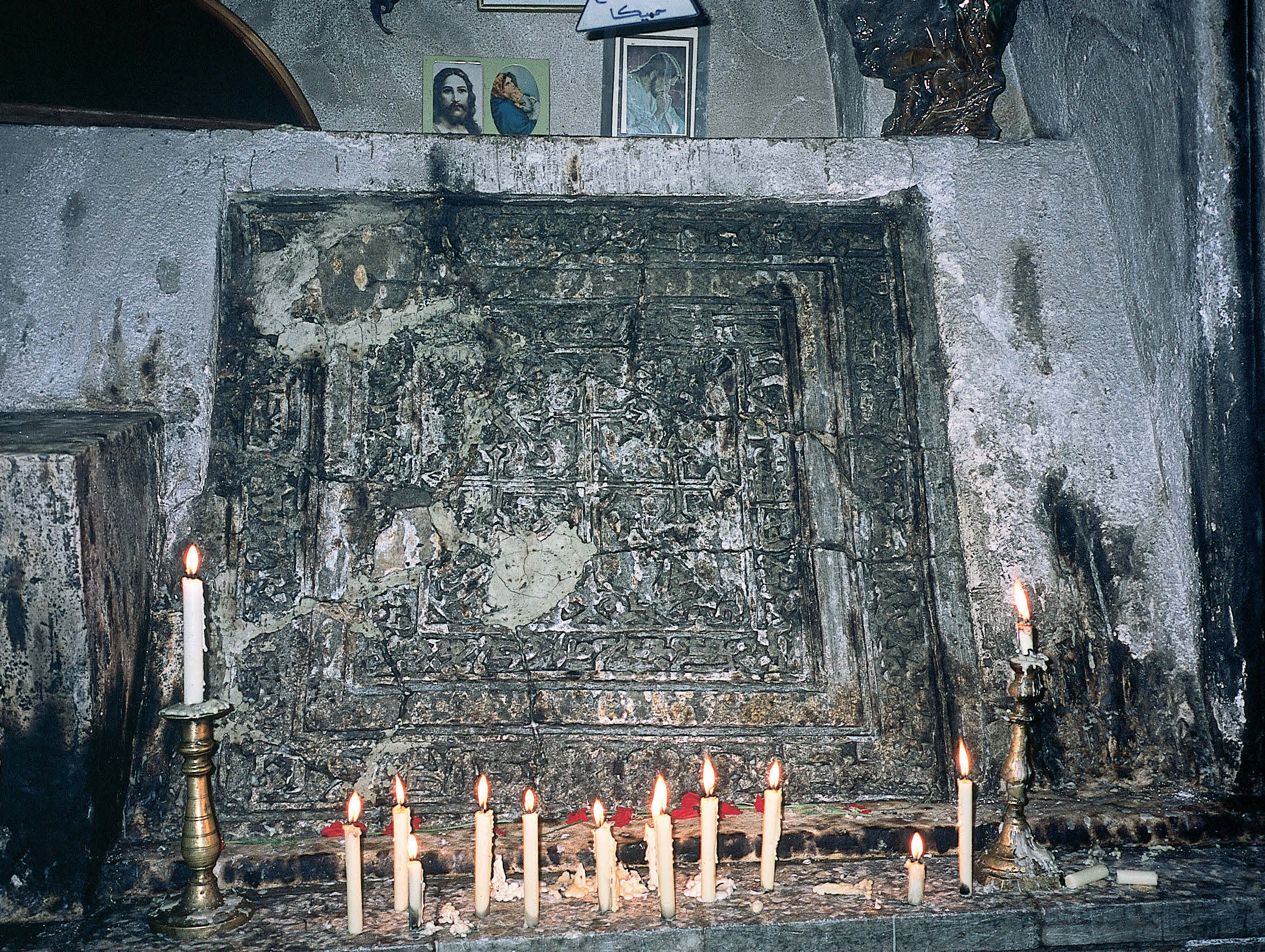
Bishop’s grave in the Meskinta Cathedral, today Chaldean, in Mosul, northern Iraq. Between 1364 until about the middle of the fifteenth century the church, founded in 1199 or 1212, served as the patriarchal cathedral of the three patriarchs of the Church of the East who lived in Mosul.70
伊拉克北部摩苏尔 (Mosul) 的梅斯金塔主教座堂 (Meskinta Cathedral) 内的主教墓;该主教座堂今属迦勒底教会 (Chaldean)。在1364年至约十五世纪中叶之间,这座建于1199年或1212年的教堂曾作为居住在摩苏尔 (Mosul) 的东方教会 (Ch. of E.) 三位宗主教的宗主教座堂。70
Despite its caution, the Vatican erred in recognizing Mar Elias XII Ishoyahb as patriarch in 1778, for only a few months later, in May 1779, Elias XII denounced the union with Rome, which had not yet been formally concluded, and returned to Nestorianism, presumably because he had been unable to unite the two other Church groups of Kotchannes and Amida under his leadership and with his line.7 Now four prelates – the two Uniate administrators of Amida and Mosul and the two non-Uniate, Nestorian patriarchs of Kotchannes and Alqosh – fought for predominance over the remaining dioceses and members of the one-time Church
尽管梵蒂冈 (Vatican) 行事谨慎,但它在1778年承认马尔·伊利亚十二世·伊肖雅布 (Mar Elias XII Ishoyahb) 为宗主教 (patriarch) 一事上还是犯了错,因为仅仅几个月后,即在1779年5月,伊利亚十二世 (Elias XII) 便谴责了与罗马 (Rome) 的联合——这一联合尚未正式缔结——并回归聂斯托利派 (Nestorianism),大概是因为他未能将科特昌内斯 (Kotchannes) 和阿米达 (Amida) 的另外两个教会团体统一到他的领导及其世系之下。7 如今,四位教长——阿米达 (Amida) 和摩苏尔 (Mosul) 的两位合一派 (Uniate) 管理者,以及科特昌内斯 (Kotchannes) 和阿尔科什 (Alqosh) 的两位非合一派 (non-Uniate) 聂斯托利派 (Nestorian) 宗主教——争夺对昔日教会余下教区和成员的主导权。
of the East. Only death allowed the muddled situation to be somewhat clarified. Mar Elias XII died in 1804, bringing an end to the Nestorian patriarchate of Rabban Hormizd and Alqosh, and Joseph V Hindi of Amida died in 1828.8 After thorough examination, the pope appointed John VIII Hormez as patriarch for the Chaldean Catholic Church, with his see at Baghdad. [^9] The situation also became clearer on the Nestorian side. After a nephew of John VIII Hormez tried unsuccessfully in 1831 to be elected as an anti-patriarch under the name Elias XIV, the patriarchate of Kotchannes under Mar Shimun XVII Abraham (in office 1820–1861) remained more or less unchallenged. But the Nestorians soon became the prey of Roman Catholic, Chaldean, Anglican, Protestant and Russian missionaries, all of whom enjoyed more or less strong support from the Western great powers. To paraphrase Metropolitan Mar Aprem, the missionaries attacked the Syrian congregations like hungry wolves ‘in order to steal their sheep’. [^10] Neither the missionaries nor the Nestorians noticed that they were merely tiny, always dispensable figures on the chessboard of inter-national politics. The Church of the East owed its survival during this time to its deep roots among the faithful.
东方教会。只有死亡才使混乱的局面多少得到澄清。马尔·埃利亚斯十二世 (Mar Elias XII) 于1804年去世,结束了拉班·霍尔米兹德 (Rabban Hormizd) 和阿尔科什 (Alqosh) 的聂斯托利派宗主教区,而阿米达的约瑟五世·欣迪 (Joseph V Hindi of Amida) 于1828年去世。8 经过彻底审查后,教皇任命约翰八世·霍尔梅兹 (John VIII Hormez) 为迦勒底天主教会 (Chaldean Catholic Church) 的宗主教,其教座设在巴格达 (Baghdad)。9 聂斯托利派一方的情况也变得更为清晰。约翰八世·霍尔梅兹 (John VIII Hormez) 的一个侄子于1831年试图以埃利亚斯十四世 (Elias XIV) 之名被选为对立宗主教,但未能成功;此后,由马尔·希蒙十七世·亚伯拉罕 (Mar Shimun XVII Abraham)(在位 1820–1861 年)领导的科特昌内斯 (Kotchannes) 宗主教区则或多或少未受挑战。但聂斯托利派信徒很快成为罗马天主教、迦勒底、圣公会、新教和俄罗斯传教士的猎物,这些传教士都或多或少得到西方列强的有力支持。用都主教马尔·阿普雷姆 (Metropolitan Mar Aprem) 的话来说,传教士像饿狼一样攻击叙利亚教会会众,‘为了偷走他们的羊’。10 无论是传教士还是聂斯托利派信徒,都没有注意到他们不过是国际政治棋盘上渺小、随时可被舍弃的棋子。东方教会 (Ch. of E.) 在这一时期得以存续,要归功于其在信众中的深厚根基。
The surprising result of these complex unions and divisions consists in the fact that the Chaldean Catholic Church, led in 2005 by Patriarch Mar Emmanuel III Delly (in office since 2003), is the successor to the ancient catholicate of Seleucia- Ctesiphon, while the Assyrian Church of the East, led by Patriarch Mar Dinkha IV (in office since 1976), is descended from the formerly Catholic patriarchate of John Sulaqa. Put differently, the hierarchal line of the ancient Nestorian Church of the East has become Catholic, while the hierarchical line that was once united with Rome has returned to the East Syrian creed. [^11]
这些复杂的联合与分裂所带来的出人意料的结果在于:迦勒底天主教会 (Chaldean Catholic Church) 于2005年由宗主教马尔·埃马努埃尔三世·德利 (Mar Emmanuel III Delly) 领导(自2003年起在位),是古代塞琉西亚-泰西封 (Seleucia-Ctesiphon) 大公宗主教区的继承者;而东方亚述教会 (Assyrian Church of the East) 由宗主教马尔·丁卡四世 (Mar Dinkha IV) 领导(自1976年起在位),则传承自约翰·苏拉卡 (John Sulaqa) 先前曾属天主教的宗主教区。换言之,古代聂斯托利派东方教会 (Nestorian Church of the East) 的圣统已变为天主教,而曾与罗马 (Rome) 合一的圣统则回归了东叙利亚信条。11
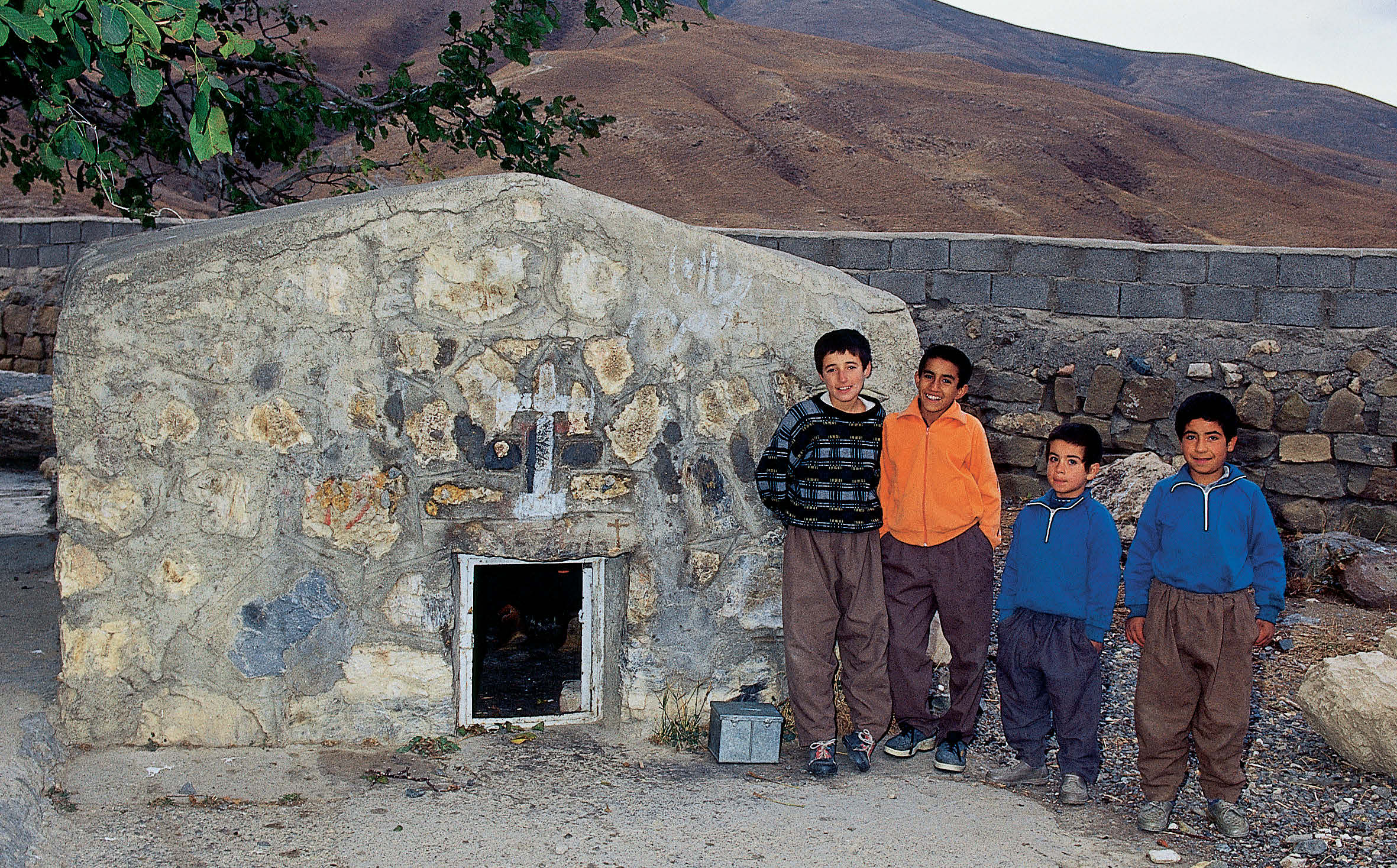
The tiny East Syrian Rabban Hormizd Chapel in Dasgir is located in the mountains west of Urmiah, Iran. In the Kurdish mountains the Nestorians intentionally built their chapels either very small or with tiny entrances in order to prevent the Kurds from misusing the churches as stalls for cattle.
达斯吉尔 (Dasgir) 那座小小的东叙利亚 (East Syrian) 拉班·霍尔米兹德 (Rabban Hormizd) 小教堂,位于伊朗 (Iran) 乌尔米亚 (Urmiah) 以西的群山中。在库尔德 (Kurdish) 山区,聂斯托利派信徒 (Nestorians) 有意将他们的礼拜堂建得要么非常小,要么入口极小,以防库尔德人 (Kurds) 将这些教堂误用作牛栏。
The political situation in the
……的政治局势
Ottoman Empire and the
奥斯曼帝国 (Ottoman Empire) 和
Chaldean Catholic Church
迦勒底天主教会 (Chaldean Catholic Church)
until the twentieth century
直到二十世纪
In the nineteenth century the European great powers, France, Great Britain and Russia, compelled the Turkish sultans on the one hand to offer better protection to the Christians within the Ottoman Empire and, on the other, to allow greater latitude to missionaries. The same occurred in Iran, as the country, beginning in 1872, slowly diminished in status to become an English–Russian protectorate. Naturally the field of operation for the European and American missionaries was limited to other Christian groups, such as the Armenians and Nestorians; to work among the Muslims was strictly forbidden, and among the Jews they had no prospects for success.
19世纪,欧洲列强——法国 (France)、英国 (Great Britain) 和俄国 (Russia)——一方面迫使土耳其苏丹更好地保护奥斯曼帝国 (Ottoman Empire) 境内的基督徒,另一方面则迫使苏丹给予传教士更大的活动自由。同样的情况也发生在伊朗 (Iran):自1872年起,该国地位逐渐下降,最终沦为英俄保护国 (English–Russian protectorate)。自然,欧美传教士的活动范围仅限于其他基督徒群体,如亚美尼亚人 (Armenians) 和聂斯托利派 (Nestorians);在穆斯林中传教被严格禁止,而在犹太人中,他们也没有成功的希望。
Roman Catholic Church be accepted, leading to the introduction of personal confession, extreme unction and separate confirmation. Although men who were already married were permitted into the office of priest, remarriage following the death of a wife was forbidden. After John VIII’s death Rome appointed Nicholas I (†1855) as Chaldean patriarch, but he resigned in 1847 on account of disagreements with the Vatican. He was followed by Joseph VI Audo (in office 1848–1878), whose patriarchate was marked by endless struggles about the oriental character of his Church and its sovereignty. The conflict was sparked by the papal claim to be the sole authority in naming the Chaldean bishops. The conflict first flared up when Joseph Audo sent the patriarchal vicar Thomas Rokos to India in 1860 but had to recall him later under papal pressure. At the First Vatican Council in 1870 he fought against the dogma of papal infallibility and in 1874, with Bishop Elias Mellus, sent a high dignitary to India for the second time. When, shortly before his death, the authoritarian Pope Pius IX threatened him with excommunication, he gave in and summoned Elias Mellus to return.
tags. Need ensure all proper nouns translated first then original in parentheses. We have “罗马天主教会 (Roman Catholic Church)” yes. “约翰八世 (John VIII)” yes. “尼古拉一世 (Nicholas I, †1855)” yes. “迦勒底宗主教 (Chaldean patriarch)”? Wait “Chaldean patriarch” is not proper noun? It’s title. Rule says church designations etc. We can include original for Chaldean? “迦勒底宗主教 (Chaldean patriarch)” maybe. “迦勒底主教 (Chaldean bishops)” maybe. “约瑟六世·奥多 (Joseph VI Audo)” yes. “托马斯·罗科斯 (Thomas Rokos)” yes. “第一次梵蒂冈大公会议 (First Vatican Council)” yes. “教宗无误论 (papal infallibility)” yes. “埃利亚斯·梅卢斯 (Elias Mellus)” yes. “庇护九世 (Pius IX)” yes. “梵蒂冈” no original? It’s place name, should include original? Rule: place names → Chinese name + (original), e.g. 尼西比斯 (Nisibis). So “梵蒂冈 (Vatican)” maybe. “罗马 (Rome)”? Place name. “印度 (India)”? Place name. Should include original? The rule says ALWAYS translate proper nouns into Chinese first, then include original in parentheses: place names. So yes, “罗马 (Rome)”, “梵蒂冈 (Vatican)”, “印度 (India)”. But if repeated, maybe first occurrence? It says always. We can include each occurrence? Might be cumbersome but okay. “罗马 (Rome)” first, later “罗马” maybe no need? But rule says always. We can include first occurrence and maybe subsequent not? To be safe, include original for each proper noun occurrence? But repeated “India” twice. Could include “印度 (India)” both times. “梵蒂冈 (Vatican)” once. “罗马 (Rome)” once. “迦勒底” is adjective? Proper noun? “Chaldean” should include original? Maybe “迦勒底 (Chaldean)”? But “Chaldean patriarch” as title. We can do “迦勒底宗主教 (Chaldean patriarch)” and “迦勒底主教 (Chaldean bishops)”. Good. Need “John VIII” maybe “约翰八世 (John VIII)” yes. “Nicholas I” yes. “Joseph VI Audo” yes. “Thomas Rokos” yes. “Elias Mellus” yes. “Pius IX” yes. “First Vatican Council” yes. “papal infallibility” yes. “Roman Catholic Church” yes. “Vatican” yes. “India” yes. “Rome” yes. Need “personal confession” maybe “个人告解 (personal confession)”? It’s not proper noun but technical term. Rule for technical Syriac terms? Not Syriac. But maybe include original? Not necessary. But could include for clarity? The instruction only proper nouns and technical Syriac terms. “personal confession” is technical term but not Syriac. We can just translate. “extreme unction” = 终傅. “separate confirmation” = 单独坚振. Good. Need “Chaldean patriarch” maybe “迦勒底宗主教 (Chaldean patriarch)” yes. Need “patriarchal vicar” = 宗主教代理 (patriarchal vicar)? It’s title. Could include original. “宗主教代理 (patriarchal vicar)” maybe. “high dignitary” = 高级教长 (high dignitary)? Not proper. Could include original? Not necessary. But maybe “高级教长” enough. Need “Bishop Elias Mellus” = 主教埃利亚斯·梅卢斯 (Elias Mellus). Good. Need “Pope Pius IX” = 教宗庇护九世 (Pius IX). Good. Need “authoritarian” = 专制的. “gave in” = 屈服. “summoned Elias Mellus to return” = 召埃利亚斯·梅卢斯 (Elias Mellus) 返回. Good. Potential issue: “John VIII’s death” maybe “约翰八世 (John VIII) 去世后” but “John VIII” could be “约翰八世” not “约翰八世 (John VIII)”? Good. Need “Nicholas I (†1855)” maybe “尼古拉一世 (Nicholas I, †1855)” but Chinese punctuation: “尼古拉一世 (Nicholas I, †1855)” okay. Or “尼古拉一世 (Nicholas I; †1855)”? Keep original. “†1855” exactly. Good. Need “in office 1848–1878” = 在任1848–1878. Could include original? “in office” not proper. “约瑟六世·奥多 (Joseph VI Audo)(在任1848–1878)” Good. Need “oriental character” = 东方特性. “sovereignty” = 自主权. Good. Need “The conflict was sparked by the papal claim to be the sole authority in naming the Chaldean bishops.” = 冲突的导火索是教宗声称自己是任命迦勒底主教 (Chaldean bishops) 的唯一权威。 Good. Need “The conflict first flared up when Joseph Audo sent the patriarchal vicar Thomas Rokos to India in 1860 but had to recall him later under papal pressure.” = 冲突首次爆发于1860年,当时约瑟·奥多 (Joseph Audo) 派遣宗主教代理托马斯·罗科斯 (Thomas Rokos) 前往印度 (India),但后来在教宗压力下不得不将他召回。 Good. Need “At the First Vatican Council in 1870 he fought against the dogma of papal infallibility and in 1874, with Bishop Elias Mellus, sent a high dignitary to India for the second time.” = 在1870年第一次梵蒂冈大公会议 (First Vatican Council) 上,他反对教宗无误论 (papal infallibility) 的信条;1874年,他又与主教埃利亚斯·梅卢斯 (Elias Mellus) 一起第二次派遣一位高级教长前往印度 (India)。 Good. Need “When, shortly before his death, the authoritarian Pope Pius IX threatened him with excommunication, he gave in and summoned Elias Mellus to return.” = 在他去世前不久,专制的教宗庇护九世 (Pius IX) 以绝罚威胁他,他于是屈服,并召埃利亚斯·梅卢斯 (Elias Mellus) 返回。 Good. Need maybe “John VIII’s death” = “约翰八世 (John VIII) 去世后” but “John VIII” maybe “约翰八世” not “约翰八世 (John VIII)”? Good. Need “Roman Catholic Church be accepted” grammar: “Roman Catholic Church be accepted” maybe “罗马天主教会 (Roman Catholic Church) 被接受” but “be accepted” maybe “should be accepted” from previous. We can translate “罗马天主教会 (Roman Catholic Church) 被接受”. Good. Need “leading to the introduction of personal confession, extreme unction and separate confirmation.” = 从而引入了个人告解、终傅和单独坚振。 Good. Need “Although men who were already married were permitted into the office of priest, remarriage following the death of a wife was forbidden.” = 尽管已婚男子获准担任司铎,但妻子去世后再婚则被禁止。 Good. Need “After John VIII’s death Rome appointed Nicholas I (†1855) as Chaldean patriarch, but he resigned in 1847 on account of disagreements with the Vatican.” = 约翰八世 (John VIII) 去世后,罗马 (Rome) 任命尼古拉一世 (Nicholas I, †1855) 为迦勒底宗主教 (Chaldean patriarch),但他于1847年因与梵蒂冈 (Vatican) 的分歧而辞职。 Good. Need “He was followed by Joseph VI Audo (in office 1848–1878), whose patriarchate was marked by endless struggles about the oriental character of his Church and its sovereignty.” = 其继任者是约瑟六世·奥多 (Joseph VI Audo)(在任1848–1878),其宗主教任期以围绕其教会的东方特性及其自主权的无休止斗争为标志。 Good. Need “The conflict was sparked by the papal claim to be the sole authority in naming the Chaldean bishops.” = 冲突的导火索是教宗声称拥有任命迦勒底主教 (Chaldean bishops) 的唯一权威。 Good. Need “The conflict first flared up when Joseph Audo sent the patriarchal vicar Thomas Rokos to India in 1860 but had to recall him later under papal pressure.” = 冲突首次爆发于1860年,当时约瑟·奥多 (Joseph Audo) 派遣宗主教代理托马斯·罗科斯 (Thomas Rokos) 前往印度 (India),但后来在教宗压力下不得不将他召回。 Good. Need “At the First Vatican Council in 1870 he fought against the dogma of papal infallibility and in 1874, with Bishop Elias Mellus, sent a high dignitary to India for the second time.” = 在1870年第一次梵蒂冈大公会议 (First Vatican Council) 上,他反对教宗无误论 (papal infallibility) 的信条;1874年,他又与主教埃利亚斯·梅卢斯 (Elias Mellus) 一起第二次派遣一位高级教长前往印度 (India)。 Good. Need “When, shortly before his death, the authoritarian Pope Pius IX threatened him with excommunication, he gave in and summoned Elias Mellus to return.” = 在他去世前不久,专制的教宗庇护九世 (Pius IX) 以绝罚威胁他,他于是屈服,并召埃利亚斯·梅卢斯 (Elias Mellus) 返回。 Good. Need maybe “Pope Pius IX” = 教宗庇护九世 (Pius IX). Good. Need “excommunication” = 绝罚. Good. Need “authoritarian” = 专制的. Good. Need “summoned Elias Mellus to return” = 召埃利亚斯·梅卢斯 (Elias Mellus) 返回. Good. Potential issue: “John VIII” maybe “约翰八世” but if “John VIII” is a patriarch, Chinese might be “约翰八世 (John VIII)” yes. Potential issue: “Nicholas I” maybe “尼古拉一世” but if Chaldean patriarch, maybe “尼古拉一世 (Nicholas I)” yes. Potential issue: “Joseph VI Audo” maybe “约瑟六世·奥多” but “Audo” could be “奥多” or “奥杜”. Let’s check: Joseph VI Audo (1848-1878) Chaldean Patriarch. Chinese sources? “约瑟六世·奥多” maybe. “Audo” pronounced Aw-do, Chinese “奥多”. Good. Potential issue: “Thomas Rokos” maybe “托马斯·罗科斯” or “罗克斯”. Greek? Rokos. Chinese “罗科斯”. Good. Potential issue: “Elias Mellus” maybe “埃利亚斯·梅卢斯” or “伊利亚斯·梅卢斯”. Elias in Syriac? “Elias Mellus” Chaldean bishop. Chinese “埃利亚斯·梅卢斯” okay. Could use “伊利亚斯·梅卢斯” maybe more biblical? But “Elias” in English transliteration “伊莱亚斯” or “埃利亚斯”. We’ll use “埃利亚斯·梅卢斯”. Good. Need “Chaldean” maybe “迦勒底” or “加尔底亚”? Catholic Chaldean = 迦勒底. Good. Need “First Vatican Council” = 第一次梵蒂冈大公会议. Good. Need “dogma of papal infallibility” = 教宗无误论信条. Good. Need “papal claim” = 教宗声称. Good. Need “sole authority” = 唯一权威. Good. Need “naming” = 任命. Good. Need “high dignitary” = 高级教长. Good. Need “patriarchal vicar” = 宗主教代理. Good. Need “under papal pressure” = 在教宗压力下. Good. Need “flared up” = 爆发. Good. Need “endless struggles” = 无休止斗争. Good. Need “oriental character” = 东方特性. Good. Need “sovereignty” = 自主权. Good. Need “marked by” = 以…为标志. Good. Need “in office” = 在任. Good. Need “resigned” = 辞职. Good. Need “disagreements” = 分歧. Good. Need “appointed” = 任命. Good. Need “be accepted” = 被接受. Good. Need “leading to” = 导致/从而. Good. Need “introduction” = 引入. Good. Need “personal confession” = 个人告解. Good. Need “extreme unction” = 终傅. Good. Need “separate confirmation” = 单独坚振. Good. Need “Although” = 尽管. Good. Need “men who were already married” = 已婚男子. Good. Need “permitted into the office of priest” = 获准担任司铎. Good. Need “remarriage following the death of a wife” = 妻子去世后再婚. Good. Need “forbidden” = 被禁止. Good. Need “After John VIII’s death” = 约翰八世 (John VIII) 去世后. Good. Need “Rome appointed” = 罗马 (Rome) 任命. Good. Need “Nicholas I (†1855)” = 尼古拉一世 (Nicholas I, †1855). Good. Need “as Chaldean patriarch” = 为迦勒底宗主教 (Chaldean patriarch). Good. Need “but he resigned in 1847” = 但他于1847年辞职. Good. Need “on account of disagreements with the Vatican” = 因与梵蒂冈 (Vatican) 的分歧. Good. Need “He was followed by” = 其继任者是. Good. Need “Joseph VI Audo (in office 1848–1878)” = 约瑟六世·奥多 (Joseph VI Audo)(在任1848–1878). Good. Need “whose patriarchate was marked by endless struggles about the oriental character of his Church and its sovereignty.” = 其宗主教任期以围绕其教会的东方特性及其自主权的无休止斗争为标志. Good. Need “The conflict was sparked by the papal claim to be the sole authority in naming the Chaldean bishops.” = 冲突的导火索是教宗声称拥有任命迦勒底主教 (Chaldean bishops) 的唯一权威. Good. Need “The conflict first flared up when Joseph Audo sent the patriarchal vicar Thomas Rokos to India in 1860 but had to recall him later under papal pressure.” = 冲突首次爆发于1860年,当时约瑟·奥多 (Joseph Audo) 派遣宗主教代理托马斯·罗科斯 (Thomas Rokos) 前往印度 (India),但后来在教宗压力下不得不将他召回. Good. Need “At the First Vatican Council in 1870 he fought against the dogma of papal infallibility and in 1874, with Bishop Elias Mellus, sent a high dignitary to India for the second time.” = 在1870年第一次梵蒂冈大公会议 (First Vatican Council) 上,他反对教宗无误论 (papal infallibility) 的信条;1874年,他又与主教埃利亚斯·梅卢斯 (Elias Mellus) 一起第二次派遣一位高级教长前往印度 (India). Good. Need “When, shortly before his death, the authoritarian Pope Pius IX threatened him with excommunication, he gave in and summoned Elias Mellus to return.” = 在他去世前不久,专制的教宗庇护九世 (Pius IX) 以绝罚威胁他,他于是屈服,并召埃利亚斯·梅卢斯 (Elias Mellus) 返回. Good. Need maybe “John VIII’s death” = “约翰八世 (John VIII) 去世后” but “John VIII” maybe “约翰八世” not “约翰八世 (John VIII)”? Good. Need “Nicholas I (†1855)” maybe “尼古拉一世 (Nicholas I, †1855)” but if “†1855” is death year, Chinese might “尼古拉一世 (Nicholas I, 卒于1855年)”? But instruction preserve symbols? It says preserve abbreviations, footnote markers, manuscript sigla exactly. † is not listed but likely preserve. We can keep “†1855”. Good. Need “in office 1848–1878” maybe “在任1848–1878” with en dash. Good. Need “First Vatican Council” maybe “第一次梵蒂冈大公会议 (First Vatican Council)” yes. Need “papal infallibility” maybe “教宗无误论 (papal infallibility)” yes. Need “Chaldean patriarch” maybe “迦勒底宗主教 (Chaldean patriarch)” yes. Need “Chaldean bishops” maybe “迦勒底主教 (Chaldean bishops)” yes. Need “Roman Catholic Church” maybe “罗马天主教会 (Roman Catholic Church)” yes. Need “Vatican” maybe “梵蒂冈 (Vatican)” yes. Need “Rome” maybe “罗马 (Rome)” yes. Need “India” maybe “印度 (India)” yes. Need “John VIII” maybe “约翰八世 (John VIII)” yes. Need “Nicholas I” maybe “尼古拉一世 (Nicholas I)” yes. Need “Joseph VI Audo” maybe “约瑟六世·奥多 (Joseph VI Audo)” yes. Need “Thomas Rokos” maybe “托马斯·罗科斯 (Thomas Rokos)” yes. Need “Elias Mellus” maybe “埃利亚斯·梅卢斯 (Elias Mellus)” yes. Need “Pius IX” maybe “庇护九世 (Pius IX)” yes. Need “Joseph Audo” maybe “约瑟·奥多 (Joseph Audo)” yes. Need “patriarchal vicar” maybe “宗主教代理 (patriarchal vicar)”? It’s a title. Could include original. Let’s include: “宗主教代理 (patriarchal vicar) 托马斯·罗科斯 (Thomas Rokos)”. Good. Need “high dignitary” maybe “高级教长 (high dignitary)”? Not proper. But could include original? Not necessary. But maybe “高级教长” enough. Need “Bishop Elias Mellus” = “主教埃利亚斯·梅卢斯 (Elias Mellus)” yes. Need “Pope Pius IX” = “教宗庇护九世 (Pius IX)” yes. Need “excommunication” = “绝罚” maybe include original? Not proper. Could “绝罚 (excommunication)”? It’s technical term. Maybe include original for clarity. But instruction only technical Syriac terms. However, adding original for technical terms is okay? It says for technical Syriac terms, provide Chinese translation + transliterated original. For non-Syriac, not required. But adding original in parentheses for key terms might be acceptable. But output should be natural. We can include for some: “绝罚 (excommunication)”? Maybe not necessary. But to be safe with academic conventions, include original for technical terms? The rule says proper nouns and terms. “Critical rules for proper nouns and terms:” then lists. It says ALWAYS translate proper nouns into Chinese first, then include original. For technical Syriac terms, provide Chinese + transliterated original. It doesn’t say for all technical terms. But “extreme unction” etc. are technical. Could include original? Might clutter. But maybe okay. We can include for “personal confession (personal confession)”? That’s redundant. Better not. Need “Chaldean” maybe “迦勒底” is proper adjective. We include original in title. Good. Need “Roman Catholic Church” maybe “罗马天主教会 (Roman Catholic Church)” yes. Need “personal confession” maybe “个人告解” no original. Good. Need “extreme unction” = “终傅” no original. Good. Need “separate confirmation” = “单独坚振” no original. Good. Need “office of priest” = “司铎职” no original. Good. Need “patriarchate” = “宗主教任期” no original. Good. Need “oriental character” = “东方特性” no original. Good. Need “sovereignty” = “自主权” no original. Good. Need “papal claim” = “教宗声称” no original. Good. Need “sole authority” = “唯一权威” no original. Good. Need “naming” = “任命” no original. Good. Need “flared up” = “爆发” no original. Good. Need “recall” = “召回” no original. Good. Need “papal pressure” = “教宗压力” no original. Good. Need “dogma” = “信条” no original. Good. Need “high dignitary” = “高级教长” no original. Good. Need “authoritarian” = “专制的” no original. Good. Need “threatened him with excommunication” = “以绝罚威胁他” no original. Good. Need “gave in” = “屈服” no original. Good. Need “summoned … to return” = “召…返回” no original. Good. Potential issue: “John VIII’s death” maybe “约翰八世 (John VIII) 去世后” but “John VIII” maybe “约翰八世” not “约翰八世 (John VIII)”? Good. Need final output only translated text wrapped. No extra. Ensure XML tags. Use <translated_text> …
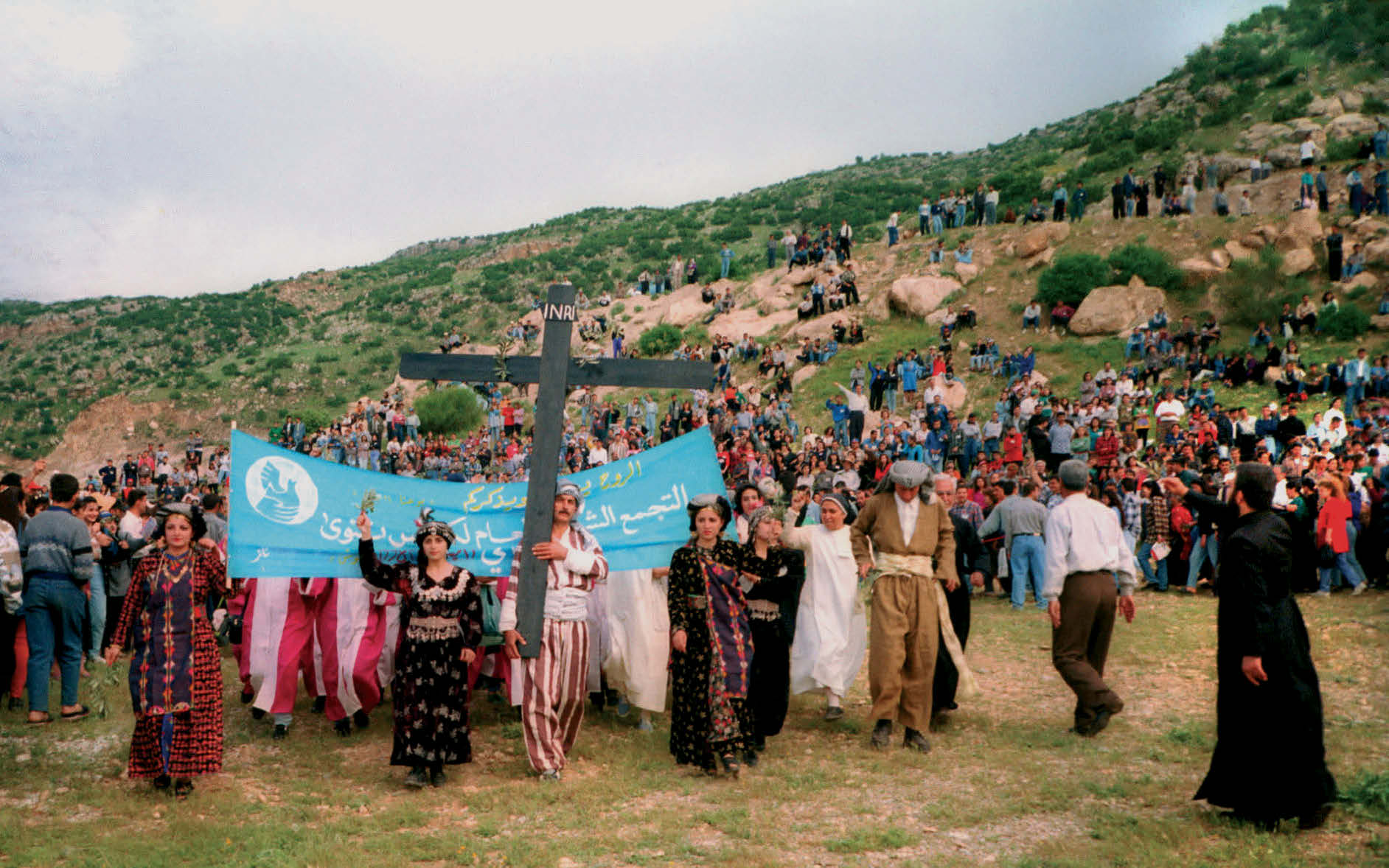
Procession of Chaldean Christians from Alqosh, northern Iraq, 1998.
1998年,来自伊拉克 (Iraq) 北部阿尔科什 (Alqosh) 的迦勒底基督徒 (Chaldean Christians) 游行。
Towards the end of the nineteenth century in the Ottoman Empire, Sultan Abdul Hamid II (ruled 1876–1909) instituted a policy of pan- Islamism, in order to mobilize the Arab provinces and Islamic dignitaries against the expanding colonial powers. The Ottoman government chose the Armenians as scapegoats for the empire’s internal collapse – between 1894 and 1896 about 300,000 innocent Armenians were massacred. After the 1908 seizure of power by the Young Turks, who played the ultranationalist card, a holocaust took place during World War I among the Armenians and Nestorian Assyrians, with approximately 1.6 to 1.8 million victims. Both peoples lost 50 to 60 per cent of their members.
19世纪末,在奥斯曼帝国 (Ottoman Empire),苏丹阿卜杜勒·哈米德二世 (Sultan Abdul Hamid II)(1876–1909年在位)推行泛伊斯兰主义 (pan-Islamism) 政策,以动员阿拉伯诸省 (Arab provinces) 和伊斯兰教显贵 (Islamic dignitaries) 对抗不断扩张的殖民列强 (colonial powers)。奥斯曼政府选择亚美尼亚人 (Armenians) 作为帝国内部崩溃的替罪羊——1894年至1896年间,约30万无辜的亚美尼亚人遭到屠杀。1908年青年土耳其党人 (Young Turks) 夺取政权后,他们打出极端民族主义牌,第一次世界大战 (World War I) 期间,在亚美尼亚人和聂斯托利派亚述人 (Nestorian Assyrians) 中发生了一场大屠杀,受害者约160万至180万。这两个民族均损失了其成员的50%至60%。
When John VIII Hormez was finally named Chaldean patriarch, he had to agree not to designate a relative as his successor. He was the last catholicos from the Abuna family, which supplied a total of 14 patriarchs. Further conditions included that the sacraments of the
当约翰八世·霍尔米兹 (John VIII Hormez) 最终被任命为迦勒底宗主教 (Chaldean patriarch) 时,他不得不同意不指定一名亲属作为其继承人。他是阿布纳家族 (Abuna family) 的最后一位大公宗主教 (catholicos),该家族总共出了14位宗主教。进一步的条件还包括,……的圣事
see of Rabban Hormizd in 1832. He not only had the churches desecrated and monks massacred; he had also as many books as possible burnt.13
1832年拉班·霍尔米兹德 (Rabban Hormizd) 的教座。他不仅让人亵渎了教堂、屠杀了修士,还尽可能多地焚毁书籍。13
Joseph Audo also undertook important efforts to educate priests and the faithful, opening a publishing house in 1860 and a seminary in 1866.
约瑟夫·奥多 (Joseph Audo) 还作出了重要努力,以教育神职人员和信众,于1860年开设了一家出版社,并于1866年开办了一所神学院。
Patriarch Emmanuel II Thomas (in office 1900–1947) launched major and also successful efforts to win Nestorians for his Church. In this regard the conversion of Bishop Abraham of Hakkari in 1902 was especially outstanding because he was a cousin of and the designated successor to the Nestorian patriarch Shimun XVIII (in office 1861–1903). Along with Abraham, another bishop and several tribes converted to the Chaldean Church.12 However, all changes of denomination made at that time were not theo- logically motivated; rather, Christians and clergy hoped that the European great powers, above all France, would intervene with Istanbul to keep the plundering and murderous Kurds in check.
宗主教埃马努埃尔二世·托马斯 (Emmanuel II Thomas)(在位 1900–1947)发起了重大且成功的努力,为其教会争取聂斯托利派 (Nestorians) 信徒。在这方面,1902 年哈卡里 (Hakkari) 主教亚伯拉罕 (Abraham) 的皈依尤为突出,因为他是聂斯托利派宗主教西满十八世 (Shimun XVIII)(在位 1861–1903)的表亲,也是其指定的继承人。与亚伯拉罕一道,另一位主教和若干部落也皈依了迦勒底教会 (Chaldean Church)。12 然而,当时所有的教派变更并非都出于神学动机;相反,基督徒和神职人员希望欧洲列强,尤其是法国 (France),能与伊斯坦布尔 (Istanbul) 交涉,以遏制劫掠成性、杀人成性的库尔德人 (Kurds)。
The second social group was made up of the so-called mountain Nestorians, who lived from their herds of sheep and goats, as well as the meagre harvest from small mountain fields. Their character and lifestyle had been fully adapted to the harsh environment of the rugged mountains of Kurdistan – they were a freedom- loving and battle-ready people, who instilled fear even in the Kurdish arch-enemy. In 1839 the American Presbyterian missionary Grant described the mountain Nestorians as ‘the most independent people I ever saw, in every respect’. When Kurds from central Kurdistan, who had just plundered Rabban Hormizd, drew near, the Nestorians were said to have beheaded a half- dozen Kurds and displayed their heads on spikes on the bridge leading into their territory as a deterrent.14 Regarding those mountain Nestorians who lived in the heart of the Kurdish mountains, the British traveller Isabella Bishop, who visited them in 1890, reported: ‘They are practically unconquered by the Turks and unmolested by the Kurds; and maintain a fierce semi-independence under their maleks [lit. kings] and chiefs. They are wild and lawless mountaineers; brave, hardy and warlike, preserving their freedom by the sword; fierce, quarrelsome among themselves; and have little in common with the subject Syrians of the plains except their tenacious clinging to their ancient Church.’15 In this tribal society the patriarch brought together religious and worldly power. These were acknowledged by the tribal leaders because, to implement his decisions, he could apply the feared punishment of excommunication, even in civil matters, and this was equivalent to expulsion from society. Nevertheless, he could not prevent the mountain Nestorians, who fought bitterly with each other, from entering into disastrous alliances with Kurdish tribal leaders.16
第二个社会群体由所谓的山地聂斯托利派组成,他们依靠羊群和山羊群,以及从小块山地田地上的微薄收成生活。他们的性格和生活方式已完全适应库尔德斯坦崎岖山区的严酷环境——他们是一个热爱自由、随时准备战斗的民族,甚至令库尔德宿敌也心生恐惧。1839年,美国长老会传教士格兰特 (Grant) 将山地聂斯托利派描述为“我所见过的最独立的人,在各个方面都是如此”。当来自库尔德斯坦中部的库尔德人刚刚洗劫了拉班·霍尔米兹德 (Rabban Hormizd) 后逼近时,据说聂斯托利派信徒砍下了六个库尔德人的头,并将他们的首级插在通往其领地的桥上的尖桩上,以示威慑。14 至于那些生活在库尔德山区腹地的山地聂斯托利派信徒,1890年造访他们的英国旅行家伊莎贝拉·毕晓普 (Isabella Bishop) 记述道:“他们实际上未被土耳其人征服,也未受库尔德人骚扰;在他们的马利克 (maleks,字面意为“国王”) 和首领的统治下,维持着一种强悍的半独立状态。他们是野蛮而不受法律约束的山民;勇敢、坚韧、好战,以刀剑维护自由;凶猛,彼此好斗;除了对古老教会的顽强坚守之外,与平原上臣属的叙利亚人几乎没有共同之处。”15 在这个部落社会中,宗主教集宗教与世俗权力于一身。这些权力得到部落首领的承认,因为为了执行他的决定,他可以施加令人畏惧的绝罚,即使在民事事务中也是如此,而这等同于逐出社会。尽管如此,他无法阻止彼此激烈争斗的山地聂斯托利派信徒与库尔德部落首领结成灾难性的联盟。16
Catholic, Russian Orthodox and Protestant missionaries
天主教、俄罗斯东正教和新教传教士
Since the Nestorians’ retreat from the cities of Mesopotamia in the fifteenth century, they had been divided into two social groups. One consisted of farmers living in the broad valleys near the mountains of Kurdistan, whether it be north of Mosul, south of the Turkish Lake Van or west of the Iranian Lake Urmiah. This small minority was oppressed again and again by the Muslims, especially the Kurds, in the form of special taxation, extortion, plunder and the abduction of young women. Their churches were also often the targets of destructive attacks. It was especially painful for the rural East Syrians that in the early nineteenth century they lost their two remaining great libraries. First, Catholic missionaries incited recent converts to Catholicism to throw the library of Mosul, made up of many thousands of manuscripts, into the River Tigris, after which the Kurdish leader Mohammed Pasha attacked the former patriarchal
自十五世纪聂斯托利派 (Nestorians) 从美索不达米亚 (Mesopotamia) 诸城撤退以来,他们便分化为两个社会群体。其中一个群体由农民组成,他们生活在库尔德斯坦 (Kurdistan) 山区附近宽阔的谷地中,无论是在摩苏尔 (Mosul) 以北、土耳其的凡湖 (Lake Van) 以南,还是伊朗的乌尔米耶湖 (Lake Urmiah) 以西。这一少数群体屡遭穆斯林,尤其是库尔德人 (Kurds) 的压迫,形式包括特别征税、敲诈勒索、劫掠以及掳掠年轻妇女。他们的教堂也常常成为破坏性袭击的目标。对乡村地区的东叙利亚人 (East Syrians) 来说,尤其痛苦的是,他们在十九世纪初失去了仅存的两座大型图书馆。首先,天主教传教士煽动新近皈依天主教者,将摩苏尔 (Mosul) 的图书馆——由成千上万份手稿构成——投入底格里斯河 (Tigris),此后库尔德领袖穆罕默德帕夏 (Mohammed Pasha) 袭击了前宗主教(patriarchal)
Although Catholic missionaries had already long been active among the rural Nestorians, the West ‘discovered’ this small Christian community only beginning in 1820. First, the British archae- ologist and employee of the East India Company Claude Rich reported in 1820 of these Syrian Christians, who still used the language of Jesus, Aramaic or East Syriac. This last created a minor sensation: the Nestorians represented a living fossil, which it was necessary to study, to preserve and finally to convert. The first priest to come to the mountain Nestorians from the Anglo-Saxon regions was the British pastor Joseph Wolff in 1825. He took back to England a manuscript of the Peshitta, which he had published there and distributed in the region around Urmiah in 1827.17
尽管天主教传教士早已长期活跃于乡村聂斯托利派 (Nestorians) 信徒中间,但西方直到1820年才开始“发现”这一小型基督教社群。首先,英国考古学家、东印度公司 (East India Company) 职员克劳德·里奇 (Claude Rich) 于1820年报道了这些叙利亚基督徒 (Syrian Christians),他们仍使用耶稣的语言——阿拉米语 (Aramaic) 或东叙利亚语 (East Syriac)。最后这一点引起了小小的轰动:聂斯托利派代表了一种活化石,必须对其加以研究、保存,并最终使其皈依。第一位从盎格鲁-撒克逊地区来到山区聂斯托利派信徒中的教士,是英国牧师约瑟夫·沃尔夫 (Joseph Wolff),时在1825年。他将一份《别西大译本》(Peshitta) 抄本带回英国;他已于1827年在那里将其出版,并在乌尔米耶 (Urmiah) 周边地区分发。17
Two years earlier Russian troops had advanced to Urmiah, which had inspired individual groups of Nestorians to choose the Russian Orthodox Church for the short term. In 1830, with the Presbyterians E. Smith and H. G. O. Dwight of the American Board of Commissioners for Foreign Missions, Americans for the first time appeared on the chessboard of the mission to the Nestorians.19 The promising report of Smith and Dwight led in 1833 to the sending of Justin Perkins, who arrived in Urmiah in 1834. In contrast to their American successors and the Catholic missionaries, Perkins and his superiors were at first sincerely well disposed towards the Nestorians. His orders read: ‘A primary object which you will have in view, will be to convince the people, that you come among them with no design to take away their religious privileges, not to subject them to any foreign ecclesiastical power. The only acknowledged head of the Church is Jesus Christ, and your only acknowledged standard in ecclesiastical matters is the New Testament. The Syrian Church acknowledges the same head and also the same standard, though it may be, with some additions. You will have, therefore, a broad common ground. But your main objective will be, to enable the Nestorian Church, through the grace of God, to exert a commanding influence in the spiritual regen- eration of Asia.’20 The Presbyterian missionaries were comfortable with the absence from the Nestorian churches of statues and images, with the cross without the crucified figure, and with the aversion to the pope, which is why they called the Nestorians the ‘Protestants of Asia’.21 Conversely, the Nestorians, who had never heard of the Reformation, indulged in the idea that the Protestants were the ‘Nestorians of the West’.22 This spiritual brotherhood developed not least because the early Presbyterian and Anglican priests who lived among the Nestorians mostly dispensed with attempts at conversion. They provided assistance in matters of education and
两年前,俄国军队已推进至乌尔米耶 (Urmiah),这促使聂斯托利派 (Nestorians) 的若干个别群体短期选择了俄罗斯东正教会 (Russian Orthodox Church)。1830年,随着美国海外传教委员会 (American Board of Commissioners for Foreign Missions) 的长老会 (Presbyterians) 传教士 E. 史密斯 (E. Smith) 和 H. G. O. 德怀特 (H. G. O. Dwight) 的到来,美国人首次登上了向聂斯托利派传教的棋盘。19 史密斯和德怀特那份前景可观的报告,促使 1833 年派遣贾斯廷·珀金斯 (Justin Perkins),他于 1834 年抵达乌尔米耶 (Urmiah)。与他们的美国后继者和天主教 (Catholic) 传教士不同,珀金斯及其上级起初真诚地善待聂斯托利派 (Nestorians)。他的指令写道:“你们将抱有的首要目标,是使这些人确信:你们来到他们中间,无意剥夺他们的宗教特权,也无意使他们臣服于任何外来的教会权力。教会唯一公认的首脑是耶稣基督,你们在教会事务上唯一公认的标准是《新约》(New Testament)。叙利亚教会 (Syrian Church) 承认同一位首脑,也承认同一标准,尽管可能带有一些附加内容。因此,你们将拥有广阔的共同基础。但你们的主要目标将是,使聂斯托利派教会 (Nestorian Church) 借着上帝的恩典,在亚洲的属灵复兴中发挥主导性影响。”20 长老会 (Presbyterians) 传教士对聂斯托利派教会中没有雕像和圣像、对没有受难像的十字架,以及对教皇 (pope) 的反感感到安然,因此他们称聂斯托利派为“亚洲的新教徒” (Protestants of Asia)。21 反过来,从未听说过宗教改革 (Reformation) 的聂斯托利派,则沉溺于这样一种想法:新教徒 (Protestants) 是“西方的聂斯托利派” (Nestorians of the West)。22 这种属灵兄弟情谊之所以发展起来,尤其是因为早期生活在聂斯托利派中间的长老会 (Presbyterian) 和圣公会 (Anglican) 牧师大多放弃了劝人改宗的尝试。他们在教育事务和……方面提供帮助
But contacts between the mountain Nestorians and Western missionaries developed into a double-edged sword for both sides. A new field of activity was opened for the missionaries, and the Nestorians hoped for political aid – the dream of the patriarchs at that time revolved around a future European protectorate that would guarantee the security of their people. On the other side, these intentions were a thorn in the side of the Kurds, which is why in 1829 they murdered the German C. Schultz on his return from a visit to the patriarch in Kotchannes.18 Worse yet, the numerically far superior Kurds avenged themselves on the mountain Nestorians on account of the purported internationalization of the ‘Christian question’ with increasing massacres, for which they received the support of the pan-Islamist and ultranationalist Turkish factions. Since a few East Syrian bishops expected political gain from a conversion to the Chaldean or Russian Orthodox Church, the Church of the East was further weakened by the missionary efforts of their potential allies. But in 1830 it looked at first as though the intervention of European powers could help the Nestorians, for the Ottoman government was compelled to stop the Kurdish attacks.
但山地聂斯托利派 (mountain Nestorians) 与西方传教士之间的接触,对双方而言都变成了一把双刃剑。对传教士来说,这开辟了一个新的活动领域;而聂斯托利派则希望获得政治援助——当时宗主教们 (patriarchs) 的梦想,是围绕着一个未来的欧洲保护国展开的,这个保护国将保障其人民的安全。另一方面,这些意图却成了库尔德人 (Kurds) 的眼中钉,因此1829年,他们在德国人 C. 舒尔茨 (C. Schultz) 访问科查内斯 (Kotchannes) 的宗主教后返回途中将其杀害。18 更糟的是,人数远占优势的库尔德人因所谓“基督教问题”的国际化,以日益增多的屠杀对山地聂斯托利派实施报复,并因此得到泛伊斯兰主义和极端民族主义的土耳其派系的支持。由于少数东叙利亚主教 (East Syrian bishops) 期望通过皈依迦勒底教会 (Chaldean Church) 或俄罗斯正教会 (Russian Orthodox Church) 来获得政治利益,东方教会 (Ch. of E.) 又因其潜在盟友的传教活动而进一步削弱。但1830年,起初看来,欧洲列强 (European powers) 的干预或许能帮助聂斯托利派,因为奥斯曼政府 (Ottoman government) 被迫制止库尔德人的袭击。
take up work among the mountain Nestorians of Hakkari. However, Grant was attacked in Mardin by angry Muslims and had to seek refuge in the nearby West Syrian monastery of Deir az-Zafaran. After a meeting with Patriarch Mar Shimun XVII Abraham, Grant returned to Urmiah, where he soon received support through the arrival of the missionaries
在哈卡里 (Hakkari) 的山区聂斯托利派 (Nestorians) 中开展工作。然而,格兰特 (Grant) 在马尔丁 (Mardin) 遭到愤怒的穆斯林袭击,不得不前往附近的西叙利亚派 (West Syrian) 代尔扎法兰 (Deir az-Zafaran) 修道院避难。在与牧首 (Patriarch) 马尔·希蒙十七世·亚伯拉罕 (Mar Shimun XVII Abraham) 会面后,格兰特 (Grant) 返回乌尔米亚 (Urmiah),并很快因传教士的到来而获得支持。
A. Hallady and W. Stocking in 1837, W. Jones in 1839, A. Wright in 1840 and finally E. Breath, who brought along a printing press.
A. 哈拉迪 (A. Hallady) 和 W. 斯托金 (W. Stocking) 于1837年,W. 琼斯 (W. Jones) 于1839年,A. 赖特 (A. Wright) 于1840年,最后是 E. 布雷思 (E. Breath),他随身带来了一台印刷机。
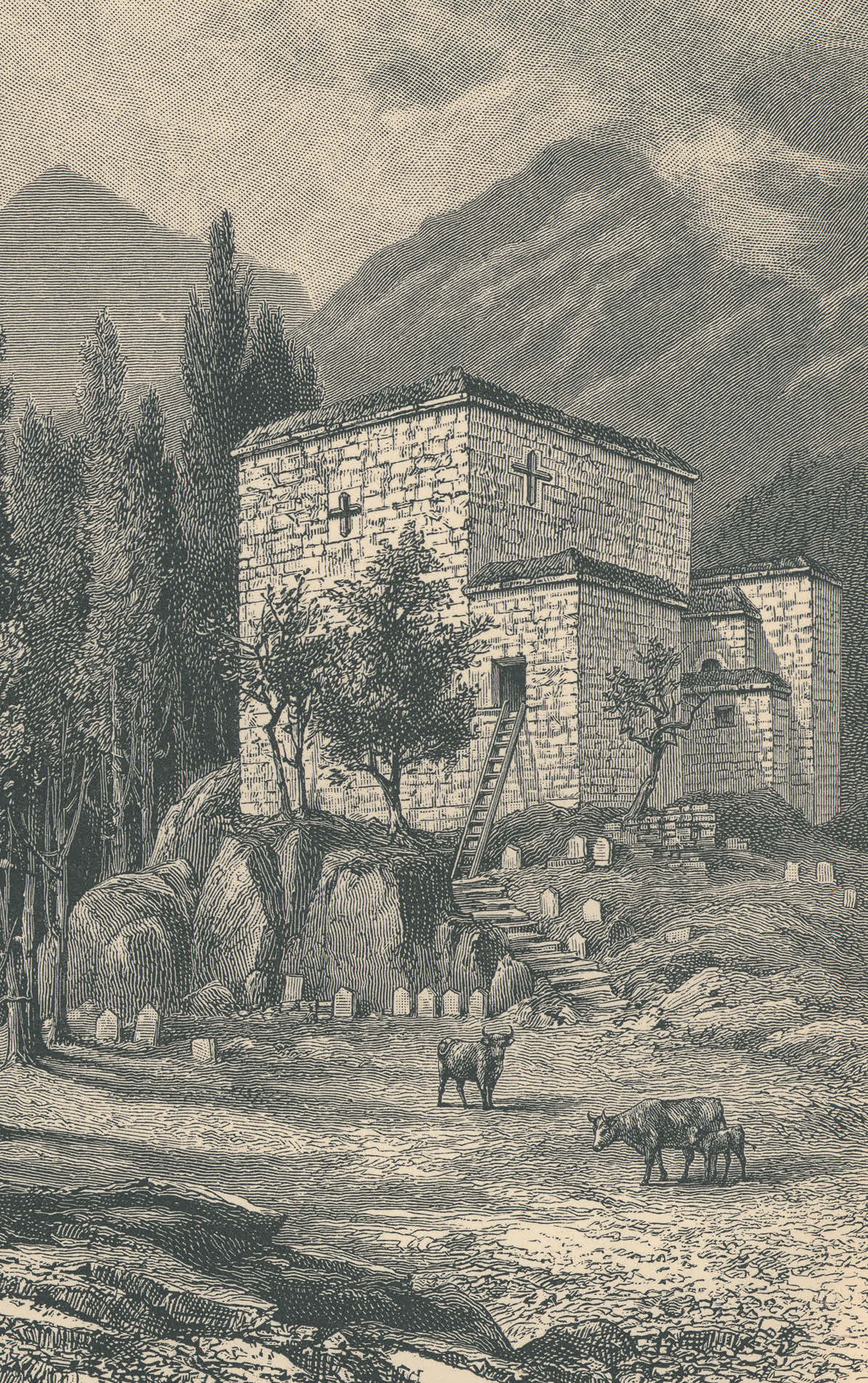
The Mar Shalita basilica of Kotchannes in the Hakkari Mountains of Kurdistan, south- eastern Turkey. From 1662 to 1915 it served as the patriarchal see of the patriarchs of the so-called ‘Sulaqa line’ of the Church of the East. The only entrance was almost four metres above the ground and accessible only via a ladder that could be removed at any time. In troubled times, the fortified church served Christians as a place of refuge. Illustration by Isabella Bishop, 1890.
科查内斯 (Kotchannes) 的圣沙利塔巴西利卡 (Mar Shalita Basilica) 位于土耳其 (Turkey) 东南部库尔德斯坦 (Kurdistan) 的哈卡里 (Hakkari) 山区。1662年至1915年间,它曾作为所谓“苏拉卡 (Sulaqa) 世系”的东方教会 (Ch. of E.) 宗主教们的宗主教座堂。唯一的入口离地近四米,只能通过一架随时可以撤走的梯子进入。在动荡时期,这座设防的教堂曾为基督徒提供避难之所。伊莎贝拉·毕晓普 (Isabella Bishop) 绘,1890年。
That such missionary attempts could also be politically explosive was tragically revealed in 1843. Grant’s activity irritated the Kurdish leader Badr Khan, who dreamt of an independent Kurdistan. Nevertheless, Grant won the friend- ship of Nurallah, a chieftain subordinate to Badr Khan, whom he cured of an illness. For both the patriarch, who hoped the American Grant would provide protection from the Kurdish threat, and Badr Khan, who viewed Grant’s efforts with suspicion, his missionary work had an eminently political dimension, which Grant himself did not want to admit. When, in the early summer of 1843, he set out to see the Kurdish leaders Badr Khan and Nurallah hundreds of Nestorians streamed to him and asked him to speak to his friend Nurallah on their behalf. He not only refused this request on the grounds of neutrality, he also observed with indifference the military preparations being made in the camp of the two Kurdish leaders for an invasion of the Nestorian regions. Instead of trying to mediate between Badr Khan and Patriarch Mar Shimun XVII with the help of his friend Nurallah, he concerned himself only with the assurance that the attacking Kurds would spare a schoolhouse he had built. health, in contrast to the Catholics, who applied great pressure and did not hesitate to attempt to bribe patriarchs and bishops with money.23 In a more amusing case, a Nestorian bishop and a Catholic bishop could not agree on theological questions, so they brought their argument before the chief mullah of Urmiah, who declared the Nestorian the victor – a process that recalls the old debates before the Mongol princes.24
这种传教尝试也可能具有政治爆炸性,这一点在1843年以悲剧性的方式显露出来。格兰特 (Grant) 的活动激怒了库尔德领袖巴德尔汗 (Badr Khan),后者梦想建立一个独立的库尔德斯坦。尽管如此,格兰特赢得了努尔阿拉 (Nurallah) 的友谊;努尔阿拉是巴德尔汗下属的一位酋长,格兰特治好了他的病。对于宗主教和巴德尔汗而言,格兰特的传教工作都具有极其明显的政治维度:宗主教希望这位美国人格兰特 (Grant) 能提供保护,以抵御库尔德人的威胁;而巴德尔汗则对格兰特的努力心存疑虑。格兰特本人却不愿承认这一点。1843年初夏,当他动身去见库尔德领袖巴德尔汗 (Badr Khan) 和努尔阿拉 (Nurallah) 时,数百名聂斯托利派信徒 (Nestorians) 涌向他,请求他代表他们向他的朋友努尔阿拉 (Nurallah) 陈情。他不仅以中立为由拒绝了这一请求,还漠然注视着两位库尔德领袖营地中为入侵聂斯托利派地区 (Nestorian regions) 所做的军事准备。他没有试图借助朋友努尔阿拉 (Nurallah) 的帮助在巴德尔汗 (Badr Khan) 与宗主教马尔·希蒙十七世 (Mar Shimun XVII) 之间进行调解,而只关心确保进攻的库尔德人会放过他建造的一所校舍。健康,与天主教徒 (Catholics) 形成对比,后者施加了巨大压力,并且毫不犹豫地试图用金钱贿赂宗主教和主教。23 在一个更滑稽的例子中,一位聂斯托利派主教 (Nestorian bishop) 和一位天主教主教 (Catholic bishop) 无法就神学问题达成一致,于是他们把争论提交给乌尔米亚 (Urmiah) 的首席毛拉 (chief mullah),后者宣布聂斯托利派一方获胜——这一过程让人想起蒙古王公 (Mongol princes) 面前的古老辩论。24
In 1835 the Presbyterian physician and missionary Asahel Grant reached Urmiah. Together with his wife, he not only opened a school and a medical practice greatly valued by both Christians and Muslims, he also sought to prove that the Nestorians were the descendants of the ten lost tribes of Israel.25 Four years later he was instructed by the Board of Missions to
1835年,长老会医生兼传教士阿萨赫尔·格兰特 (Asahel Grant) 抵达乌尔米亚 (Urmiah)。他与妻子一道,不仅开办了一所学校和一个深受基督徒与穆斯林珍视的诊所,还试图证明聂斯托利派信徒 (Nestorians) 是以色列失落的十个支派的后裔。25 四年后,他受差会董事会 (Board of Missions) 指示……
When Grant had only just left the Kurdish camp the Kurds attacked the Nestorians in the plains first, in June, and then the mountain Nestorians, in July. ‘The massacre was the ugliest which the Nestorians of Kurdistan had experienced since the ravages of Timur Lang.’26
格兰特 (Grant) 刚刚离开库尔德营地,库尔德人 (Kurds) 就发动了袭击:六月先袭击了平原地区的聂斯托利派信徒 (Nestorians),七月又袭击了山区的聂斯托利派信徒。“这场屠杀是库尔德斯坦 (Kurdistan) 的聂斯托利派信徒自帖木儿 (Timur Lang) 的蹂躏以来所经历的最惨烈的一次。”26
The Kurds murdered thousands of women and men, slicing off the ears of the dead and sending them to Badr Khan. Since young women were either sold as slaves or given as gifts to Muslim chieftains, many opted for suicide and threw themselves from bridges into the chasms below. At the same time, all the herds were stolen, churches razed, libraries destroyed and entire villages consumed by flames. In order to prevent the return of the fleeing Nestorians to their homeland, the Kurds also destroyed the irrigation canals and felled the fruit trees.27 The patriarch had to seek asylum in the British consulate in Mosul, and he thus escaped the fate of the West Syrian maphrian (archbishop), who was murdered by Badr Khan in Midyat. Three years later the Kurds attacked the mountain Nestorians of the Tyari tribe and systematically killed the priests, deacons and family leaders; not a single church remained standing. In total the Kurds massacred about 15,000 to 20,000 Nestorians. As far as Grant’s schoolhouse is concerned, they did in fact leave it undamaged, but they converted it into a fort. Grant himself died of typhus in Mosul in 1844, when he was caring for Nestorian refugees.28 After the third massacre of Christians, in 1846, the British government intervened with Istanbul. Kurdistan was placed under a Turkish pasha, and Badr Khan was sent into exile. Nevertheless, the Turkish authorities forbade the Nestorians from rebuilding their churches, in order to extort large bribes from them.29 Today we know that the Turkish government, which at that time held only loose authority over northern Mesopotamia, had incited the Kurds to massacre the Christians, so they could, in a second step, find a pretext to intervene militarily and destroy the Kurdish emirates.30
库尔德人(Kurds)杀害了数千名男女,割下死者的耳朵送给巴德尔汗(Badr Khan)。年轻女子不是被卖为奴隶,就是被赠予穆斯林首领;许多人因此选择自尽,从桥上跳入下方的深谷。与此同时,所有牲畜都被掠走,教堂被夷平,图书馆遭到毁坏,整座村庄葬身火海。为防止逃亡的聂斯托利派返回故土,库尔德人还毁坏了灌溉渠,砍倒果树。27 宗主教不得不前往摩苏尔(Mosul)的英国领事馆避难,因而逃过了西叙利亚教会的马弗里安(maphrian,大主教)的命运;后者在米迪亚特(Midyat)被巴德尔汗杀害。3年后,库尔德人袭击泰亚里(Tyari)部族的山区聂斯托利派,系统地杀害司铎、执事和家族领袖;没有一座教堂幸免。库尔德人总共屠杀了约15,000至20,000名聂斯托利派信徒。至于格兰特(Grant)的校舍,他们确实没有损毁,而是把它改成了堡垒。1844年,格兰特在摩苏尔照料聂斯托利派难民时染上斑疹伤寒去世。28 1846年第3次基督徒大屠杀后,英国政府向伊斯坦布尔(Istanbul)交涉。库尔德斯坦(Kurdistan)被置于一位土耳其帕夏管辖之下,巴德尔汗则被流放。尽管如此,土耳其(Turkey)当局仍禁止聂斯托利派重建教堂,以此向他们勒索巨额贿赂。29 如今我们知道,当时对美索不达米亚(Mesopotamia)北部(northern Mesopotamia)只有松散控制权的土耳其政府曾煽动库尔德人屠杀基督徒,以便随后以此为借口出兵干预并摧毁库尔德酋长国。30
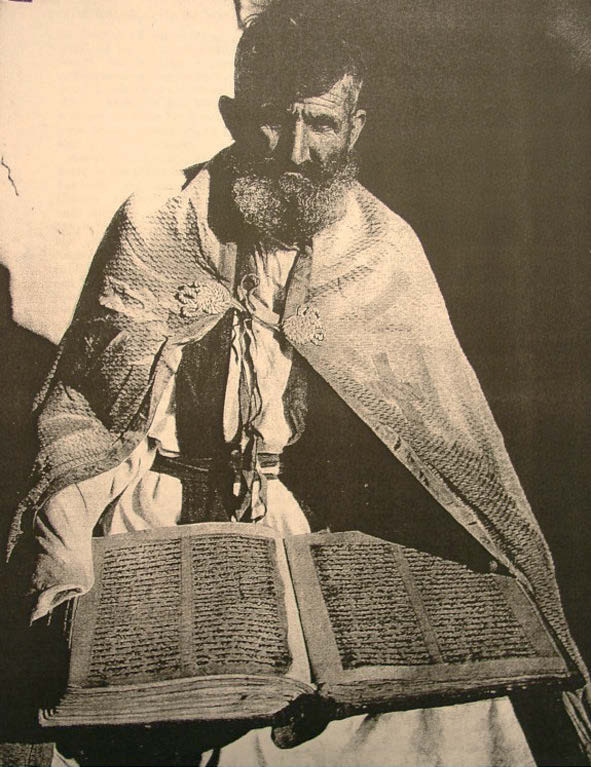
Priest of the Church of the East in northern Iraq, circa mid-1920s.
约20世纪20年代中期,伊拉克 (Iraq) 北部的东方教会 (Ch. of E.) 司铎。
Not only did the new arrivals publish and distribute anti-Nestorian tracts; the originally open-minded Perkins also adopted a fanatical tone when he attacked the practice of fasting:
新来者不仅出版并分发反聂斯托利派 (anti-Nestorian) 的小册子;原本思想开明的珀金斯 (Perkins) 在攻击禁食做法时也采用了狂热的腔调:
‘I do not know what more artful contrivance Satan could have invented, to substitute in the place of the pure religion of the gospel, than he has furnished with the fasts of these oriental churches.’31 The patriarch had the American school in Urmiah closed, whereupon most Presbyterians left the city and Mosul. Around 1870 they returned and began an aggressive campaign for conversion, which led to the establishment of an Assyrian Protestant Church.32 The missionary activities of other Protestant Churches later caused just as many divisions on the Nestorian side. Not for nothing had Mar Shimun XVII Abraham declared on his deathbed: ‘If you must change your religion, in order to guarantee the survival of our nation, convert to the Chaldeans, not the Protestants.’33
“我不知道撒但 (Satan) 还能发明出什么更巧妙的诡计,来取代福音的纯正宗教,胜过他以这些东方教会的斋戒所提供的那一套。”31 宗主教下令关闭了乌尔米亚 (Urmiah) 的美国学校,于是大多数长老会信徒 (Presbyterians) 离开了该城和摩苏尔 (Mosul)。约1870年,他们返回,并开始了一场强势的皈依运动,这促成了一个亚述新教教会 (Assyrian Protestant Church) 的建立。32 后来,其他新教教会 (Protestant Churches) 的传教活动在聂斯托利派 (Nestorian) 一方造成了同样多的分裂。马尔·希蒙十七世·亚伯拉罕 (Mar Shimun XVII Abraham) 在临终时曾宣称,这并非没有道理:“如果你们必须改变宗教,为了保证我们民族的存续,那就皈依迦勒底派 (Chaldeans),而不是新教徒 (Protestants)。”33
As a consequence of the lack of humanitarian help from Grant, relations deteriorated between the Nestorian clergy and the American Presbyterians, who for their part began harshly attacking the liturgical customs of the East Syrians.
由于格兰特 (Grant) 未能提供人道主义援助,聂斯托利派神职人员与美国长老会之间的关系恶化,后者则开始严厉抨击东叙利亚人的礼仪习俗。
The British did not stand idly by. In the years between 1835 and 1837 the British colonel Chesney led the Euphrates expedition, and upon his return told of ancient Christians in Kurdistan. This inspired the Royal Geographical Society and the Society for the Propagation of Christian Knowledge to send the surgeon and geologist
英国人并没有袖手旁观。在1835年至1837年间,英国上校切斯尼 (Chesney) 率领幼发拉底河探险 (Euphrates expedition),归来后讲述了库尔德斯坦 (Kurdistan) 的古代基督徒。这促使皇家地理学会 (Royal Geographical Society) 和基督教知识传播会 (Society for the Propagation of Christian Knowledge) 派遣这位外科医生兼地质学家
W. Ainsworth to the patriarch in 1838. Together with his travel companion, the Chaldean Isa (Jesus) Rassam, who after the end of the expedition was appointed vice-consul in Mosul, Ainsworth met Patriarch Shimun XVII in 1840. It was on the occasion of this meeting that the patriarch became angry about the crucifix Isa Rassam had brought along. For Christ had suffered but once and died but once, and now he is resurrected and enthroned in glory. No true Christian could portray the suffering Christ, since the symbol of Christianity was the ‘empty’ cross of the resurrection. The patriarch threw the crucifix away. [^34]
W. 安斯沃思 (W. Ainsworth) 于1838年致信宗主教 (patriarch)。1840年,安斯沃思与其旅行同伴——迦勒底人 (Chaldean) 伊萨(耶稣)·拉萨姆 (Isa (Jesus) Rassam) 一起会见了宗主教希蒙十七世 (Patriarch Shimun XVII);拉萨姆在考察结束后被任命为摩苏尔 (Mosul) 的副领事。正是在这次会面时,宗主教对伊萨·拉萨姆 (Isa Rassam) 随身携带的十字苦像 (crucifix) 大为恼怒。因为基督只受难一次,也只死一次,如今他已复活,并在荣耀中登基。任何真正的基督徒都不能描绘受难的基督,因为基督教的象征是复活之‘空’十字架。宗主教把十字苦像扔掉了。34
From this reconnaissance there resulted at the end of 1842 the trip of George Percy Badger, who enjoyed the support of the Archbishop of Canterbury and the Bishop of London. At his meeting with the patriarch in 1843 Badger succeeding in persuading him that the Anglican Church harboured no intentions of conversion but wanted to help the Nestorians in the areas of education and health. [^35] The Anglican mission-aries held to this strategy. The fifth Anglican missionary campaign, concluded in 1885, formulated its goal thus: ‘The work of the mission is in the first place to train up a body of literate clergy; secondly to instruct the youth in both religious and secular knowledge; and thirdly to print the very early liturgies of the Assyrians. The mission in no way seeks to Anglicanise the Assyrians nor to condone their heresy or to minimize its importance.’36 Patriarch Mar Shimun XVIII Ruben (1861–1903) was nevertheless disappointed by the British, as Isabella Bishop reported: ‘The patriarch and his people hoped for a British protectorate as one result of the Archbishop of Canterbury’s Mission, and they are bitterly disappointed that their condition is growing worse.’37 However, the British ambassador in Istanbul, Henry Layard (†1894), and the prime minister, Lord Salisbury (†1903), had already warned him that working closely with the Church of England could provoke further persecutions by the Turks and Kurds. [^38]
这次侦察的结果是,1842年底,乔治·珀西·巴杰 (George Percy Badger) 成行;他得到了坎特伯雷大主教 (Archbishop of Canterbury) 和伦敦主教 (Bishop of London) 的支持。1843年,巴杰在与宗主教 (patriarch) 会面时,成功说服后者相信,安立甘教会 (Anglican Church) 无意使聂斯托利派改宗,而是希望在教育和健康领域帮助聂斯托利派 (Nestorians)。35 安立甘传教士 (Anglican missionaries) 坚持这一策略。第五次安立甘传教运动 (Anglican missionary campaign) 于1885年结束,其目标表述如下:“传教团的工作首先是培养一批有文化的神职人员;其次是向青年教授宗教与世俗知识;第三是印刷亚述人 (Assyrians) 极早期的礼仪书。传教团绝无意使亚述人安立甘化,也无意纵容他们的异端或贬低其重要性。”36 然而,宗主教马尔·希蒙十八世·鲁本 (Patriarch Mar Shimun XVIII Ruben, 1861–1903) 对英国人感到失望,正如伊莎贝拉·毕晓普 (Isabella Bishop) 所报道的那样:“宗主教及其人民曾希望成为英国的保护国,以此作为坎特伯雷大主教传教团 (Archbishop of Canterbury’s Mission) 的一项成果;而如今他们的处境日益恶化,他们对此深感失望。”37 然而,英国驻伊斯坦布尔 (Istanbul) 大使亨利·莱亚德 (Henry Layard, †1894) 和首相索尔兹伯里勋爵 (Lord Salisbury, †1903) 已经警告他,与英格兰教会 (Church of England) 密切合作可能会招致土耳其人 (Turks) 和库尔德人 (Kurds) 的进一步迫害。38
It was in the second half of the nineteenth century that Anglican and American missionaries as well as the archaeologist Austen A. Layard described to the broad public the members of the Church of the East as Assyrians. [^39] The missionary W. A. Wigram, active in the early twentieth century, titled his book The Assyrians and their Neighbours and defined the Nestorians as the true descendants of the Assyrians, whose
正是在十九世纪下半叶,圣公会(Anglican)传教士和美国传教士以及考古学家奥斯汀·A·莱亚德 (Austen A. Layard) 才向广大公众将东方教会 (Ch. of E.) 的成员描述为亚述人 (Assyrians)。39 活跃于二十世纪初的传教士 W. A. 威格拉姆 (W. A. Wigram) 将其著作命名为《亚述人及其邻邦》(The Assyrians and their Neighbours),并将聂斯托利派 (Nestorians) 界定为亚述人的真正后裔,其
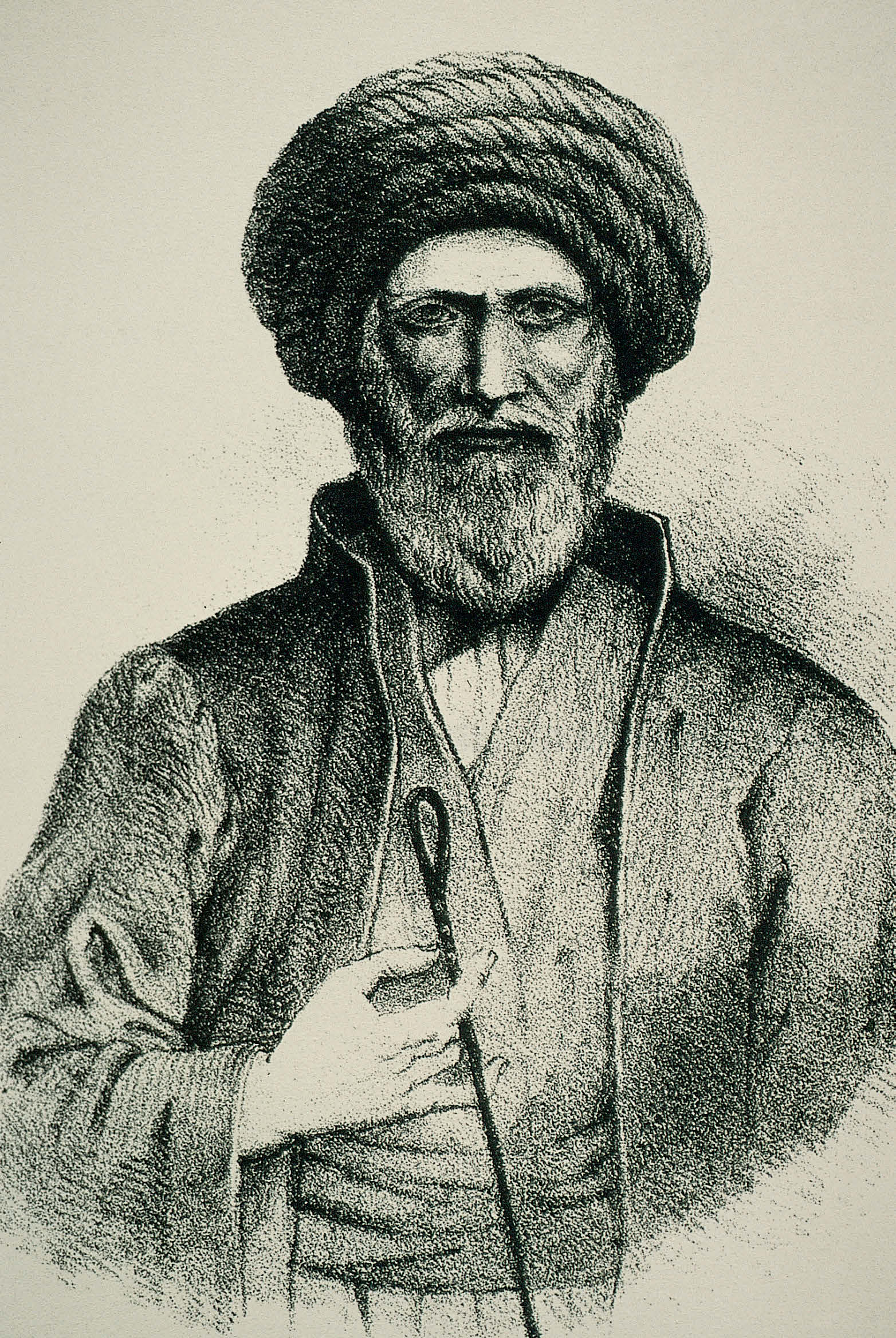
The patriarch of the Church of the East, Mar Shimun XVII (in office 1820–1861). Drawing by George Badger, c.1843.
东方教会 (Ch. of E.) 宗主教马尔·希蒙十七世 (Mar Shimun XVII)(在位 1820–1861 年)。乔治·巴杰 (George Badger) 绘,约1843年。
The Assyrian Reformed Mar Thoma Church in Mushava, Urmiah, Iran, late nineteenth century. empire fell in 612BCE. But, as Isabella Bishop, Grant and other missionaries had noted, in the nineteenth century the Nestorians called themselves not ‘Assyrians’ but rather ‘Syrians’, ‘Nazarenes’ or simply ‘Christians’. None the less, there are numerous proofs that the missionaries and Layard were not the first to call the local people of the Adiabene – the heartland of ancient Assyria and later one of the cradles of the Church of the East – Assyrians even after the fall of the Assyrian Empire. However, the Church first took on its present official name, the Holy Apostolic and Catholic Assyrian Church of the East, only under Patriarch Mar Shimun XXI in 1975.40 minorities of Kurdistan but only in limiting the Russian sphere of influence, pushed the Nestorians directly into the arms of the tsar. On 26 April 1868 Patriarch Mar Shimun XVIII wrote to the Russian tsar: ‘For some time past you have known and heard of the state of the Nestorians, a nation of poor people, who live in the mountains of Kurdistan. The Kurds have forcibly taken possession of several of our churches and convents; they constantly abduct our virgins, brides and women, forcing them to turn Moslems. For twenty years and more the Turks have taken possession of the country, but they are worse than the Kurds. We beseech your Mightiness, for the sake of Jesus, His Baptism, and Cross, either free us from such a state or procure us a remedy.’41 This letter had no effect
伊朗乌尔米耶(Urmiah)穆沙瓦(Mushava)的亚述改革派马尔·托马教会(Assyrian Reformed Mar Thoma Church),十九世纪晚期。亚述帝国于公元前612年灭亡。然而,正如伊莎贝拉·毕晓普(Isabella Bishop)、格兰特(Grant)及其他传教士所指出的,十九世纪的聂斯托利派自称“亚述人”之外,更多称自己为“叙利亚人”“拿撒勒人”,或干脆称“基督徒”。尽管如此,许多证据表明,传教士和莱亚德(Layard)并非最早把阿迪亚贝尼(Adiabene)当地居民称为亚述人的人;阿迪亚贝尼是古亚述的核心地区,后来也是东方教会的发源地之一,即便在亚述帝国灭亡后,当地居民也被这样称呼。然而,该教会直到1975年马尔·西门二十一世(Mar Shimun XXI)宗主教任内,才首次采用现行正式名称“东方亚述圣使徒大公教会”(Holy Apostolic and Catholic Assyrian Church of the East)。40……库尔德斯坦的少数群体,但其政策只着眼于限制俄罗斯势力范围,结果直接把聂斯托利派推入沙皇的怀抱。1868年4月26日,马尔·西门十八世(Mar Shimun XVIII)宗主教致信俄国沙皇:“您早已知晓并听闻聂斯托利派的处境:我们是生活在库尔德斯坦山区的一群贫苦百姓。库尔德人强占了我们的数座教堂和修道院;他们不断绑架我们的处女、新娘和妇女,逼迫她们改信伊斯兰教。二十多年来,土耳其人占领了这片土地,但他们比库尔德人更坏。我们恳求陛下,看在耶稣、祂的洗礼和十字架的份上,要么将我们从这种处境中解救出来,要么为我们寻得救济。”41这封信没有产生任何效果……
The hesitant attitude of the British government, which was not interested in the Christian
英国政府犹豫不决的态度,该政府对基督徒不感兴趣
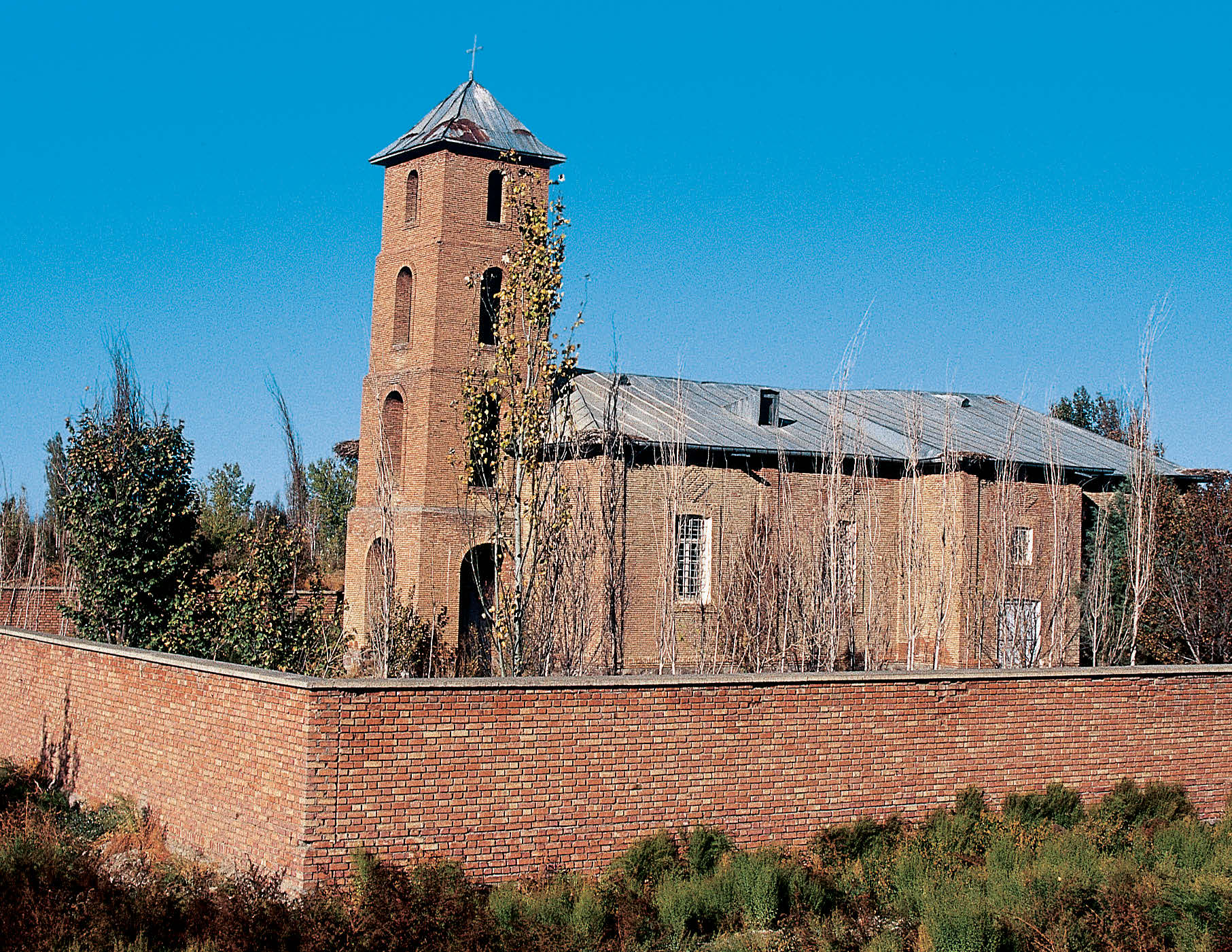
The Mar Giwargis Church, which belongs to the Church of the East and is located near Ardishai Urmiah, Iran, was desecrated by vandals in 2001. at first, but, when in 1876 the tsar declared himself prepared to work with Great Britain to help the Nestorians, Britain refused. England had concluded a defensive military alliance with the Ottoman Empire against Russia and thus sacrificed the mountain Nestorians on the altar of the politics of the great powers. motivated ‘conversion’, the people hoped to be spared the fate suffered by the Armenians living in the Ottoman Empire during the first genocide carried out by the Turks and Kurds in 1894–1896. Paradoxically, the situation of the Armenians had then taken a turn for the worse, when the leading Western powers at the peace conference in Berlin compelled the Ottoman Turks to reform the administration of the eastern Anatolian provinces, where millions of Christians lived. After this Sultan Abdul Hamid II, as a first step, purposefully settled anti-Christian Kurds in the regions with Christian majorities.42 As a second step he armed them militarily in the name of pan-Islamism, and built them into an irregular parallel army, in order to exterminate the Armenians. The
圣乔治教堂 (Mar Giwargis Church) 属于东方教会 (Church of the East),位于伊朗 (Iran) 乌尔米亚 (Urmiah) 的阿尔迪沙伊 (Ardishai) 附近,2001 年遭破坏者亵渎。起初,但是,当 1876 年沙皇宣布他准备与英国 (Great Britain) 合作以帮助聂斯托利派信徒 (Nestorians) 时,英国 (Britain) 拒绝了。英格兰 (England) 已与奥斯曼帝国 (Ottoman Empire) 缔结针对俄国 (Russia) 的防御性军事同盟,从而在大国政治的祭坛上牺牲了山区聂斯托利派信徒 (mountain Nestorians)。受“皈依”动机驱使,这些人希望免遭奥斯曼帝国 (Ottoman Empire) 境内亚美尼亚人 (Armenians) 在 1894–1896 年土耳其人和库尔德人 (Turks and Kurds) 实施的第一次种族灭绝中所遭受的命运。悖谬的是,亚美尼亚人 (Armenians) 的处境当时反而恶化了,因为西方主要列强在柏林 (Berlin) 和会上迫使奥斯曼土耳其人 (Ottoman Turks) 改革安纳托利亚东部诸省 (eastern Anatolian provinces) 的行政,那里居住着数百万基督徒。此后,苏丹阿卜杜勒·哈米德二世 (Sultan Abdul Hamid II) 作为第一步,有意将反基督教的库尔德人 (Kurds) 安置在基督徒占多数的地区。42 作为第二步,他以泛伊斯兰主义 (pan-Islamism) 的名义将他们武装起来,并将他们组建为一支非正规的平行军队,以消灭亚美尼亚人 (Armenians)。这
After the 1883/1884 negotiations about union with the Russian Orthodox Church broke down, Bishop Yuhannan of Urmiah signed a corre- sponding union treaty in St Petersburg in 1898. He was followed by over 20,000 faithful, who renounced the ‘Nestorian heresy’, whereupon a second Assyrian Russian Orthodox bishop was appointed and the old Church of the Virgin Mary in Urmiah was remodelled in the typical Russian style. With the purely politically
1883/1884年关于与俄罗斯东正教会 (Russian Orthodox Church) 联合的谈判破裂后,乌尔米亚的尤汉南主教 (Bishop Yuhannan of Urmiah) 于1898年在圣彼得堡 (St Petersburg) 签署了一份相应的联合条约。追随他的有两万多名信徒,他们宣布放弃“聂斯托利异端” (Nestorian heresy),随后第二位亚述俄罗斯东正教主教被任命,乌尔米亚的旧圣母玛利亚教堂 (old Church of the Virgin Mary) 也按照典型的俄罗斯风格进行了改建。在纯粹政治上的
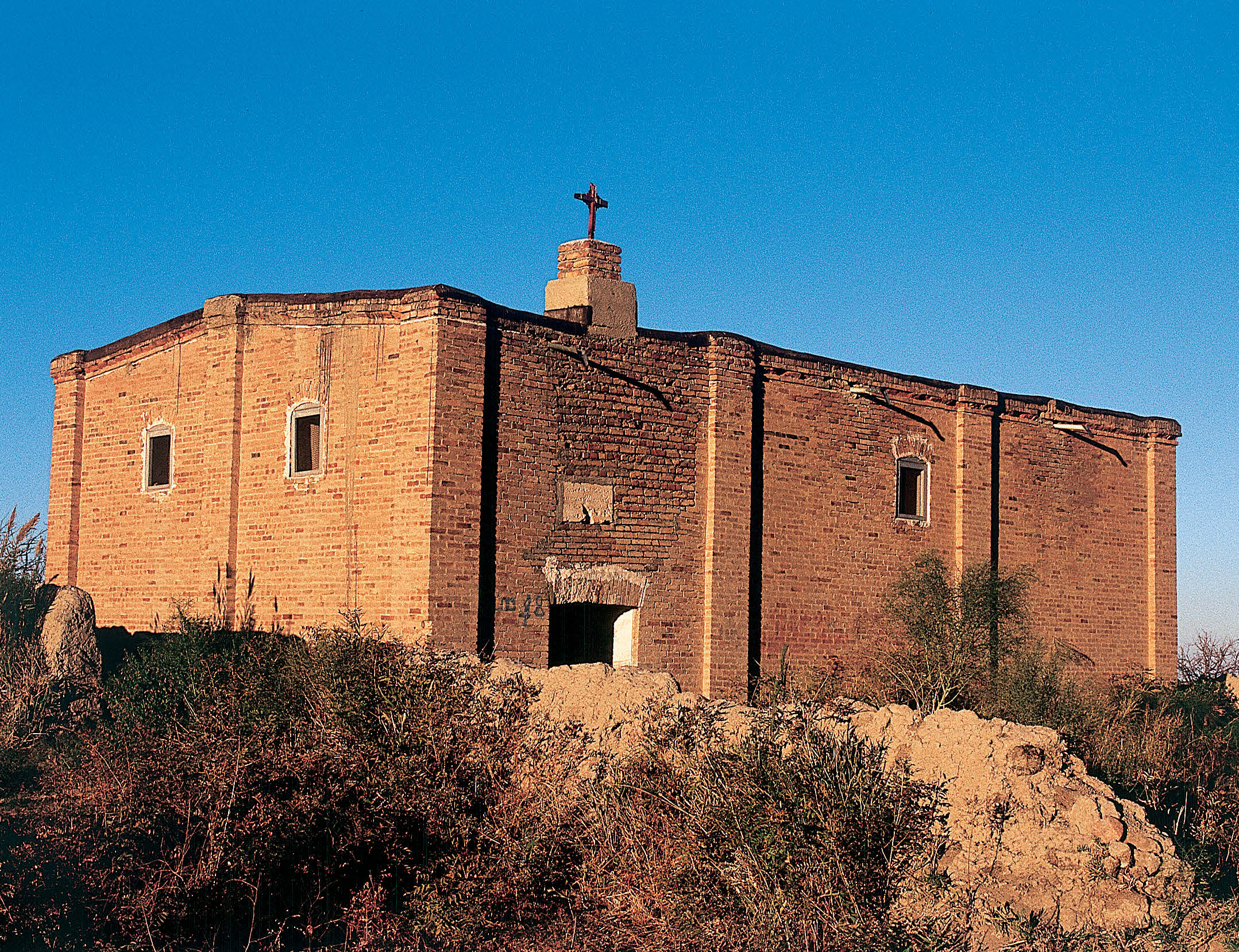
same fate threatened the Nestorians. However, the Assyrians of Urmiah bound their fate to that of Russia or to Russia’s military fortunes. At the same time, the Turkish government met the Assyrians living in the Ottoman Empire with increased distrust; they fell under suspicion of being a fifth column of the tsar.
聂斯托利派也面临同样的命运。然而,乌尔米耶(Urmiah)的亚述人(Assyrians)把自己的命运系于俄罗斯(Russia),或系于俄罗斯的军事胜败。同时,土耳其政府对居住在奥斯曼帝国(Ottoman Empire)境内的亚述人日益猜疑;他们被怀疑是沙皇的第5纵队。
The union with Russia soon suffered its first setback when the Russian Orthodox aid waned as a result of the Russian defeat in the Russo–
与俄罗斯(Russia)的联合很快遭遇第1次挫折:俄罗斯东正教的援助因俄国在俄
Japanese War of 1904–1905 and the consequent internal unrest. At the same time more Protestant groups entered the region of Urmiah, such as the missionaries of the United Lutheran Church of America, the Methodists, the Northern and Southern Baptists, the American Dunkards, the English Congregationalists, the English Plymouth Brethren, the German Oriental Mission, the Evangelical Association for the Promotion of the Nestorian Church and the Swedish-American Augustana Synod.43 Added to these were the established missionaries of the Catholic Lazarists, the Carmelites, the Chaldeans, the Anglicans and the Russian Orthodox. Presumably nowhere else in the world did so many rival Christian groups romp about in such a small area as in Urmiah. This undignified ‘hunt for souls’ ruined the morale of the Christians of Urmiah, who now treated ‘religion like sport and trade’.44
日战争(1904—1905年)中战败及随之而来的国内动荡而减弱。与此同时,更多新教团体进入乌尔米耶(Urmiah)地区,包括美国联合路德会(United Lutheran Church of America)的传教士、卫理公会(Methodists)、北方和南方浸信会(Northern and Southern Baptists)、美国邓卡派(American Dunkards)、英国公理会(English Congregationalists)、英国普利茅斯弟兄会(English Plymouth Brethren)、德国东方传教会(German Oriental Mission)、促进聂斯托利派教会福音派协会(Evangelical Association for the Promotion of the Nestorian Church),以及瑞典裔美国奥古斯塔纳主教会议(Swedish-American Augustana Synod)。43 此外,当地还有已建立的天主教遣使会士(Catholic Lazarists)、加尔默罗会士(Carmelites)、迦勒底人(Chaldeans)、圣公会人士(Anglicans)和俄罗斯正教会人士(Russian Orthodox)。大概世界上再没有别的地方,像乌尔米耶这样一小片地区聚集了如此众多彼此竞争的基督教团体。这种有失体面的“猎取灵魂”活动摧毁了乌尔米耶基督徒的士气;他们如今“把宗教当成运动和交易”。44
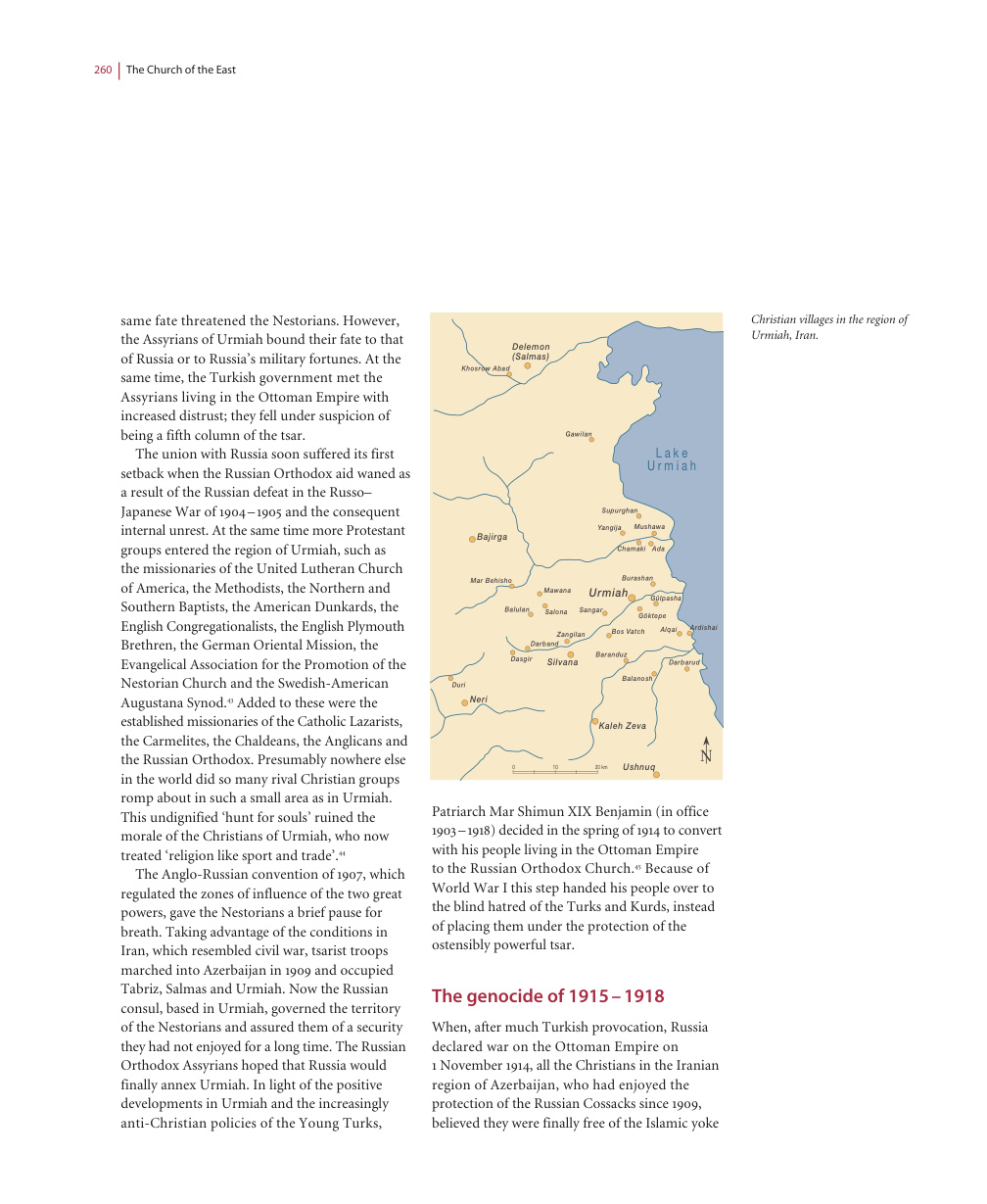
Patriarch Mar Shimun XIX Benjamin (in office 1903–1918) decided in the spring of 1914 to convert with his people living in the Ottoman Empire to the Russian Orthodox Church.45 Because of World War I this step handed his people over to the blind hatred of the Turks and Kurds, instead of placing them under the protection of the ostensibly powerful tsar.
宗主教马尔·西门19世·本雅明(Mar Shimun XIX Benjamin,在位1903—1918年)于1914年春决定带领居住在奥斯曼帝国(Ottoman Empire)境内的民众改宗俄罗斯正教会。45 由于第一次世界大战,这一举措使他的民众落入土耳其人(Turks)和库尔德人(Kurds)的盲目仇恨之中,而未能使他们得到表面上强大的沙皇(tsar)保护。
The Anglo-Russian convention of 1907, which regulated the zones of influence of the two great powers, gave the Nestorians a brief pause for breath. Taking advantage of the conditions in Iran, which resembled civil war, tsarist troops marched into Azerbaijan in 1909 and occupied Tabriz, Salmas and Urmiah. Now the Russian consul, based in Urmiah, governed the territory of the Nestorians and assured them of a security they had not enjoyed for a long time. The Russian Orthodox Assyrians hoped that Russia would finally annex Urmiah. In light of the positive developments in Urmiah and the increasingly anti-Christian policies of the Young Turks,
1907年的英俄协定(Anglo-Russian convention)划定了2大强国的势力范围,使聂斯托利派(Nestorians)获得短暂喘息。趁着伊朗(Iran)局势近似内战,沙皇俄军于1909年开进阿塞拜疆(Azerbaijan),占领大不里士(Tabriz)、萨尔马斯(Salmas)和乌尔米耶(Urmiah)。此后,驻乌尔米耶的俄罗斯(Russian)领事统治着聂斯托利派所在地区,并向他们保证一种久违的安全。俄罗斯正教亚述人希望俄罗斯最终吞并乌尔米耶。鉴于乌尔米耶局势有所好转,以及青年土耳其党(Young Turks)日益加剧的反基督教政策,
When, after much Turkish provocation, Russia declared war on the Ottoman Empire on
在土耳其多次挑衅之后,当俄罗斯(Russia)于
1 November 1914, all the Christians in the Iranian region of Azerbaijan, who had enjoyed the protection of the Russian Cossacks since 1909, believed they were finally free of the Islamic yoke
1914年11月1日向奥斯曼帝国宣战时,伊朗(Iran)阿塞拜疆(Azerbaijan)地区所有基督徒——他们自1909年以来一直受到俄罗斯哥萨克人(Russian Cossacks)的保护——都以为自己终于摆脱了伊斯兰(Islam)的枷锁
The Thomas Christians of South India | 261
南印度 (South India) 的圣多马基督徒 (Thomas Christians) | 261
From 1915 to 1918, General Agha Petros (1880–1932), with a small Assyrian voluntary army, achieved several successes against the Turks, but failed in his attempt to establish an autonomous Assyrian region in Kurdistan. In 1923 the British-Iraqi authorities forced him into exile in France, where he died under unsolved circumstances in 1932. (Photo c.1914.)
1915年至1918年,阿迦·佩特罗斯将军 (Agha Petros)(1880—1932)率领一支小规模的亚述人志愿军 (Assyrian voluntary army),对土耳其人 (Turks) 取得了数次胜利,但试图在库尔德斯坦 (Kurdistan) 建立亚述人自治区的努力未能成功。1923年,英国-伊拉克当局 (British-Iraqi authorities) 迫使他流亡法国 (France);1932年,他在那里去世,死因不明。(照片约摄于1914年 [c.1914]。)
Nestorian gravestone in the cemetery of Khosrow Abad near Delemon, Azerbaijan, Iran. and placed themselves on the side of the tsar. At the same time, the strongman in Istanbul, Enver Pasha (1881–1922), announced the jihad, the holy war against the Christians, on 4 November, which of course roused the Kurds to carry out new massacres. Since Azerbaijan, compared to the Caucasus, was for Russia only a secondary theatre of war, it evacuated Urmiah on 2 January and Salmas on 4 January 1915. Some 15,000 Assyro-Chaldeans 46 fled in the footsteps of the retreating Russian army to the north, where the majority died from the winter cold and hunger. But no sooner had the Cossacks left Urmiah than Turks and Kurds under the leadership of the Kurdish ruler Agha Simko (†1930) stormed the city and the surrounding villages, where they carried out a systematic hunt for Christians: men were murdered and women raped. The approximately 20,000 Assyro-Chaldeans who found refuge in the French and American missionary buildings had better luck. There began simultaneously in eastern Anatolia the total ethnic cleansing of Christians from Turkey, ordered by the Turkish interior minister Talat Pasha (1874–1921) on 24 April 1915, to which Armenians as well as Syrian Orthodox, Chaldeans and Nestorians fell victim; for about two million Christians this was the equivalent of a descent into hell.47 The massacres began in the cities of Amida (Diyarbakir), Mardin and Midyat, and then proceeded into Nisibis, Jazireh and Seert, where the famous Church historian and arch- bishop Addai Scher was murdered and the library, filled with ancient manuscripts, went up in
伊朗 (Iran) 阿塞拜疆 (Azerbaijan) 地区德莱蒙 (Delemon) 附近霍斯罗阿巴德 (Khosrow Abad) 墓地的聂斯托利派 (Nestorian) 墓碑。并站到了沙皇 (tsar) 一边。与此同时,伊斯坦布尔 (Istanbul) 的铁腕人物恩维尔帕夏 (Enver Pasha, 1881–1922) 于11月4日宣布发动圣战 (jihad),即针对基督徒的圣战,这自然煽动库尔德人 (Kurds) 实施新的屠杀。由于与高加索 (Caucasus) 相比,阿塞拜疆 (Azerbaijan) 对俄国 (Russia) 而言只是一个次要战场,俄军于1月2日撤出乌尔米亚 (Urmiah),又于1915年1月4日撤出萨勒马斯 (Salmas)。约15,000名亚述-迦勒底人 (Assyro-Chaldeans) 46 跟随撤退中的俄军逃往北方,其中大多数人死于冬季严寒和饥饿。但哥萨克人 (Cossacks) 刚一离开乌尔米亚 (Urmiah),库尔德统治者阿迦·西姆科 (Agha Simko, †1930) 率领的土耳其人 (Turks) 和库尔德人 (Kurds) 就攻占了该城及周边村庄,并在那里对基督徒展开系统性搜捕:男人遭杀害,女人遭强奸。在法国和美国传教站建筑中寻得庇护的约20,000名亚述-迦勒底人 (Assyro-Chaldeans) 则较为幸运。与此同时,在安纳托利亚 (Anatolia) 东部开始了对土耳其境内基督徒的全面种族清洗,这是土耳其内政部长塔拉特帕夏 (Talat Pasha, 1874–1921) 于1915年4月24日下令进行的;亚美尼亚人 (Armenians) 以及叙利亚正教徒 (Syrian Orthodox)、迦勒底人 (Chaldeans) 和聂斯托利派 (Nestorians) 都沦为受害者;对约两百万基督徒而言,这无异于坠入地狱。47 屠杀始于阿米达 (Amida,即迪亚巴克尔 (Diyarbakir))、马尔丁 (Mardin) 和米迪亚特 (Midyat) 等城市,随后蔓延至尼西比斯 (Nisibis)、贾济雷 (Jazireh) 和西尔特 (Seert);在那里,著名的教会历史学家、大主教阿代·舍尔 (Addai Scher) 被杀害,藏有古代手稿的图书馆也被焚毁。
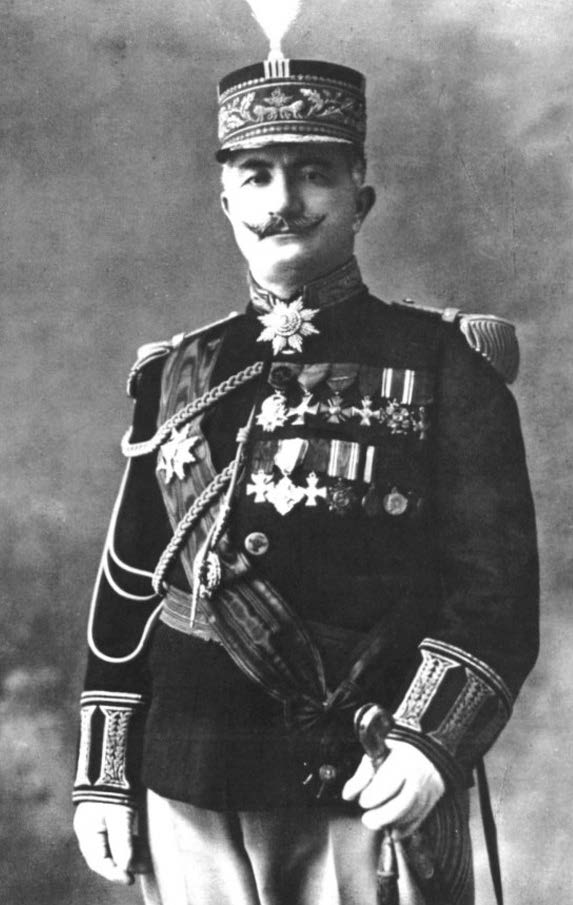
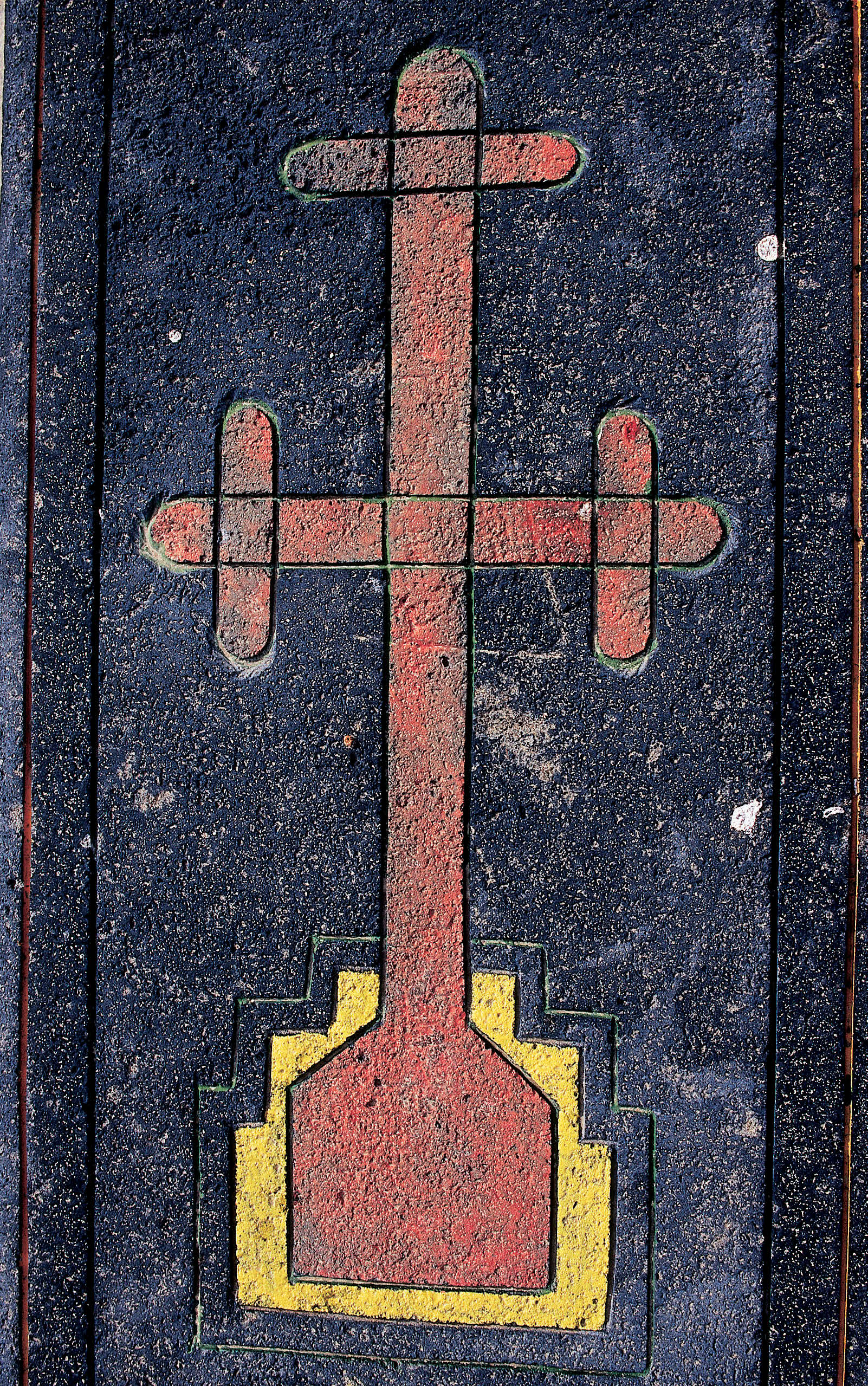
The patriarch of the Church of the East, Mar Shimun XIX (in office 1903–1918), along with all the Assyrians living in Hakkari, had to flee from Turkish–Kurdish troops to Urmiah in 1915.
东方教会 (Ch. of E.) 宗主教马尔·希蒙十九世 (Mar Shimun XIX)(在位 1903–1918 年),以及所有居住在哈卡里 (Hakkari) 的亚述人,于 1915 年不得不逃离土耳其-库尔德军队,前往乌尔米亚 (Urmiah)。
Patriarch Mar Shimun XIX was murdered by the Kurdish leader Agha Simko on 16 March 1918 near this Chapel of Mar Jacub near Salmas, dating from the thirteenth century. flames. In the space of a few weeks the Turkish–
1918年3月16日,牧首马尔·希蒙十九世 (Patriarch Mar Shimun XIX) 在萨勒马斯 (Salmas) 附近、始建于十三世纪的这座马尔·雅各布小教堂 (Chapel of Mar Jacub) 附近被库尔德领袖阿迦·西姆科 (Agha Simko) 谋杀。火焰。在几周之内,土耳其—
Kurdish gangs massacred tens of thousands of Christians – those who were able to flee to the mountains were murdered by bands of Kurds. in the summer of 1915 to flee and unite with the Assyrians of Urmiah. About 60,000 men, women and children left their homeland, which they would never see again. Arriving in Urmiah, the united Assyrians supplied the Russians with some 20,000 battle-tested soldiers under the leadership of General David, a brother of the patriarch, and General Agha Petros (1880–1932). In light of a few successes and the slow British advance on Baghdad, there arose the dream that united Anglo-Russian forces would liberate the Assyrian homeland, which is why the Assyrians, under Russian pressure, agreed to a tactical alliance with the Kurdish leader Agha Simko.
库尔德人团伙屠杀了数万名基督徒——那些得以逃入山中的人,又被一伙伙库尔德人杀害。1915年夏天,他们出逃并与乌尔米耶 (Urmiah) 的亚述人联合。约6万名男女老少离开了他们的家园,从此再也没能见到它。抵达乌尔米耶 (Urmiah) 后,联合起来的亚述人在宗主教的一位兄弟大卫将军 (General David) 和阿迦·彼得罗斯将军 (General Agha Petros, 1880–1932) 的领导下,向俄国人提供了约2万名久经沙场的士兵。鉴于几次胜利以及英军向巴格达 (Baghdad) 推进缓慢,人们产生了这样一个梦想:英俄联军将解放亚述人的家园;因此,亚述人在俄国人的压力下,同意与库尔德领袖阿迦·西姆科 (Agha Simko) 结成战术联盟。
Since it was only a matter of a few weeks before the Turkish–Kurdish marauders would reach Hakkari, to which the Nestorians had retreated, Patriarch Mar Shimun XIX Benjamin accepted the alliance offer of Russia, which was carrying out a counter-offensive in the regions of Urmiah and Van. On 10 May 1915 he officially declared war on Turkey in the name of his nation.48 But the fortunes of war soon turned, as the Turks drove the Russians out of Van and waged fierce battles against the mountain Nestorians. In order to escape the imminent encirclement, the Assyrian leadership decided
由于土耳其—库尔德劫掠者(Turkish–Kurdish marauders)再过几周便会抵达聂斯托利派(Nestorians)已退守的哈卡里(Hakkari),牧首马尔·希蒙十九世·本雅明(Patriarch Mar Shimun XIX Benjamin)接受了俄国(Russia)的结盟提议;俄国当时正在乌尔米亚(Urmiah)和凡城(Van)地区发动反攻。1915年5月10日,他以本民族的名义正式对土耳其(Turkey)宣战。48 但战局很快逆转,土耳其人(Turks)将俄国人(Russians)逐出凡城(Van),并对山地的聂斯托利派(mountain Nestorians)展开激战。为躲避即将到来的包围,亚述领导层(Assyrian leadership)决定
But in March of 1917 revolution broke out in Russia, followed by the Bolshevik coup in October. The Russian Caucasus army collapsed into
但1917年3月,俄国爆发了革命,随后十月又发生了布尔什维克政变。俄国高加索军队崩溃,陷入
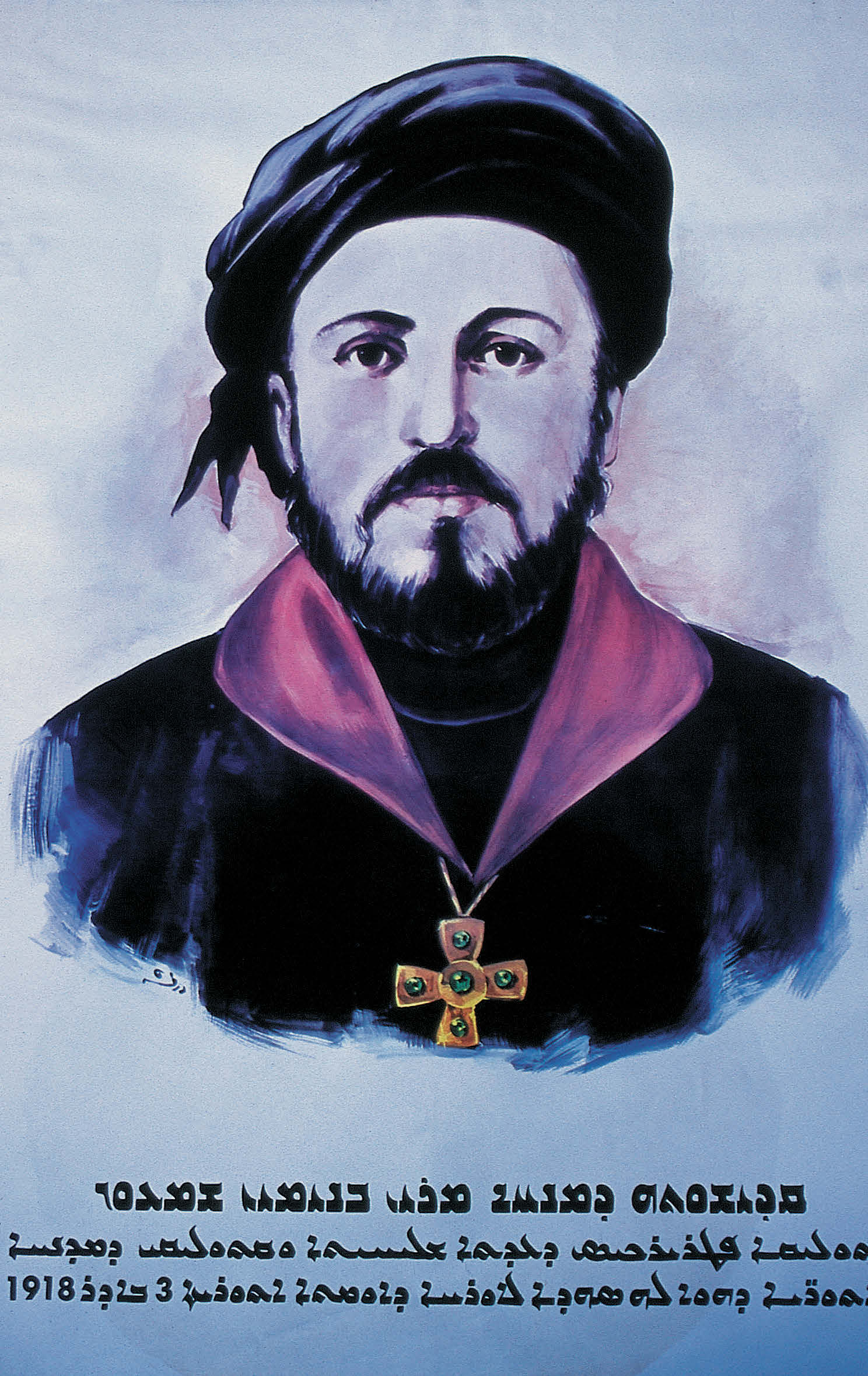
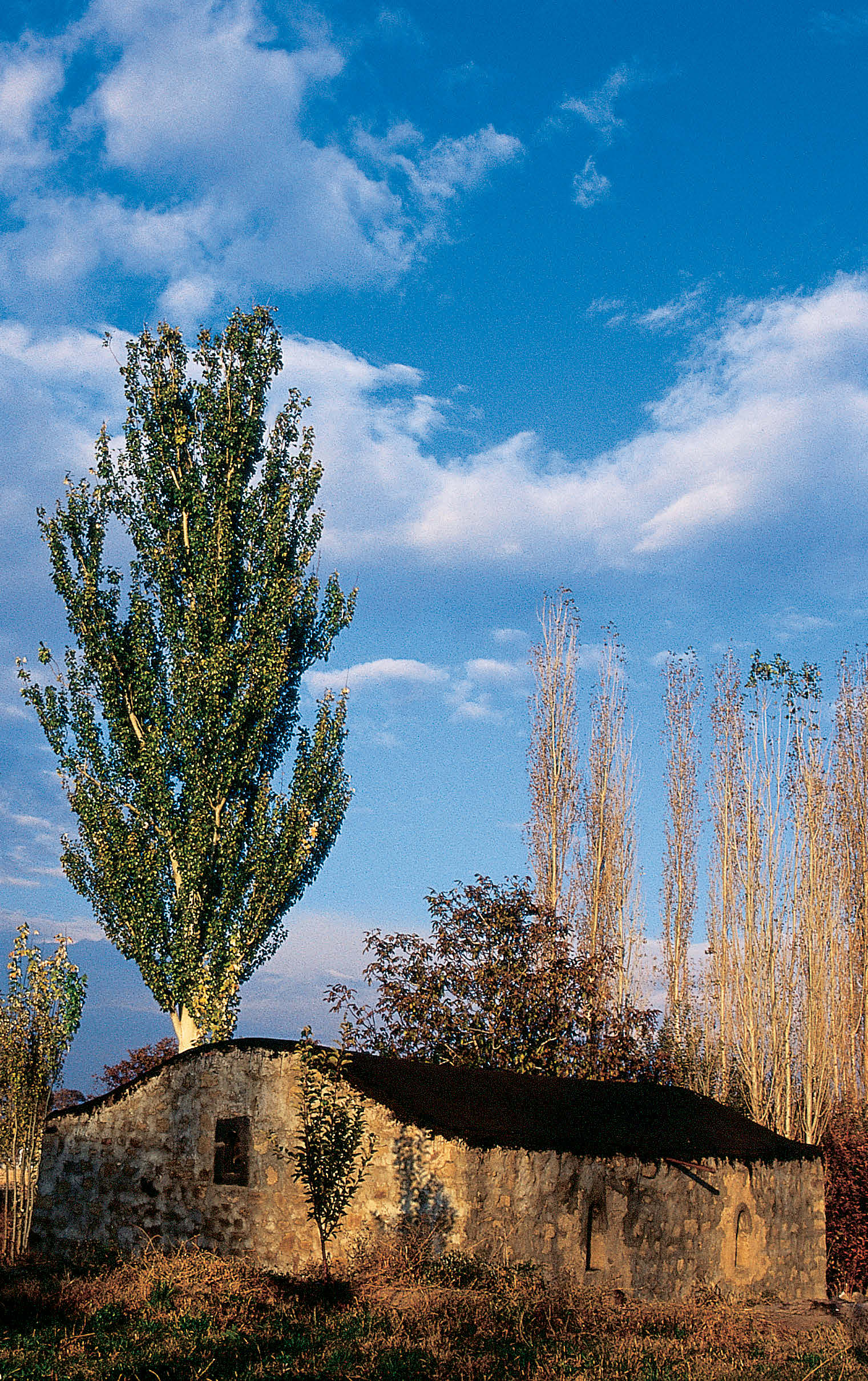
chaos and its troops left Urmiah in October/ November 1917. Since the British were still 500 kilometres from Urmiah, the Assyrian fighters now stood alone against the Turkish army, who were burning to reconquer the region to avenge the attacks made on the local Muslims by the Russians. Worse yet, the Kurd Agha Simko decided in early 1918 to switch sides and lure the patriarch into a trap, so he invited him to a discussion at Salmas. Although Mar Shimun’s staff warned him against the meeting, he gave in to pressure from the British captain Gracey and went on 16 March to Agha Simko, who had him and his companions treacherously murdered.49 As successor to the murdered patriarch his younger brother was appointed, Mar Shimun XX Paulos (in office 1918–1920), who suffered from tuberculosis and thus could not assume his leadership duties. The Assyrian acts of vengeance against the Muslims were followed by Kurdish massacres of Christians.50
混乱之中,其军队于1917年10月/11月离开乌尔米亚 (Urmiah)。由于英国人 (British) 距离乌尔米亚 (Urmiah) 仍有500公里,亚述 (Assyrian) 战士此时只能独自对抗土耳其军队 (Turkish army),后者急于重新征服该地区,以报复俄国人 (Russians) 对当地穆斯林 (Muslims) 发动的袭击。更糟的是,库尔德人阿迦·西姆科 (Agha Simko) 于1918年初决定倒戈,并诱使宗主教落入陷阱,因此邀请他到萨勒马斯 (Salmas) 会谈。尽管马尔·希蒙 (Mar Shimun) 的幕僚警告他不要赴会,他还是屈服于英国上尉格雷西 (Gracey) 的压力,于3月16日前往阿迦·西姆科 (Agha Simko) 处;后者背信弃义地将他及其同伴杀害。49 被杀害的宗主教之弟被任命为继任者,即马尔·希蒙二十世·保罗斯 (Mar Shimun XX Paulos)(在位 1918–1920 年),他患有肺结核,因此无法履行领导职责。亚述人 (Assyrians) 对穆斯林 (Muslims) 的报复行动之后,是库尔德人 (Kurds) 对基督徒 (Christians) 的大屠杀。50
The genocide carried out against the Christians living in the Ottoman Empire anticipated the Holocaust of the Jews in Hitler’s Germany. The massacres by Turks and Kurds in 1894–1896 and 1915–1918 caused c.1.5 to 1.7 million Armenian deaths and 90,000 to 100,000 Assyrian deaths – the Armenians lost about 55 per cent of their people, the Assyrians 60 per cent to 65 per cent. Added to this were some 100,000 murdered Syrian Orthodox and just as many Chaldeans.52 While until 1915 about 150,000 Syrian Orthodox (Jacobites) lived in Tur Abdin in south-eastern Anatolia, which was ceded to Turkey in 1923, today there are fewer than 3000. Among the Assyrians the result was even more serious, as, with the violent deaths of a patriarch, a metro- politan, many bishops and nearly all priests, some 80 per cent to 85 per cent of the spiritual élite died – a wound that had still not healed fifty years later. Apart from isolated cases, in which Turkish and Kurdish individuals risked their lives to hide persecuted Christians in their homes, this genocide was a project planned by the Turkish government, from which the Muslim natives profited as the property of the murdered Christians was distributed among them free of charge. Although the Turkish Republic is the legitimate successor to the Ottoman Empire, it refuses to this day to acknowledge as such the genocide carried out against the Christians.
针对生活在奥斯曼帝国 (Ottoman Empire) 的基督徒所实施的种族灭绝,预示了希特勒德国 (Hitler’s Germany) 对犹太人 (Jews) 的大屠杀 (Holocaust)。土耳其人 (Turks) 和库尔德人 (Kurds) 在1894—1896年和1915—1918年间的屠杀,造成约150万至170万亚美尼亚人 (Armenians) 死亡,以及9万至10万亚述人 (Assyrians) 死亡——亚美尼亚人损失了约55%的人口,亚述人则损失了60%至65%。此外,还有约10万叙利亚正教徒 (Syrian Orthodox) 和同样多的迦勒底人 (Chaldeans) 遭到杀害。52 1915年以前,约有15万叙利亚正教徒(雅各派,Jacobites)生活在安纳托利亚 (Anatolia) 东南部的图尔阿布丁 (Tur Abdin);该地区于1923年被割让给土耳其 (Turkey),而如今那里只剩下不足3000人。在亚述人中,结果更为严重:随着一位宗主教 (patriarch)、一位都主教 (metropolitan)、许多主教 (bishops) 以及几乎所有神父 (priests) 的惨死,约80%至85%的宗教精英丧生——这一创伤在五十年后仍未愈合。除了个别案例——即土耳其人和库尔德人个体冒着生命危险将受迫害的基督徒藏匿在家中——之外,这场种族灭绝是土耳其政府 (Turkish government) 策划的一项计划,穆斯林原住民 (Muslim natives) 从中获利,因为被杀害基督徒的财产被无偿分配给他们。尽管土耳其共和国 (Turkish Republic) 是奥斯曼帝国的合法继承者,但时至今日,它仍拒绝承认针对基督徒实施的这场种族灭绝。
Although politically leaderless, the Assyrians, under the brilliant leadership of Agha Petros, mounted a fierce opposition against the Turkish army, as Great Britain held out the prospect of an autonomous territory at the war’s end.51 But when another encirclement threatened the Assyrians in late June 1918, they decided to break through to the British at Hamadan. Almost 100,000 people left for the south in July 1918, and of these about half reached Hamadan in western Iran, completely exhausted; the others were victims of Turkish or Persian attacks or of epidemics. The approximately 15,000 Christians who remained in Urmiah were murdered by Turkish–Kurdish gangs. Although the Ottoman Empire had capitulated in the interim, the British disarmed the fleeing Assyrians and led them on a forced march in the direction of Baghdad, where they were interned in refugee camps at Bakuba. With this the Assyrians lost their final opportunity to return to their now depopulated homeland of Hakkari.
尽管在政治上群龙无首,亚述人 (Assyrians) 在阿迦·彼得罗斯 (Agha Petros) 的卓越领导下,对土耳其军队展开了猛烈抵抗,因为英国 (Great Britain) 许以战争结束时建立自治领地的前景。51 但当1918年6月下旬另一次包围威胁到亚述人时,他们决定突围前往哈马丹 (Hamadan) 投奔英军。1918年7月,近10万人南下,其中约一半人精疲力竭地抵达伊朗西部的哈马丹;其余的人则成为土耳其人或波斯人袭击或流行病的牺牲品。留在乌尔米耶 (Urmiah) 的约1.5万名基督徒被土耳其—库尔德团伙杀害。尽管奥斯曼帝国 (Ottoman Empire) 在此期间已经投降,但英国人还是解除了这些逃亡亚述人的武装,并迫使他们向巴格达 (Baghdad) 方向强行军,随后他们被关押在巴库巴 (Bakuba) 的难民营中。至此,亚述人失去了返回如今已人口凋零的故土哈卡里 (Hakkari) 的最后机会。
While the uprooted Church of the East stood at the edge of an abyss, there emerged among the refugees for the first time a feeling of national identity, which allowed the interests of individual tribes to move somewhat to the background. Both traditional Nestorians and the reformed groups understood themselves as part of the Assyrian nation.53
当流离失所的东方教会 (Ch. of E.) 站在深渊边缘时,难民中首次出现了一种民族认同感,这使得各个部落的利益在某种程度上退居次要地位。无论是传统的聂斯托利派 (Nestorians) 还是改革派群体,都把自己视为亚述民族 (Assyrian nation) 的一部分。53
Hopes betrayed
被辜负的希望
Middle East into zones of interest, tossed out all later promises even before the fact – none was fulfilled. Out of the moribund Ottoman Empire, Syria, Lebanon, south-eastern Anatolia and Mosul were to go to France, and Baghdad, southern Mesopotamia and the ports of Haifa and Akko to Great Britain. Between them was to be an Arab satellite state, divided into French and British zones of influence. Finally, Jerusalem was to be placed under international control.57
将中东 (Middle East) 划分为利益区,抛出了后来的一切承诺,甚至早在事情发生之前——无一兑现。从垂死的奥斯曼帝国 (Ottoman Empire) 中,叙利亚 (Syria)、黎巴嫩 (Lebanon)、安纳托利亚东南部 (south-eastern Anatolia) 和摩苏尔 (Mosul) 将划归法国 (France),而巴格达 (Baghdad)、美索不达米亚南部 (southern Mesopotamia) 以及海法 (Haifa) 和阿卡 (Akko) 港则划归英国 (Great Britain)。在它们之间将建立一个阿拉伯卫星国,划分为法国和英国势力范围。最后,耶路撒冷 (Jerusalem) 将置于国际共管之下。57
The situation of the Assyrian refugees was worsened by the death in 1920 of their gravely ill patriarch Mar Shimun XX and the subsequent internal debates. Without consulting Metropolitan Timothy, who was travelling from India, the late patriarch’s sister, Lady Surma d’Mar Shimun, had her twelve-year-old nephew consecrated as Patriarch Mar Shimun XXI Eshai (in office 1920–1975).54 Since many Assyrians would not acknowledge an under-age boy as spiritual and secular ruler, they split into two bitterly opposed camps: that of the patriarchal family, led by his aunt Surma and his father General David, and the opposition party, led by the war hero Agha Petros. All mediation attempts undertaken by Mar Timothy foundered on Surma’s intransigence.55 Despite the inner strife, the Assyrians harboured the dream of an independent state, or at least an autonomous region, as they had been promised by the British in 1917.
亚述难民的处境因他们病重的牧首马尔·希蒙二十世 (Mar Shimun XX) 于1920年去世以及随后的内部争论而进一步恶化。在未与正从印度旅行途中的都主教提摩太 (Metropolitan Timothy) 商议的情况下,已故牧首的妹妹苏尔玛·德·马尔·希蒙夫人 (Lady Surma d’Mar Shimun) 让其十二岁的侄子被祝圣为牧首马尔·希蒙二十一世·伊沙伊 (Mar Shimun XXI Eshai)(在位 1920–1975)。54 由于许多亚述人不愿承认一个未成年的男孩为宗教和世俗领袖,他们分裂为两个激烈对立的阵营:一派是牧首家族,由其姑母苏尔玛 (Surma) 和其父戴维将军 (General David) 领导;另一派是由战争英雄阿迦·彼得罗斯 (Agha Petros) 领导的反对派。马尔·提摩太 (Mar Timothy) 进行的所有调解尝试都因苏尔玛 (Surma) 的顽固不化而失败。55 尽管内部纷争不断,亚述人仍怀有建立独立国家、或至少一个自治区的梦想,正如英国人在1917年向他们承诺的那样。
While the Arabs at least received the kingdoms of Mecca and Medina, Jordan and Iraq – although the last two were British protectorates – the Armenians, Kurds and Assyrians went away empty-handed; they were sacrificed for the sake of British interests on the altar of the oil discovered in southern Kurdistan.58 Then, in October 1920, the attempt undertaken by Agha Petros to establish by military means and with British support the seed of an autonomous Assyrian region in Kurdistan failed miserably, due to the lack of discipline among his troops.59 In the following months thousands of Assyrians began to trickle back into their villages in Hakkari and Urmiah. Since in the Treaty of Lausanne of 1923 Turkey had successfully fended off any Assyro- Chaldean autonomy, in 1924 the Assyrians and Chaldeans appealed to the League of Nations, which was working on drawing a definitive border between Turkey and Iraq. When a commission decided to visit Hakkari, which was again inhabited by Nestorians, Kamal Atatürk sent troops to create a fait accompli. They carried out a bloodbath and destroyed the only recently rebuilt Christian villages; the survivors fled back to Iraq.60 But it was not the Ottoman sultanate that performed this renewed ethnic cleansing; rather, it was the Turkish Republic. In December 1925 the League of Nations finally granted oil-rich northern Mesopotamia to the British protectorate of Iraq and the Hakkari mountains to Turkey; the Kurds and Assyrians were left with nothing. Immediately thereafter Turkey confirmed
阿拉伯人 (Arabs) 至少获得了麦加 (Mecca) 与麦地那 (Medina)、约旦 (Jordan) 和伊拉克 (Iraq) 等王国——尽管后两者是英国保护国 (British protectorates)——而亚美尼亚人 (Armenians)、库尔德人 (Kurds) 和亚述人 (Assyrians) 却空手而归;他们为了英国的利益,被牺牲在库尔德斯坦 (Kurdistan) 南部所发现石油的祭坛上。58 随后,1920年10月,阿迦·彼得罗斯 (Agha Petros) 试图以军事手段并在英国支持下,在库尔德斯坦 (Kurdistan) 播下自治亚述地区 (autonomous Assyrian region) 的种子,但由于其部队缺乏纪律,这一尝试惨败。59 在接下来的几个月里,成千上万的亚述人 (Assyrians) 开始陆续返回他们在哈卡里 (Hakkari) 和乌尔米耶 (Urmiah) 的村庄。由于土耳其 (Turkey) 在1923年的《洛桑条约》(Treaty of Lausanne) 中成功抵制了任何亚述-迦勒底自治 (Assyro-Chaldean autonomy),1924年,亚述人 (Assyrians) 和迦勒底人 (Chaldeans) 向国际联盟 (League of Nations) 请愿,而后者当时正致力于划定土耳其 (Turkey) 与伊拉克 (Iraq) 之间的最终边界。当一个委员会决定访问再次有聂斯托利派 (Nestorians) 居住的哈卡里 (Hakkari) 时,凯末尔·阿塔图尔克 (Kamal Atatürk) 派出军队以造成既成事实 (fait accompli)。他们进行了血腥屠杀,摧毁了刚刚重建的基督教村庄;幸存者逃回伊拉克 (Iraq)。60 但实施这场新一轮种族清洗的并不是奥斯曼苏丹国 (Ottoman sultanate),而是土耳其共和国 (Turkish Republic)。1925年12月,国际联盟 (League of Nations) 最终将富含石油的北美索不达米亚 (northern Mesopotamia) 划给英国保护下的伊拉克 (British protectorate of Iraq),将哈卡里山脉 (Hakkari mountains) 划给土耳其 (Turkey);库尔德人 (Kurds) 和亚述人 (Assyrians) 则一无所得。紧接着,土耳其 (Turkey) 确认了
At the end of the war Great Britain faced the impossible task, which it had brought upon itself, of fulfilling its many and often contra-dictory promises. First, the British had promised the Armenians, as well as the Kurds and Assyrians, their own states, although their respective territories included significant overlap. Second, Lawrence of Arabia had extended to the Hashemite leaders of the Arab revolt the prospect of an independent Arab state, which would encompass all Arab regions of the Ottoman Empire.56 This promise contradicted not only the obligations to the Kurds and Assyrians living in Mesopotamia but also the famous Balfour Declaration of 2 November 1917, in which British Foreign Secretary Balfour promised to Baron de Rothschild to create a national homeland for the Jews in Palestine. But as early as May 1916 the secret agreement between the authorized representatives Sir Mark Sykes and Georges Picot, which divided the
战争结束时,大不列颠 (Great Britain) 面临一项不可能完成的任务——这项任务是它自己招致的——即履行其许多且常常相互矛盾的承诺。首先,英国人曾向亚美尼亚人 (Armenians) 以及库尔德人 (Kurds) 和亚述人 (Assyrians) 承诺给予他们各自的国家,尽管他们各自的领土存在显著重叠。其次,阿拉伯的劳伦斯 (Lawrence of Arabia) 曾向阿拉伯起义 (Arab revolt) 的哈希姆 (Hashemite) 领袖们提出一个独立阿拉伯国家的前景,该国家将囊括奥斯曼帝国 (Ottoman Empire) 的所有阿拉伯地区。56 这一承诺不仅与对生活在美索不达米亚 (Mesopotamia) 的库尔德人和亚述人所承担的义务相矛盾,而且也与1917年11月2日著名的《贝尔福宣言》(Balfour Declaration) 相矛盾;在该宣言中,英国外交大臣贝尔福 (Balfour) 向罗斯柴尔德男爵 (Baron de Rothschild) 承诺,要在巴勒斯坦 (Palestine) 为犹太人建立一个民族家园。但早在1916年5月,授权代表马克·赛克斯爵士 (Sir Mark Sykes) 与乔治·皮科 (Georges Picot) 之间的秘密协定,就划分了
that return of the Assyrian refugees was for- bidden and returning Assyrians would be harshly punished.61 of the country, since Assyrian refugees were already living there. The emigrating Assyrians were followed close on their heels by Iraqi government troops as far as the border. When the armed Assyrians returned from their nego- tiations with the French to the families they had left behind on the Iraqi side of the border, the Iraqi troops opened fire. Some Assyrians successfully fled to Syria; the others were taken prisoner and murdered. This border incident gave the Iraqi military the opportunity to distinguish themselves in the absence of King Faisal I (ruled 1921–1933), who was staying in Switzerland for health reasons, by solving ‘the Assyrian question’. Beginning on 7 August 1933 the Iraqi army, led by the Kurdish general Badr Sidqi, attacked 95 Assyrian villages and tent settlements, 65 of which they relentlessly plundered and destroyed. The defenceless civilian population was indiscriminately massacred. Among the acts of cruelty were not only the torture of priests and the rape of women but also small children being run over by large vehicles or thrown into the air to be impaled on bayonets, and pregnant women likewise killed with bayonets. The tragic highpoint was the massacre in the village of Simel; over the course of about ten days, over 3000 innocent people died. Only those who meekly converted to Islam could save themselves. But General Bakr Sidqi, who was responsible for the massacre, was celebrated as a hero in Baghdad and received from King Ghazi I (ruled 1933–1939) a medal and the title of pasha.62
亚述难民 (Assyrian refugees) 返回该国被禁止,返回的亚述人将受到严厉惩罚。61 因为亚述难民已经居住在该国。外迁的亚述人身后紧跟着伊拉克政府军,一直追到边境。当武装亚述人与法国人谈判结束后,回到他们留在伊拉克一侧边境的家人身边时,伊拉克军队开火了。一些亚述人成功逃往叙利亚 (Syria);其他人则被俘并杀害。这起边境事件使伊拉克军方得以在国王费萨尔一世 (Faisal I)(1921–1933年在位)因健康原因留在瑞士 (Switzerland) 而不在国内之际,通过解决“亚述问题”来大显身手。自1933年8月7日起,由库尔德将军巴德尔·西德基 (Badr Sidqi) 率领的伊拉克军队袭击了95个亚述村庄和帐篷定居点,其中65个被他们无情地劫掠并摧毁。手无寸铁的平民遭到无差别屠杀。这些暴行不仅包括对神父施以酷刑和强奸妇女,还包括用大型车辆碾轧幼童,或将幼童抛向空中,使其被刺刀刺穿;孕妇也同样被刺刀杀死。悲剧的高潮是西梅尔村 (Simel) 的屠杀;在大约十天的时间里,3000多名无辜者丧生。只有那些顺从地改信伊斯兰教的人才能保住性命。但应对这场屠杀负责的巴克尔·西德基将军 (Bakr Sidqi) 却在巴格达 (Baghdad) 被奉为英雄,并从国王加齐一世 (Ghazi I)(1933–1939年在位)那里获得一枚勋章和帕夏 (pasha) 称号。62
Although the political situation of the Assyrians in the British protectorate remained unsatisfying, at least their security was ensured. But this, too, was only for a limited time, as the Anglo-Iraqi negotiations over a British withdrawal began in 1927 and led in 1932 to Iraqi independence. It was foreseeable that the Assyrians would lose the protection of the British. The situation grew worse after the patriarch travelled to Geneva in 1932 to the League of Nations, and early in 1933 this body definitively rejected the Assyrian claim to be acknowledged as a homogeneous group and be granted an autonomous region. Upon his return to Iraq, Patriarch Mar Shimun was placed under house arrest and given an ultimatum to surrender all secular authority. Because he fought this deprivation of power, he was deported from Iraq to Cyprus at the end of August 1933; he also lost his Iraqi citizenship. The Assyrians were now without their leader, and the patriarch was without his people. Metropolitan Mar Yosip Khananisho (1893–1977), acting as deputy, conducted the affairs of the Church in Iraq.
尽管亚述人 (Assyrians) 在英国保护国 (British protectorate) 内的政治处境仍不尽如人意,但至少他们的安全得到了保障。然而,这也只是暂时的,因为关于英国撤出的英伊谈判 (Anglo-Iraqi negotiations) 于1927年开始,并于1932年促成了伊拉克 (Iraq) 独立。可以预见,亚述人将失去英国人的保护。1932年,宗主教前往日内瓦 (Geneva) 的国际联盟 (League of Nations) 后,局势进一步恶化;1933年初,该机构明确拒绝了亚述人要求被承认为一个同质群体并获得一个自治区的诉求。返回伊拉克后,宗主教马尔·希蒙 (Patriarch Mar Shimun) 被软禁,并被下达最后通牒,要求他交出所有世俗权力。由于他抗拒这一权力剥夺,他于1933年8月底被从伊拉克驱逐到塞浦路斯 (Cyprus);他还失去了伊拉克公民身份。此时,亚述人失去了他们的领袖,而宗主教也失去了他的人民。都主教马尔·约瑟普·哈纳尼绍 (Metropolitan Mar Yosip Khananisho, 1893–1977) 作为代理人,主持了伊拉克教会的事务。
The situation was also explosive because since 1919 the Assyrians had provided the British occupying forces with troops, the so-called Assyrian Levies. Since the British had again and again used the Christian Assyrian Levies to suppress Kurdish and Arab revolts, they were accordingly hated by the Muslims. The situation deteriorated further when a British–Iraqi plan announced the dispersal throughout the country of the Assyrians, who had until then lived homogeneously in refugee camps; the Assyrians were to be settled in Kurdish, Sunni and Shi’ite villages, which spelled the destruction of their political and cultural identity.
局势之所以也一触即发,是因为自1919年以来,亚述人 (Assyrians) 一直向英国 (British) 占领军提供兵员,即所谓的“亚述人征募军” (Assyrian Levies)。由于英国一再利用信奉基督教的亚述人征募军镇压库尔德人 (Kurds) 和阿拉伯人 (Arabs) 的起义,他们因此遭到穆斯林 (Muslims) 的仇恨。当一项英国—伊拉克计划 (British–Iraqi plan) 宣布将亚述人分散安置到全国各地时,局势进一步恶化;此前,亚述人一直集中居住在难民营中。按照该计划,亚述人将被安置到库尔德人、逊尼派 (Sunni) 和什叶派 (Shi’ite) 的村庄中,这预示着其政治和文化认同的毁灭。
For the surviving Assyrians it was crushing to experience the fact that an Islamic state, only a few months after the establishment of sovereignty, could allow itself to butcher members of a religious minority with impunity. No one reacted; Great Britain helped Iraq to hush up what had happened, and the League of Nations appointed a commission. This commission did not consider at all how the security of the
对于幸存的亚述人 (Assyrians) 而言,亲历这样一个事实是令人崩溃的:一个伊斯兰国家在主权确立仅数月之后,竟能不受惩罚地屠杀一个宗教少数群体的成员。无人作出反应;英国 (Great Britain) 帮助伊拉克 (Iraq) 掩盖了所发生的一切,国际联盟 (League of Nations) 则任命了一个委员会。这个委员会根本没有考虑……的安全如何
At the end of the British mandate a group of Assyrians decided in July 1933 to emigrate to Syria and settle in the Little Khabur in the north-east
在英国托管 (British mandate) 结束之际,一群亚述人 (Assyrians) 于1933年7月决定移居叙利亚 (Syria),并在东北部的小哈布尔河 (Little Khabur) 一带定居。
Assyrians in Iraq could be ensured, but instead recommended that the Assyrians ‘simply’ move to Argentina, Brazil, British Guyana, Canada, Colombia, Niger or South Africa, and thus the Assyrians had the status of refugees within their own homeland.63 The affected people paid little attention to these naïve recommendations, however; a few hid in the Kurdish region of Iraq, and others fled to the refugee camp of Habbaniyah west of Baghdad, where Great Britain maintained an air force base. In May 1941 the remaining Assyrian Levies had the satisfaction of successfully defending the base at Habbaniyah, together with the British, against 15,000 Iraqi soldiers and defeating the military putsch of the officers who sympathized with Nazi Germany. Their units were dissolved in 1955.64 About half of the Assyrians left Iraq, with some accepting France’s offer to settle in Syrian Khabur and others emigrating to the United States, especially to Chicago. numerous Kurds, so they could not realistically claim their own state. The failure of the Assyrian movement in the summer of 1933 dragged the Church with it into the abyss.
伊拉克境内亚述人 (Assyrians) 的权利本可得到保障,但(有关方面)却建议亚述人“干脆”迁往阿根廷 (Argentina)、巴西 (Brazil)、英属圭亚那 (British Guyana)、加拿大 (Canada)、哥伦比亚 (Colombia)、尼日尔 (Niger) 或南非 (South Africa),亚述人因此在自己的家园内处于难民地位。63 然而,受影响的人们对这些天真的建议几乎不予理会;少数人躲藏在伊拉克 (Iraq) 的库尔德地区,另一些人则逃往巴格达 (Baghdad) 以西的哈巴尼亚 (Habbaniyah) 难民营,英国 (Great Britain) 在那里维持着一座空军基地。1941年5月,余下的亚述人征募兵 (Assyrian Levies) 与英国人一道,成功保卫了哈巴尼亚 (Habbaniyah) 基地,抗击15,000名伊拉克士兵,并挫败了同情纳粹德国 (Nazi Germany) 的军官发动的军事政变,这令他们感到欣慰。他们的部队于1955年解散。64 约半数亚述人离开了伊拉克,其中一些人接受了法国 (France) 提出的在叙利亚哈布尔 (Khabur) 定居的建议,另一些人则移居美国 (United States),尤其是芝加哥 (Chicago)。面对众多的库尔德人 (Kurds),他们无法现实地要求建立自己的国家。1933年夏天亚述人运动 (Assyrian movement) 的失败,将教会也一同拖入深渊。
Why did the Church of the
为什么……的教会
East collapse?
东方崩溃?
The disintegration of organisms – be they living things, state organizations, societal structures or religious institutions – is part of life. Nevertheless, it is extraordinary that a Church that from the beginning belonged to the extremely successful Christian religion shrank from seven to eight millions to 400,000 members, or that its share of the world population decreased from about 2–3 per cent during the Middle Ages to 0.005 per cent. Numerous external and internal reasons account for this, of which no single one but rather their combination was decisive.65 Nine external reasons contributed. First, the Church of the East was isolated from its sister Churches and spread itself over enormous distances. This factor was especially serious when wars prevented all communication between the patriarchate and distant provinces, sometimes for years. Second, the Church, except in Mesopotamia, remained numerically weak in relation to the overall population; it never achieved the critical mass necessary to become generally accepted but remained a minority religion. Third, it never experienced the advantage of becoming a state religion; it was always dependent on the goodwill of non-Christian rulers and was correspondingly vulnerable. Fourth, in Asia East Syrian Christianity encountered strong, deeply rooted religions, such as Buddhism, Taoism and Confucianism. The three Far Eastern religions were so closely tied to the cultures and mindsets of the local people – and had indeed helped to create these – that an aura of foreignness always clung to the Christian message. In contrast, the Latin Church met with
有机体的解体——无论是生物、国家组织、社会结构还是宗教机构——都是生命的一部分。然而,非同寻常的是,一个从一开始就属于极其成功的基督教宗教的教会,其成员从七八百万缩减到40万,或者其世界人口占比从中世纪的大约2%—3%下降到0.005%。造成这一点的外部和内部原因众多,其中没有任何单一原因,而是它们的共同作用起了决定性作用。65 有九个外部原因起了作用。第一,东方教会 (Ch. of E.) 与其姊妹教会相隔绝,并分布在极其广阔的地域上。当战争使宗主教区与遥远省份之间的一切联系中断,有时长达数年之久时,这一因素尤为严重。第二,除美索不达米亚 (Mesopotamia) 外,该教会在人数上相对于总人口始终薄弱;它从未达到为被普遍接受所必需的临界规模,而始终是一种少数派宗教。第三,它从未享有成为国教的优势;它始终依赖非基督教统治者的善意,因而相应地脆弱。第四,在亚洲,东叙利亚基督教 (East Syrian Christianity) 遇到了强大而根深蒂固的宗教,如佛教 (Buddhism)、道教 (Taoism) 和儒教 (Confucianism)。这三种远东宗教与当地人的文化和心态如此紧密相连——而且实际上曾帮助创造了这些文化和心态——以至于基督教信息始终带有一种外来气息。相比之下,拉丁教会 (Latin Church) 则遇到了
The Iraqi Chaldeans, by contrast, who now greatly outnumbered the Nestorians, were hardly affected by persecutions, as they had, under the leadership of their patriarch Emmanuel II Thomas, given up any claim to political and territorial autonomy and consciously assimilated into Iraqi society. While Mar Shimun XXI had to live in exile, Emmanuel II sat in the Iraqi Senate until his death in 1947. His three successors – Joseph VII Ghanima (1947–1958), who was likewise a senator, Paul II Cheiko (1958–1989) and Raphael II Bidawid (1989–2003) – advanced a cautious strategy of submissiveness towards the ruling authorities, which guaranteed the Chaldeans relative peace, despite three revolutions and three wars. In contrast to the Chaldean Church, which distanced itself from nationalist ambitions, the Church of the East appropriated the goal of an Assyrian national state in the 1920s and 1930s, an effort at which they inevitably failed. The Assyrians were a small community fraught with internal debates, whose scattered territories overlapped those of the vastly more
相比之下,伊拉克迦勒底人 (Iraqi Chaldeans) 如今在人数上远超聂斯托利派 (Nestorians),却几乎未受迫害影响,因为他们在其宗主教埃马努埃尔二世·托马斯 (Emmanuel II Thomas) 的领导下,已经放弃了任何政治和领土自治的主张,并有意识地融入了伊拉克社会。当马·希蒙二十一世 (Mar Shimun XXI) 不得不流亡海外时,埃马努埃尔二世 (Emmanuel II) 则一直在伊拉克参议院 (Iraqi Senate) 任职,直到1947年去世。他的三位继任者——约瑟七世·加尼玛 (Joseph VII Ghanima)(1947–1958),他同样也是一位参议员;保罗二世·切科 (Paul II Cheiko)(1958–1989);以及拉斐尔二世·比达维德 (Raphael II Bidawid)(1989–2003)——推行了一种对统治当局谨慎顺从的策略,这保证了迦勒底人相对的和平,尽管经历了三场革命和三场战争。与同民族主义野心保持距离的迦勒底教会 (Chaldean Church) 不同,东方教会 (Church of the East) 在20世纪20年代和30年代接过了建立亚述民族国家 (Assyrian national state) 的目标,而这一努力他们不可避免地失败了。亚述人 (Assyrians) 是一个内部争论不断的小社群,其分散的领土与规模远为更大的……的领土重叠。
a more favourable situation in the third/fourth centuries, since the Roman religion had long since hardened into state propaganda, and the Gallic, Celtic and Germanic religions gave no answers to many existential questions. religion supported by another armed power can maintain itself over the long term. Regions that once had predominantly Christian populations were either radically cleansed of Christians – as happened, for instance, in Anatolia and North Africa – or the Christians came to constitute only a small minority, as in Iran, Iraq, Syria and Egypt. In contrast, in Christian Europe, it was military operations that either stopped Islam or repulsed it – as, for example, at the Battle of Tours and Poitiers in 732, the Reconquista of Spain in the fifteenth century and at both sieges of Vienna in 1529 and 1638. Since in Islamic states conversion from Christianity to Islam was desired, while conversion from Islam to Christianity usually brought the death penalty, the Church of the East was always at a disadvantage in the competition with Islam.
在第三/第四世纪,情况更为有利,因为罗马宗教早已固化为国家宣传,而高卢 (Gallic)、凯尔特 (Celtic) 和日耳曼 (Germanic) 宗教无法回答许多存在性问题。得到另一武装力量支持的宗教能够长期维持自身。曾经基督徒占多数的地区,要么基督徒被彻底清洗——例如安纳托利亚 (Anatolia) 和北非 (North Africa) 就发生了这种情况——要么基督徒最终只构成一小部分少数群体,如在伊朗 (Iran)、伊拉克 (Iraq)、叙利亚 (Syria) 和埃及 (Egypt)。相比之下,在基督教欧洲 (Christian Europe),正是军事行动要么阻止了伊斯兰教,要么将其击退——例如,732年的图尔和普瓦捷战役 (Battle of Tours and Poitiers)、十五世纪西班牙的收复失地运动 (Reconquista),以及1529年和1638年的两次维也纳之围 (sieges of Vienna)。由于在伊斯兰国家中,从基督教改宗伊斯兰教是受鼓励的,而从伊斯兰教改宗基督教通常会被判处死刑,东方教会 (Ch. of E.) 在与伊斯兰教的竞争中始终处于劣势。
Fifth, the Church and its members faced persecutions, often lasting for centuries, and serious social discrimination, which led quite a few Christians, despite the awe-inspiring general resistance, to convert to the state religion. Six, the East Syrians of Kurdistan lived in a narrow social and geographical ghetto, which resulted in a self-focused life and a lack of intellectual development. Seventh, the activities of Catholic and Protestant missionaries hastened the decline of the already greatly weakened Church. Eighth, the East Syrians were twice the victims of a general genocide – first in the late fourteenth century by Tamerlane, and then in 1915/1918 by the Turks and Kurds. Ninth, the Church saw itself confronted with an essentially intolerant religion, Islam, which dictated not only the forms of society but also law and the administration of justice as soon as it achieved a majority in a state.
第五,教会及其成员面临迫害,这些迫害往往持续数百年,并遭受严重的社会歧视;这导致不少基督徒尽管总体上有着令人敬畏的抵抗,仍改信国教。第六,库尔德斯坦 (Kurdistan) 的东叙利亚人 (East Syrians) 生活在一个狭窄的社会和地理隔离区中,这导致了一种以自我为中心的生活和智识发展的缺乏。第七,天主教 (Catholic) 和新教 (Protestant) 传教士的活动加速了本已严重削弱的教会的衰落。第八,东叙利亚人 (East Syrians) 两次成为种族灭绝的受害者——第一次是在十四世纪晚期,由帖木儿 (Tamerlane) 造成;第二次是在1915/1918年,由土耳其人 (Turks) 和库尔德人 (Kurds) 造成。第九,教会发现自己面对的是一个本质上不宽容的宗教——伊斯兰教 (Islam);一旦它在某个国家取得多数地位,就不仅规定了社会形态,还规定了法律和司法行政。
To these external reasons should be added two internal ones. First, the Church of the East focused its efforts on the ruling classes, because it was dependent on them, but neglected to work for the conversion of the general population. This strategy had the consequence that, upon a change of heart in the ruler or a regime change, the Church found itself isolated, with no foundation among the people. Second, the Church was often plagued by internal conflicts, arguments among personnel and schisms, which greatly weakened it and alienated the faithful from the clerical hierarchy. While large organizations such as the Catholic Church could weather internal power struggles and divisions, these were disasters for smaller groups situated in hostile environments.
在这些外在原因之外,还应加上两个内在原因。首先,东方教会 (Ch. of E.) 将精力集中于统治阶层,因为它依赖他们,却忽视了使普通民众皈依的工作。这一策略的后果是,一旦统治者改变心意或发生政权更迭,教会便发现自己陷入孤立,在民众中毫无根基。其次,教会常常受到内部冲突、人员之间的争执和分裂的困扰,这极大地削弱了它,并使信众疏远教士阶层。尽管像天主教会 (Catholic Church) 这样的大型组织能够经受住内部权力斗争和分裂,但对于处于敌对环境中的较小群体而言,这些却是灾难。
The last two points demonstrate the relative validity of the argument of the Muslim theologian Ali at-Tabari (†855), a former Christian. In his Refutation of Christianity, he wrote that no religion without a concept of holy war could survive. He referred to the triumph of Islam, which had succeeded and greatly weakened Christianity everywhere, that no one had met it with armed force.66 A passing glance at history shows that, in confrontation with an aggressive religion equipped with military means, only a
最后两点表明了曾为基督徒的穆斯林神学家阿里·塔巴里 (Ali at-Tabari)(卒于855年)之论点的相对有效性。在其《驳基督教》(Refutation of Christianity)中,他写道:没有圣战观念的宗教都无法存续。他提到伊斯兰教 (Islam)的胜利,它取得了成功,并在各地大大削弱了基督教 (Christianity),且说没有人曾以武力抵抗过它。66 略览历史即可看出,在与一个拥有军事手段的侵略性宗教对抗时,只有一种